
Best Museums in Belgium: 8 Worth a City Break
Eight Belgian museums worth planning a city break around, from Flemish primitives in Bruges to In Flanders Fields in Ypres and KMSKA in Antwerp.
On this page
The best museums in Belgium outside Brussels are the Groeningemuseum and Museum Sint-Janshospitaal in Bruges, In Flanders Fields Museum in Ypres, Museum Plantin-Moretus, KMSKA and MAS in Antwerp, STAM in Ghent, M Leuven and La Boverie in Liège. Each one is strong enough to anchor a day of a short break, and several sit within a ten-minute walk of the square or station you will arrive at. This guide sets out what each collection actually holds, where it sits in its city, and how much time to give it.
The split that matters most is between art and history. Bruges, Antwerp and Liège hold the paintings and sculpture; Ypres, Ghent, Leuven and the MAS tell the story of a city, a war or a port. Pick by that divide first, then by which city you are sleeping in, because a one-to-four-day break rarely supports more than one museum a day.
Why these museums: the collections that justify the trip
Belgium's museum strength is concentrated in a handful of collections rather than spread evenly. Bruges holds the core of the Flemish primitives, the 15th-century painters who worked during the city's Golden Age, and the Visit Bruges listings show works by Jan van Eyck and Hans Memling hanging at the Groeningemuseum, Museum Sint-Janshospitaal, Saint Saviour's Cathedral and the Church of Our Lady. Our guide to the Flemish primitives maps those locations street by street if you want to follow one painter across the city.
Antwerp adds the old masters and moderns at KMSKA, a printing workshop at Plantin-Moretus and a port museum at the MAS. Ghent and Leuven hold city collections that explain how each place grew, Ypres holds the First World War, and Liège holds fine art in a park pavilion above the Meuse. None of these needs a full day unless you want one.
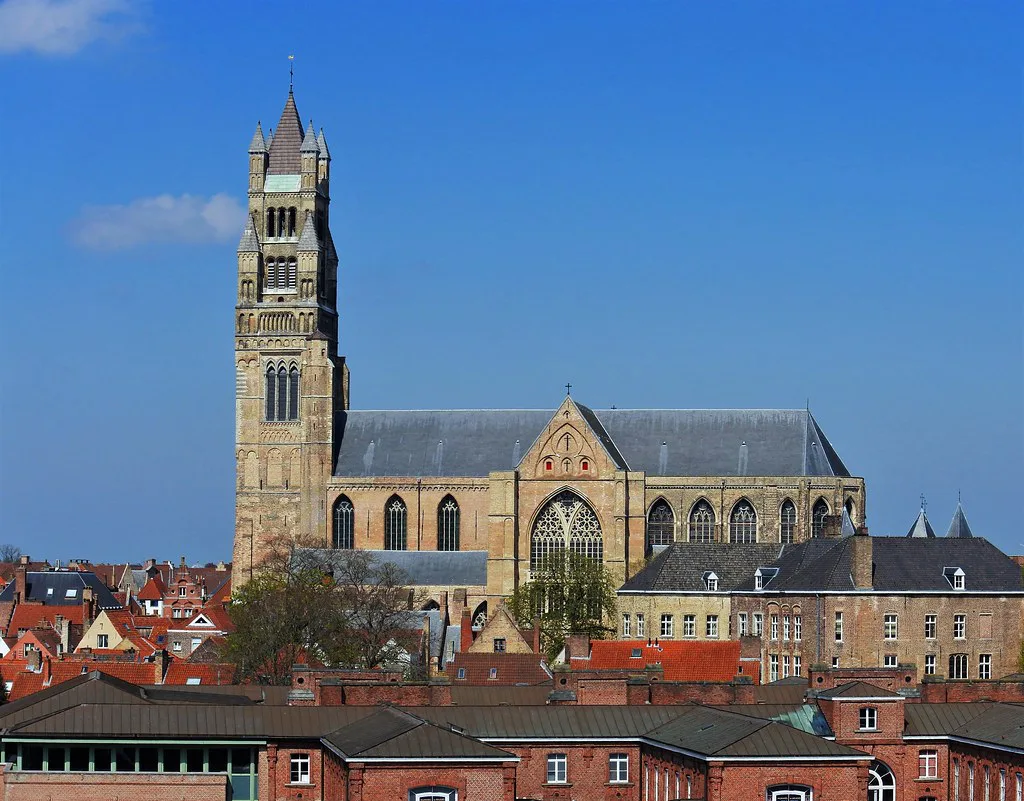
Groeningemuseum, Bruges: Van Eyck and Memling in the city they painted for
The Groeningemuseum on Dijver gives a chronological run through Belgian visual art, with the Flemish primitives as its centre of gravity. It is the place to see panel paintings by the artists who lived and worked in Bruges, rather than the same names shipped into a national gallery elsewhere. Allow two hours for the paintings and a little more if you read the labels properly.
Why these museums: the collections that justify the trip. Belgium's museum strength is concentrated in a handful of collections rather than spread evenly.
Groeningemuseum, Bruges: Van Eyck and Memling in the city they painted for. The Groeningemuseum on Dijver gives a chronological run through Belgian visual art, with the Flemish primitives as its centre of gravity.
Museum Sint-Janshospitaal, Bruges: Memling in a medieval hospital ward. Museum Sint-Janshospitaal on Mariastraat occupies a medieval hospital building, and its collection is built around care and healing as well as painting.
The museum sits on the Dijver canal, a short walk from the Markt and next door to the Gruuthusemuseum, which covers three periods of Bruges history from its Burgundian heyday onwards. Pairing the two makes a natural half-day on the canal side of town. If Van Eyck is your reason for coming, our guide to Van Eyck in Belgium sets out where else his work hangs.
Museum Sint-Janshospitaal, Bruges: Memling in a medieval hospital ward
Museum Sint-Janshospitaal on Mariastraat occupies a medieval hospital building, and its collection is built around care and healing as well as painting. The setting is the point: you see Hans Memling's works in the ward and chapel they were made for, which is a different experience from a white-cube gallery. Give it an hour to ninety minutes.
It is a few minutes from the Church of Our Lady, whose tower is the second-highest brick church tower in the world and which holds Michelangelo's Madonna and Child. Doing both in one morning keeps you in the Mariastraat quarter and saves a second crossing of the centre.
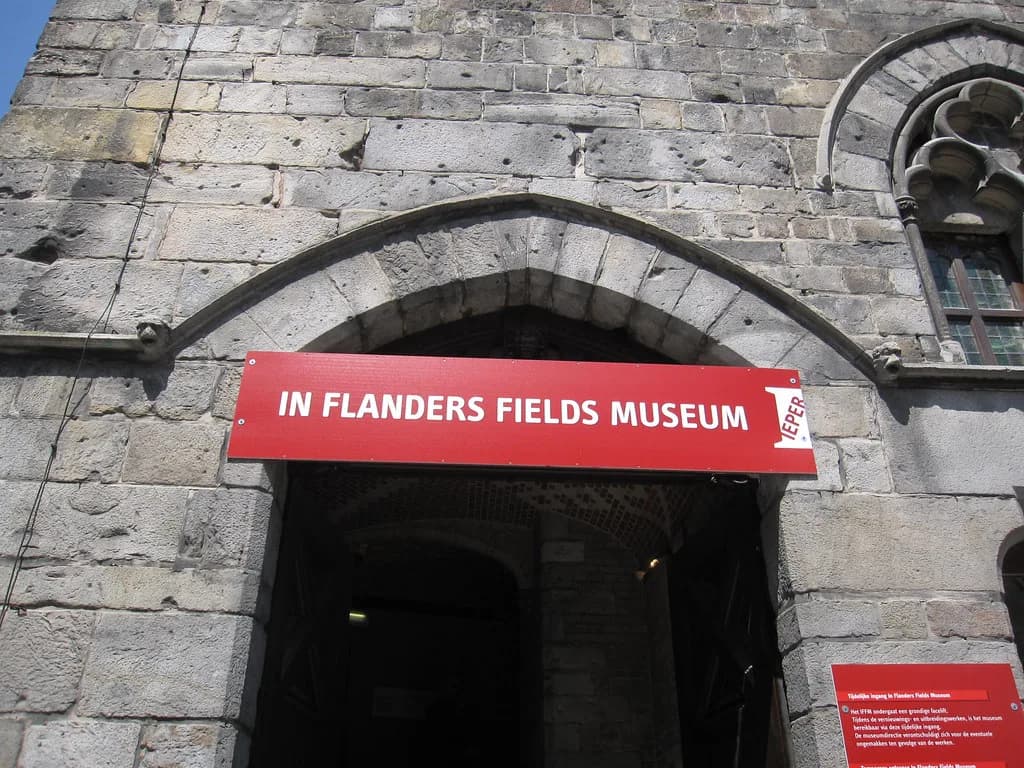
In Flanders Fields Museum, Ypres: the First World War told inside the Lakenhalle
In Flanders Fields Museum occupies the Lakenhalle, the rebuilt Cloth Hall on the Grote Markt in Ypres (Ieper), and takes the First World War as its entire subject. The building itself is part of the story, since the medieval hall was reconstructed after the war. Plan on two hours, and treat the museum as a memorial rather than an attraction.
Ypres is compact: the Menin Gate (Menenpoort) is a short walk from the Grote Markt, and the museum pairs naturally with a walk to the gate and the ramparts. Ypres works well as a full day from Ghent or Bruges, though staying overnight gives you a quieter evening in the square.
Museum Plantin-Moretus, Antwerp: a printing workshop and its books
Museum Plantin-Moretus preserves the Plantin printing house, a UNESCO-listed site where the workshops, presses and library survive in the family's former home. It suits anyone interested in how books were made in the 16th century rather than in paintings, and the historic rooms reward a slow hour and a half. It sits in the old centre, walkable from the Grote Markt and the cathedral.
Koninklijk Museum voor Schone Kunsten Antwerpen (KMSKA): old masters and moderns under one roof
KMSKA, the Royal Museum of Fine Arts in Antwerp, holds both old masters and modern art, so one ticket covers several centuries. That makes it the efficient choice if you have one museum slot in Antwerp and want range rather than depth. Allow two to three hours.
Antwerp's other art claim is Pieter Bruegel the Elder, and our guide to where to see Bruegel paintings in Belgium sets out which collections hold his work, including what hangs outside Antwerp. If you are building a painting-focused break, read that before you fix your days.
Museum aan de Stroom (MAS), Antwerp: the city as a port, floor by floor
The MAS, or Museum aan de Stroom, is a tower museum on Antwerp's docklands that treats the city as a port connected to the world. Its displays work upward through themes of trade, power and exchange, which makes it the best single stop for understanding why Antwerp looks the way it does. Set aside two hours, plus time on the roof terrace.
It sits away from the historic centre, so it works best as a first morning or a wet afternoon rather than something squeezed between cathedral and square. The walk from the old docks to the MAS passes the MAS surroundings and the harbour architecture, which is half the point.
STAM, Ghent: how Ghent grew, on the site of a former abbey
STAM, Ghent's city museum, occupies a former abbey site and uses a large floor map and a chronological route to show how the city expanded from its medieval core. It is the museum to choose if you want to understand Ghent's layout before you walk it, and an hour and a half is enough.
For paintings, Ghent's centrepiece is the Adoration of the Mystic Lamb in Sint-Baafskathedraal, which is a separate visit and a separate booking decision. Between STAM and the cathedral you can cover the city's shape and its most famous artwork in one day.
M Leuven: city collection and old masters in Leuven
M Leuven combines the city's art collection with older works, so it gives you both the local story and the painting tradition in one building. Leuven is small enough that the museum fits easily into a one-day visit alongside the Grote Markt and the old university buildings. Two hours is a fair allowance.
Leuven works as a half-day from Brussels or as a quiet stop between Antwerp and Liège. If you are following painters rather than cities, our overview of Flemish painters explains who worked where, which helps you decide whether Leuven's collection is worth the stop.
La Boverie, Liège: fine art in a park pavilion on the Meuse
La Boverie stands in a park on the Meuse in Liège, in a pavilion built for a world fair, and holds the city's fine art collection. The combination of park setting and collection makes it a calm two-hour stop, and it pairs well with the Montagne de Bueren and the Citadelle de Namur if you are travelling on to Namur.
Liège is the least-visited city on this list, which means it rewards travellers who want Wallonia rather than Flanders. Ostend's painter James Ensor is the other coastal-side draw; our guide to James Ensor in Ostend covers the house and where his work hangs.
Matching museums to the days you have and the city you are based in
With one day, stay in the city you are in and pick a single museum: Groeningemuseum in Bruges, KMSKA or the MAS in Antwerp, STAM in Ghent. With two days, add the Sint-Janshospitaal in Bruges or Plantin-Moretus in Antwerp, since both sit close to the first choice and neither takes a full afternoon.
With three or four days, base yourself in Bruges or Ghent and give one whole day to Ypres for In Flanders Fields and the Menin Gate. Trains from Brussels to Bruges take just under an hour, and the old town can be crossed on foot in half an hour, which makes Bruges the easiest base for a short break.
For a chocolate stop, Choco-Story in Bruges spreads across four floors with a hand-making demonstration, and Visit Bruges lists adult admission at 16 euros, seniors 65+ and students at 14 euros, children 3 to 11 at 10 euros, and under-threes free. Combi-tickets with the Fries Museum or the Diamond Museum are also offered. Belgium's chocolate reputation rests on brands such as Côte d'Or, Godiva, Leonidas, Mary and Neuhaus, several of which started in Brussels workshops.
Which museum should you build your break around?
For paintings, build the trip around Bruges and give the Groeningemuseum and Sint-Janshospitaal a day between them, then add Antwerp's KMSKA if you have a second city in you. For history and war, make Ypres the anchor and use Ghent as your base.
The remaining museums are second-visit material rather than first-trip essentials: the MAS for port history, STAM and M Leuven for city stories, La Boverie for a quiet Walloon half-day. If you only have a weekend, do not try to cross Flanders for a third museum; pick two and walk between them.
Explore more Belgium guides
Sources
Useful notes for your next trip
Optional updates to our guides.
You might also like



Continue reading
More guides you'll find useful


