
Castles in Belgium: Which to Visit and How to Reach Them
Castles in Belgium range from Ghent's moated Gravensteen to Beersel and the Gaasbeek estate. Here is what each is like and how to fit one into a city break.
On this page
Belgium holds more than 3000 castles, forts, palaces and manor houses, so the practical question is not which one is finest but which one fits the base you already have. Ghent gives you a medieval moated castle in the middle of town, Namur and Liège put the Meuse valley within reach, and several brick fortresses and romantic estates sit within easy striking distance of Brussels as a rail hub. This guide takes the main candidates one by one, says what each is actually like inside and out, and explains how to reach it on public transport so you can judge whether it deserves a day.
The castles here split into two broad families that suit different moods. Medieval fortresses such as Gravensteen and Beersel are about walls, moats and defence, while the estates of Flemish Brabant were largely built or heavily remodelled in the 18th and 19th centuries and look the part, with turrets, parks and long drives. Weather and time of year matter less than you might think, because a castle day is mostly spent indoors or in a walled garden, but spring and summer make the estate walks far more rewarding.
Why Belgium has so many castles
The density comes from geography and politics rather than any single royal building programme. The Low Countries were a patchwork of competing lordships, and possession of a strong tower or moated site was the practical way to hold land, tolls and river crossings. As prosperity grew, especially in the Flemish counties, many of those defensive structures were converted into comfortable residences, which is why so many Belgian castles look lived-in rather than ruined.
The result is a spread of types rather than a single style. You will find medieval forts and ruins, moated brick keeps, neoclassical mansions and 19th-century romantic rebuilds, often within an hour of each other. The heaviest concentration of medieval fortification lies along the Meuse near Liège and Namur, where castles were built to command the river valley, while the Flemish castles tend to be later or extensively reworked.
Which castles work from a city-break base
If you are based in Ghent, Gravensteen needs no planning at all: it sits in the city centre, a short walk from the Korenlei and the Graslei, and can be combined with Sint-Baafskathedraal and the belfry in a single morning. Bruges has its own small castle remnant, Het Steen, and the wider collection of castles near Bruges rewards a half-day with a car or a bike. Antwerp and Leuven are better used as bases for the Flemish Brabant estates and for Mechelen and its surroundings than for a single headline castle.
How many castles are there in Belgium? Belgium has more than 3000 castles, forts, palaces and manor houses, counting medieval ruins, moated keeps and later country estates. The figure is a broad count rather than a register of visitable sites, so treat it as a measure of density rather than a checklist.
What is the difference between a castle and a château? In Belgium the words overlap: château is simply the French term for a castle or country house, and many Walloon fortresses carry it while Flemish ones use kasteel. The useful distinction for a visitor is between medieval defensive structures such as Gravensteen and Beersel and the later, comfortable estates of Flemish Brabant.
Is there still a royal family in Belgium? Yes, Belgium is a constitutional monarchy, and the royal family remains part of the country's public life. The Royal Palace of Laeken is one of the residences associated with the monarchy, and it sits among the castles and estates around Brussels rather than being a museum open to casual visitors.
Namur and Liège are the strongest bases for the Meuse valley, where the castle of Bouillon and the riverside châteaux of the Ardennes sit within a day's reach. From Namur, the Citadelle de Namur is the obvious anchor, and the valley scenery is part of the point rather than a backdrop. From Liège, the same landscape works in the other direction, with the added advantage of a larger rail hub for connections.
Brussels is best treated as a transport hub for the castles south and west of the city rather than as a castle destination in its own right. Trains from Brussels Central and Schuman connect to Halle and Lot, which are the practical gateways for Beersel and Huizingen. If you are staying in the city anyway, the estates of Flemish Brabant are the obvious day out.
Gravensteen in Ghent: the moated medieval castle in the city centre
Gravensteen is the one Belgian castle you can visit without leaving the streets of a city break. The moated fortress sits in central Ghent, surrounded by water on most sides, with a gatehouse, a strong curtain wall and a keep that gives you roof-level views over the surrounding rooftops. It is compact enough to see in two hours, and it pairs naturally with the Graslei and Korenlei quays a few minutes' walk away. If towers rather than moats are your priority, the same short city walk in Ghent leads to the city's belfry, one of the belfries of Belgium on the UNESCO list.
The trade-off is that Gravensteen is a popular stop in the middle of a busy city, so it feels less like a country estate and more like a monument in a town. Go early, then walk the length of the Graslei for the view back towards the castle and the guild houses. It is the best first castle for anyone who wants the medieval experience without a train journey.
Beersel Castle: the brick fortress south of Brussels
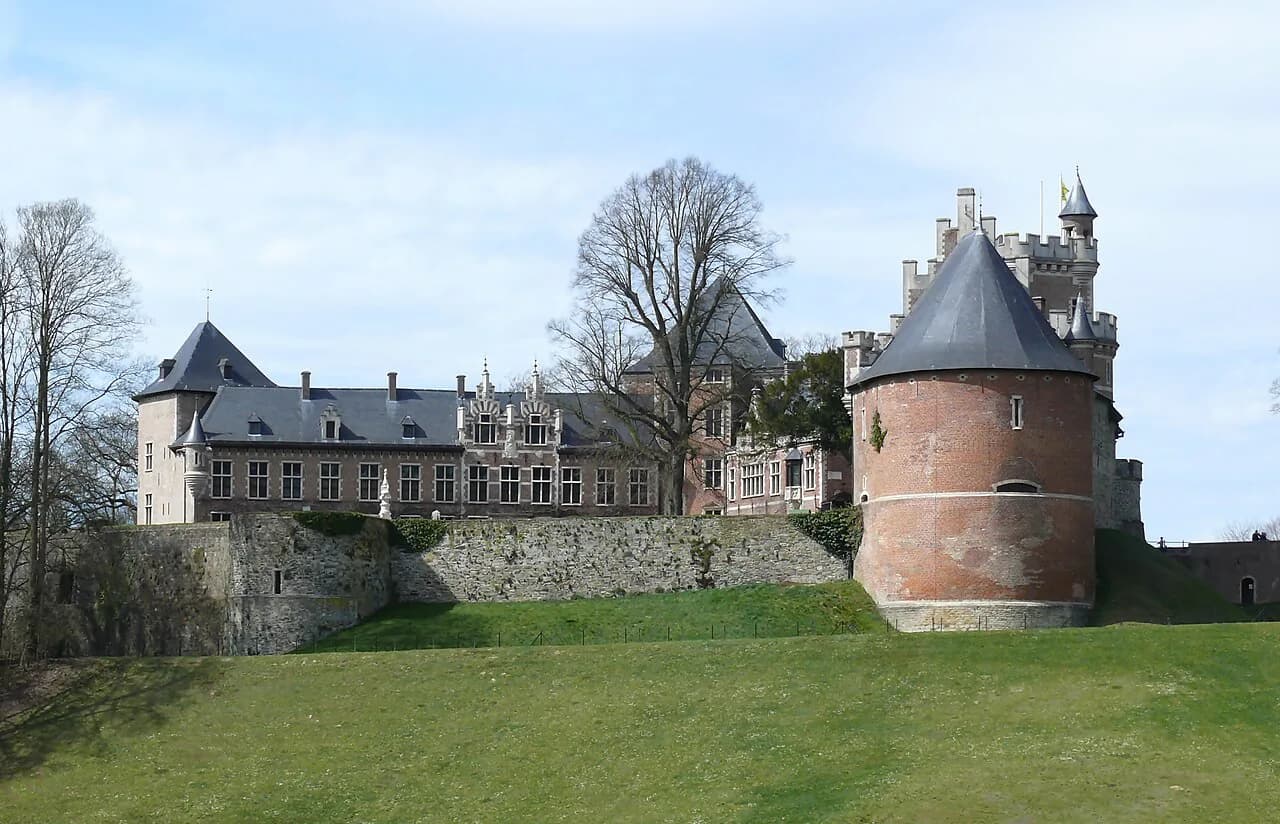
Beersel castle is a moated brick fortress that began as a fortification around 1300 and later formed part of the defence line around Brussels. It changed hands repeatedly during the wars that rolled across the Duchy of Brabant and the County of Hainaut, and by the early 16th century it had lost its military role and become a private residence before falling into ruin and being rebuilt. What you see today reads as a medieval stronghold rather than a mansion.
Reaching it without a car is straightforward: trains from Brussels serve Halle and Lot, and local buses run the last stretch to the castle. Beersel is also easy to combine with the Hallerbos bluebell woods in spring, making a full day out of a short rail hop. The castle is small enough that the grounds and the moat walk take as long as the interior.
Gaasbeek Castle and its estate
Gaasbeek Castle (Kasteel van Gaasbeek) is the romantic counterpoint to the brick fortresses: a turreted mansion set in a large park south-west of Brussels, with formal gardens, ponds and long walking paths. It is the kind of place where the estate matters as much as the building, and a half-day is the minimum if you want to walk the grounds properly. The interior has been restored and refitted over the centuries, so expect a lived-in aristocratic house rather than a bare medieval shell.
The estate is the reason to come. Allow time for the park and the surrounding village rather than rushing straight back to the train, and treat the castle as the centrepiece of a walk. It is also one of the easiest castles to combine with a Brussels base, since the journey is short enough to leave the afternoon free.
Bouchout Castle and the Botanic Garden at Meise
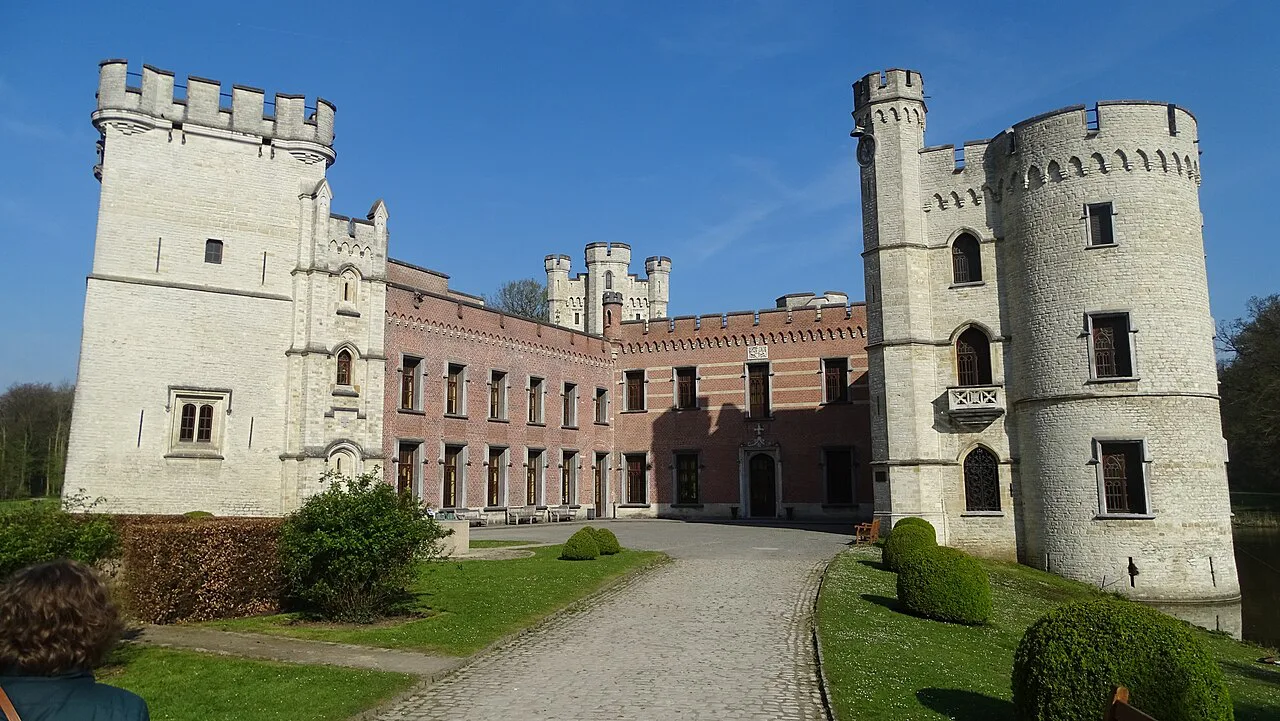
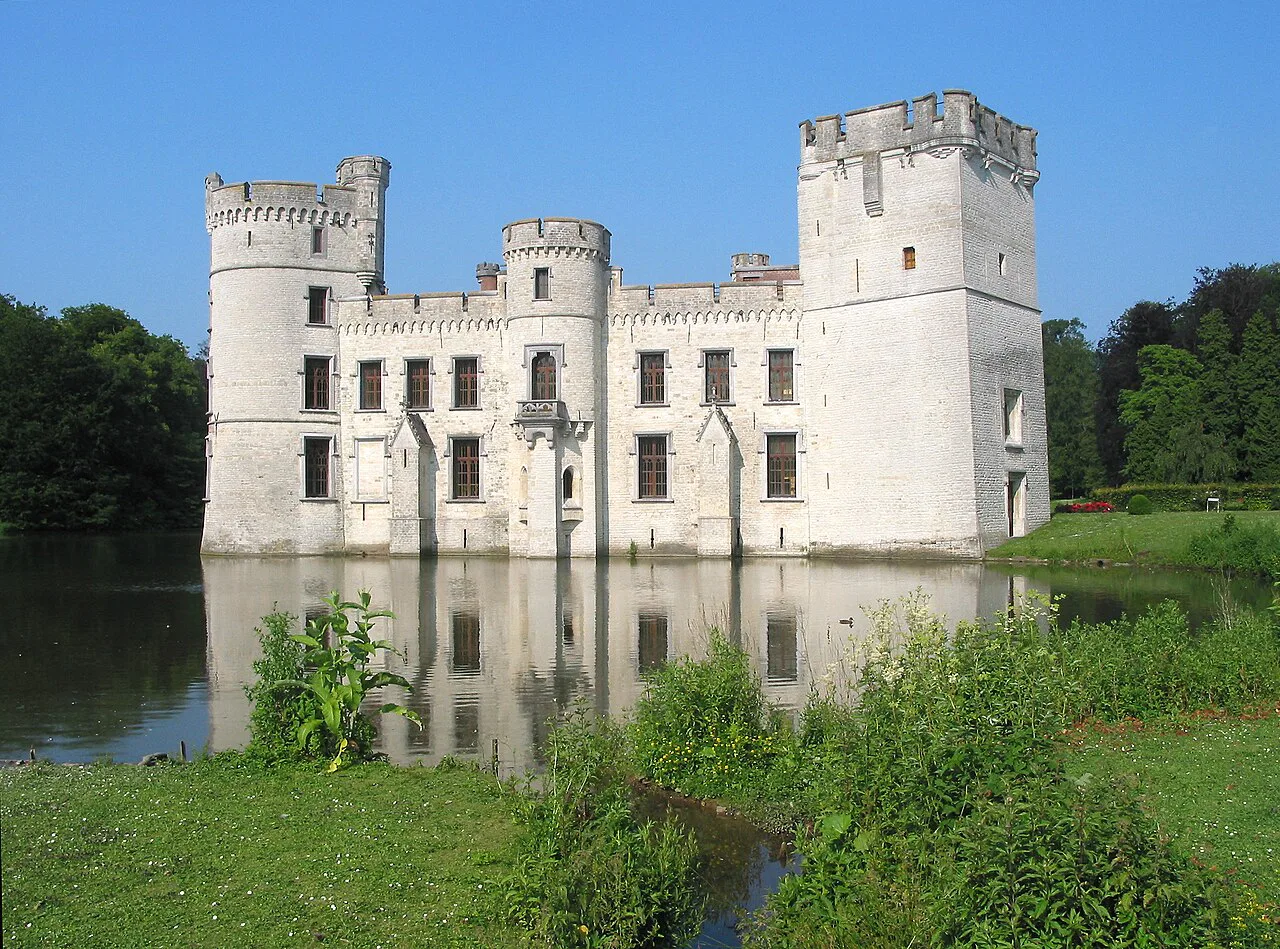
Bouchout Castle stands inside the Botanic Garden at Meise, north of Brussels, which changes the nature of the visit: you come for the gardens and the glasshouses and the castle is the historic centrepiece. It is a gentle, green day rather than a fortress day, and it suits travellers who want a long walk and a garden collection rather than battlements. Families and plant lovers will get more from it than castle purists.
Huizingen Castle and the provincial domain around it
Huizingen Castle is part of the Provincial Domain of Huizingen, and the castle building itself functions as a restaurant and event venue, so do not plan on a museum tour. The domain around it is the attraction: a large rock garden with streams and waterfalls, waymarked walking trails, play areas and an animal park with farm animals and a few exotic birds.
There is a small boating pond in front of the castle where pedal boats and rowboats can be hired, and an outdoor swimming pool that opens in the warmer months, with pre-booking needed for the pool. Parking is not the point here: trains from Brussels Central and Schuman reach Huizingen station, though it is a walk of roughly 1.4 km from there. For less walking, use Halle or Lot station and pick up local bus routes 153 or 154.
Château de La Hulpe and the Solvay domain
The Château de La Hulpe was built in the 19th century in a Flemish neoclassical style and later became the summer home of the industrialist Ernest Solvay, whose name the surrounding domain carries. The interior was reworked by Victor Horta, and the castle and grounds were eventually given to the Belgian state on condition that they be used for cultural projects. It is a working cultural venue as much as a monument, so the grounds rather than the rooms are usually the reason to go.
The Solvay domain has several signposted walks in the four to six kilometre range that loop through the park and give you the classic view of the castle facade framed by green pillars. Come for a walk and a picnic rather than an interior visit. It is one of the best castles near Brussels for a relaxed afternoon out.
The castles of the Meuse valley near Namur and Liège
The Meuse valley is where Belgium's medieval fortifications are concentrated, because the river was the strategic axis of the region and the castles were built to hold it. From Namur, the Citadelle de Namur gives you the scale of the valley, and the castle of Bouillon makes a substantial day out that rewards an early start. The Ardennes setting means the scenery is part of the experience, not just the building.
Two smaller châteaux round out a Meuse-based trip. Vêves castle is a romantic turreted fortress in the Ardennes, and Walzin castle sits dramatically on a rock above the Lesse. Both suit travellers who have already seen the city sights and want a full day in the countryside; neither is a quick city-centre stop.
Hoeilaart and Rivieren: smaller castles within easy reach of Brussels
Not every castle day needs a headline sight. Hoeilaart and Rivieren are smaller estates south of Brussels, and they work well as a half-day combined with a walk in the surrounding countryside. They are the kind of place to visit when you have already covered the big names and want a quieter afternoon, rather than a first introduction to Belgian castles.
Castle hotels and staying overnight in a historic building
Belgium has a cluster of castle hotels and bed-and-breakfasts in converted castles, manor houses and monasteries, with options across the provinces including Antwerp, Flemish Brabant, Liège and Namur. Kasteel van Ordingen is one such boutique castle hotel, and the appeal is the building and grounds rather than proximity to a city centre. The trade-off is location: these properties are usually set in countryside, so a car or a taxi from the nearest station is often part of the plan.
Choosing one castle that fits your day and your base
Match the castle to the base rather than the other way around. Ghent gives you Gravensteen with no travel at all, Brussels gives you Beersel, Huizingen and La Hulpe by train and a short bus or walk, and Namur and Liège open up the Meuse valley and the Ardennes châteaux. If you only have one castle day in a short city break, pick the one you can reach without a hire car.
Then decide what you want from the visit: walls and water, a garden and a walk, or a lived-in mansion. Fortresses such as Gravensteen and Beersel are compact and satisfying on a wet day, while Gaasbeek and La Hulpe are better in dry weather when the park is the main event. Anything based on a castle estate is worth treating as a half-day outdoors rather than a quick indoor stop.
Which castle earns your one free day?
If you are staying in Ghent, spend the morning at Gravensteen and walk the Graslei afterwards; it is the least planning for the most medieval atmosphere. If you are in Brussels, take the train to Halle or Lot for Beersel and add the Hallerbos in spring, or head to Gaasbeek or La Hulpe for a park-and-mansion day. If you are based in Namur or Liège, give the day to the Meuse valley and Bouillon.
Explore more Belgium guides
Frequently Asked Questions
How many castles are there in Belgium?
Belgium has more than 3000 castles, forts, palaces and manor houses, counting medieval ruins, moated keeps and later country estates. The figure is a broad count rather than a register of visitable sites, so treat it as a measure of density rather than a checklist.
What is the difference between a castle and a château?
In Belgium the words overlap: château is simply the French term for a castle or country house, and many Walloon fortresses carry it while Flemish ones use kasteel. The useful distinction for a visitor is between medieval defensive structures such as Gravensteen and Beersel and the later, comfortable estates of Flemish Brabant.
Is there still a royal family in Belgium?
Yes, Belgium is a constitutional monarchy, and the royal family remains part of the country's public life. The Royal Palace of Laeken is one of the residences associated with the monarchy, and it sits among the castles and estates around Brussels rather than being a museum open to casual visitors.
Can you visit the castles without a car?
Several are easy by rail: Gravensteen is in central Ghent, Beersel and Huizingen are reached via Halle or Lot station with a bus or short walk from there, and the Meuse valley sites work from Namur and Liège. The smaller Ardennes châteaux are the ones where a car makes a real difference.
Sources
Useful notes for your next trip
Optional updates to our guides.
You might also like



Continue reading
More guides you'll find useful





