
Gaasbeek Castle: What to See Inside and in the Park
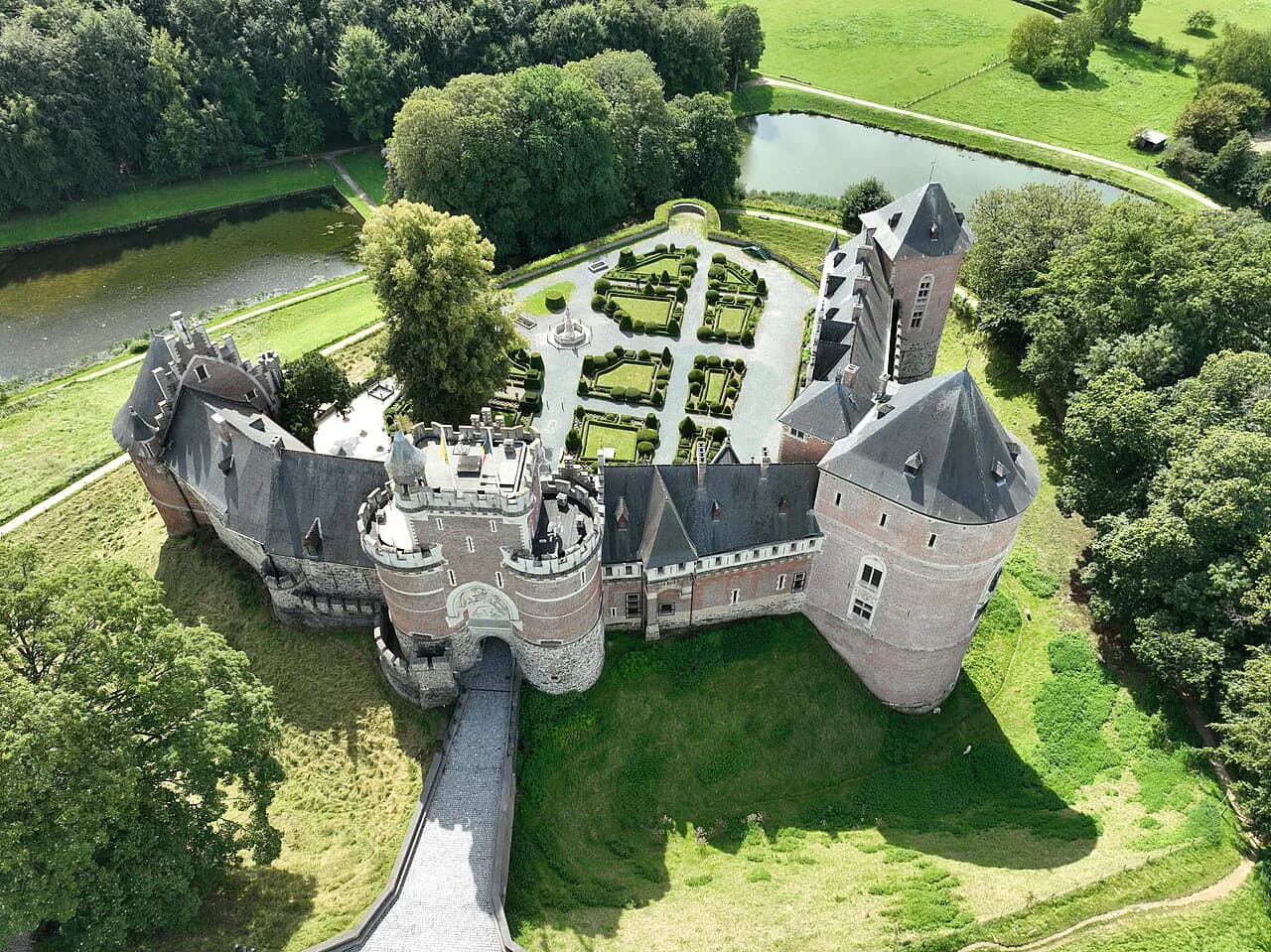
Gaasbeek Castle near Lennik is a neo-Renaissance museum castle with a 49-hectare park, chapel, triumphal arch and neo-Gothic barn to explore on foot.
On this page
Gaasbeek Castle is a museum castle near Lennik, in the Pajottenland south-west of Brussels, and it rewards a half day rather than a quick photo stop. The building you see is largely a late 19th-century neo-Renaissance remaking of a much older site, so the interest lies in the interiors and the park as much as the walls. This guide covers what stands on the estate, the story behind the rooms, and how the visit compares with the city-centre castles of Ghent and Bruges.
What Gaasbeek Castle is and where it sits
The castle stands at the edge of Gaasbeek village in the rolling Pajottenland countryside, roughly south-west of Brussels and beyond the Brussels ring. Its history runs back to around 1240, when the Land van Gaasbeek was founded on the western side of the Duchy of Brabant as a defence against Flanders and Hainaut, and the castle itself is attributed to Godfrey of Louvain. In nearly eight centuries the site was occupied, looted, burned and rebuilt repeatedly, passing by inheritance and sale through families including the van Hoorne, van Egmont and Arconati Visconti.
That layered past is why the building can look medieval from a distance and decidedly 19th-century inside. The Flemish Community has owned Gaasbeek since 1980, and the estate opened to the public as a museum in 1924 after its last private owner gave it to the Belgian state. For a wider shortlist of Belgian castles by region and character, the Castles in Belgium Worth Planning a Day Around overview is the sensible starting point.
The Marquise Arconati Visconti and her interiors
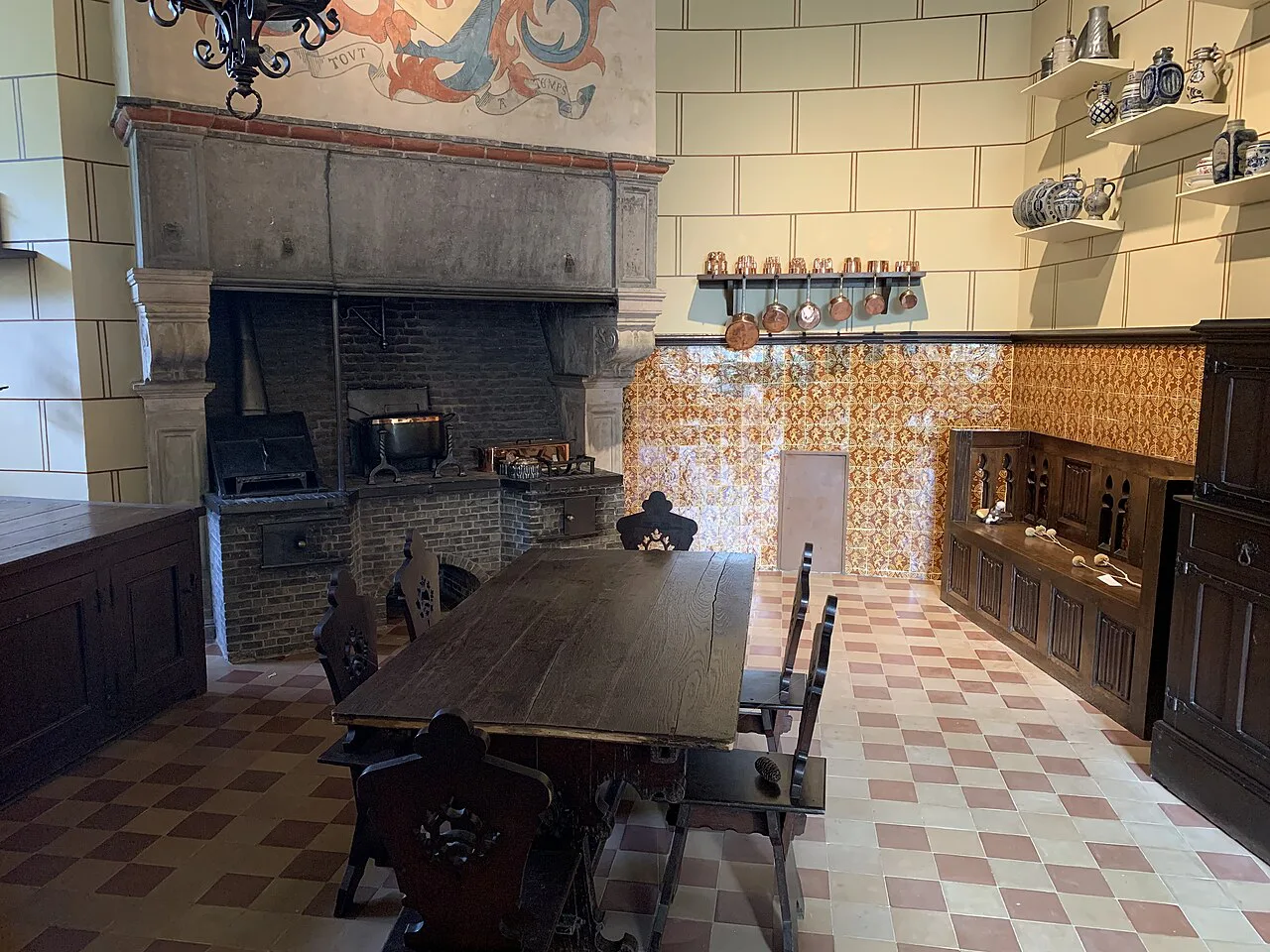
The castle's personality comes from Marie Peyrat, Marquise Arconati Visconti, a Parisienne and political activist who inherited the estate through her husband and donated it to the Belgian state in 1921, together with the park. She found the castle dilapidated and, in 1889, commissioned a Brussels architect to remake it as an escapist refuge in which she could live in the past. She bought furniture and objects at auction to fit out period rooms, which is why the interiors read as a deliberate staging of earlier centuries rather than an untouched family home.
Her taste was contested: the neo-styles she chose fell out of favour with museum thinking in the 1960s and 1970s and later came back into favour. The house was restored and reconstructed between 2020 and 2023, and the castle reopened to visitors in 2024 in the spirit she intended. Go expecting a curated late 19th-century dream of the Middle Ages, not a castle whose fabric tells a continuous medieval story.
What you see inside: period rooms and the art collection
Inside, the visit is a sequence of furnished rooms hung with the marquise's permanent art collection, with interiors matched to the periods she wanted to evoke. The effect works best if you look at it as a portrait of one wealthy, nostalgic collector rather than as a survey of Belgian furniture across the centuries. The house is the core of the visit, so give it your attention before the grounds.
The park: Gloriette, chapel, triumphal arch and barn
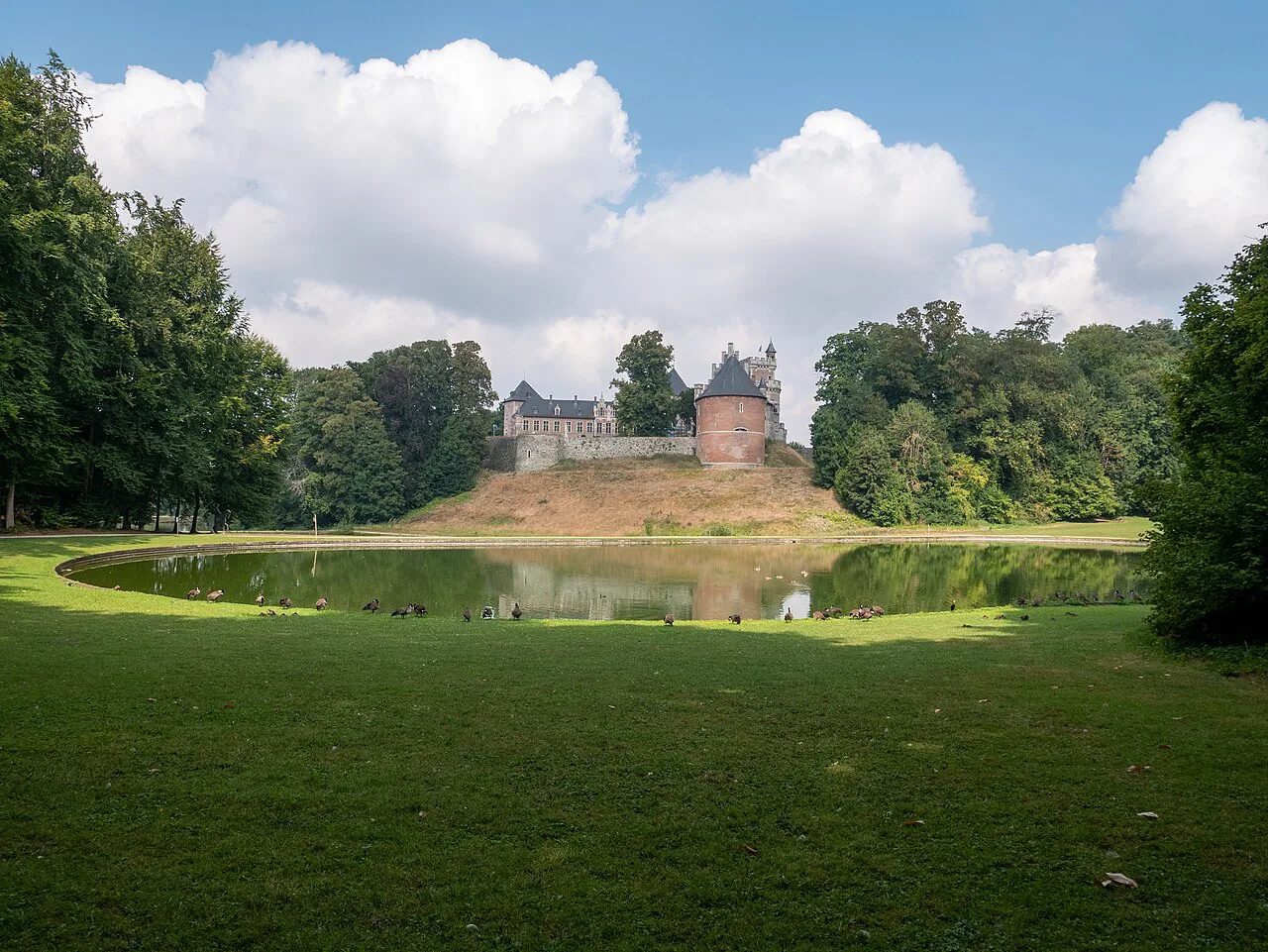
The park covers approximately 49 hectares and is a substantial part of the day, not a strip of grass around the walls. Named features to tick off include the Gloriette, Saint Gertrude's Chapel, the Triumphal Arch, the Octagon and the neo-Gothic barn, all set among woodland and avenues. Allow real walking time between them, and treat the park as the place to slow down after the rooms.
The museum garden, fruit repository and beehives
Close to the house, the museum garden adds a productive, working dimension to the estate, with a fruit repository and beehives among its features. It is the part of the visit that suits anyone more interested in growing and keeping than in gilt and tapestry, and it sits naturally on the walk between the castle and the wider park.
How long a visit takes
Budget half a day: something in the region of two hours for the house and its collection, then at least an hour and a half on foot in the park to reach the chapel, triumphal arch, octagon and barn without rushing. If the weather is good and you want the museum garden and a slow loop of the grounds, a full afternoon is the more honest allowance. The trade-off is that Gaasbeek is a single-site outing in open country, so it fills a day only if you pair it with the surrounding Pajottenland landscape.
How to reach Gaasbeek from Brussels
Gaasbeek sits near Lennik, south-west of Brussels beyond the ring, which makes it feasible as a half-day outing from the city; a car gives the most flexibility for the final approach and for combining the castle with the surrounding Pajottenland countryside. The visit begins and ends outdoors, so plan the house for the middle of the day.
Gaasbeek is one of several moated or wooded castles within reach of the capital. Beersel castle lies closer to Brussels and fits neatly with the Duchy of Brabant history sketched above, while Loppem castle and Ooidonk castle sit out towards Bruges and the River Leie.
Gaasbeek compared with Ghent's Gravensteen or Bruges' Belfort
The comparison is really about setting. Gravensteen in Ghent and the Belfort in Bruges drop you into dense, walkable city centres where a castle or tower is one stop on a day of squares, canals and churches; Gaasbeek gives you one estate in open country with a long park walk attached. Choose Gaasbeek when you want interiors, gardens and quiet, and the city monuments when you want a castle folded into a broader city break.
Across Belgium the same choice recurs in different forms: the castle of Bouillon pairs a dramatic river gorge with an Austrian Tower and the Scriptura Museum, the Ardennes étape of Vêves castle offers a fairy-tale outline in woodland, and the Château de Walzin is seen from the riverbank rather than toured room by room.
Which castles to pair with a Gaasbeek day
If you are touring by car, Gaasbeek combines well with the quieter, rural castles rather than with the big city sights. Alden Biesen, once the headquarters of the Teutonic Order, and Modave castle in the Condroz both reward a detour for visitors chasing architecture over crowds.
Is Gaasbeek worth the trip from Brussels?
Yes, if you want one unhurried estate with furnished rooms, a real art collection and a long park walk, and you are content to make it the day's single destination. It is not the choice for anyone who wants a castle amid city streets, and it is not a substitute for Ghent or Bruges. Check the estate's own site for the current opening season and ticket arrangements before you set out.
Explore more Belgium guides
Frequently Asked Questions
Do I need to book Gaasbeek Castle in advance?
The estate publishes its own ticket arrangements and any timed entry rules, and those are the details to rely on rather than a third-party page. Decide your date first, then check the castle's official information before travelling, especially if you are coming from Brussels for a single-site day.
Can I visit the park without going inside the castle?
The park is a substantial part of the estate, with the Gloriette, Saint Gertrude's Chapel, the Triumphal Arch, the Octagon and the neo-Gothic barn spread across roughly 49 hectares. Whether park-only access is offered on your date is a question for the estate's own visitor information.
How does Gaasbeek compare with Bouillon or Vêves?
Gaasbeek is a furnished museum castle with a large landscaped park in the Pajottenland near Brussels. The castle of Bouillon is built around a dramatic river-gorge site with an Austrian Tower and the Scriptura Museum, while Vêves castle is a woodland fairy-tale outline in the Ardennes. Pick by setting and by how much interior you want to see.
Sources
Useful notes for your next trip
Optional updates to our guides.
You might also like



Continue reading
More guides you'll find useful





