
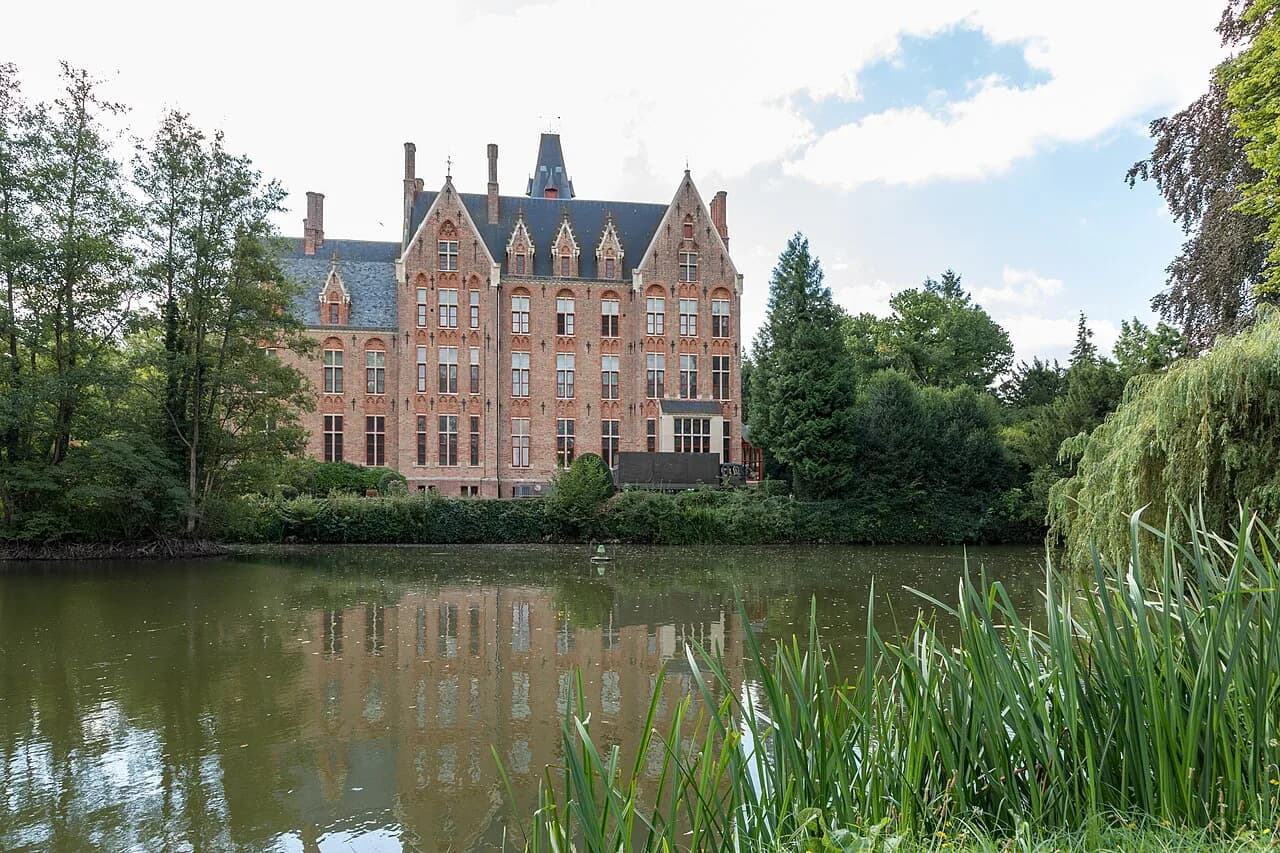
Loppem Castle near Bruges: Visiting the Neo-Gothic Château
Loppem Castle near Bruges is a neo-Gothic house with original interiors, a Van Caloen art collection and a park with ponds and a maze. Here is how to plan it.
On this page
Loppem Castle (Kasteel van Loppem) is worth the short trip from Bruges if you care about Gothic Revival architecture and Old Master painting, because it is a 19th-century house kept largely as it was built rather than a ruined fortress. It stands at Steenbrugsestraat 26 in Zedelgem-Loppem, a village on Bruges's doorstep, and individual visitors are welcome from March to mid-November. This guide covers the 1858–1863 house, the Van Caloen collections inside it, the park with its ponds and maze, and how to judge the detour.
Set aside a half day rather than a full one: the house and collections reward a slow hour or two, and the park adds a walk afterwards. Treat Loppem as a contrast to Bruges's brick-gabled medieval centre, not a substitute for it.
Where Loppem Castle sits
Loppem is part of Zedelgem, west of Bruges, and the castle's address places it squarely in the village rather than in open countryside. That makes it one of the easiest castle outings from the city, and a natural companion to an overview of Castles in Belgium Worth Planning a Day Around if you are stringing several together.
Unlike the moated medieval strongholds that define the genre elsewhere, this is a 19th-century monument: a neo-Gothic ensemble rather than a defensive ruin. If you want ramparts and dungeons, look at Beersel castle instead; if you want interiors, furniture and paintings in situ, Loppem is the stronger choice.
The house: a neo-Gothic ensemble built for the Van Caloen family
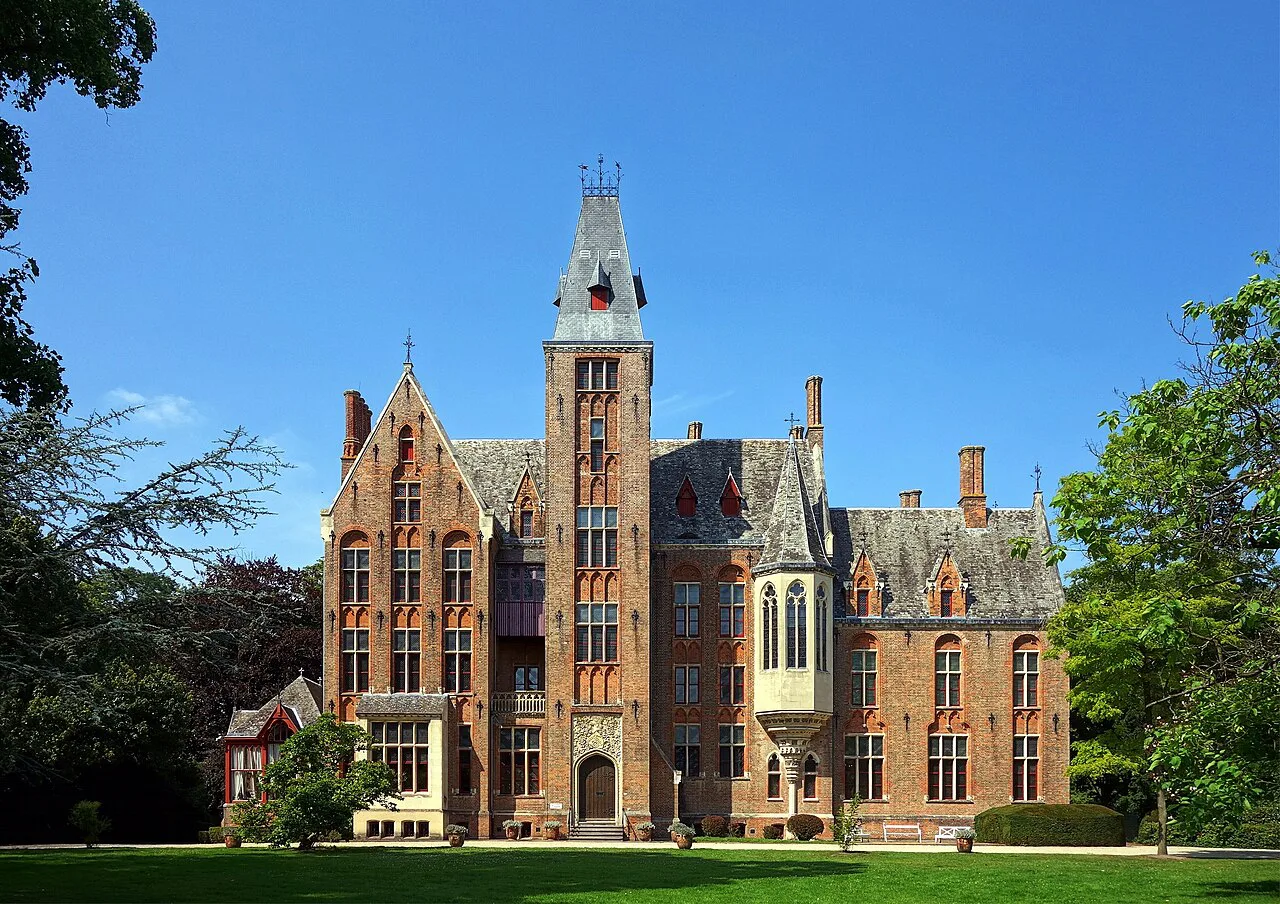
Baron Charles van Caloen and his wife, Savina de Gourcy Serainchamps, built the romantic château between 1858 and 1863, and the architecture and interiors have been kept in their original state. The Fondation Jean van Caloen now looks after the building and opens the house and grounds to visitors.
That survival is the point. Many Belgian castles show you empty rooms and a story; here the neo-Gothic decoration, the furniture and the family's art sit together as one ensemble, which is why the house reads as a home rather than a gallery. The other place near Bruges that shows what a castle could have looked like had it lasted is Ooidonk castle, a rebuilt fortress on the River Leie north-east of the city.
What you see inside: apartments, staircase and chapel
The ground-floor apartments and interiors introduce life in the 19th century and the very beginning of the 20th, room by room rather than as a single state circuit. A grand staircase leads to the first floor and the family chapel, so the visit has a clear upward spine.
Upstairs you also see the room where King Albert I and Queen Elisabeth stayed in 1918, a royal connection that gives the house a national as well as a family history. Read the rooms as layers: the 1860s shell, the 1918 episode, and the collections added later.
Architecturally, Loppem belongs with the romantic revival houses rather than the medieval survivors. Gaasbeek Castle (Kasteel van Gaasbeek) in the Pajottenland south-west of Brussels is the closest comparison in spirit, a castle reimagined in the 19th century and filled with collections.
The art collections of Jean and Roland van Caloen
The art collections assembled by Jean and Roland van Caloen are displayed in separate rooms and range from European medieval works to Asian and African art, which surprises visitors expecting a purely Flemish country-house display. Treat the medieval material as the core and the wider world as the family's curiosity cabinet.
The painting collection traces art in the Low Countries from the Flemish Primitives to the 19th century, with work by Pauwels van Overbeeck (I), Frans Pourbus (I) and Gillis van Tilborgh (II), plus followers of Bosch, Rubens and Van Dyck. Sculpture is mostly 16th and 17th century Netherlandish, including a piece by Jan Borman (III) from around 1520.
Look out for four early 18th-century garden statues, two signed by Ignatius van Logteren, and a 15th-century Brussels stained-glass Pietà attributed to Vrancke van der Stockt or his workshop. The library holds printed works, emblem books and prints from the Low Countries, some from the 16th century, though you should expect to see it as a collection rather than a reading room.
The park: ponds and a maze
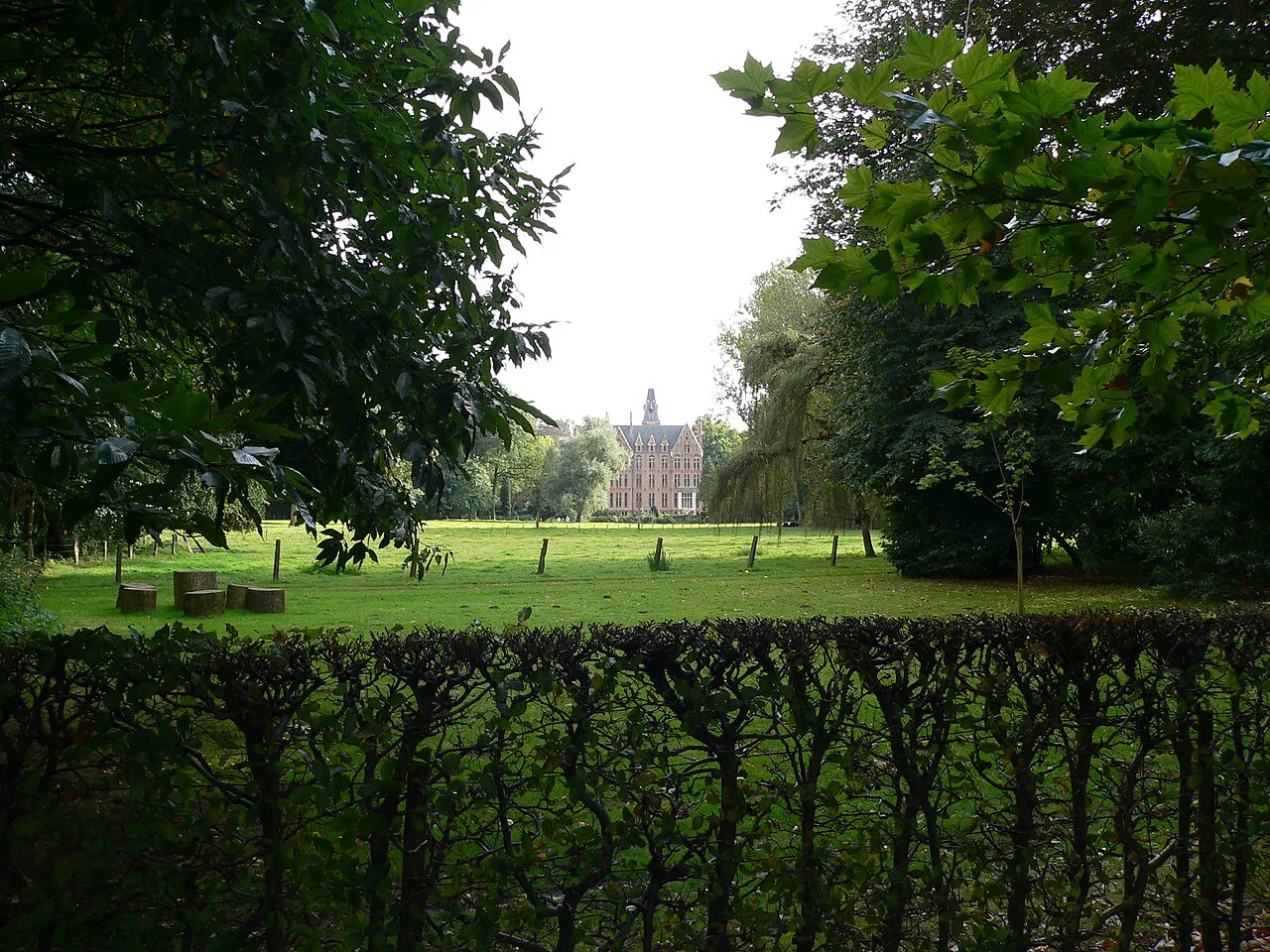
The castle sits in a romantic park with several ponds and a labyrinth, and the grounds are part of the visit rather than a route to the door. Allow time to walk the water and the maze after the interiors; it is the part children and non-museum companions tend to remember.
If your taste runs to woodland and water settings rather than formal gardens, the Vêves castle in the Ardennes offers a different kind of romantic setting, while Walzin castle is seen from the river valley below rather than from inside. Loppem's advantage is that the park and house sit together on one estate, a short walk apart.
When individual visitors can go
Individual visitors are welcomed from March to mid-November, so a late-autumn or winter Bruges break puts the house out of reach for independent visits. Groups are received all year by reservation, which matters if you are travelling as an organised party.
The castle publishes its own hours and prices, and those can change by season and around holidays, so confirm the day you plan to travel against the castle's own site before building your itinerary around it. A midweek Bruges stay is easier to pair with a Loppem visit than a weekend crammed with city sights.
Tickets and how to buy them
The castle's own site is the place to check what a visit costs and what a ticket includes, since admission details are published there rather than by any third party. Give the house a fixed slot in your day: it is a single small destination rather than a district you can drift through.
Belgium's castle circuit varies widely in how it sells admission: some estates charge separately for gardens, and some only open for guided slots. Compare before committing a day, especially if you are weighing Loppem against a larger property such as Modave castle in the Condroz.
Getting to Loppem from Bruges and how long to allow
Loppem is a short hop from Bruges, and the practical approach is to treat the journey as a local outing rather than a day trip and to arrive for the start of the visiting window. Do not build a tight schedule around the castle and a Bruges museum on the same afternoon.
Allow a half day in total: an hour or two inside for the apartments, chapel, royal room and collections, then a walk through the ponds and maze. If you have only a two-day Bruges break, slot Loppem into the quieter of the two days and keep the other for the Markt, Burg and Belfort.
For a wider sweep of alternatives within reach of the city, the guide to castles near Bruges sets out which properties repay a detour and which are best left for another trip. Loppem's case rests on its interiors; a fortified shell with a view is a different purchase.
Is Loppem Castle worth it, and who will enjoy it most?
Go if you like Gothic Revival houses, family collections and Old Master painting in the rooms they were hung for; skip it if your idea of a castle is battlements and a moat. The interiors and the 1918 royal room are the reasons to make the trip, and the park with its ponds and maze makes it a comfortable half day rather than a rushed stop.
Readers who want the full survey of Belgian castle types, from medieval keeps to country houses, should start with the guide to Castles in Belgium Worth Planning a Day Around and work outwards. If you are heading east instead, Alden Biesen, a former Teutonic Order commandery in Limburg, offers a contrasting institutional story.
Should you add Loppem to your Bruges itinerary?
Add Loppem if you can visit between March and mid-November, want to see a 19th-century house with its interiors and collections intact, and can give it a half day including the park. Leave it out of a winter city break, when individual visits outside that season are not available.
Check current opening hours and ticket details on the castle's own site before you fix the date, then plan the rest of the day around Bruges rather than around Loppem. For a medieval contrast with dungeons rather than drawing rooms, the Castle of Bouillon in the Ardennes makes the opposite kind of day out.
Explore more Belgium guides
Frequently Asked Questions
Do you need to book Loppem Castle in advance?
Individual visitors are received from March to mid-November, and the castle's own site is the place to check ticket details before you travel. Groups can visit all year by reservation, so an organised party should arrange the date directly with the castle.
Is Loppem Castle a medieval castle?
No. It is a 19th-century neo-Gothic house built for Baron Charles van Caloen and his wife, Savina de Gourcy Serainchamps, with its architecture and interiors kept largely in their original state. That makes it a house-and-collections visit rather than a fortress or ruin.
How long does a visit to Loppem Castle take?
Plan a half day: an hour or two for the ground-floor apartments, the grand staircase, the family chapel and the room used by King Albert I and Queen Elisabeth in 1918, plus the art collections. The romantic park with its ponds and maze is best walked afterwards at an unhurried pace.
Can you visit Loppem Castle with children?
The park with its ponds and maze gives children something to do beyond the interiors, and the castle presents itself as an outing for all ages. Whether a particular child will enjoy the neo-Gothic rooms and Old Master paintings depends on their patience for museum-style visiting.
Sources
Useful notes for your next trip
Optional updates to our guides.
You might also like



Continue reading
More guides you'll find useful





