
Hallerbos Bluebells: When to Go and How to Visit the Blue Forest
Plan a spring visit to Hallerbos, the bluebell forest near Halle. Learn when the bluebells peak, the paths and rules, and how to arrive by shuttle or bike.
On this page
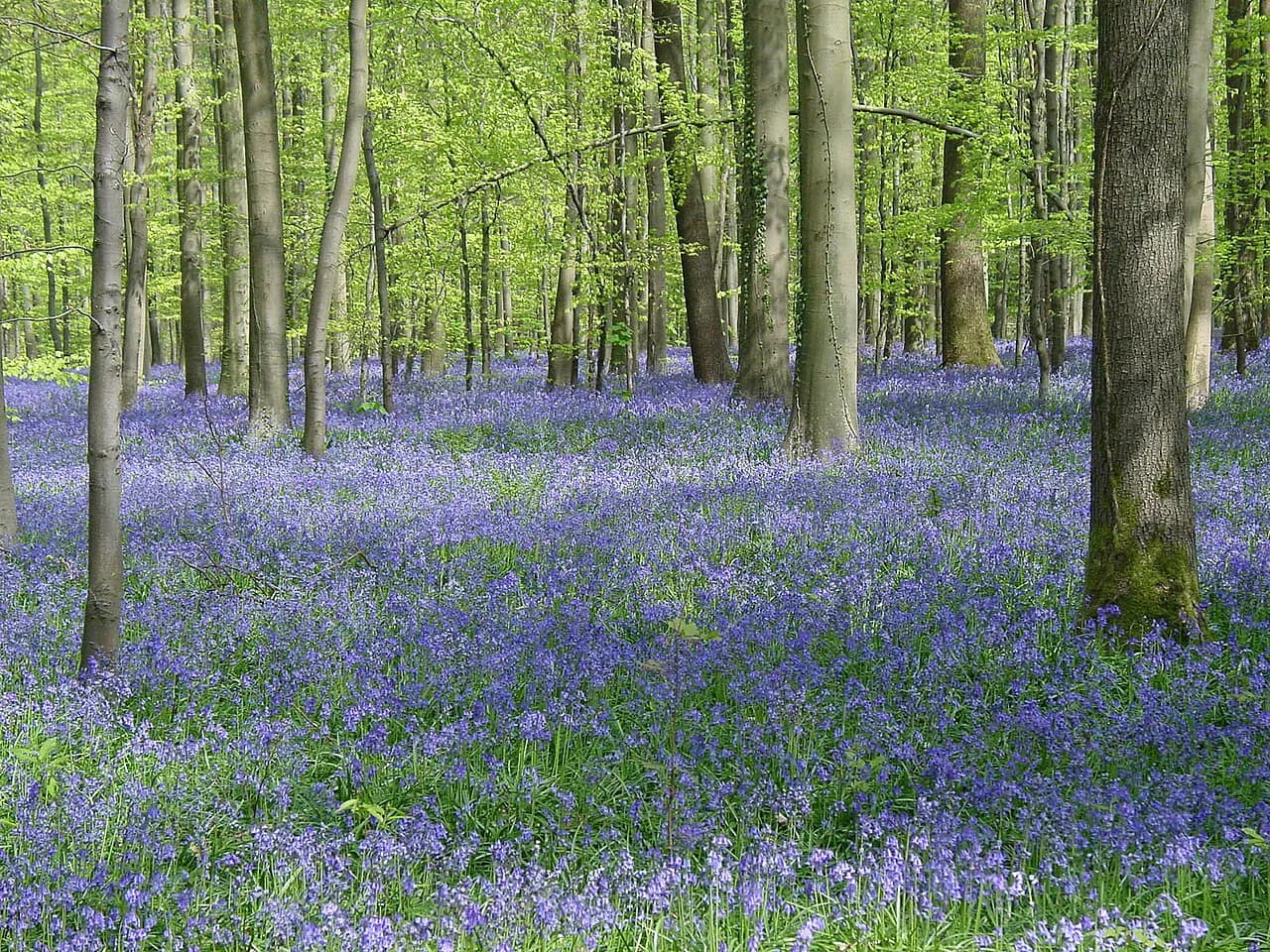
Hallerbos is a mixed wood at Halle in Flemish Brabant, roughly 25 km south-west of Brussels, and it earns the name Blue Forest for a few weeks each April when its bluebells carpet the ground beneath the trees. This guide covers the bloom itself, the rules that protect it, transport from Halle, and how to build the walk into a Belgian city break.
Go for the flowers, not for facilities: entry is free, the forest is open every day from early morning until late evening, and there is nowhere inside to buy food or drink, so bring your own water. Weekends and public holidays draw the biggest crowds, and a free shuttle from Halle copes with them better than the limited parking at the forest edge.
Where Hallerbos sits and why it matters
The forest lies beside the town of Halle, just beyond the Brussels ring, and its name is simply the forest of Halle. For city-break travellers it is one of the few genuinely wild spectacles within easy reach of the Belgian art cities, and it pairs well with a spring trip timed on the best time to visit Belgium.
Think of it as a half-day outdoors rather than a full sightseeing stop: the draw is the beech woodland floor, not architecture or museums. If your trip is already built around Bruges, Ghent or Antwerp, Hallerbos works best as a deliberate detour on a day when the bloom reports look promising.
When the bluebells flower
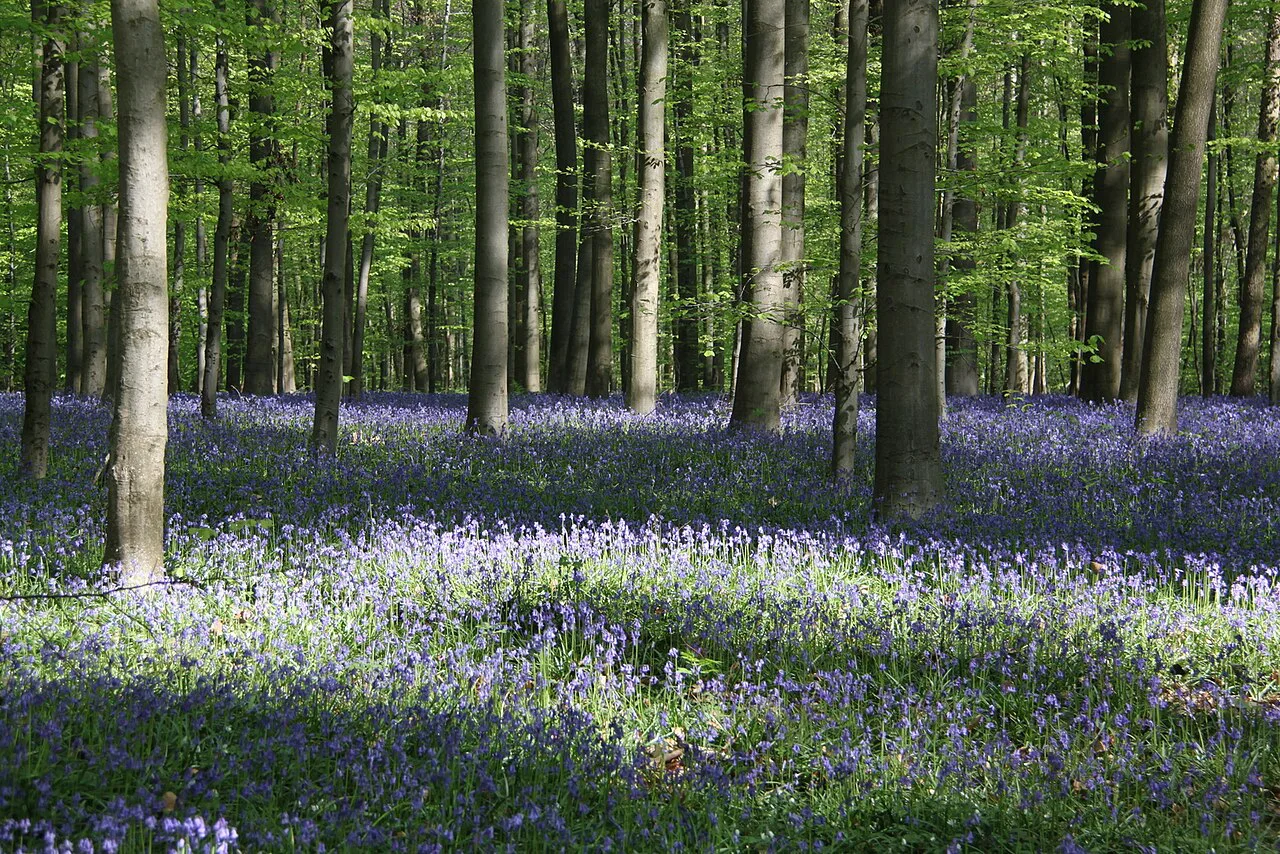
The bluebells bloom in April and usually reach their peak around mid-April, though the exact timing shifts with the weather each year. Flowering does not happen everywhere at once: open, sunny areas tend to turn first, while sections down in the valleys follow a little later, so a visit in the first half of the month may show patchy colour rather than a solid carpet.
That sequencing is useful for planning. If you want the densest colour, aim for the middle of the month, when the more open and sunny areas will have turned first and the valley sections tend to follow a little later. If your dates are fixed early, go anyway and treat the first flowers as a bonus.
What else is flowering along the paths
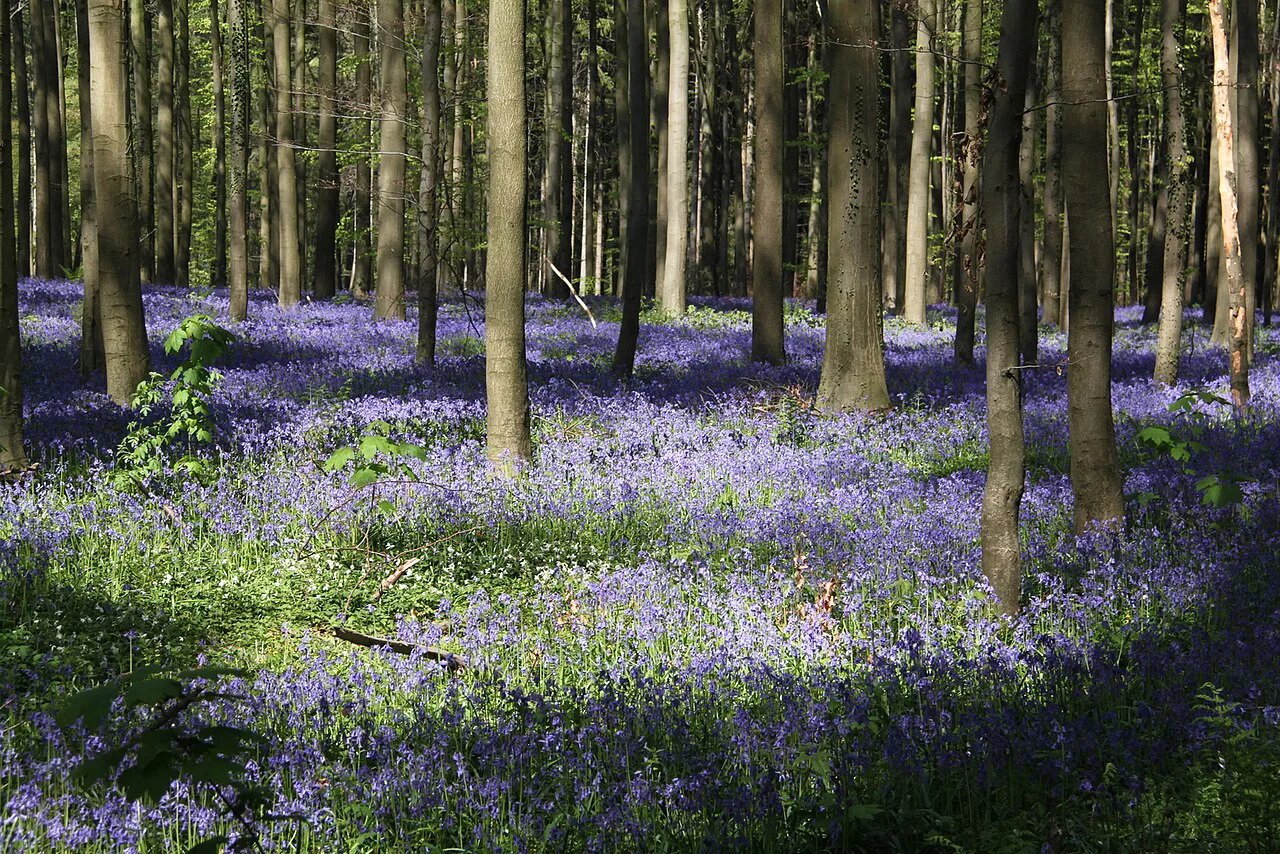
Bluebells are not the only spring show. Along the way you can spot wood anemones and moschatel, and the white wood anemones often open before the blue haze arrives, so a walk has interest even outside peak bloom.
This matters if you are travelling with a flexible schedule: a slightly early visit trades the full blue carpet for a mix of white and blue that many walkers find just as rewarding. Later in April the colour concentrates in the cooler, shadier sections.
Staying on the paths: the rule that protects the wood
Visitors must stay on the official paths at all times, including when stopping for photographs. Bluebells are fragile and damage easily underfoot, and straying off the trail is the main way a good visit harms the flowers. Wear proper walking shoes, because the paths are gravel and dirt and turn muddy after rain.
Treat the paths as the whole point of the visit rather than an inconvenience. The forest is a managed wood, not a park, and the rule is enforced in spirit by everyone who walks it; a few steps off the trail leave a scar that lasts the season.
Dogs, drones and litter: the rules in practice
Dogs are allowed but must be kept on a leash, drones are not allowed, and picking flowers or leaving rubbish behind is prohibited. There are no cafés or food stands inside the forest, so pack out whatever you bring in and carry water with you.
These rules make for a straightforward visit: leave the drone at home, keep the dog close, and take only photographs. It is worth telling anyone in your group before you set off, since the paths are shared with cyclists and horse riders in places and a loose dog quickly becomes a problem.
Getting there without a car
The easiest approach on busy days is to take the train to Halle and pick up the free shuttle, which runs on weekends and public holidays, including 1 May, and links the town centre, the station and the main forest entrances. Regular TEC and De Lijn buses also serve the area, so you do not need a car at all.
Cycling is a good middle option: the forest is around five kilometres from Halle station, and bikes can be rented at the station and are free to use on weekends and public holidays. That makes a bike-and-walk day realistic if you are staying in Brussels or another nearby city.
Driving and parking
Parking near the forest is limited and fills quickly, and illegal parking can lead to fines, so arriving by car on a sunny weekend is the least relaxing option. Even on quieter weekdays it pays to have the shuttle as a backup rather than circling the lanes around the wood.
There is no entry charge, which makes the trip easy to justify even if you only stay a couple of hours. The trade-off is that everyone else knows this too, so the parking crunch is about timing rather than cost.
Accessible and slower-paced options
A smaller free shuttle runs on the same weekends and public holidays for visitors with reduced mobility, people aged 65 and over, and pregnant women. If that applies to your group, plan around the shuttle rather than the parking, and allow extra time at the entrance points.
Temporary toilets are installed near the main access points during the blooming period, which takes some of the pressure off a long morning out. The paths themselves are uneven in places, so a slower pace and a stick or companion help more than any facility can.
How long to allow and what to bring
A comfortable walk through the bluebell areas takes roughly two hours at an easy pace, with time to stop; one visitor's round of about 3.5 miles came in just under that. Some walkers cover more ground in that window, but there is no need to rush: the pleasure is in the slow loop, not in distance covered.
Bring water, decent walking shoes and a layer for changeable weather, and expect mud after rain. Since there is nowhere to buy food or drink inside, a flask and a snack make the difference between a pleasant morning and a hungry one.
Quiet versus busy days
Weekdays are the better bet if you want peace, especially when the weather is fine and the weekends fill up. A jogging event in the forest brings extra visitors at some point in the bloom season, so a day when one is scheduled is to be avoided if you are after quiet paths.
For a short city break, a weekday morning slots neatly between museum days, and the light is often better for photographs before the crowds arrive. If your trip falls on a public holiday, lean on the shuttle and go early.
Combining Hallerbos with a city break
Hallerbos is a natural add-on to a spring stay in Bruges (Brugge), Ghent (Gent) or Antwerp (Antwerpen), each an easy rail hop from Brussels. Give the forest a half-day, then return to the city for the evening; the Graslei and Korenlei in Ghent make a fine contrast to a morning in the woods, and Belgium in April sets out the rest of the season.
If you are building an itinerary around the bloom, check the wider seasonal picture before locking dates. Best Time to Visit Belgium for a City Break covers the trade-offs between spring flowers, milder weather and the Easter crowds.
Later in spring the woods fade but the cities fill with their own events, from the Grote Markt squares to the North Sea coast. If your dates slip past the bluebells, shift the plan towards town rather than forcing a forest visit, and let Belgium in May show what comes next.
Should Hallerbos be on your itinerary?
Yes, if your trip falls in April and you want one outdoor day that feels nothing like a city. Go mid-month for the densest colour, choose a weekday, stay on the paths, and use the free shuttle from Halle rather than hunting for parking.
Outside April, leave it for another year and spend the time on the belfries and squares instead. Hallerbos rewards good timing, and a well-planned spring day out is worth more than a rushed one off-season.
Explore more Belgium guides
Sources
Useful notes for your next trip
Optional updates to our guides.
You might also like



Continue reading
More guides you'll find useful





