
Belgium in September: Weather, Crowds and Where to Go
Belgium in September brings mild days around 20°C, thinner crowds and open museums. See what the month suits and which Belgian cities reward a short break.
On this page
September is one of the best months for a Belgian city break: daytime temperatures in Brussels average around 20°C, nights fall to about 12°C, and the summer peak has passed. That makes it comfortable for walking between squares, canals and quays without the heat of midsummer. This guide covers what the month is like, which cities reward a one-to-four-day trip and how to split your time.
Typical September conditions mix bright spells with rain, so a light waterproof layer earns its place in your bag. These are typical averages for Brussels, not a forecast, and other Belgian cities can run slightly warmer or cooler. Think of September as a month for layered clothing and flexible plans rather than guaranteed sunshine.
What September is like in Belgium
September sits at the turn of the season. Brussels averages around 20°C by day and 12°C at night, with some rain over the month. Compare that with high summer, when temperatures climb higher and outdoor terraces fill earlier. The drop is modest but noticeable, especially in the evenings and in the early morning.
Treat September as a month that can swing between late-summer warmth and cooler, wetter days. A short break of one to four days leaves little room for a washout, so build in at least one indoor option per day, such as a museum, a church or a brewery tour. The Best Time to Visit Belgium for a City Break page sets out how the seasons compare across the year.
Why September suits a short city break
September brings school terms back and the main holiday season to a close, so the pace in Belgian cities slows. Lonely Planet notes that April to June and September to October are the best windows for thinner crowds and outdoor exploring. That does not mean empty streets, but it does mean a calmer feel than July or August, especially midweek.
Why September suits a short city break. September brings school terms back and the main holiday season to a close, so the pace in Belgian cities slows.
Bruges (Brugge) in September. Bruges is the classic choice for a first Belgian city break, and September is a good month to see it.
Ghent (Gent) in September. Ghent has a larger, livelier centre than Bruges, with a student population that keeps the streets busy even outside peak season.
The month also suits the kind of city break where you spend most of the day on foot. Bruges, Ghent and Antwerp all have compact historic cores where the main sights sit close together. In September that walk is more pleasant than in the heat of August, and you can stop for a beer or a coffee without hunting for shade.
Bruges (Brugge) in September
Bruges is the classic choice for a first Belgian city break, and September is a good month to see it. The Markt and Burg are the two central squares, with the Belfort tower rising over the Markt and the Heilig-Bloedbasiliek on the Burg. Allow two days to cover the centre without rushing: one for the squares and the Groeningemuseum, one for the canals and the quieter lanes.
The canal-side walk around the Rozenhoedkaai is the city's signature stroll, best done early before the day-trippers arrive. A boat trip from one of the jetties gives a different view of the same waterways. If you visit in spring rather than autumn, the Belgium in April guide covers the Procession of the Holy Blood and the Church of Our Lady.
Ghent (Gent) in September
Ghent has a larger, livelier centre than Bruges, with a student population that keeps the streets busy even outside peak season. The Graslei and Korenlei quays are the prettiest spot for an evening drink, and the Gravensteen castle sits a short walk away at the end of the shopping street. Sint-Baafskathedraal, home to the Adoration of the Mystic Lamb, anchors the eastern side of the centre.
Much of the historic core is car-free, which makes Ghent easy to explore on foot over two days. A September visit means you can walk from the Korenmarkt to the Patershol neighbourhood and back without the summer crush. If you want a longer trip that takes in Ghent alongside other cities, the Belgium in April page sets out a spring visit to the same quays and squares.
Antwerp (Antwerpen) in September
Antwerp feels bigger and more urban than Bruges or Ghent, and September is a good month to explore its two centres: the historic Grote Markt with the Onze-Lieve-Vrouwekathedraal, and the fashion and design district around the Nationalestraat. The Vleeshuis, a former guildhall, now houses a museum of music and sound, and the Scheldt quays give you a wide open view of the river and the port beyond.
Two days is enough for the main sights, with a third if you want to add the MAS museum or the Plantin-Moretus Museum. The walk from the Grote Markt to the river is short, and the quays are at their best in the late afternoon light. If you are travelling later in the year, the Belgium in October guide covers the Grote Markt and the autumn atmosphere.
Leuven, Liège and Namur in September
Leuven (Louvain) is a compact university town whose Grote Markt and Oude Markt are the twin centres of student life. September brings the academic year back to life, so the cafés and bookshops are busy but the streets are not yet crowded with tourists. One day covers the main squares, the Sint-Pieterskerk and the botanical garden.
Liège (Luik) and Namur (Namen) reward a longer stay. In Liège, the Montagne de Bueren is a 374-step staircase that climbs from the Hors-Château district to the citadel plateau, with a view over the Meuse valley. In Namur, the Citadelle de Namur sits above the confluence of the Sambre and Meuse, and the walk up from the town centre takes about twenty minutes. Give Liège two days and Namur one.
Ostend (Oostende) and Ypres (Ieper) in September
Ostend (Oostende) is a seaside town with a working harbour and a long promenade, and September is a quieter month to walk the quays and the Albert I promenade. The town centre has the Mercator, a preserved three-masted ship, and the James Ensor house near the station. One day is enough for the town itself, with a second if you want to explore the surrounding polders by bike.
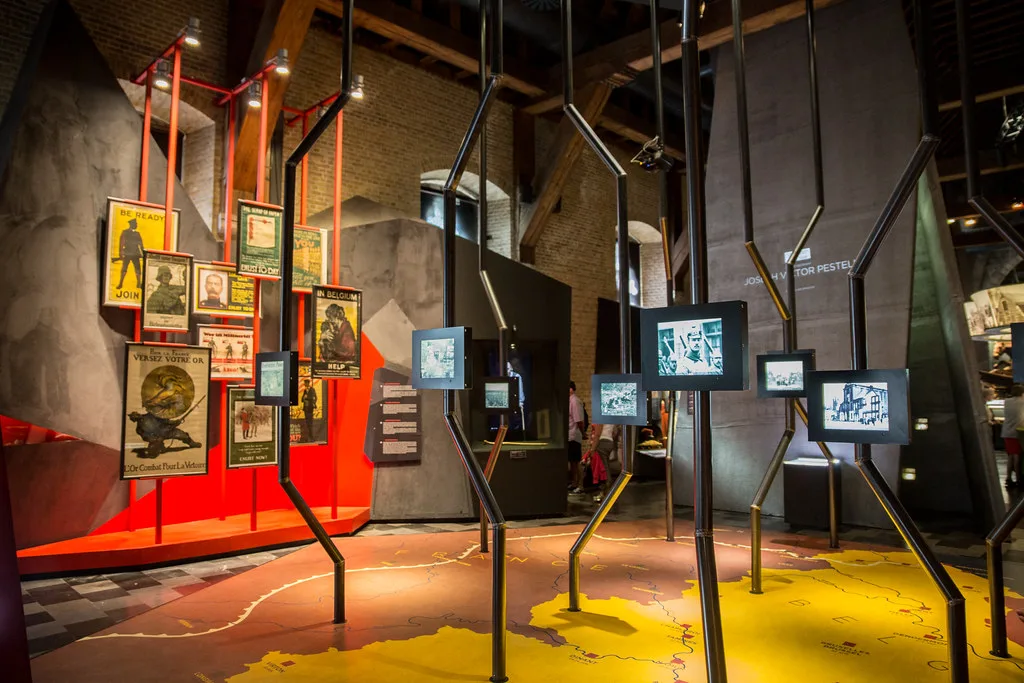
Ypres (Ieper) is the base for the WWI memorials of the Salient. The Lakenhalle (Cloth Hall) on the Grote Markt houses the In Flanders Fields Museum, and the Menin Gate (Menenpoort) is the site of the Last Post ceremony, held in the evening. As September progresses the ceremony falls in darker hours, which adds to the atmosphere. Allow a full day for the town and the memorial sites, and a second day if you want to follow the battlefield route.
How many days each city needs
For a short break, think in terms of full days rather than half-days. Bruges and Ghent each need two days to see the main sights at a comfortable pace. Antwerp needs two days for the centre, or three with a museum. Leuven fits into one day, Liège into two and Namur into one. Ostend and Ypres each take a day for the town, with extra time for the surrounding area.
If you have four days, pick two cities that sit close together on the train network: Bruges and Ghent are twenty-five minutes apart, and Antwerp and Ghent are about forty minutes apart. That lets you base yourself in one city and visit the other without changing hotels. For a three-day trip, one city with a day trip is usually more satisfying than trying to cover three.
September daylight and evening plans
September daylight in Belgium shortens over the month, so evenings draw in earlier by late September than at the start. That still leaves long evenings for a canal walk in Bruges or a last drink on the Graslei in Ghent. It also means the Last Post ceremony at the Menin Gate in Ypres falls in darker hours later in the month, which is worth planning for if you want to combine it with an evening meal.
The practical effect is that you should schedule outdoor sights for the morning and early afternoon, and keep museums or indoor attractions for the late afternoon. In Bruges, the Belfort climb is best done first thing; in Antwerp, the MAS museum stays open later, making it a good choice for a cloudy afternoon. For a full seasonal overview, see the Best Time to Visit Belgium for a City Break.
Which Belgian city suits your September break?
If you want the classic canal-and-squares experience, Bruges is the obvious first choice, with two days enough to see the Markt, the Burg and the Belfort. For a livelier city with a car-free centre and a strong food and drink scene, Ghent is the better pick. Antwerp suits travellers who want a bigger city with fashion, museums and river views.
For a quieter September trip with a focus on memorials and history, Ypres rewards a full day and a second for the Salient. Ostend works well as a contrast if you want sea air and a harbour walk. Whichever you choose, keep one indoor option ready for a showery day and allow time for the memorial ceremony in the evening.
Explore more Belgium guides
Sources
Useful notes for your next trip
Optional updates to our guides.
You might also like



Continue reading
More guides you'll find useful


