
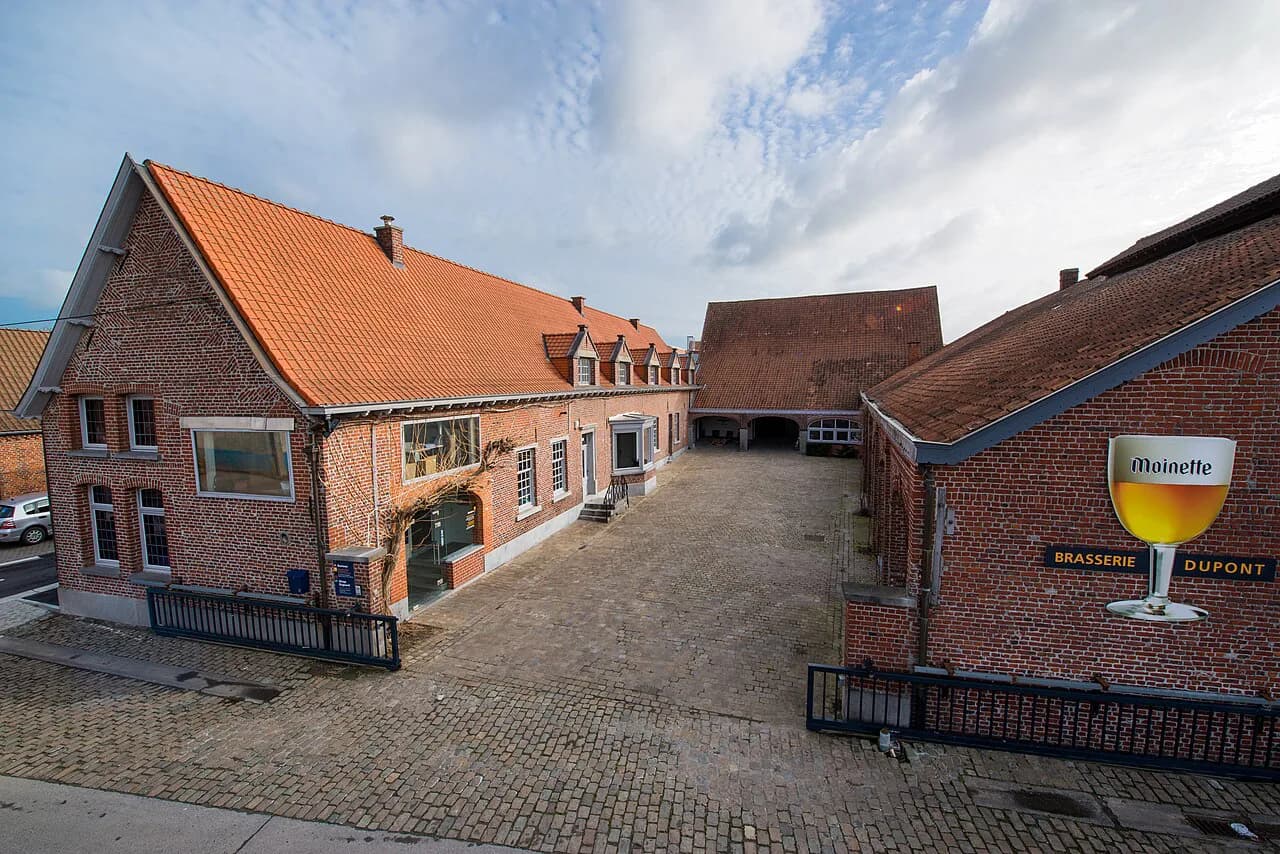
Brasserie Dupont, Tourpes: The Saison Brewery Explained
Brasserie Dupont in Tourpes brews Saison Dupont, the benchmark for the style. Here is what the brewery makes, how its beers differ and why they matter.
On this page
Brasserie Dupont is a farm brewery in Tourpes, a village in Hainaut, and its Saison Dupont is the beer most often held up as the reference point for the saison style. The reason to make the trip is to taste the range where it is brewed and to see how a working farm brewery, rather than a city-centre taproom, produces beer with such a distinct character. This guide covers what Dupont brews, how saison developed as a style, what makes the brewing distinctive and how the brewery's cheeses fit into a visit.
What Brasserie Dupont is and where Tourpes sits in Hainaut
Brasserie Dupont was founded in 1844 in Tourpes, in the heart of Belgian Hainaut, under the name Rimaux-Derrider. It has stayed a farm brewery through the upheavals that reshaped Belgian brewing, and that continuity is central to how its beers taste today. Tourpes is a village rather than a city, so the brewery is a destination in its own right rather than one stop on a town-centre crawl. If you are planning several brewery visits across the country, our guide to brewery tours in Belgium sets out the wider landscape of farm and city breweries and how they differ as days out.
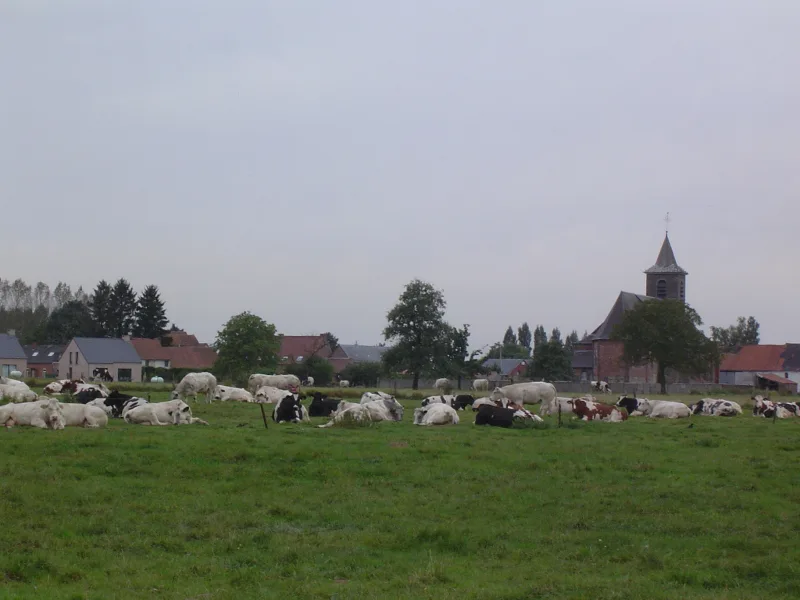
The Hainaut setting matters for the beer. Saison brewing took lasting hold in the farm breweries of Hainaut after the two world wars destroyed many urban breweries, according to the brewery's own history of the style. Dupont's identity grew out of that farm-brewing tradition, and the beers remain closely tied to the region rather than to a big-city brand.
Why Saison Dupont is treated as the reference for saison
Saison Dupont is regularly described by beer writers as the benchmark for saison, and the brewery collects those assessments on its own site. Michael Jackson, in Great Beers of Belgium, called the style the most elusive of beer types, while Martin Thibault, Jackson and Phil Markowski have each, in their books, presented Saison Dupont as the reference for saison. Treat that as a critical consensus rather than an official ranking, but it is why the brewery carries weight far beyond its size.
The beer itself is described by the brewery as dry in the mouth, with assertive bitterness and fruity, floral and slightly spicy notes. That combination of dryness and bitterness is what makes saison such a good match for food, and it is the quality to look for when you taste it on site.
What a saison is, and how the style changed
Saison is hard to pin down, which is part of its appeal. The first recorded appearance of the style was in Liège in 1823, where it was mainly drunk by workers and miners, according to the brewery's account. Early saisons were spelled beers, blond and strong at up to 7% alcohol, but also amber or even brown, and often acidic.
The style only became essentially blond and lighter in the second half of the twentieth century. That history helps explain why a modern saison like Saison Dupont tastes clean and bitter rather than sour, and why the beer is a living example of how a farmhouse style evolved rather than a reconstruction of an old recipe.
The Dupont beers to know: Saison Dupont, Saison Bio, Dry Hop and Biolégère
Saison Dupont is the core beer and the one to start with. Around it, Dupont brews Saison Bio, Dry Hop and Biolégère, each a variation on the saison idea rather than a separate style. The brewery describes Saison Dupont as standing out for its exceptional character, with the dry mouth and assertive bitterness that define its house expression.
The differences between the four are worth tasting side by side if the visit allows. If you want to compare Dupont with another of Belgium's most admired family breweries, our article on the Duvel brewery explains how a very different fermentation and bottle-conditioning tradition produces a contrasting beer.
What makes Dupont's brewing distinctive: open-fire mash, square vessels, horizontal storage
Dupont's brewing is deliberately traditional in ways that shape the flavour. The mash vessel is heated over an open fire, fermentation takes place in square vats with a flat bottom, beers are stored horizontally, and the water comes from the brewery's own well. Each of these choices is a departure from standard modern practice, and together they give the beers a character that is hard to reproduce elsewhere.
The hard well water is part of that picture, affecting the balance of the finished beer. For the visitor, the useful takeaway is that Dupont is not a brewery where you taste one beer and assume you know the rest: the process itself is the attraction. A city brewery such as De Koninck brewery in Antwerp makes an instructive contrast, where the scale and setting are urban rather than agricultural.
The cheeses aged in Dupont beer, and pairing them with the beers
Dupont began making artisan cheeses in 1995, and they are aged in the brewery's own beer. Moinette is a semi-hard cheese brined and aged in Moinette Brune for six to eight weeks, as is Moinette au malt & houblon, while Vieux Moinette and Vieux Moinette au malt & houblon are harder cheeses aged in the same beer for six to twelve months. Saison Dupont cheese is a smaller semi-hard cheese aged in Saison Dupont for four to six weeks, and Carré à la Moinette is a soft cheese with a crust washed in Moinette Brune. Moinette with malt and hops was voted Cheese of the Year in 2016 in the Fromages de Wallonie competition. The cheeses are made on site from locally sourced milk pasteurised at the brewery, sold at the brewery and can be tasted with the beers or taken away.
The pairing principle is simple: match the cheese to the beer it was aged in. Moinette cheeses suit Moinette Brune, and Saison Dupont cheese suits Saison Dupont, because the ageing has already married the two flavours before you taste them together.
Visiting the brewery and tasting beer with cheese
Visits to Brasserie Dupont include a tasting of the beers, and the cheeses can be tasted alongside them, according to the brewery. This is a working farm brewery rather than a city taproom, so the visit is built around seeing the process and tasting the range in the place it is made. To compare with other Belgian brewery visits, our article on Het Anker Brewery in Mechelen shows how a historic city brewery organises its tours and tastings.
Should you build a day around Tourpes?
Yes, if you want to taste saison where the benchmark is brewed and to understand how a farm brewery works. The visit is about the beer and the cheeses rather than a town-centre day out, so build it around the brewery itself. Pair it with other Belgian brewery visits on the same trip if beer is a main interest.
Explore more Belgium guides
Sources
Useful notes for your next trip
Optional updates to our guides.
You might also like



Continue reading
More guides you'll find useful





