A Bruges Weekend Break: Two Days in the Old Town
Plan a Bruges weekend break with a two-day route through Markt, the Belfry, the Hansa District and Minnewater, plus boat tours and Sunday timings.
On this page
Two days is the right length for a Bruges weekend break. The old town crosses on foot in half an hour, so a Saturday and a Sunday take in the Markt, the Belfry, the Burg, the Hansa quays and Minnewater at an unhurried pace. This plan gives you the shape of the weekend, slot by slot, then the trade-offs.
Bruges (Brugge) suits a short break better than almost any Belgian city because everything worth seeing sits inside one compact medieval centre, which is why the historic heart is a UNESCO World Heritage site. Trains from Brussels take just under an hour, so the city works as a stopover as well as a destination in its own right.
Why Bruges works as a two-day city break
The centre is small enough that your feet do the planning. You can walk from the Markt to the Beguinage in around fifteen minutes without crossing anything wider than a cobbled lane, so two days covers the sights without the rushing that a single day forces.
That compactness is also the honest limit. Bruges rewards slow walking, canal views and a long lunch more than a tick-list, and two days let you do both without choosing between the Groeninge Museum and the quays. If you are still deciding whether the city earns the trip at all, the case rests on the centre's completeness rather than on any single blockbuster sight.
Friday evening: arrive and get your bearings on the Spiegelrei
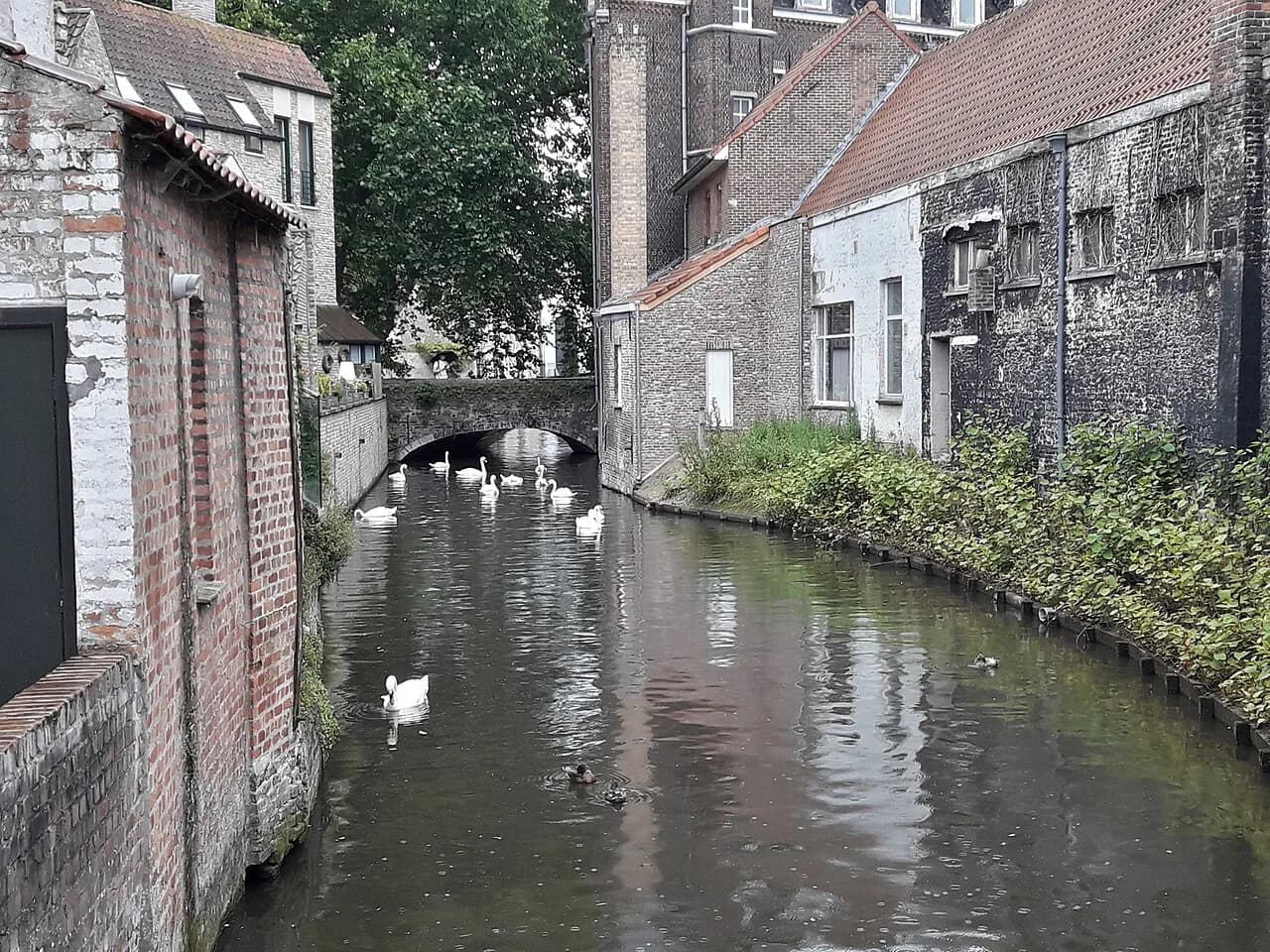
Arrive in the late afternoon, drop your bags and walk north of the Markt into the Hansa District. Jan van Eyckplein was once a wealthy, cosmopolitan port, and the view from the Spiegelrei canal towards the Burgher's Lodge is one of the finest in the city. It is a gentle first hour that sets the medieval geography in your head before the crowds arrive on Saturday.
Book a canal boat for the morning rather than squeezing one in now. Boats pick up at five stops along the route between Jan van Eyck Square and the Beguinage, and a morning circuit gives you the city from the water before you walk it. Operators set their own timetables and fares, so confirm both when you reserve.
For dinner, the Markt and its lanes have plenty of choice, and the northern side of the square is a good place to start. Expect classic Flemish cooking and Belgian beer rather than anything experimental, then take a short evening walk back along the canals while the lights are on the water.
Saturday morning: Markt, the Belfry and the carillon
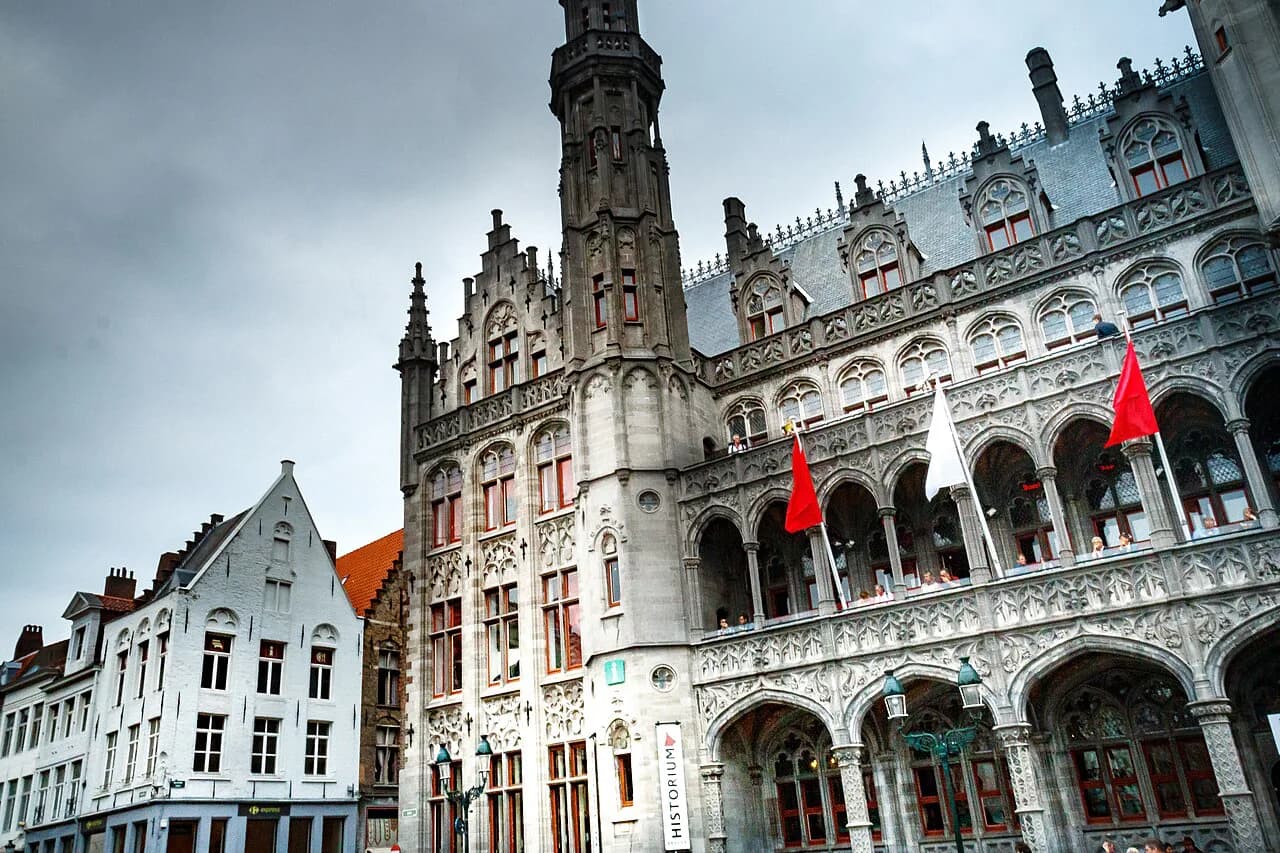
Start on the Markt, the grand central square, with the Belfry (Belfort) rising 83 metres above it from the top of the Cloth Hall. Look for the neo-gothic Provincial Court on the eastern side and the bronze statue of Jan Breydel and Pieter de Coninck, the local heroes. Horse-drawn carriages wait on the square if you want a tour without walking.
Climb the Belfry's 366 steps and you are rewarded twice: once with the view over the city and once with the enormous musical drum that runs a complex system of gears, strings and 47 bells. Time the climb for the 11am carillon concert on Wednesday, Saturday and Sunday, when you hear the instrument in action. In summer there are also evening concerts on Mondays and Wednesdays from 9pm, which you can hear from the courtyard below.
Come back down for the Wednesday morning market if your weekend includes it, when the Markt fills with stalls and you can put together a picnic. On a Saturday, walk the Hansa quays instead while the square is still quiet, then loop back for coffee before the afternoon sights.
Saturday afternoon: Burg, the Holy Blood and the Groeninge
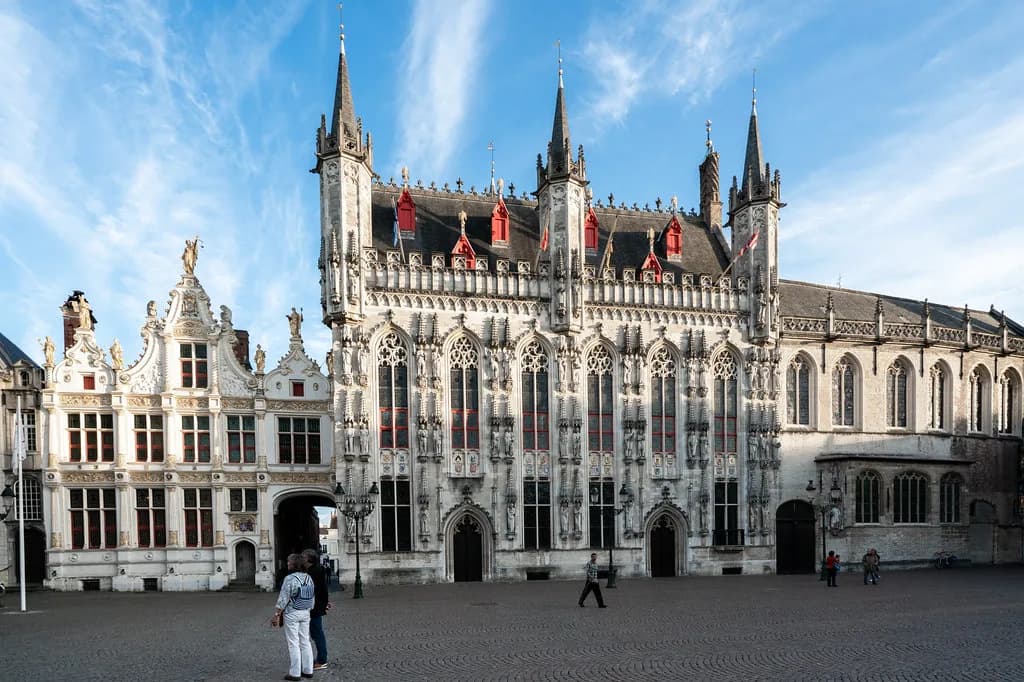
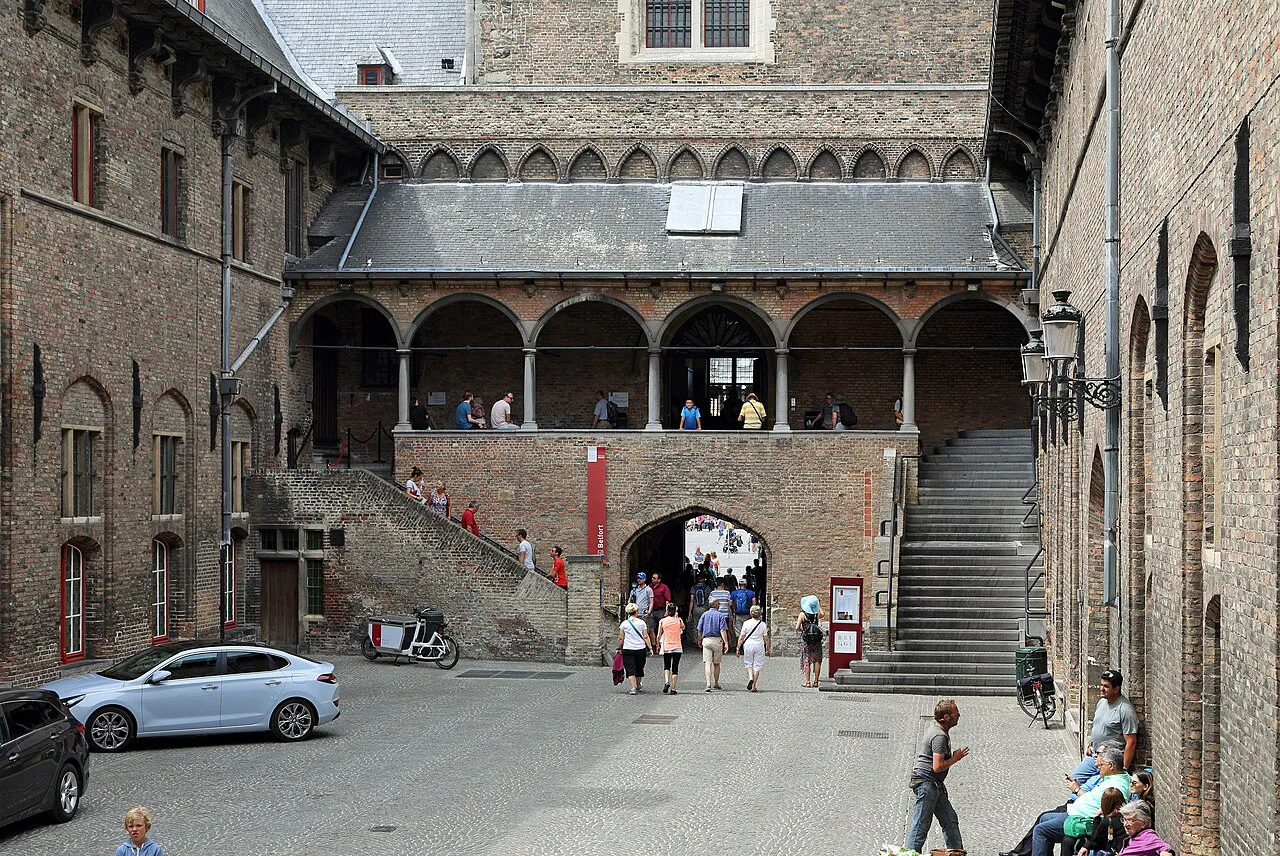
Walk the two minutes from the Markt to the Burg, the smaller square that holds the Basilica of the Holy Blood on one corner and the city's civic buildings around the rest. The basilica is the reason most visitors come, and the square itself is a good place to pause between sights.
Then give the Groeninge Museum the bulk of the afternoon. It holds Flemish masterpieces, and the collection is the best single answer to what Bruges was in its golden century. Confirm the opening days before you set the order of the afternoon, since Belgian museums often close early in the week.
If you have energy left, the Church of Our Lady is a short walk away and holds a Michelangelo sculpture, which makes it the strongest second art stop. Two art stops in one afternoon is plenty; a third would mean rushing the Groeninge.
Saturday late afternoon: the Hansa District quays
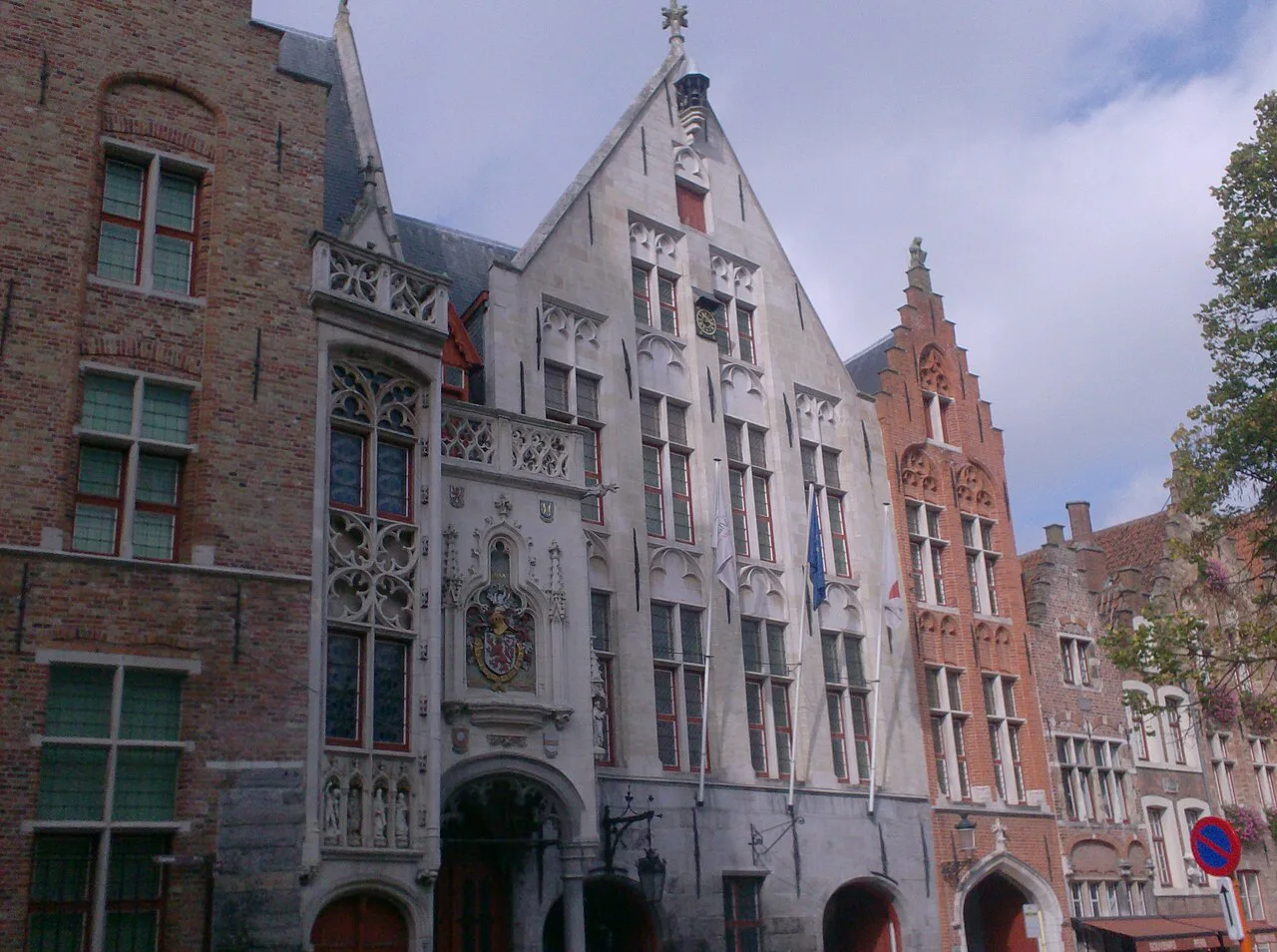
Head north to the quays that made medieval Bruges rich. Spanish traders settled on Spaanse Loskaai, while merchants of the Baltic Hanseatic League set up on Oosterlingenplein, and both streets keep much of their historic character today.
On Jan van Eyckplein, look for the Toll House and the narrow Rijkepijndershuis, the porters' house decorated with figures carrying heavy loads. The walk between the two takes minutes, which is exactly why the district fits a late afternoon rather than a whole day.
Saturday evening: beer and lit canals
Bruges is a beer city, and an evening in a beer café is the simplest way to taste it. Ask for a flight or a short list of Belgian styles rather than a single familiar brand, and treat the stop as a tasting rather than a night out.
Finish with a low-key walk through the lit canals towards your bed, which in this city is never more than twenty minutes away. If you would rather spend the evening money elsewhere on Sunday, keep Saturday simple and bank the difference.
Sunday morning: the Beguinage and the Jeruzalemkapel
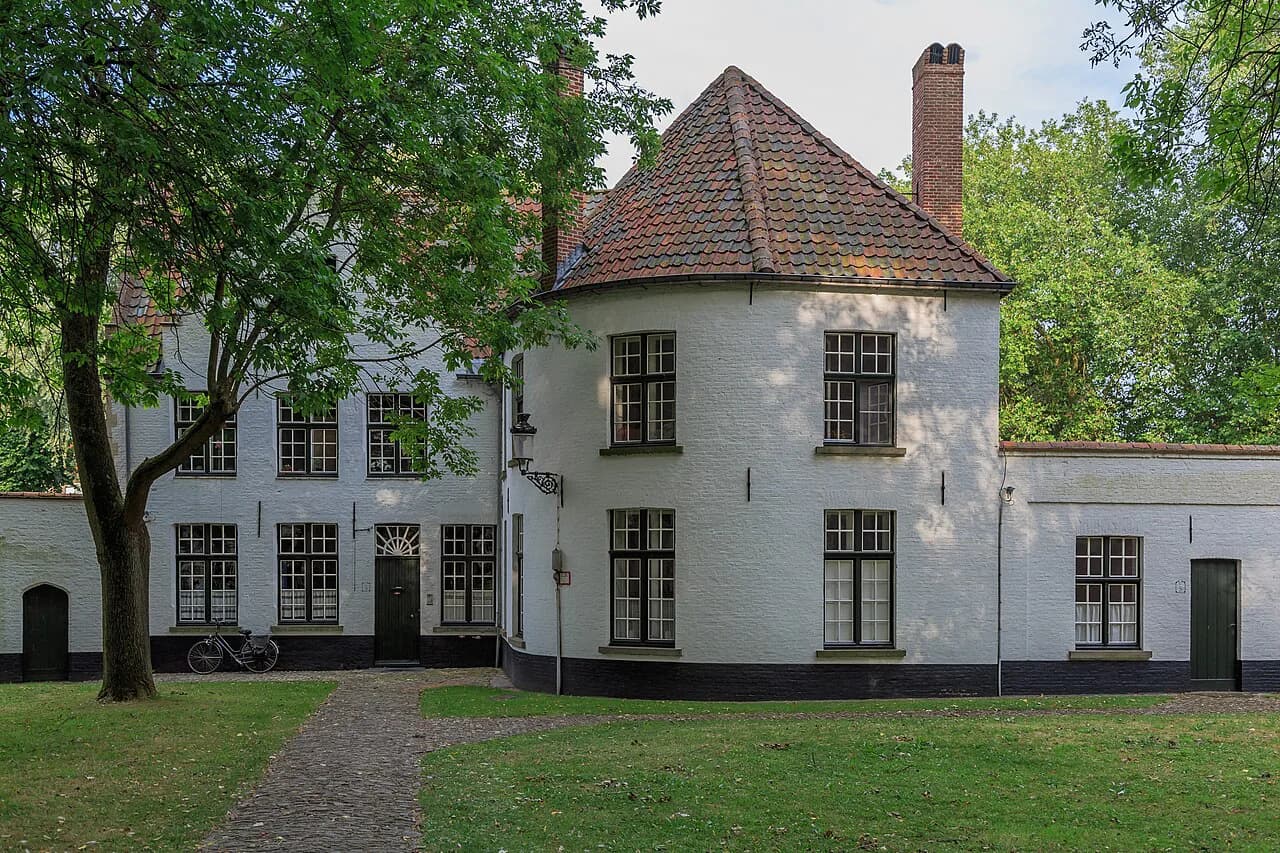
Sunday starts quietly. Cross the Wijngaard Bridge to the Beguinage (Begijnhof), the whitewashed courtyard community that is the calmest place in the centre. Take a look inside the Jeruzalemkapel, a private chapel with a remarkable wooden ceiling.
This is the part of the weekend that rewards going early: the Beguinage is a place for low voices, and the walk there through the lanes is as good as the destination. Give it an hour and then head south.
Sunday midday: the Minnewater walk
Minnewater is a fifteen-minute walk south of the Markt, a lake and park at the edge of the old town that feels like a different city. Walk the path around it and back along the canal, and you have seen the quiet side of Bruges that a one-day visit usually misses.
It is also the natural place to decide whether you want a third day. If the pace of Saturday and Sunday morning has felt right rather than rushed, you are in the majority; if you are already looking for more to fill, that is the sign to add one.
Sunday afternoon: chocolate and the shopping streets
Bruges is famous for its chocolate shops, and the lanes around the Markt have one at practically every corner. Buy pralines and truffles to take home rather than eating your way around the city, and leave space in your bag for the concept and designer stores nearby.
This is the part of the weekend that is easiest to over-plan. Wander rather than target: the centre is small enough that the shops you miss on Sunday are ones you will pass again on your way to the station.
If your weekend runs into a Monday
A Monday in Bruges is a day for the city outside rather than its museums. Build it around the Markt, the Burg, the Hansa quays and the canals, all of which the sources present as outside public space you can walk. A canal boat is a sensible Monday move if the weather holds.
Churches are the obvious indoor option on a Monday, so check whether the Basilica of the Holy Blood and the Church of Our Lady are open before making them the plan. Confirming on the day beats assuming, since opening patterns shift with the season.
Where to base yourself in the old town
Base yourself inside the old town, between the Markt and the Burg, if you can. From there every stop on this plan is a walk of twenty minutes or less, and you never need a bus or a taxi to reach a sight.
The trade-off is price against convenience, and it is real. Staying outside the centre saves money but adds a daily walk or bus ride that eats into a two-day schedule. Compare what your budget buys in each before you book.
What to drop with one day, and what two days cannot fit
With one day, drop the Hansa District and Minnewater. Spend the time on the Markt, the Belfry, the Burg and the Groeninge Museum, which are the core of the city. That is a good day rather than a rushed one.
Two days still cannot absorb the coast, Ypres or Ghent, all of which are separate trips in their own right. Treat Bruges as the whole of this weekend and you will enjoy it more than splitting your time.
The climate is cool and wet year-round, in the region of 4-17°C across the seasons, so pack for rain rather than betting on a dry weekend. Weather like this makes the museum slots more valuable, not less.
Bruges on foot and by bike
Walk the centre and cycle the outskirts. Cycling is safe in Bruges and the quickest way to reach the ring of parks and canals beyond the old town, where the crowds thin out. Inside the medieval lanes, walking is simply faster.
Bring or hire a bike only if you plan to leave the centre; for a two-day weekend built around Markt, Burg and the quays, your feet cover everything in this plan.
Book Saturday for the Belfry and Sunday for the Beguinage
Set your weekend around Saturday at the Belfry and Sunday at the Beguinage and Minnewater, and fit the Groeninge Museum and the Hansa quays in between. Book the canal boat for Saturday morning and keep Sunday afternoon loose for chocolate and shopping. If you want the sequence tightened further, check How many days do you need in Bruges? before you commit.
Explore more Bruges guides
Sources
Useful notes for your next trip
Optional updates to our guides.
You might also like
Continue reading
More guides you'll find useful