Eurostar to Bruges: London to Bruges Train Guide
No direct London to Bruges train exists: Eurostar reaches Brussels, then a Belgian train runs to Brugge, taking around three hours and 14 minutes at best.
On this page
Eurostar does not run direct to Bruges: you take it from London to Brussels and change there onto a Belgian domestic train for the last leg to Bruges (Brugge). The fastest London to Bruges journeys take around three hours and 14 minutes in total, covering roughly 234 kilometres, so the trip is a rail journey with one change rather than a short hop. This guide sets out how the routing works, the case for one through ticket over separately booked legs, where you land in Bruges and how the train compares with flying into Brussels.
What the Eurostar to Bruges trip actually involves
The pattern is two trains. Eurostar carries you from London St Pancras to Brussels Midi/Zuid, and from there you take a Belgian domestic service to Brugge. That second leg is an ordinary Belgian rail journey of the kind that links Brussels with the rest of the country, not part of the Eurostar service itself.
Because the change happens in Brussels, you take the next service to Bruges that suits your arrival rather than relying on a single departure. Baggage stays with you throughout and the transfer is a walk between platforms inside one station, not a cross-city trip. The main thing to plan for is allowing realistic time between your Eurostar arrival and your onward train rather than booking the tightest possible connection.
How long London to Bruges takes
The fastest through journeys take about three hours and 14 minutes from London to Bruges, and that figure already includes the change in Brussels. A comfortable planning figure for a city break is somewhat longer, because your Brussels connection is unlikely to be immediate.
Check-in at St Pancras adds time at the London end that the rail figures do not show, and you need to be at the terminal well before departure rather than stepping onto the platform at the last moment. Build that into your day when deciding between a morning and an afternoon start, especially if you want to reach Bruges with usable daylight. The total distance is around 234 kilometres, so the journey is short enough that the train can compare well with flying once airport time is counted.
One through ticket or separate legs
Booking a single through journey from London to Bruges can give you one contract covering both trains, which matters most when something goes wrong. If your Eurostar is delayed and you miss the Brussels connection, check the conditions of the through fare to see how the onward leg is treated rather than assuming you will not need a new Belgian ticket. The trade-off is less flexibility in choosing your exact Bruges departure, since the itinerary is fixed when you book.
Booking the legs separately can be cheaper on paper and lets you pick your Bruges train freely, but the two tickets stand alone: a missed connection is your problem and your cost. For a short break where a delay could eat a whole evening in Bruges, the protection of a through ticket is usually worth more than the small saving. If you do book separately, leave a generous gap in Brussels rather than a tight one.
Where you arrive in Bruges
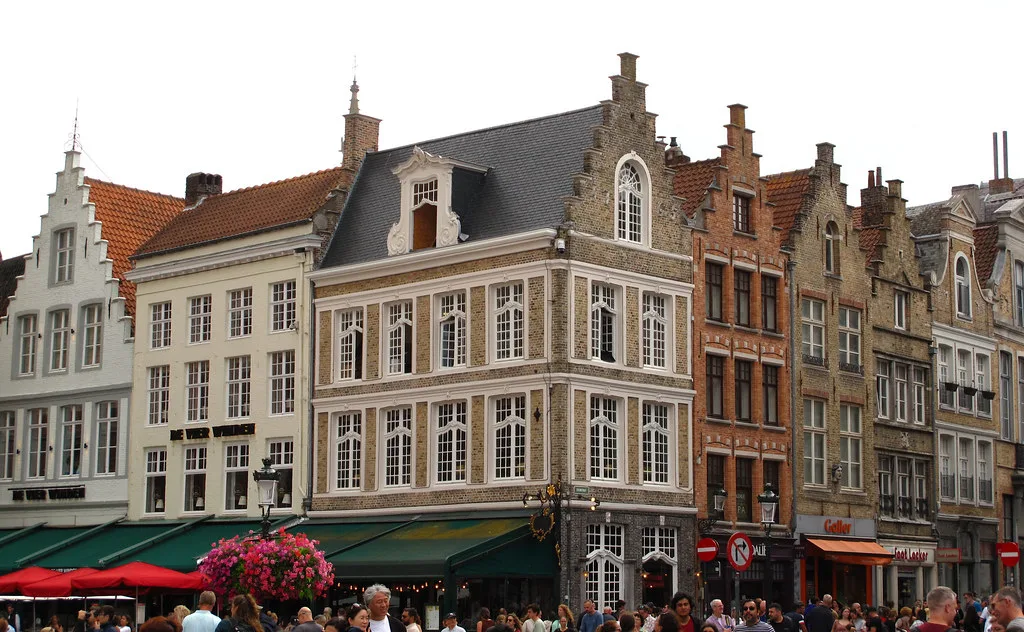
Belgian trains from Brussels run to Bruges station, which sits on the southern side of the historic centre rather than beside the Markt. From there you walk north into the old town, and the streets become markedly more medieval as you go. The Belfort, the bell tower over the Markt (Brugge), makes a useful landmark to steer by once you are through the station area.
Eurostar to Bruges versus flying to Brussels
Flying London to Brussels puts you at an airport outside the city, and you still face the onward train to Bruges from there, so the flight is only part of the journey. On the rail side, the Eurostar goes city centre to city centre, with the Brussels change happening inside the station rather than via a bus or taxi transfer. For a short break, the train often wins simply because the airport faff is removed.
The honest trade-off is cost and departure choice: budget flights can undercut the train, and airports may offer more departure times than the Eurostar does. Weigh that against the time and money spent getting between airport, city and station. If your priority is arriving in Bruges fresh with the minimum of changes, the train through Brussels is the calmer option.
Who the train suits for a one to four day Bruges break
The train suits anyone doing a city break of a few days who values a predictable arrival and does not want to chain a flight to a transfer. It is particularly good for a first visit, when you want to step off in Bruges and start walking rather than navigate an airport. Once the transport is fixed, a plan for 2 days in Bruges covers the Markt, the Belfort and the Basilica of the Holy Blood without rushing.
It suits less well if you are chasing the lowest possible fare, travelling with a lot of luggage, or coming from a part of the UK with no easy route to London. In those cases, flying into Brussels and continuing by rail can make more sense. A Bruges weekend break shapes the same two or three days around a Friday or Saturday arrival.
Is the Eurostar just a fast train?
Eurostar is a high-speed international service, but on this route it only takes you as far as Brussels. The Bruges leg is an ordinary Belgian train, so the trip is a fast train plus a connecting domestic service rather than one seamless high-speed run. That is why the Brussels change is the detail to plan around rather than something to gloss over.
Which route should you book for Bruges?
For a Bruges break of one to four days from London, book a through journey to Bruges via Brussels. Check the fare conditions so both trains are covered, and you get a city-centre arrival with only a short walk to the Markt. The total is around three hours and 14 minutes at best, plus check-in time at St Pancras.
Choose flying only if the fare gap is substantial and you are happy to add the airport transfer and the onward rail leg. Either way, the Bruges end is easy: you arrive at a compact station on the edge of the old centre, and the historic core is a straightforward walk from there.
Explore more Bruges guides
Frequently Asked Questions
Do you have to change trains to reach Bruges from London?
Yes. Eurostar runs from London to Brussels, and you change there onto a Belgian domestic train to Bruges; the fastest through journeys take around three hours and 14 minutes including that change.
How long does the whole journey take?
The fastest London to Bruges journeys take around three hours and 14 minutes including the change in Brussels. Allow extra time for check-in at St Pancras and for your connection.
Is it better to book one ticket or two?
A single through ticket can cover both trains, so check the fare conditions to see how a missed Brussels connection is treated. Two separate tickets are independent, which means you bear the cost of a missed train.
Where does the train arrive in Bruges?
At Bruges station, on the southern side of the historic centre, with a straightforward walk north into the old town and the Markt.
Sources
Useful notes for your next trip
Optional updates to our guides.
You might also like
Continue reading
More guides you'll find useful