
Where to Go in Belgium: Pick the Right City for Your Trip
Where to go in Belgium beyond Brussels: match Bruges, Ghent, Antwerp, Leuven, Liège, Namur, Ostend or Ypres to your days, interests and travel style.
On this page
For a first Belgian city break of two or three days, choose Bruges (Brugge) for canals and Ghent (Gent) for a working medieval city with a student pulse. Antwerp (Antwerpen) rewards anyone who wants scale, a grand Grote Markt and river quays; Leuven (Louvain), Liège (Luik), Namur (Namen), Ostend (Oostende) and Ypres (Ieper) each fit a particular interest instead. This guide matches each city to a trip type and length rather than crowning one the most beautiful, and sits alongside our wider Best Cities in Belgium ranking.
The short answer is that almost every city here can be seen in a day and understood in two. Bruges and Ghent sit close enough to pair, Antwerp and Leuven combine well on the same rail line, and the Walloon cities of Liège and Namur belong to a different, hillier trip. Ostend and Ypres anchor the west, one on the coast and one in the flat Flanders fields.
Ghent is frequently recommended as the single best Belgian city to base yourself in, thanks to its canals, medieval core and livelier everyday atmosphere beside the Gravensteen and the Graslei quays, and it is noticeably less crowded than Bruges. Bruges remains the fairytale version, best early or late in the day when the day-trippers thin out.
Bruges (Brugge): canals, Markt and the Belfort
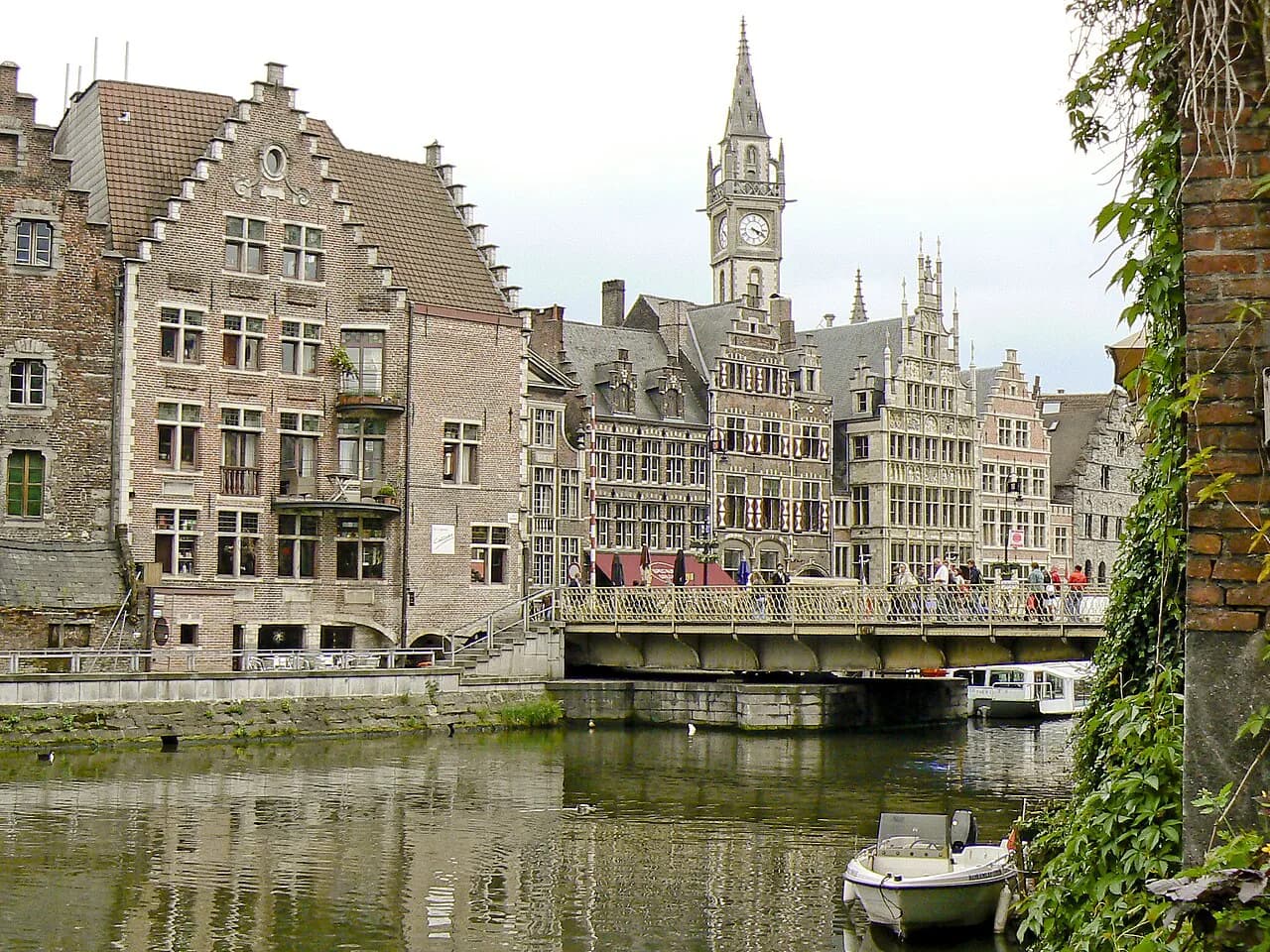
Bruges is the picture-postcard city: gabled houses, brick-lined canals and the wide Markt dominated by the Belfort tower. The classic view is from the Rozenhoedkaai, where the canal bends below historic facades, and it is at its calmest before the coach parties arrive. Allow a full day for the centre and a second for the museums and a canal boat.
The honest trade-off is crowding: the historic core gets very busy during the day, so plan the quiet sights for early morning and keep the afternoon for a slower wander or a boat trip. Chocolate shops are everywhere; Chocolaterie De Burg is one named stop in the centre. Stay overnight if you can, because the city empties out in the evening.
Bruges is also compact enough to walk end to end, with the Markt, Burg and Belfort clustered together and the canals looping around them. That makes it ideal for a one- or two-day break where you never need transport inside the city.
Ghent (Gent): Graslei and Korenlei, Gravensteen and Sint-Baafskathedraal
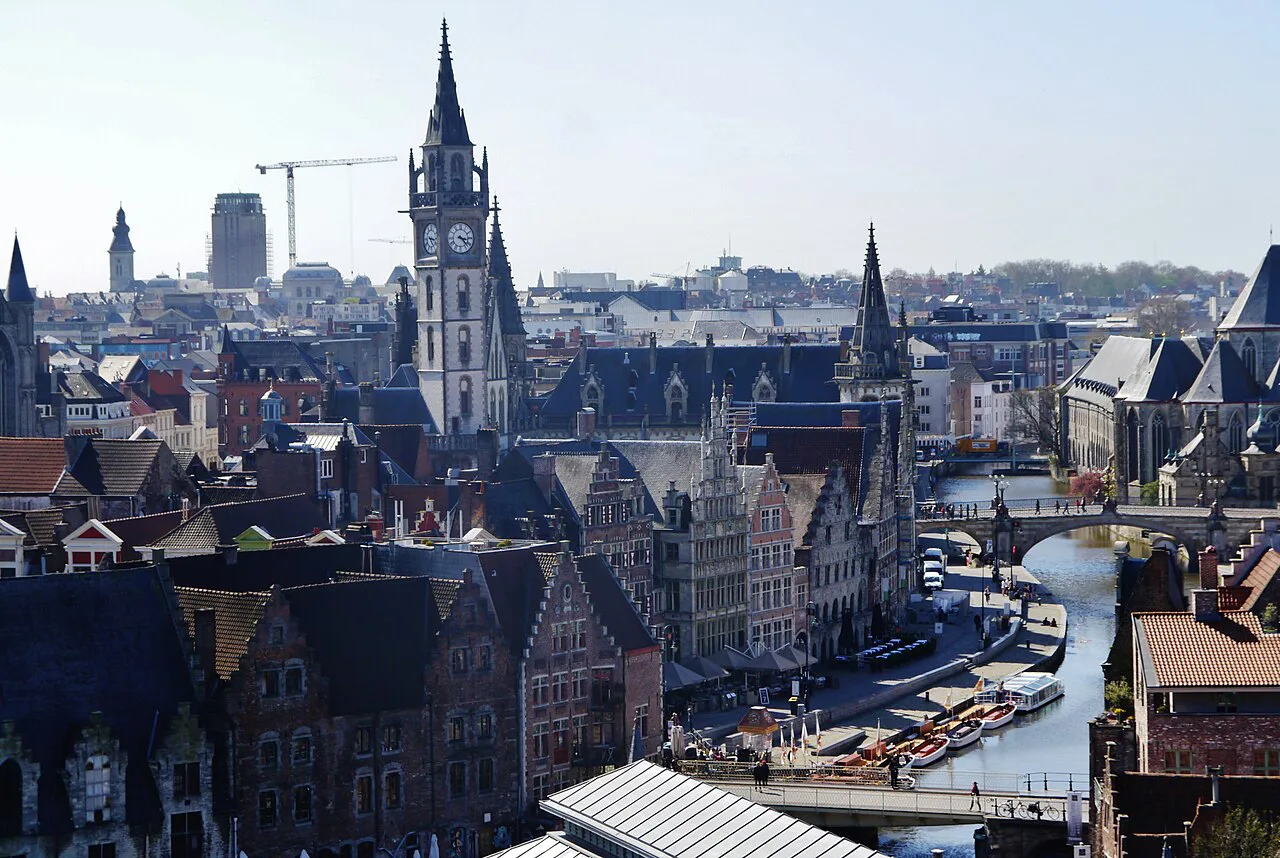
Ghent packs a medieval core, two riverside quays and a large student population into a city that feels lived-in rather than preserved. The Graslei and Korenlei quays are the signature view, the Gravensteen is the only well-preserved medieval moated castle in the Low Countries, and the Belfry gives a rooftop panorama. Sint-Baafskathedraal holds the Adoration of the Mystic Lamb, and you can read more on Van Eyck in Belgium.
Bruges (Brugge): canals, Markt and the Belfort. Bruges is the picture-postcard city: gabled houses, brick-lined canals and the wide Markt dominated by the Belfort tower.
Ghent (Gent): Graslei and Korenlei, Gravensteen and Sint-Baafskathedraal. Ghent packs a medieval core, two riverside quays and a large student population into a city that feels lived-in rather than preserved.
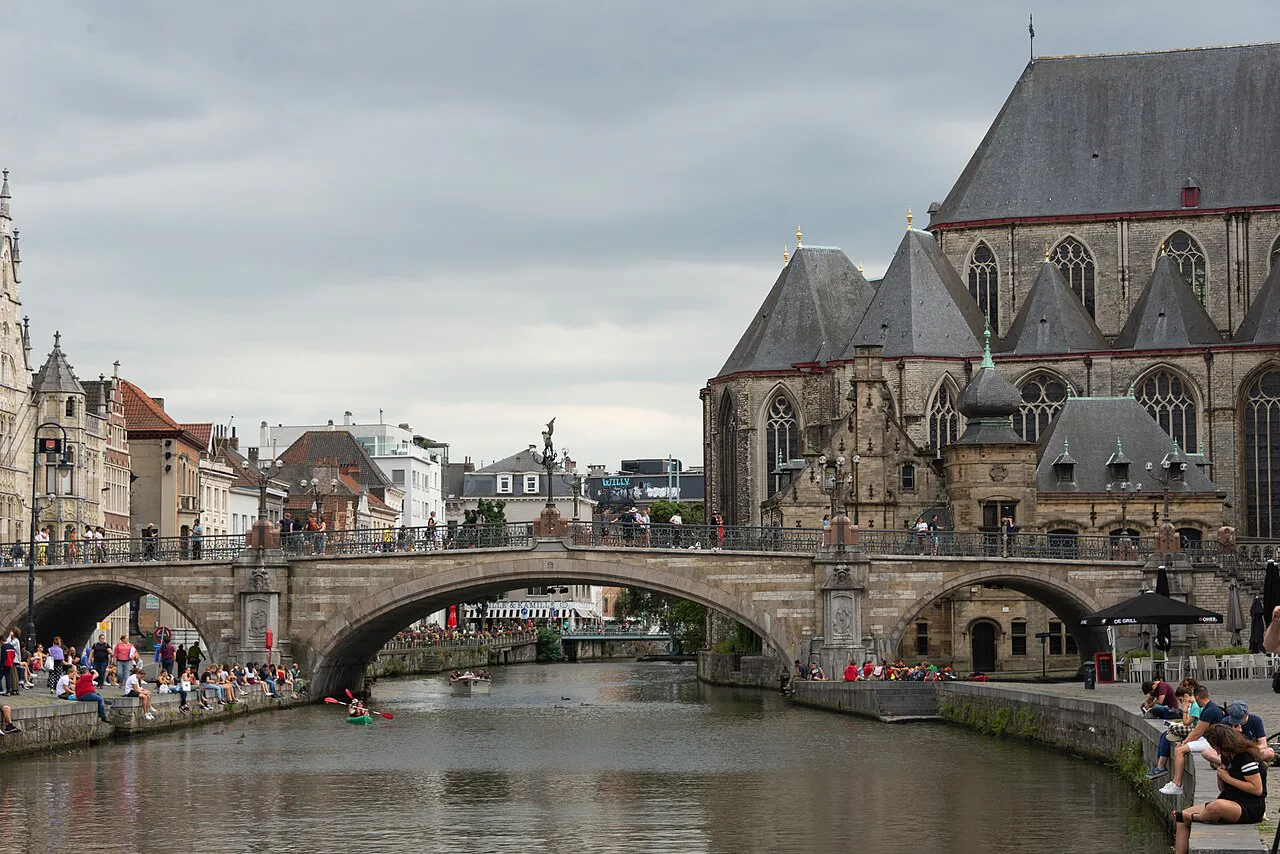
Bruges or Ghent: which to choose for one or two days. With one day, choose Bruges if you want the canal-city image and are willing to start early; choose Ghent if you would rather have a living city with fewer crowds and more evening life.
The trade-off is energy versus polish: Ghent has more bustle, more students and a less manicured centre than Bruges, which many travellers prefer. Evenings along the water, with illuminated facades reflecting in the canals, are the city at its best. A canal boat gives a different angle on the same streets.
Base yourself in Ghent if you want one city that covers architecture, beer cafés and a genuine everyday atmosphere without the crowds. Two days lets you see the centre properly and still take a boat or climb the Belfry.
Bruges or Ghent: which to choose for one or two days
With one day, choose Bruges if you want the canal-city image and are willing to start early; choose Ghent if you would rather have a living city with fewer crowds and more evening life. With two days, do both: they are linked by frequent trains, and the contrast between the preserved and the lived-in is the point.
If you have only a weekend in Belgium, pick one base and resist adding a third city. Bruges suits a slow, romantic weekend; Ghent suits a weekend with more eating, drinking and wandering after dark.
Antwerp (Antwerpen): Grote Markt, the cathedral and the Scheldt quays
Antwerp is the big-city option, with its town square ringed by guild houses, a cathedral that is the largest in the Benelux, and the Scheldt quays stretching north through the old docks. The Eilandje neighbourhood and the MAS museum rooftop give a modern counterpoint and a wide view over the port. Antwerp Central station is an attraction in itself, and it earns its place among the Most Beautiful Towns in Belgium for a different, urban reason.
This is the city for shopping, museums and river light rather than canal romance, and it rewards two or three days better than most Belgian cities. The trade-off is distance: the centre and the docks are a walk apart, so plan your day in one direction rather than zig-zagging.
Antwerp also pairs naturally with Leuven on the same line, making a two-city trip that mixes scale with intimacy. Beer lovers will find plenty of places to taste Belgian beer around the centre.
Leuven (Louvain): a compact student city in Flemish Brabant
Leuven is often called Belgium's best student city, small enough to cross on foot and dominated by its university and the Grote Markt. It suits a half-day or a lazy day between Antwerp and Brussels, with café terraces and a young crowd rather than blockbuster sights. If you like a compact, lively town more than a checklist, it earns its place.
The trade-off is that Leuven is a complement, not a headline: it works best as a second stop or a relaxed day rather than the anchor of a long break. Pair it with Antwerp and you have two very different Flemish cities within easy reach of one another.
Liège (Luik): the Walloon city on the Meuse
Liège is the French-speaking Walloon city on the Meuse, with a grittier, more industrial character than the Flemish showpieces and a strong everyday food and café culture. It is the natural choice if you want to see a different Belgium from the canal towns and are willing to trade polish for personality. Give it a day and see how it grows on you.
The trade-off is that Liège is less immediately beautiful than Bruges or Ghent, so it suits travellers who like cities for their texture. Pair it with Namur to make a Walloon loop along the Meuse rather than a series of day trips from Flanders.
Namur (Namen): the Citadelle and the confluence of the Sambre and Meuse
Namur, the capital of Wallonia, sits where the Sambre meets the Meuse, with the Citadelle de Namur rising above the town and the old centre below. It is a compact, surprisingly charming city that works well as a stop on a longer journey. Allow a day for the citadel, the old centre and the riverbanks.
The trade-off is scale: Namur is quieter and less dense with sights than Bruges or Antwerp, so it rewards travellers who want river views, a climb and a relaxed pace. It is the kind of place that surprises people who stop off between trains.
Ostend (Oostende): the coastal town and its North Sea setting
Ostend is the bustling seaside resort on the Belgian coast, with a promenade, a working harbour and a salty North Sea atmosphere that is quite different from the inland cities. It suits a day of sea air and strolling rather than a museum marathon.
The trade-off is that Ostend is a town break, not a canal-city break: choose it if you want the coast and a change of pace, and accept that its appeal depends heavily on the weather. The coastal tram links the resort towns along the shore, so you can combine Ostend with a neighbouring stop.
Ypres (Ieper): the Lakenhalle and the WWI memorials around Menin Gate (Menenpoort)
Ypres is a small, rebuilt cloth town whose Lakenhalle dominates the Grote Markt, and it is the base for the WWI memorials and cemeteries scattered across the surrounding Flanders fields. The Menin Gate (Menenpoort) is the town's memorial to the missing, and the surrounding landscape holds the war cemeteries. Treat these sites as memorials, not attractions to tick off.
Give Ypres at least a full day, and more if you want to visit several cemeteries and sites respectfully. It suits travellers interested in remembrance and history rather than a lively city break, and the contrast with the busy canal towns is stark.
Which city for which kind of trip: architecture, beer, chocolate, museums, coast or remembrance
For architecture, Bruges and Ghent give the medieval set piece, Antwerp gives guild houses and a cathedral, and Namur gives the citadel on the hill. For beer, Ghent and Antwerp have the liveliest café scenes; for chocolate, Bruges is the obvious stop. For museums, Antwerp's MAS and the cathedrals at Ghent and Antwerp carry the cultural weight.
For the coast, Ostend is the natural choice; for remembrance, Ypres and its surrounding cemeteries are the reason to go. If you want a compact, youthful city, Leuven fits, and Liège suits anyone who prefers industrial texture to chocolate-box streets.
How many days you need in each city
Bruges needs one full day for the centre and two to include museums and a canal boat; Ghent needs two days to see the Gravensteen, the cathedral and the quays without rushing. Antwerp rewards two or three days, Leuven a half-day or a relaxed day, and Liège and Namur a day each.
Ostend fills a day comfortably, and Ypres a full day plus travel to the memorial sites. A three-day break works best with one anchor city and one nearby complement rather than three separate bases.
When to go: how the season and the weather shape a Belgian city break
Belgian weather is changeable in every season, so build in indoor stops such as cathedrals and museums whatever the month. Spring and early autumn suit long walking days through the medieval centres, while high summer brings the biggest crowds to Bruges and the coast. Winter is quieter and colder, with shorter daylight for the outdoor sights.
If your trip centres on Ypres and the memorials, allow time for walking between sites and dress for open, flat countryside. If it centres on Ostend, check the coastal forecast and keep a city alternative in reserve.
Linking two cities in one trip
The best pairings are Bruges with Ghent, Antwerp with Leuven, and Liège with Namur. Each pair sits on the same rail line and offers a genuine contrast: preserved versus lived-in, scale versus intimacy, Flemish versus Walloon. Two bases are plenty for a three- or four-day break.
For a first weekend, Bruges and Ghent give the classic introduction without long journeys. A longer trip might add Antwerp and Leuven, or head south to the Meuse for Liège and Namur.
How to travel between the cities
Belgian cities are linked by a dense rail network with frequent services, and most of these towns have stations close to their centres. Bruges and Ghent are a short hop apart, Antwerp and Leuven sit on the same line, and Liège and Namur are connected along the Meuse valley.
Where not to base yourself if you are short on time
With one or two days, do not try to base yourself in a small town and commute into a bigger city; you will spend your break on trains. Skip Ostend unless the coast is the point, and skip Liège and Namur unless you are committed to Wallonia. Stay in the city you most want to see, and treat the rest as a second stop.
Choose one city, then add a second
Pick the city that matches your reason for going: Bruges for canals, Ghent for a living medieval city, Antwerp for quays and scale, Leuven for compact student life, Liège and Namur for Wallonia, Ostend for the coast, and Ypres for remembrance. Then add one nearby city rather than three, and your break will feel generous rather than rushed.
Sources
Useful notes for your next trip
Optional updates to our guides.
You might also like



Continue reading
More guides you'll find useful





