
3 Days in Belgium: Bruges and Ghent, or Antwerp and Ghent
Plan 3 days in Belgium with two workable routes: Bruges and Ghent, or Antwerp and Ghent. See what each day covers and what to leave for next time.
On this page
Three days in Belgium buys you two cities, not five. Pick either Bruges (Brugge) paired with Ghent (Gent), or Antwerp (Antwerpen) paired with Ghent, keep one base for the pair and spend your time on foot rather than on platforms. This guide sets out both routes day by day, with the squares, canals, churches and museums that justify each stop.
The split is a question of temperament. Bruges is compact, canal-ringed and almost entirely medieval in its centre, so two days there feel generous rather than rushed. Antwerp is larger, has the Scheldt quays and a museum quarter worth half a day, and rewards travellers who want a working city alongside the old streets. For the wider picture of how these cities fit into a longer trip, the Belgium itinerary sets out the fuller sequence.
The short answer on which cities to pick
Pair Bruges with Ghent if you want canals, Flemish painting and two compact centres you can walk end to end. Pair Antwerp with Ghent if you want a larger first city with a cathedral, a museum quarter and the Scheldt, then a single day in Ghent's medieval core. Ghent appears in both routes because it sits neatly between the two and its centre is dense enough to see in a day.
Hello Belgium's own three-day suggestion starts in Brussels and pushes out to Mechelen, Leuven and Walloon Brabant rather than committing to Bruges or Antwerp at all, which shows how easily a short trip fragments. Committing to one pair and one base is what makes three days feel unhurried.
Route one: Bruges (Brugge) and Ghent (Gent) in three days
Base yourself in Bruges for two nights and move to Ghent on the third morning, or stay in Ghent throughout and take the short hop west to Bruges first. Bruges is small enough that the Markt, Burg and the Belfort sit within a few minutes of each other, which is why it absorbs two days without padding. Ghent then gives you a denser student city with a medieval core that is larger than Bruges' but less polished.
Is three days enough to see Bruges and Ghent? Yes, if you give Bruges two days and Ghent one. Bruges' centre is compact enough to cover the Markt, Burg, the Belfort and the Groeningemuseum in two days, and Ghent's medieval core of Graslei, Sint-Baafskathedraal and the Gravensteen fits into a single loop.
Should I base myself in one city or move hotels? Stay in one city per pair and travel to the other on the day. Bruges and Ghent are close enough that a day trip is easier than a hotel change, and the same applies to Antwerp and Ghent.
How do I add Ypres and the Menin Gate? Treat Ypres as a half-day from Bruges or Ghent and go for the Menin Gate and the In Flanders Fields Museum in the Lakenhalle rather than as a general sightseeing stop. It replaces one of your city days, so decide before you book.
The trade-off is real: two days in Bruges means you see the centre properly and still have time for one museum, but you will not reach the outlying sights. If a single belfry climb is the point of the trip, do it in Bruges rather than saving it for Ghent.
Day 1 in Bruges: Markt, Burg, the Belfort and the canals
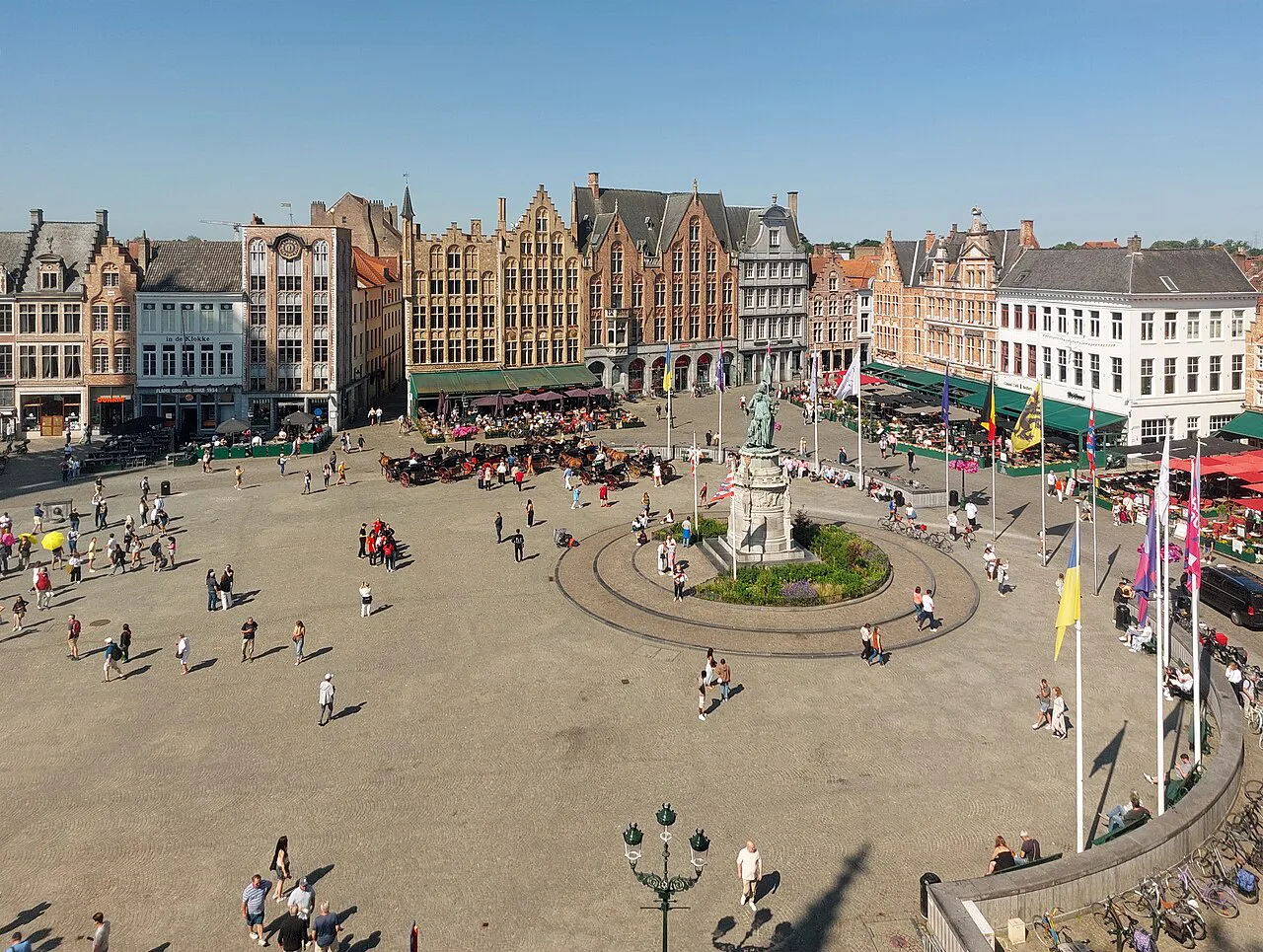
Start on the Markt, the wide square lined with stepped gables, and walk the two minutes into the Burg, where the town hall and the Basilica of the Holy Blood face each other across a small, enclosed square. The Belfort rises from the Markt and is the city's defining tower; climbers should expect a narrow spiral staircase and go early rather than mid-morning.
Spend the afternoon on the water side of town. The canals around the Jan van Eyckplein and the quieter reaches towards the Onze-Lieve-Vrouwekerk give you the Bruges of the postcards without the crush of the Markt, and the walk between them is short enough to do twice.
Day 2 in Bruges: Groeningemuseum, Sint-Salvatorskathedraal and the quieter lanes
Give the morning to the Groeningemuseum, which holds the Flemish Primitives that make Bruges worth two days rather than one. From there, Sint-Salvatorskathedraal is a ten-minute walk east, a heavy brick church with a tall tower and far fewer visitors than the centre.
Use the afternoon for the lanes north of the Markt and along the Langestraat, where the crowds thin and the canal-side walls do the work. This is the half-day to cut if you are running behind, because it is atmosphere rather than a ticketed sight.
Day 3 in Ghent: Graslei and Korenlei, Sint-Baafskathedraal and the Gravensteen
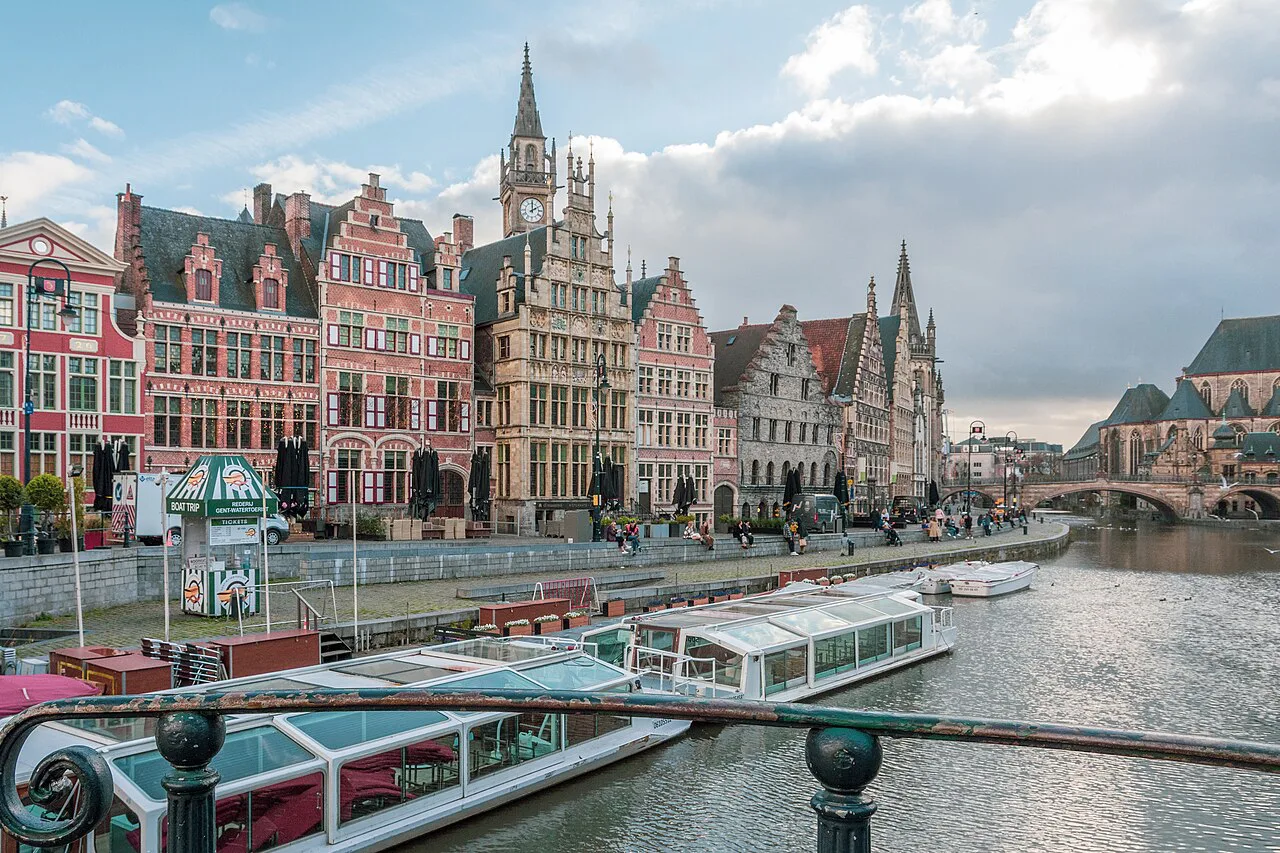
Ghent's day is a single loop. Begin at Graslei and Korenlei, the two quays facing each other across the Leie, with the gabled guild houses reflected in the water, then walk up to Sint-Baafskathedraal for the interior and its painted panels. From the cathedral it is a short walk to the Gravensteen, the moated castle that anchors the east side of the medieval core.
The rest of the day belongs to the streets between those three points: the Korenmarkt, the Vrijdagmarkt and the lanes running down to the water. Ghent rewards wandering more than ticking off, and one day here is enough to see the core without feeling hurried.
Route two: Antwerp (Antwerpen) and Ghent in three days
The second route puts two nights in Antwerp and one day in Ghent, which suits travellers arriving on the Eurostar from London or Amsterdam and wanting a larger city first. Antwerp's centre is bigger and its sights more spread out, so the extra scale justifies the two days.
If you are weighing this against a longer trip, the same pairing works across a 5 day Belgium itinerary with a day added in Brussels or Ypres. Three days simply means fewer museums and no day trips.
Day 1 in Antwerp: Grote Markt, the cathedral and the Vleeshuis quarter
Antwerp's Grote Markt is the obvious starting point, with the town hall and guild houses on one side and the Brabo fountain in the middle. From there, the Cathedral of Our Lady is a two-minute walk, and the streets running north towards the Vleeshuis take you past the old meat hall and into the smaller squares of the old town.
The Vleeshuis quarter is where the day slows down: narrow streets, brick gables and a sense of a merchant city rather than a museum city. Allow the afternoon for it and do not try to reach the museum quarter on the same day.
Day 2 in Antwerp: the museum quarter and the Scheldt quays
Give the morning to the museum quarter around the Leopold de Waelplaats, where the Royal Museum of Fine Arts and the fashion and printing museums cluster within a few minutes of each other. One museum is realistic; two is ambitious unless you skip the quays.
Walk back towards the river in the afternoon for the Scheldt quays, where the redeveloped waterfront gives you the city's widest view and a sense of the port that made it rich. The walk from the museum quarter to the water is the longest single leg of the route.
Day 3 in Ghent: the medieval centre on foot
The Ghent day follows the same loop as route one: Graslei and Korenlei first, Sint-Baafskathedraal next, the Gravensteen last. If you arrive late, reverse it and take the castle first, because the quays are best in low light anyway.
Antwerp to Ghent is a straightforward rail hop, and doing it as a day trip rather than a hotel change saves you an hour of packing. Leave your bags in Antwerp and travel light.
Adding Ypres (Ieper) and the Menin Gate (Menenpoort) as a half-day from Bruges or Ghent
Ypres is a memorial town, not an attraction list. The Menin Gate (Menenpoort) records the names of soldiers with no known grave, and the Lakenhalle (Cloth Hall) on the Grote Markt houses the In Flanders Fields Museum, which gives the context the gate itself cannot.
Treat it as a half-day from Bruges or Ghent and go with the intention of attending rather than touring. Three days is tight for this: adding Ypres means cutting one of the Ghent or Bruges days, so decide before you book.
Where Leuven (Louvain) fits if you are based near Brussels
Leuven sits close to Brussels and works as a university-city counterweight to the medieval showpieces: the Town Hall, the Great Beguinage, a UNESCO World Heritage site, and the Stella Artois brewery. The city is intimate enough to cross on foot, and the Oude Markt gives you a beer stop without a detour.
Where it does not fit is in three days alongside Bruges and Ghent. The draw is real, but a third city in a three-day trip means a third hotel or a lot of rail time, and the Leuven day is better spent as an extension of a Brussels stay.
How the days are paced: walking times, museum time and canal trips
Each route works because the days are geographical rather than thematic. In Bruges, everything within the canal ring is a short walk from everything else, and the Belfort, Markt and Burg form a single stop. In Ghent, Graslei, the cathedral and the Gravensteen are close enough to walk between in one loop.
Antwerp is the exception, which is why it gets its own day for the museum quarter and the quays. Budget one museum per day, not two, and leave canal trips for the city where you have spare time rather than building a day around them.
What three days does not cover, and why that is a fair trade
Three days will not give you Brussels, Liège, Namur or Ostend, and it will not give you both Bruges and Antwerp with a proper look at either. Trying to add a third city turns the trip into a rail timetable with meals attached.
If you want the loop of the whole country, the honest answer is that you need a Belgium road trip's worth of days, not three. Keep the short trip tight and save the rest for a return.
The one exception worth considering is a half-day at Ypres, taken from Bruges or Ghent, if the memorial is the reason for the trip. Otherwise, two cities and one base per pair is the shape that works.
Which route should you book?
Book Bruges and Ghent if you want canals, Flemish painting and a centre you can cross in fifteen minutes, and accept that Bruges in two days means one museum and no day trips. Book Antwerp and Ghent if you want a bigger city with a river, a museum quarter and the Eurostar at the end of it.
Either way, keep one base per pair, plan one museum a day and leave the third city for next time. The trip that works in three days is the one that does not try to be a week.
Frequently Asked Questions
Is three days enough to see Bruges and Ghent?
Yes, if you give Bruges two days and Ghent one. Bruges' centre is compact enough to cover the Markt, Burg, the Belfort and the Groeningemuseum in two days, and Ghent's medieval core of Graslei, Sint-Baafskathedraal and the Gravensteen fits into a single loop.
Should I base myself in one city or move hotels?
Stay in one city per pair and travel to the other on the day. Bruges and Ghent are close enough that a day trip is easier than a hotel change, and the same applies to Antwerp and Ghent. Moving hotels eats the morning you would otherwise spend sightseeing.
How do I add Ypres and the Menin Gate?
Treat Ypres as a half-day from Bruges or Ghent and go for the Menin Gate and the In Flanders Fields Museum in the Lakenhalle rather than as a general sightseeing stop. It replaces one of your city days, so decide before you book.
Where does Leuven fit in?
Leuven works best as an extension of a Brussels stay rather than a third city in a three-day trip. The Town Hall, the Great Beguinage and the Oude Markt justify a day, but adding it to Bruges and Ghent means a third base or a lot of rail time.
Sources
Useful notes for your next trip
Optional updates to our guides.
You might also like



Continue reading
More guides you'll find useful





