
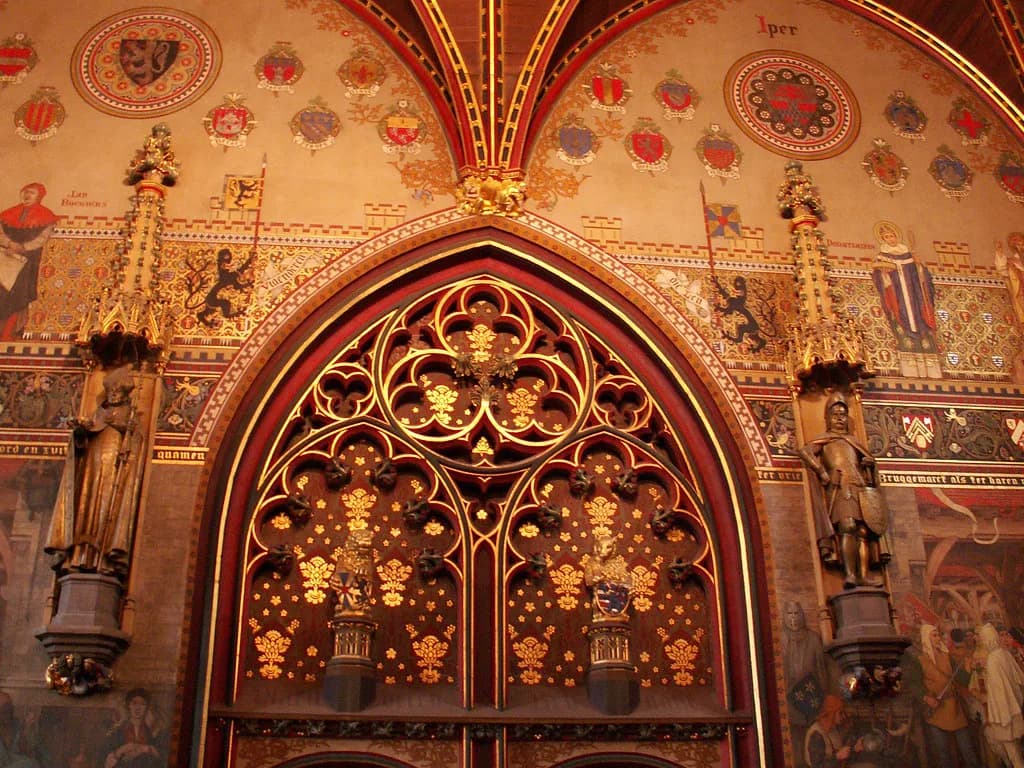
2 Days in Belgium: Bruges and Ghent Itinerary by Day
Two days in Belgium is enough for Bruges and Ghent. This day-by-day plan covers what to see in each city, how to split your time and the trade-offs involved.
On this page
Two days in Belgium is enough for two cities, and the strongest pairing is Bruges (Brugge) and Ghent (Gent), a short train ride apart and different enough that neither feels like a repeat. Give Bruges the first day for its canals and cloth-hall skyline, then Ghent the second for the Ghent Altarpiece and the Graslei quays. This guide sets out the walking order in each city, the Antwerp and Ghent alternative, and what a two-day trip cannot reach.
Which two Belgian cities to pick for a two-day trip
Bruges and Ghent make the best pair because they contrast: Bruges is a compact medieval stage set of canals and brick, Ghent a working university city with a cathedral, a castle and a livelier quayside. Both are small enough to cross on foot in a day, so you spend your time looking rather than travelling. Antwerp and Ghent suits anyone who has already seen Bruges or wants a bigger-city feel, with Antwerp's Grote Markt and fashion-district streets replacing canals as the main draw.
A wider Belgium itinerary usually spreads six days across Ghent, Bruges, Ypres, Leuven and Antwerp, which shows how much a two-day version compresses. Two days is a weekend, not a tour of the country, and treating it that way keeps the trip enjoyable.
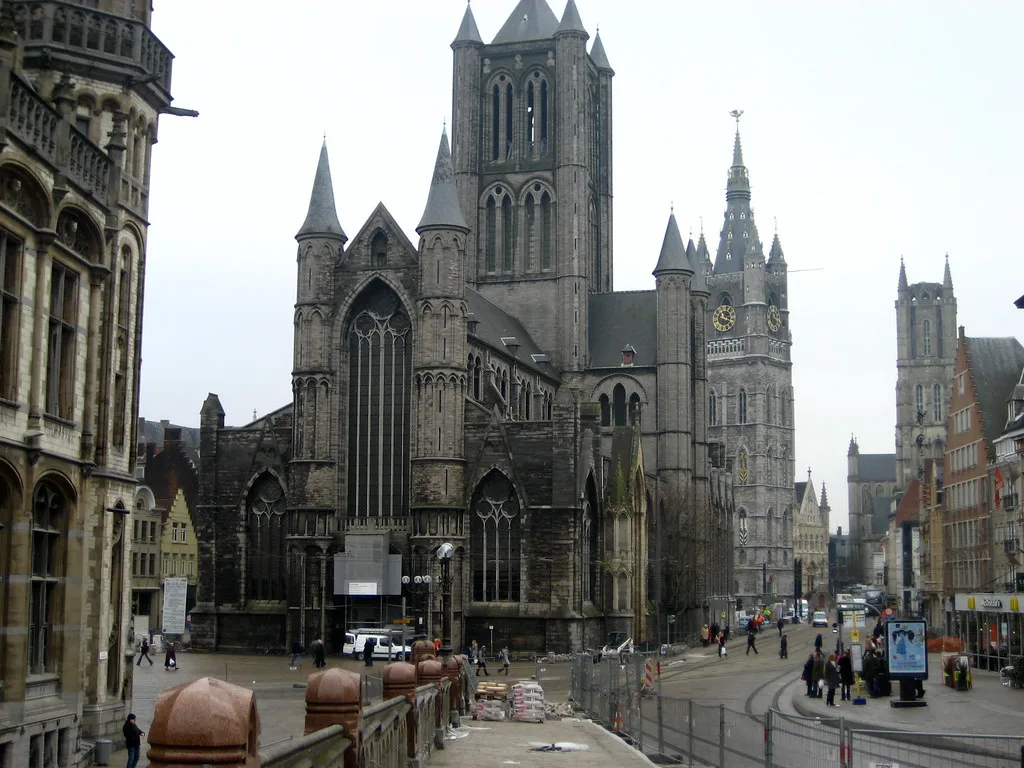
How to split two days between the two cities
Spend a full day in each city rather than half a day in four places. Base yourself in one city for both nights, or in Ghent for the middle position and easy links to Bruges and Antwerp, then travel light between them. Do Bruges on day one if you have not been before, since it rewards the early start, and keep Ghent for day two when its museums and cafés give you more to do if the weather turns.
Is two days in Belgium worth it? Yes, if you treat it as a two-city weekend rather than a tour of the country. Bruges and Ghent are close enough to combine without wasting time on trains, and one full day in each gives you the highlights on foot.
Should I stay in Bruges or Ghent for a two-day trip? Ghent is the more practical base because it sits between Bruges and Antwerp and has more going on in the evening. Bruges suits anyone who wants the canals and the Markt on the doorstep first thing in the morning.
Can I do Bruges and Ghent in one day? You can, but you will see very little of either. One day in Bruges barely covers the Markt, the Belfort, the Burg and the walk to the Lake of Love, and Ghent needs its own morning for the Ghent Altarpiece.
The split also decides your evenings: Bruges empties out after the day-trippers leave, while Ghent stays busy with students. If your two days are a Friday and Saturday, book the Bruges day for whichever is quieter, because the Markt and the Belfort area fill fastest at weekends. Note that some Belgian museums close on Mondays, so a Monday visit needs the walking route rather than a gallery.
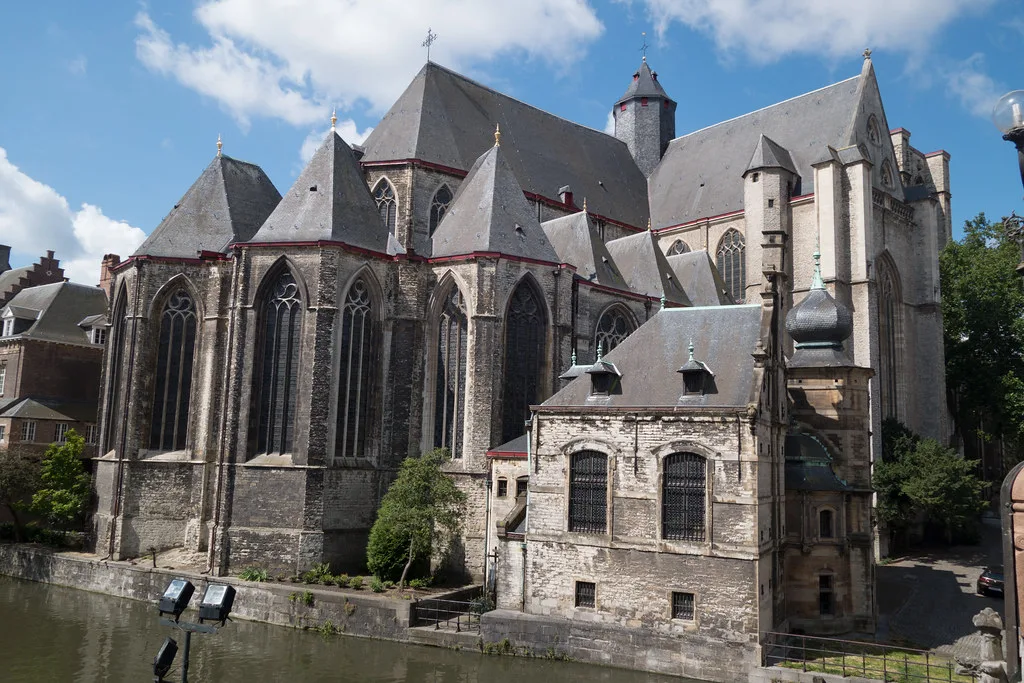
Day 1: Bruges (Brugge), starting at the Markt and Belfort
Start at the Markt, Bruges's central square lined with stepped gables, and look up at the Belfort, the medieval bell tower that dominates it. Climbing the tower is the classic first move for the view over the rooftops, and it is also the sight most likely to take a big slice of a short day, so decide before you arrive whether the climb matters more than a slow walk through the streets. From the Markt, walk a minute south into the Burg, the smaller square that holds the town hall and the Basilica of the Holy Blood.
The Belfort climb runs to 366 steps, a figure worth knowing before you commit on a warm afternoon.
The Basilica of the Holy Blood sits in a corner of the Burg and is a short visit, which makes it easy to fit in before lunch. After that, head south towards the Lake of Love (Minnewater), the tree-lined water at the edge of the old centre where the canal boats turn. The walk there passes the Begijnhof and takes you away from the busiest lanes, and it sets you up for the afternoon loop back along the canals.
Day 1 afternoon in Bruges: canals, windmills and the walk back
From the Lake of Love, follow the canal north-east past the windmills on the edge of town, where the water opens out and the crowds thin. This is the stretch that repays the detour: four white-topped windmills on a grassy rampart, with the Belfort visible again across the water. Walk back into the centre along the Dijver and Rozenhoedkaai, the postcard corner where the canal bends under the bell tower, then cut through to the Markt for the evening.
If you would rather be on the water than beside it, canal boats leave from several jetties near the Rozenhoedkaai and the Lake of Love, and a loop by boat shows you the city from below street level. Weigh that against the walking time you have left; on a one-day visit, the boat is a good substitute for sights you would otherwise rush. A short Bruges day also works well as part of a longer Belgium itinerary if you can stretch the trip.
Day 2: Ghent (Gent), Sint-Baafs Cathedral and the Ghent Altarpiece
Begin in Ghent at Sint-Baafsplein, the square in front of Sint-Baafskathedraal, where the Ghent Altarpiece by Jan van Eyck hangs in a side chapel. Seeing it is the reason many travellers choose Ghent over a second day in Bruges, and it deserves a proper slot rather than a hurried look. Approach the cathedral from the Kouter side and you get the bell tower first, then the square, which is the right order for the scale of the building.
From the cathedral, walk five minutes to the Graslei and Korenlei, the twin quays on the Leie where the medieval guild houses stand shoulder to shoulder across the water. This is Ghent's best-looking stretch and the natural place for a slow coffee or a beer before the afternoon. The quays sit between the cathedral and Gravensteen, so you cross them anyway on the way to the castle.
Day 2 afternoon in Ghent: Gravensteen, the belfry and the old harbour
Gravensteen, the moated castle a short walk north of the Graslei, is the afternoon's main stop: a stone keep with a courtyard and a view from the roof that puts the whole city in perspective. Allow an hour for the castle and its walls, then walk south-east to the belfry and the Lakenhalle on the Botermarkt, the third tower in Ghent's skyline and the one that gives the city its place among the belfry towns. Climbing it is optional, but the square below is worth the walk on its own.
Finish along the old harbour at the Grasbrug and Kraanlei, where the stepped gables and the leaning houses make the most photographed view in Ghent. If time is tight, cut the castle interior and keep the walk along the Leie, because the quays and the skyline are what you came for. If you can add a day, the extra time is easily filled, and a 3 days in Belgium plan shows how to stretch the same two cities into a longer trip.
The Antwerp and Ghent alternative
Choose Antwerp (Antwerpen) and Ghent if you have done Bruges or want a bigger, less touristed city. Start in Antwerp at the Grote Markt, the square below the cathedral spire, with the belfry and the guild houses around it, then walk north to the Vleeshuis, the old butchers' hall now a museum of sound, on the way to the river. Antwerp's centre is looser and more spread out than Bruges's, so plan on longer walking stages and pick two or three sights rather than chasing everything.
From Antwerp, the train to Ghent is straightforward, giving you the Graslei and the cathedral on day two. It is a different pair from Bruges and Ghent, and the trade-off is clear: you gain Antwerp's scale and museum depth, and you lose the canal-and-windmill scenery that makes Bruges distinctive.
What you give up with only two days
Two days will not reach Ypres (Ieper) and the Menin Gate, Leuven, Liège, Namur or Ostend, and each is a full day of its own rather than an add-on. Ypres needs time at the war memorials and cemeteries around Flanders Fields, which are places to approach slowly and with respect. Leuven is a compact university town, while Liège and Namur lie further east and south, and Ostend sits on the coast, so all of them stretch the travel time that a two-day break cannot spare.
A five day Belgium itinerary shows the realistic next step once you want more than two cities, and it is the version to consider if you can add a couple of nights.
Where to base yourself and how to move between the two cities
Ghent is the better base for two nights because it sits between Bruges and Antwerp and gives you more to do in the evening, but Bruges works if you want the canals on your doorstep at dawn. The train between the two cities is short, so day-tripping from either base costs you little time. For a route that takes in more of the country by car, a Belgium road trip is a different shape of trip and better suited to a longer stay.
Book train tickets at the station or in advance on the national operator's app, and travel light: cobbled streets and canal bridges make dragging a large suitcase between hotels harder than the map suggests. Both cities are compact once you are in the centre, and in Bruges the station sits a walk away from the Markt rather than in the thick of it.
Best time of year for a two-day Belgian city break
Spring and early autumn give you the best chance of dry weather for a trip built on walking, and they keep the canal boats and terraces open without the summer queues at the Belfort. Summer is busiest in Bruges and the Markt can feel crowded by mid-morning, so an early start matters more in July and August. Winter is quieter and cheaper but darker and colder, and the short days cut into the time you can spend on the quays.
Which two-day route should you book?
Book Bruges and Ghent if this is your first trip and you want the classic Belgian pair: one day of canals, windmills and the Belfort, one day of the Ghent Altarpiece and the Graslei. Choose Antwerp and Ghent instead if you have already seen Bruges or prefer a larger city with more museums. Either way, give each city a full day, start early, and accept that Ypres, Leuven and the eastern cities wait for a longer visit.
Frequently Asked Questions
Is two days in Belgium worth it?
Yes, if you treat it as a two-city weekend rather than a tour of the country. Bruges and Ghent are close enough to combine without wasting time on trains, and one full day in each gives you the highlights on foot. Expect to leave Ypres, Leuven, Liège, Namur and Ostend for a longer trip.
Should I stay in Bruges or Ghent for a two-day trip?
Ghent is the more practical base because it sits between Bruges and Antwerp and has more going on in the evening. Bruges suits anyone who wants the canals and the Markt on the doorstep first thing in the morning. With only one night in each city, you would spend more time moving luggage than seeing sights, so pick one base for both nights.
Can I do Bruges and Ghent in one day?
You can, but you will see very little of either. One day in Bruges barely covers the Markt, the Belfort, the Burg and the walk to the Lake of Love, and Ghent needs its own morning for the Ghent Altarpiece. Splitting the two cities across two days is the minimum for a trip that does not feel rushed.
Which is nicer, Bruges or Brussels?
Bruges is the more immediately rewarding city for a short break: compact, walkable and full of canals, squares and the Belfort. Brussels is larger and works better as a transport hub or a base for a longer trip. For a two-day visit, Bruges and Ghent give you more distinct scenery per hour than a Bruges and Brussels pairing.
Sources
Useful notes for your next trip
Optional updates to our guides.
You might also like



Continue reading
More guides you'll find useful


