5-Day Belgium Itinerary: Bruges, Ghent, Antwerp and Ypres by Train
A five-day Belgium itinerary by train taking in Bruges, Ghent, Antwerp and Ypres, with day-by-day routes, rough rail times and honest trade-offs.
On this page
Five days is enough for Bruges, Ghent, Antwerp and Ypres at a pace that leaves room to sit in a square, and it works best with one base city and short train hops rather than a hotel change every night. Bruges, Ghent and Antwerp sit within about an hour of each other by rail, so the days below build around that compact Flemish core. What follows is a day-by-day route with the squares, quays, belfries and museums that fill each city.
5 days in Belgium: the shape of the trip
Treat the five days as four city days plus one memorial day. Bruges, Ghent and Antwerp each take a full day without rushing, and Ypres earns its own day because the town's squares and the Menin Gate ceremony are the point rather than the backdrop. East of the Flemish core, Namur in Wallonia is a further option if the memorial day does not appeal.
The order here runs from the western cities to the east: Bruges and Ypres sit furthest west, then Ghent and Antwerp to the east. You could swap Ypres to day two and cluster Bruges and Ghent later, but keeping the western pair together makes more sense than a move sandwiched between Antwerp and Namur. Keep the last evening free; that is where the trip's best unscheduled hour usually lands.
The simplest plan is to stay in one city and treat the others as day trips. Either Brussels or Ghent works as a base: from Brussels, Bruges runs about 50 minutes, Ghent about 38 and Antwerp about 40, while Namur is the furthest at around 65 minutes. The same base works for all of them if you accept slightly longer mornings.
Which cities fit into five days and which to leave out
Bruges, Ghent, Antwerp, Ypres and, on the alternative day, Namur are the five that fit. Brussels functions here only as the rail hub and a comparison point: you may pass through it on the way to Bruges or Ghent, but it does not need a day of its own on a five-day trip. Leuven, Mechelen and the coast towns push the itinerary past what five days can hold.
How many days do you need in Belgium? Five days gives you Bruges, Ghent, Antwerp and a memorial day at Ypres at a comfortable pace. Four days means cutting one city, and seven lets you add Namur or a second day in Ghent without feeling rushed.
Is Bruges or Ghent better for a five-day trip? Both fit. Bruges is the more photogenic canal city and worth at least a day; Ghent is bigger, less pressured by day-trippers and works well as a base because it sits between Bruges and Antwerp.
How do you get between the cities on this itinerary? By train. Bruges is about 50 minutes from Brussels, Ghent about 38, Antwerp about 40 and Namur about 65, and Ypres is reached by a longer ride with a possible change.
The deeper trade-off is between breadth and depth. A six-day plan can add Brussels, the Waterloo battlefield and the Villers Abbey ruins between Ghent and Antwerp, but five days cannot fit all of that without turning every afternoon into a train connection. If you want Ghent to be the centrepiece rather than a day out, compare it with a tighter 3 days in Belgium that strips the itinerary to its core cities.
For an overnight stop, Ghent is a natural middle. It sits between Bruges and Antwerp, it is quieter than Bruges in the evening, and its centre — Graslei, Korenlei, Gravensteen — is compact enough to walk in a couple of hours. Sleep in Ghent, spend one day in Bruges and one in Antwerp, and add Ypres as a day three or four from Ghent.
Base decisions also come down to luggage and hotel changes. Moving once, from Ghent to a second base in western Flanders for the Ypres day, saves a long return leg but costs a morning. Staying put in Ghent for all four nights keeps the plan simple and is the version most people should book.
Day 1: Bruges (Brugge) — Markt, Burg, Belfort and the canals
Bruges is a day of two halves. Start in the Markt, the broad square dominated by the Belfort, then step through to the Burg, the smaller square with the town hall and the Basilica of the Holy Blood. Walk the canals in the morning before the day-trippers arrive, and leave the museums for the quieter afternoon.
The Belfort climb is the obvious set piece, and it is the sight most likely to be busy. Go early and expect queues in summer, and if the queue is long, the walk along the canals is the better use of the hour.
Bruges works well as the western base. Trains to Brussels take about 50 minutes, so you can be in another city before the morning crowds build. The trade-off is scale: Bruges is small and busy, and the evening is when it becomes pleasant again.
Day 2: Ghent (Gent) — Graslei and Korenlei, Gravensteen and Sint-Baafskathedraal
Ghent repays a full day because its historic centre is bigger than Bruges and less polished. Start on the Graslei and Korenlei, the twin quays where the old grain warehouses line the water, then walk to the Gravensteen, the medieval castle in the middle of the city. From there, head to Sint-Baafskathedraal to see its interior.
Ghent is the better choice than Bruges for travellers who prefer a lived-in city to a museum-like one. It has a resident, working feel and less of the day-trip pressure that makes Bruges' Markt feel crowded by mid-morning. On a five-day trip, putting Ghent at the centre gives the itinerary a workable midpoint, and it runs about 38 minutes from Brussels by train.
The day's walking order matters. Approach the Graslei from the Korenlei side and save Sint-Baafskathedraal for the afternoon, when the light through the windows is at its best. Ghent's sights are clustered in the old centre: the Graslei, Gravensteen and Sint-Baafskathedraal are all within a short walk of each other. From Brussels, the trip is about 38 minutes, which is why it fits well as a day out.
Day 3: Antwerp (Antwerpen) — Grote Markt, Vleeshuis and the old docks
Antwerp is the big-city day. The Grote Markt, with its guild houses and Brabo fountain, is the starting point, and the Vleeshuis, the old butchers' hall, is a short walk north. From there, head to the old docks and the riverside, where the scale of the port city becomes clear.
Antwerp rewards a slower pace if you are interested in art and architecture. The city is associated with Rubens and with Art Nouveau, and the cathedral spire is visible from most of the centre, so wandering between squares is a good way to fill the afternoon. The trade-off is that Antwerp's main attractions spread further apart than Ghent's, so plan more walking time or use the tram for the longer hops.
Coming from Brussels, the journey to Antwerp is short enough to make it a comfortable day out. From Brussels, the trip is about 40 minutes, which is why it fits well as the easternmost stop on a Flanders-based itinerary. The city's station is one of the most impressive in Belgium.
Day 4: Ypres (Ieper) — Lakenhalle and the Menin Gate (Menenpoort)
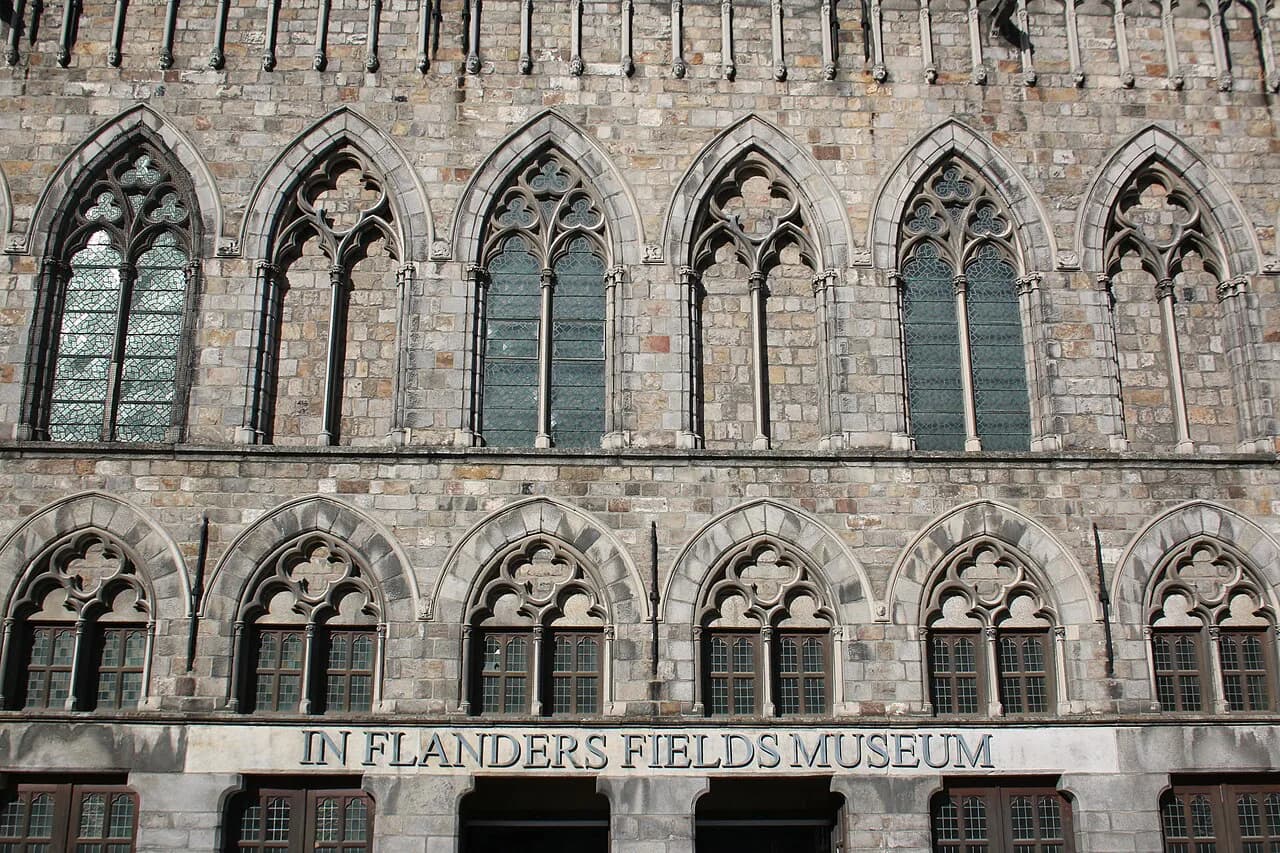
Ypres is a memorial day. The Lakenhalle (Cloth Hall) on the Grote Markt houses the In Flanders Fields Museum, and the Menin Gate (Menenpoort) at the eastern edge of the town is where the Last Post is sounded each evening. Both are worth a full afternoon; the morning can be spent walking the town centre and the ramparts.
The Menin Gate ceremony is the centrepiece of the day for most visitors. It is a memorial service, not a show, so arrive early enough to stand in a respectful position and keep conversation low. The surrounding cemeteries and battlefield sites are best visited with a guide or a clear map; doing the memorial circuit alone works, but the context matters.
Ypres is the most westerly stop on this itinerary. From Ghent, plan the day and look up the last train back before you leave in the morning; the alternative is an overnight in Ypres, which lets you stay for the full Last Post without racing for a connection.
Day 5: Namur (Namen) and the Citadelle, or a second Flanders day
Day five can go two ways. Namur (Namen), the capital of Wallonia, gives you a different country: a riverside city beneath the Citadelle de Namur, at the confluence of the Sambre and Meuse. It is the stop that makes the itinerary feel national rather than purely Flemish, and it runs around 65 minutes from Brussels by train.
The second option is more Flanders: a return to Ghent for the parts you missed, or a slower day in Bruges spent on the canals and in the chocolate shops. If you have already seen Antwerp and Bruges, adding Brussels as a half-day on the way home is a reasonable use of the last morning. Choose based on whether you want a new region or a deeper look at the one you already have.
Namur repays the journey if you like hill towns and river views. The Citadelle sits above the confluence of the Sambre and Meuse, and the climb up is the main event. It is a longer day than Antwerp or Ghent, so keep the evening free and do not overfill it with a second city.
Where to base yourself for five days
Ghent is a practical single base for this itinerary. It sits between Bruges and Antwerp, and the centre is quiet enough to come back to in the evening. Bruges is the alternative if you want the canals on your doorstep; it works best for the western end of the trip. Either way, the Belgium Itinerary pillar sets out the wider shape of a trip.
A two-base split — Ghent for the first three nights and Bruges for the last — gives you a canal base for the western end. The practical difference is one hotel change and one lost morning. If you are booking for a short trip, staying in one place usually wins.
Antwerp is the base for a city-first trip: its station connects well to the rest of Belgium, and the old docks give it more evening life than Bruges or Ghent. It is less convenient for the Ypres day, though, and you will spend more time on the train if the memorials matter to you.
Beer and chocolate: how to fit tasting into the plan
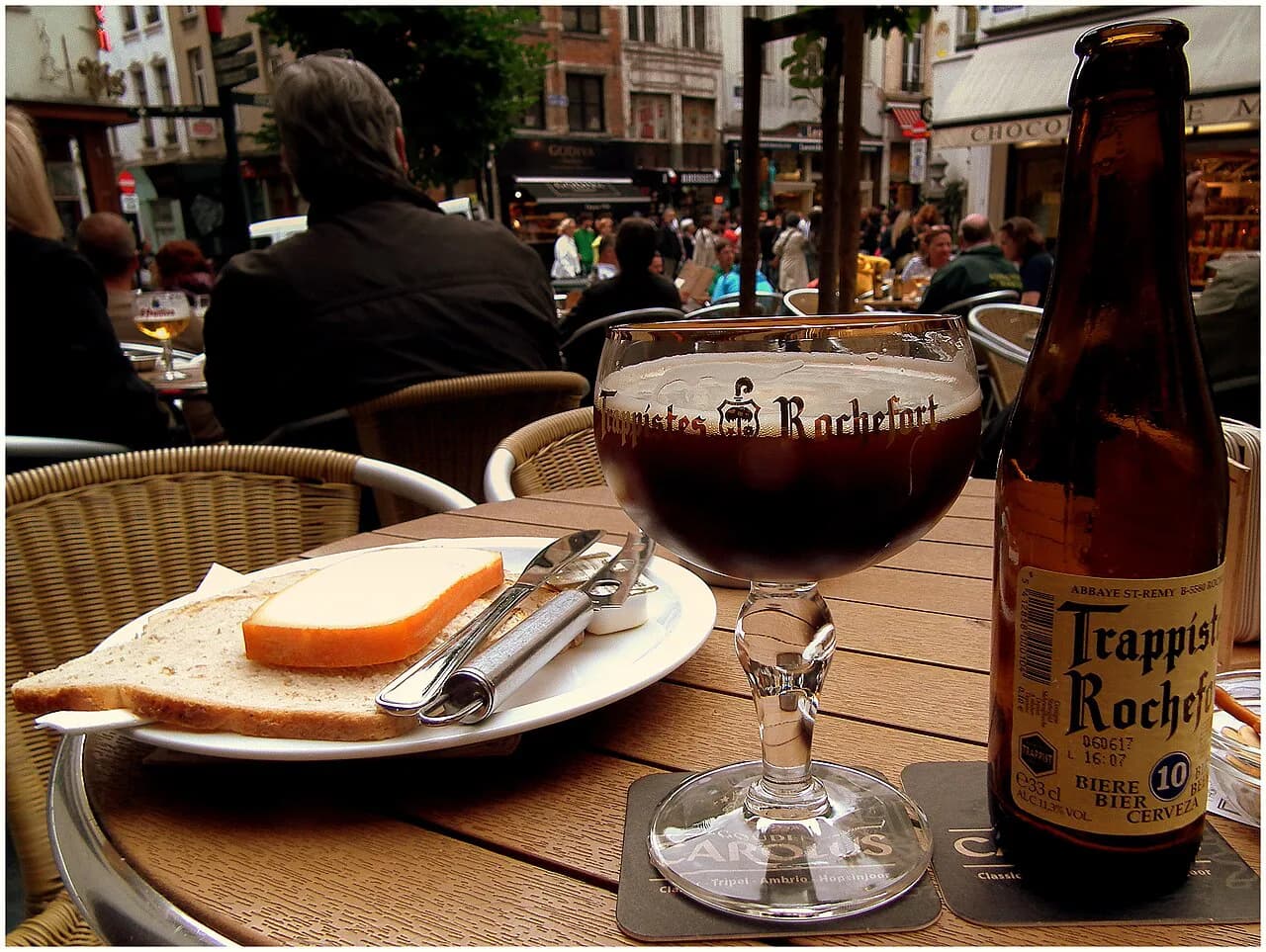
Belgian beer and chocolate are best fitted into the gaps between sights, not scheduled as separate days. Bruges, Ghent and Antwerp all have something for both, and the evening after a day of walking is the natural slot. If you want more structure, treat a tasting as the afternoon of a city day rather than an add-on at the end.
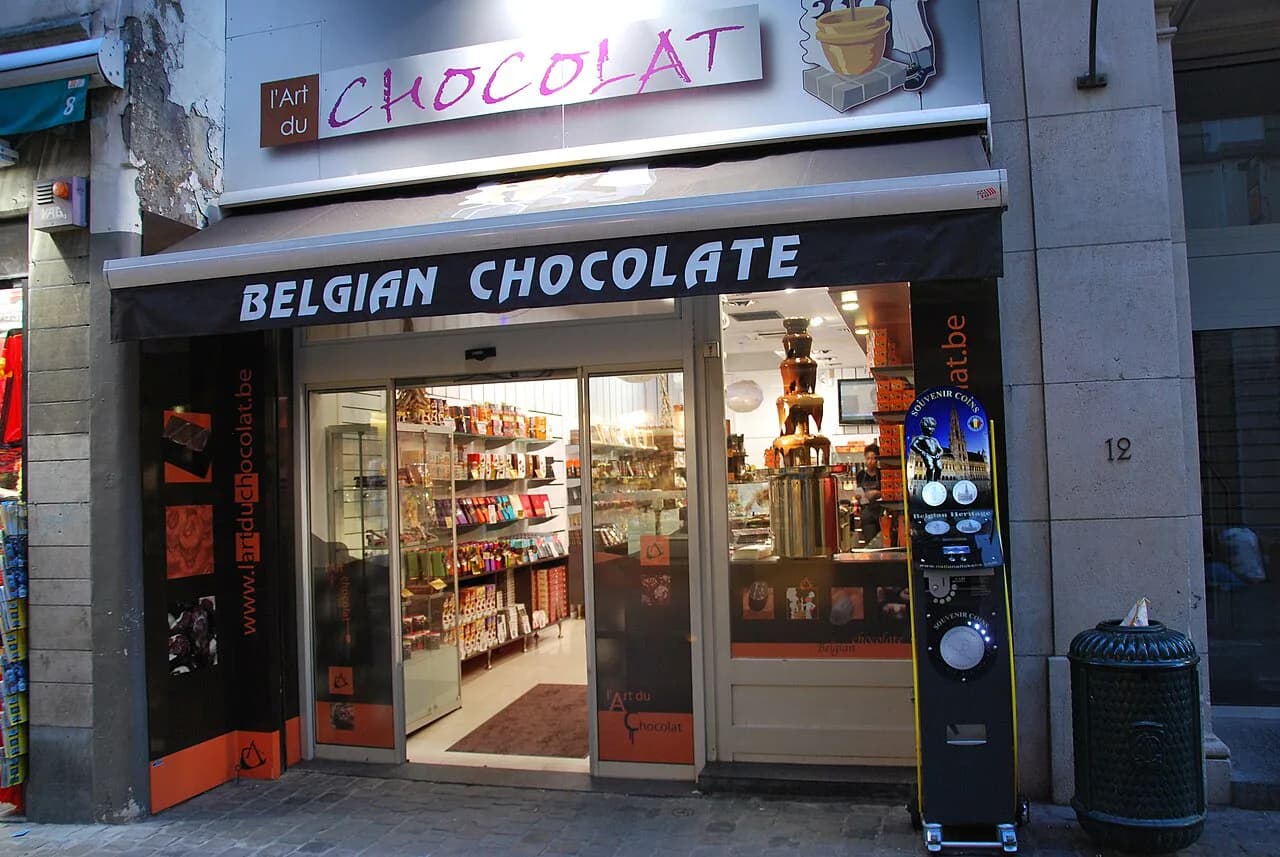
Chocolate works best as a walking activity: pick up a few pieces in Bruges and compare them with what you find in Ghent or Antwerp. The two cities have different characters, and the comparison is part of the fun. Do not over-plan it; a bag of chocolates and a bench on the Graslei is a better afternoon than a scheduled tour.
If you want the full Belgian range without a city-by-city schedule, a Belgium road trip is not necessary: the rail network links all of the stops on this itinerary. A week would let you add Leuven, Mechelen or the coast. On five days, pick one beer experience and one chocolate shop per city and leave the rest for next time.
Bruges or Ghent: which suits a shorter trip
Bruges is the more photogenic of the two, with its canals, Markt and Belfort, and it is the right choice if this is your only visit to Belgium. Ghent is the better choice for a second stop: it is bigger, busier with locals and easier to explore without a plan. On a five-day trip, you can do both, which makes the question less pressing than on a 2 days in Belgium trip.
The crowd question matters most in Bruges. Its centre is small and the day-trip traffic is concentrated in the Markt and along the main canal, so early mornings and evenings are noticeably calmer. Ghent spreads visitors out more. If you want a quiet base, Ghent wins; if you want the classic canal view, Bruges does.
Five days versus four or seven: what changes
Four days drops one city. The natural cut is either Antwerp or the Ypres day, depending on whether you want cities or memorials. Keeping Bruges, Ghent and Antwerp gives you the Flemish core; keeping Bruges, Ghent and Ypres gives you a slower, more concentrated trip in the west.
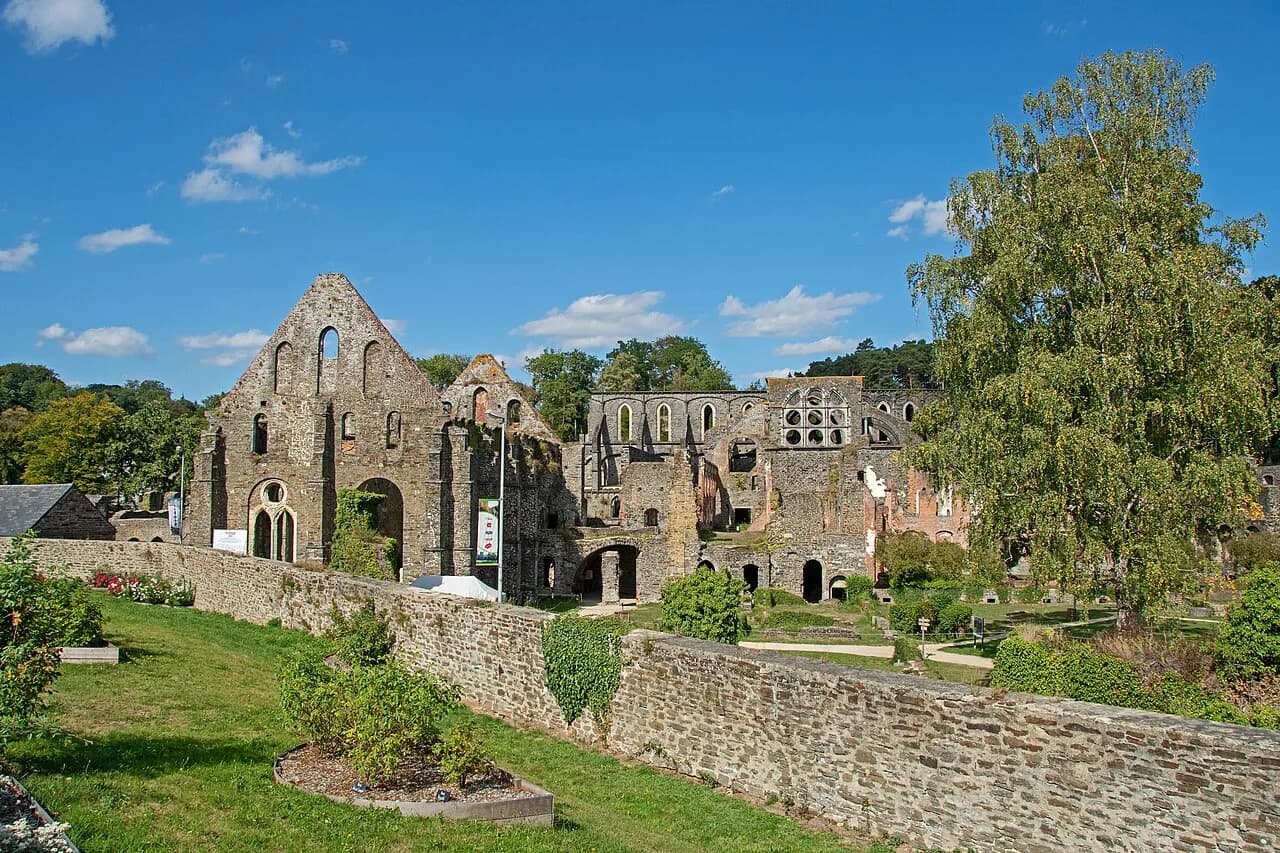
Seven days adds Namur comfortably, plus a day in Brussels or a second day in Ghent. The six-day version already includes the Waterloo battlefield, the Villers Abbey ruins and Leuven, which shows how much sits just outside the five-day frame. Each extra day adds one city or one deep afternoon, not both.
The lesson from longer itineraries is that Belgium rewards slow travel. A five-day trip that covers four cities well beats a five-day trip that touches six. If you are torn, cut a city rather than a morning.
What to book ahead: belfries, towers and timed tickets
The sights most likely to be busy are the vertical ones: the Bruges Belfort and the towers with restricted access. Go early, particularly in summer and at weekends. Everywhere else on this itinerary is a walk-in sight rather than a booked slot.
Museums are the other set of visits to plan. Antwerp's major collections and Ypres' In Flanders Fields Museum take the most time, while the Menin Gate ceremony is a short evening stop. Plan the day around the ceremony rather than the museum, and fit the museum into the morning.
Finally, book the trains in advance for the longer legs, especially to Ypres and Namur. The shorter hops between Bruges, Ghent and Antwerp need little planning, but the western leg is the one where a missed connection costs an evening. Check the return time before you leave in the morning, and a Belgian rail pass can simplify the ticketing.
Is five days the right length for this trip?
Five days is the right length if you want Bruges, Ghent, Antwerp and Ypres without rushing, and you are willing to move once or twice rather than every night. Four days works if you cut one city; seven lets you add Namur and a slower day. The version above is the balance point.
Choose Ghent as your base, put the Menin Gate on day four, and leave day five for Namur or a return to Bruges. Keep the evenings free. That plan covers the cities that define a first trip to Belgium and leaves the rest for the next one.
Frequently Asked Questions
How many days do you need in Belgium?
Five days gives you Bruges, Ghent, Antwerp and a memorial day at Ypres at a comfortable pace. Four days means cutting one city, and seven lets you add Namur or a second day in Ghent without feeling rushed.
Is Bruges or Ghent better for a five-day trip?
Both fit. Bruges is the more photogenic canal city and worth at least a day; Ghent is bigger, less pressured by day-trippers and works well as a base because it sits between Bruges and Antwerp. Use Ghent for sleeping and Bruges for the classic canal morning.
How do you get between the cities on this itinerary?
By train. Bruges is about 50 minutes from Brussels, Ghent about 38, Antwerp about 40 and Namur about 65, and Ypres is reached by a longer ride with a possible change. Book the longer legs in advance and check return times before leaving in the morning.
What should you book ahead in Belgium?
Book the longer train legs in advance, especially to Ypres and Namur, and go early to the Bruges Belfort in summer and at weekends, when it is busiest. The Menin Gate ceremony is a short evening stop, so plan the Ypres day around it.
Sources
Useful notes for your next trip
Optional updates to our guides.
You might also like
Continue reading
More guides you'll find useful