
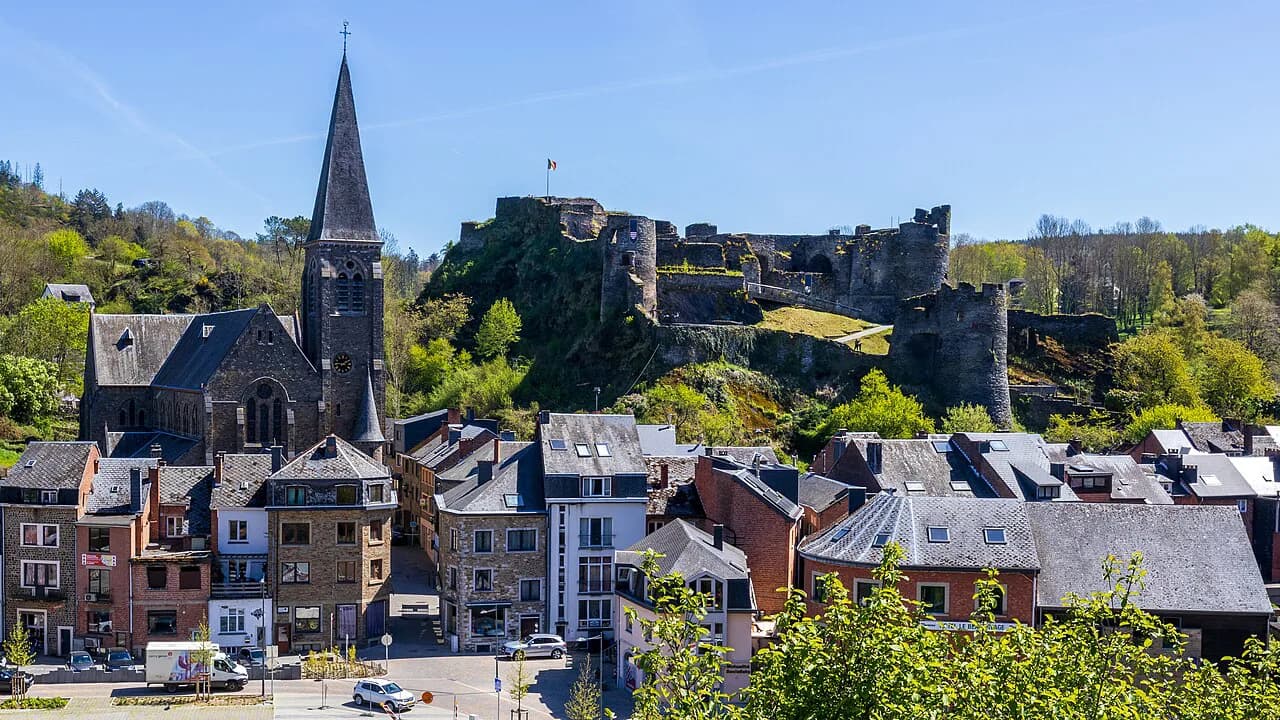
La Roche-en-Ardenne: Castle Ruins and the Town Below
A guide to La Roche-en-Ardenne in the Belgian Ardennes: the castle ruins above the Ourthe, the legend of Berthe and how the small town fits a short trip.
On this page
La Roche-en-Ardenne is worth half a day: a compact Ardennes town whose medieval castle ruins stand on the rock above the Ourthe valley and give the place its shape. Come for the ruin and the landscape rather than for shopping streets or museums, because the castle is the main sight and the town below is small. This guide covers what survives on the hill, the legend told there, the seasonal activities run at the ruins and how the town sits in the wider region.
What La Roche-en-Ardenne is and where it sits
La Roche-en-Ardenne lies in Wallonia, in the Belgian province of Luxembourg, on the Ourthe river in the Ardennes hills. It is a town of stone houses and steep wooded slopes rather than a city, so it fits an itinerary through the Ardennes instead of a stand-alone city break. The castle ruins dominate the valley and overlook the town, which tells you the site is built for its view as much as for its walls.
Think of La Roche as one strong sight with a settlement attached. That is the honest trade-off: there is no belfry-and-canals day here in the Bruges or Ghent mould, and the appeal is the combination of a ruined feudal castle with the river valley below. If you want a town where a full day of museums and squares is the point, plan your Belgian break elsewhere and treat La Roche as a countryside stop.
The castle ruins above the town: what survives on the site
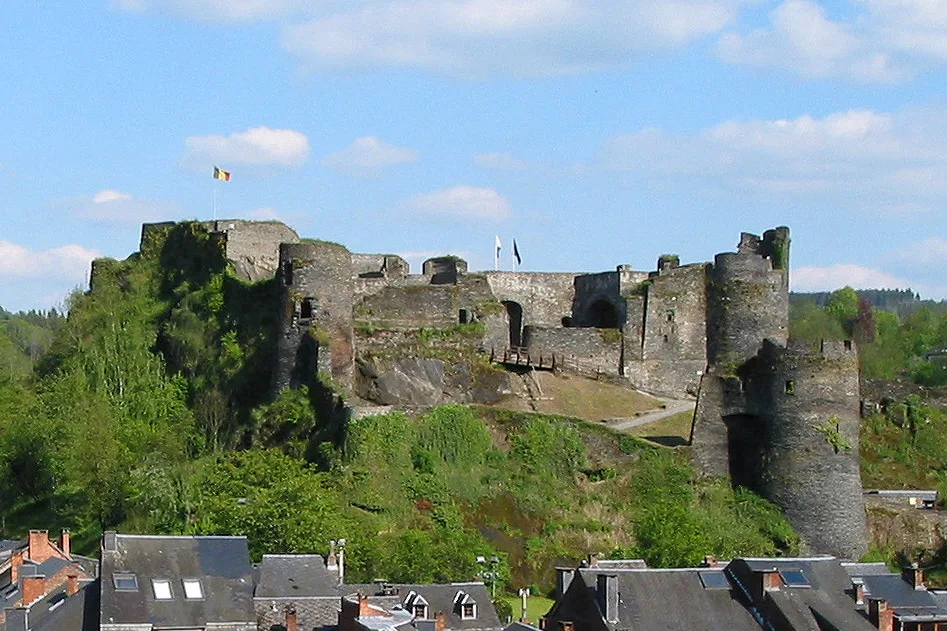
The castle is a ruin, not a restored château, so picture broken masonry, standing towers and dungeons rather than furnished halls and painted ceilings. The site's traditional dating is the 9th century, and the ruins still carry the imprint of the feudal era despite later changes. Walk it as an outline of a fortress: you read the defences from the shape of the walls and the drop of the ground, not from display rooms.
The position does most of the work. Because the ruins sit above the Ourthe valley and look down over the town, the best moments are at the wall edges where the towers frame the view. Give yourself time to circle the site slowly, and wear shoes that cope with uneven stone and ground; a ruin rewards careful footing more than a quick circuit.
The legend of Berthe and the ghost story at the castle
The castle comes with a story: Berthe, the lord's daughter, was killed on the night of her wedding by her rival, Countess Alix de Salm, and the ruins are where her ghost is said to linger. That tale is legend rather than recorded history, so enjoy it as folklore and keep the two apart in your head. It is the detail that makes the ruin memorable for many visitors.
Seasonal activities at the ruins: archery and medieval crafts
The castle runs seasonal activities alongside the ruins themselves: archery, sessions on medieval crafts, and storytelling built around the ghost of Berthe. These are seasonal rather than year-round fixtures, so they are a reason to time a visit to the warmer months rather than something you can count on in any week.
If archery and craft demonstrations are the draw, build the day around the castle rather than treating it as a photo stop on the way through. Families and groups get the most from these add-ons; walkers who want the view and the story can see the ruin in a shorter visit. It is a decision about pace, not about saving money.
The town centre below the castle and the Ourthe valley
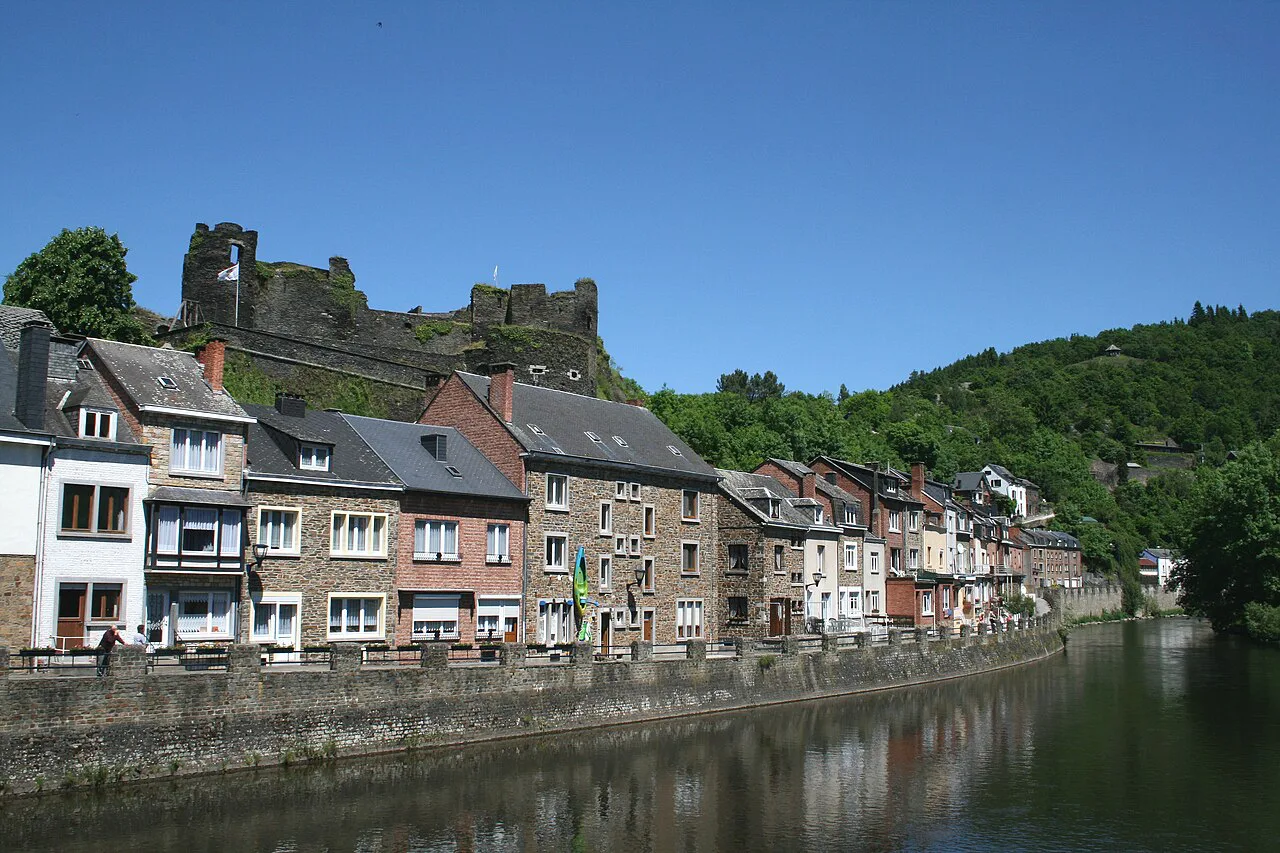
Below the hill, La Roche is a riverside town laid out along the Ourthe, with the castle rock rising directly above the streets. The pleasure is the pairing: climb to the ruins, then come down to the water and look back up at the walls you have just walked. The river bend is what makes the town photogenic from above and what gives the valley its green, enclosed feel.
Use the town as the base for the visit rather than as a separate attraction. You will not find a dense circuit of museums and squares here, so budget your time for the climb, the ruins and a wander by the water. That is a small day, and a good one if you are already touring the Ardennes.
How much time La Roche-en-Ardenne needs
Half a day covers the castle and the town comfortably; a full day suits anyone combining the ruins with a slow riverside walk or the seasonal activities. It does not need the two or three days you would give Ghent or Antwerp, because the sightseeing is concentrated on one hill and one valley. Travel time between Ardennes towns is the real constraint, so plan La Roche as one stop rather than a base for a week.
If your Belgian break is only one to four days in total, La Roche works as a half-day detour from a route through the Ardennes, not as the anchor of the trip. Travellers coming from Bruges or Ghent should count the drive before committing, because the distance eats into a short break. Save it for an itinerary that is already heading south.
Adding it to an Ardennes itinerary alongside other Belgian towns
La Roche-en-Ardenne slots naturally into an Ardennes loop with the other towns of the region. Dinant, on the Meuse, pairs a citadel and a collegiate church with the river, and makes a logical companion stop if you are crossing the region from west to east. Both are small towns built around one dominant height, so doing them on separate days keeps each fresh.
Further afield, Durbuy is a tiny stone town in the same province, worth a look if you want a second short stop on the same drive. The caves of Han and the old abbey town of Stavelot give you underground and monastic alternatives when the weather turns. Malmedy and Bastogne, with its war museum, sit deeper in the Ardennes and suit travellers following the region's Second World War history.
Houffalize is another small Ardennes town on the same circuit, useful when you are stringing together the northern Ardennes in a single day's driving. None of these places needs more than a few hours, so two towns a day is realistic if you start early and keep the castle climb as the centrepiece. Doing fewer places properly beats racing between them.
Is La Roche-en-Ardenne worth the detour?
Yes, if you are already in the Ardennes and want a ruined castle with a valley view and a ghost story attached. No, if your short Belgian break is built around city sightseeing, because one hilltop ruin does not fill days. Half a day is the right measure.
Go for the climb, the walls, the view down the Ourthe and the story of Berthe, and treat the seasonal archery and craft sessions as a bonus if your dates happen to line up.
Explore more Belgium guides
Frequently Asked Questions
Where are the Ardennes in Belgium?
The Ardennes is the wooded upland region of southern Belgium, spread across Wallonia and reaching into the provinces of Luxembourg, Namur and Liège. La Roche-en-Ardenne sits on the Ourthe in the province of Luxembourg, in the heart of the region.
Is La Roche-en-Ardenne worth visiting?
It is worth a half-day stop if you are touring the Ardennes. The medieval castle ruins above the town are the main sight, with towers and dungeons, a valley view and the legend of Berthe. It is not a substitute for a city break in Bruges or Ghent.
Does the Ardennes Forest still exist?
The Ardennes is still a wooded upland, with large areas of forest and deep river valleys running through southern Belgium, and La Roche-en-Ardenne sits within that landscape. Its castle ruins look out over the Ourthe valley and the surrounding hills.
Sources
Useful notes for your next trip
Optional updates to our guides.
You might also like



Continue reading
More guides you'll find useful





