
Houffalize: A Practical Guide to the Ardennes Town and Its Surroundings
Houffalize is a small Ardennes town in the Ourthe valley, known for its wartime memorials, wooded hills and trails. Here is what to see and how to plan a visit.
On this page
Houffalize needs half a day for the town itself and a full day or more if you want to walk or ride the wooded hills around it. It is a small Ardennes municipality in Wallonia's Province of Luxembourg, sitting in the Ourthe valley rather than offering the density of sights a Belgian city gives you. This guide covers the town's layout, its wartime heritage, the surrounding outdoor country and how long to allow.
Treat it as a place to slow down: the centre is compact and walkable, while the wider countryside begins almost at the edge of the built-up area. Houffalize makes most sense as a stop on a wider Ardennes trip, and you can read more in our guide to the Ardennes Belgium.
Houffalize in the Ourthe Valley
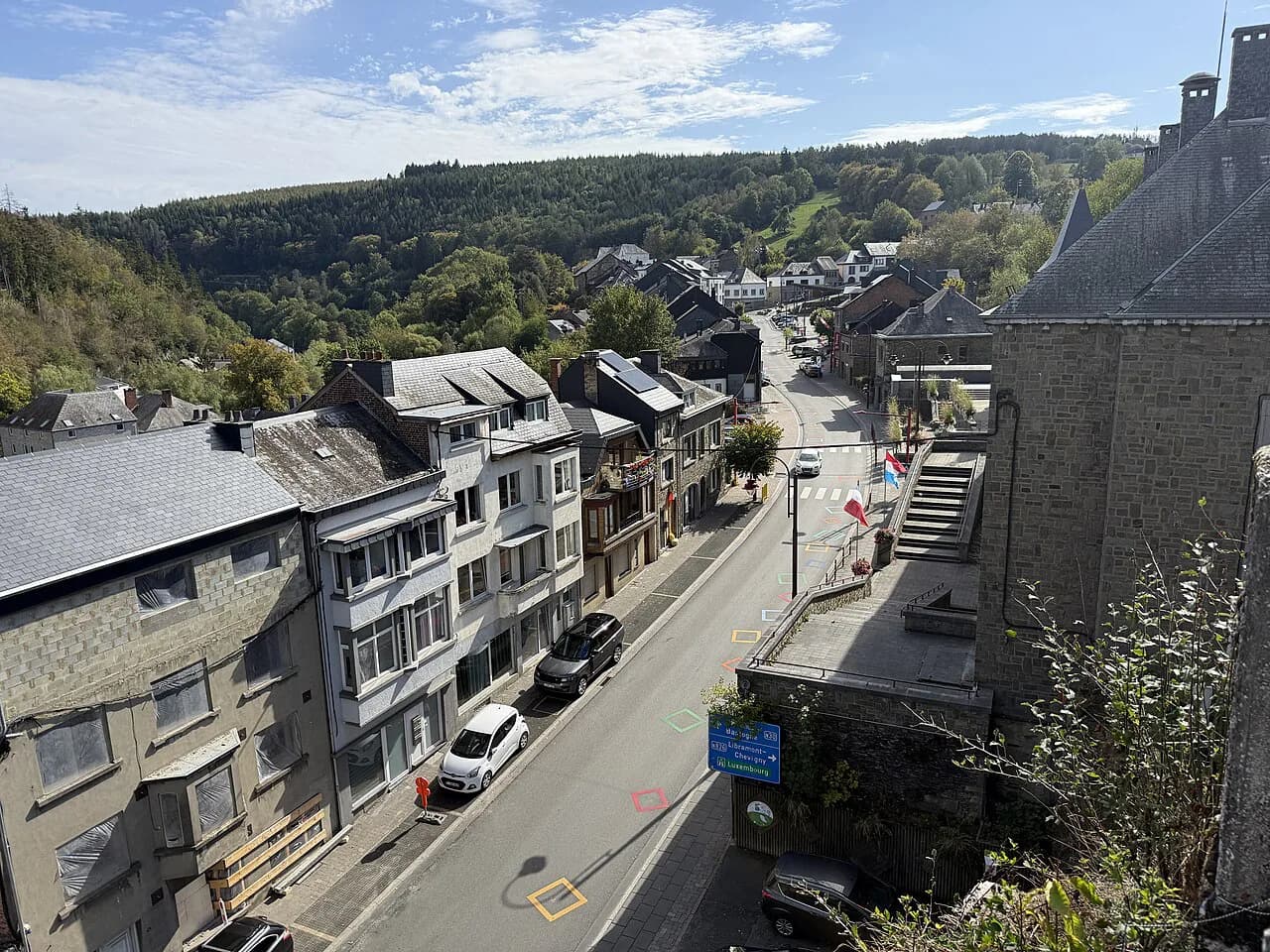
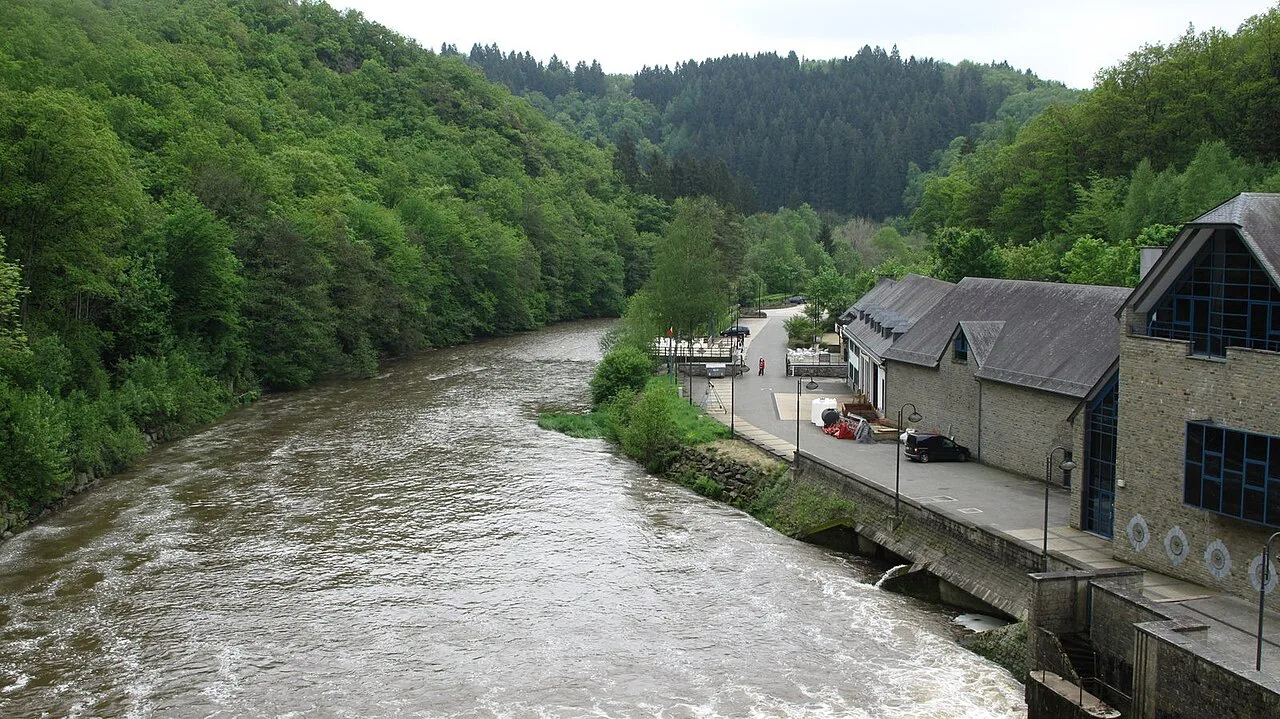
Houffalize (Oufalijhe in Walloon) is a city and municipality of Wallonia in the province of Luxembourg, in the Ardennes and associated with the Ourthe valley. The surrounding slopes are wooded, which gives the place its quiet, enclosed feel.
The municipality has an important cultural, historical, civil and religious heritage, with buildings, monuments and old schist walls among its features, as the regional tourist board describes. Old schist is the giveaway: this is Ardennes building stock, dark and stony, not the brick and sandstone of the Flemish cities.
Do not come expecting a museum-heavy town break. Houffalize's value lies in its setting and its history, so the honest comparison is not Bruges or Ghent but the Ardennes itself.
Getting Your Bearings on Foot
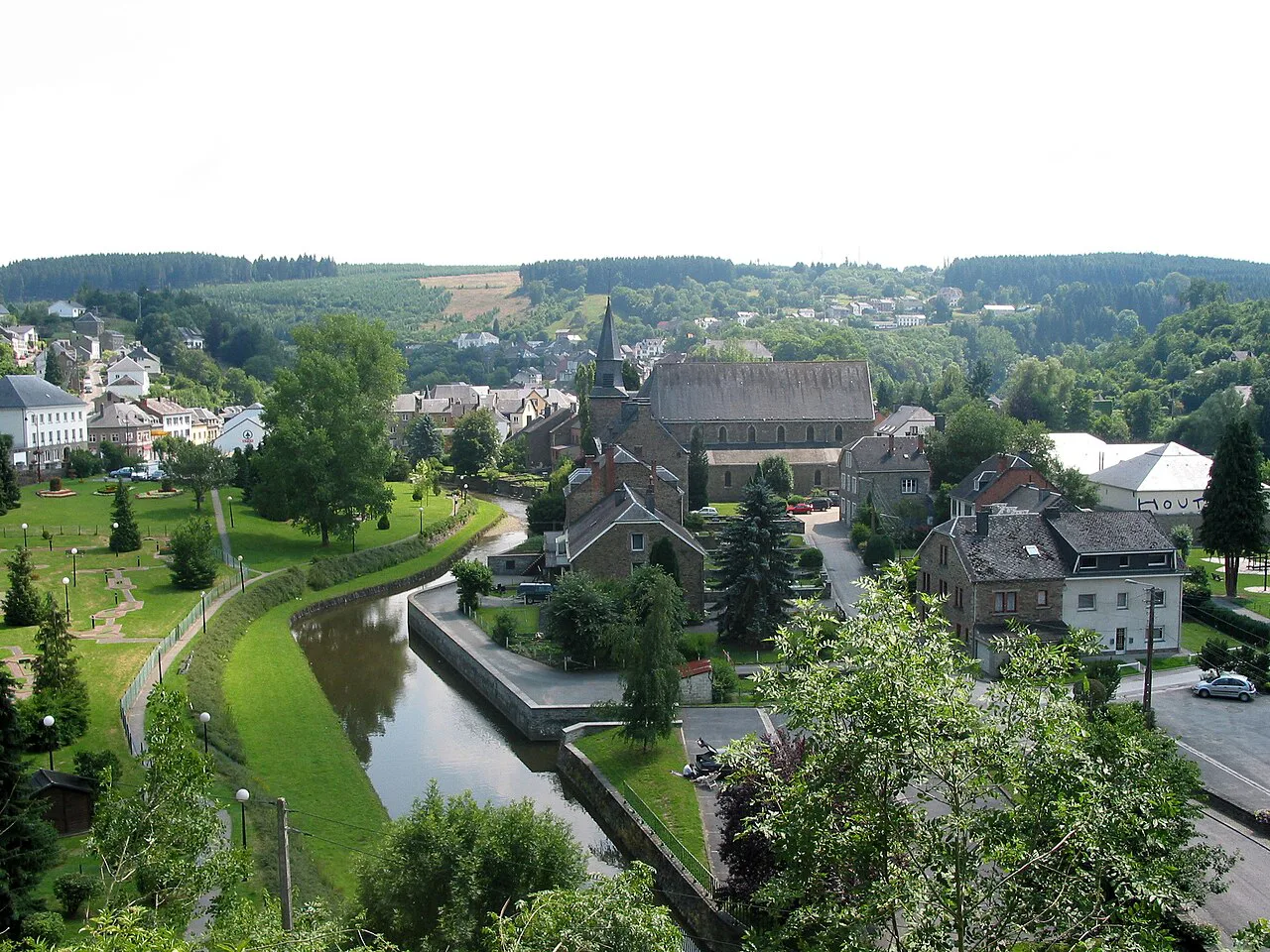
The centre is small enough to cross in a short stroll, with the river as the easiest landmark. Walk the riverside first to fix the shape of the town, then branch uphill into the older streets to see the schist walls and monuments.
A morning covers the town's own sights without rushing. If you are arriving by car, park once and do the centre on foot rather than moving between points, because distances within Houffalize are short but the valley means gradients.
For local orientation and information about the surrounding countryside, the regional tourist board is the natural first stop in a small town.
Wartime Heritage: Memorials in the Town
Houffalize carries heavy wartime history. The town was caught up in the Battle of the Bulge, the German offensive through the Ardennes in the winter of 1944 to 1945, and its memorials are among the most visible traces of that period. Approach them as memorials rather than attractions: they mark loss and destruction, and the register should be quiet.
Read the panels and inscriptions where they exist rather than relying on guesswork, and leave space for reflection instead of treating the site as a photo stop.
If the Second World War is the reason for your trip, the wider Ardennes has far more to see. Bastogne lies south, while Malmedy and Stavelot tell related stories elsewhere in the region.
Walking and Mountain-Biking in the Woods
The wooded hills around Houffalize are the main outdoor draw, best used for walking and mountain-biking in the surrounding forests. Walkers get streams, ridge paths and quiet lanes between villages; riders get the steeper tracks and descents that make this part of the Ardennes a mountain-biking destination.
Choose your season deliberately. Spring and early summer give long daylight and manageable temperatures, while autumn brings colour and quieter trails but more mud underfoot. Winter walking is possible but the days are short, and snow or ice can close the higher paths.
Kit matters more than the route choice: waterproof footwear, a proper map and a layer for wind are worth carrying even on a short loop, because the valley shelters the town but not the wooded slopes above it.
Houffalize as a Base for the Ardennes
Houffalize works best as one stop rather than a sole destination. The wider Belgian Ardennes stretches across the provinces of Luxembourg, Liège and Namur, and a car makes the connections straightforward for the castles, towns and forests that fill the region. La Roche-en-Ardenne is a smaller medieval-feeling town with its own castle ruins and riverside walks.
Dinant, on the Meuse to the north-west, pairs its citadel and church with a distinctly river-valley setting and makes a logical contrast to Houffalize's wooded hills. See our guide to Dinant: The Citadel, the Church and the Saxophone Trail on the Meuse for that leg of the trip.
Durbuy, often called Belgium's smallest town, is mostly a compact knot of stone streets and makes an easy half-day. The caves of Han and the abbey at Stavelot add underground and religious interest if you want variety beyond forest and memorials.
How Many Days Houffalize Needs
One full day covers the town, the wartime memorials and a short forest walk. Two days give you a proper longer hike or a bike ride plus time in the surrounding villages. Three or four days only make sense if you use Houffalize as a base and drive out to Dinant, Bastogne or La Roche.
Plan around the outdoors rather than the town: a wet day at Houffalize leaves little to do indoors compared with a city such as Namur or Liège. If the weather turns, shift to a museum town and return to the hills later.
When to Go
Late spring to early autumn is the practical window for walking and mountain-biking, with the longest days and the most reliable conditions. Summer is busiest, so book any accommodation early and expect company on the popular trails. Autumn is quieter and colourful, while winter suits those coming for the town and memorials rather than long days outdoors.
In Houffalize the weather changes quickly in the valley, and path conditions matter more than the forecast alone, so build in slack for wet days on a forest walk.
Is Houffalize Worth the Detour?
Yes, if you want a small Ardennes town with real wartime history and easy access to forest trails, and you are happy to drive between sights. No, if you are after a city break with museums, restaurants and an evening scene.
Frequently Asked Questions
Is Houffalize worth visiting?
It is worth a detour if wartime history and wooded walking country appeal. The town itself is small, so pair it with other Ardennes stops rather than making it the whole trip.
What is Houffalize known for?
Its setting in the Ourthe valley, its Battle of the Bulge memorials, and the walking and mountain-biking country around it.
Where is Houffalize in Belgium?
In Wallonia, in the province of Luxembourg, in the Ardennes; the town is associated with the Ourthe valley.
Sources
Useful notes for your next trip
Optional updates to our guides.
You might also like



Continue reading
More guides you'll find useful





