
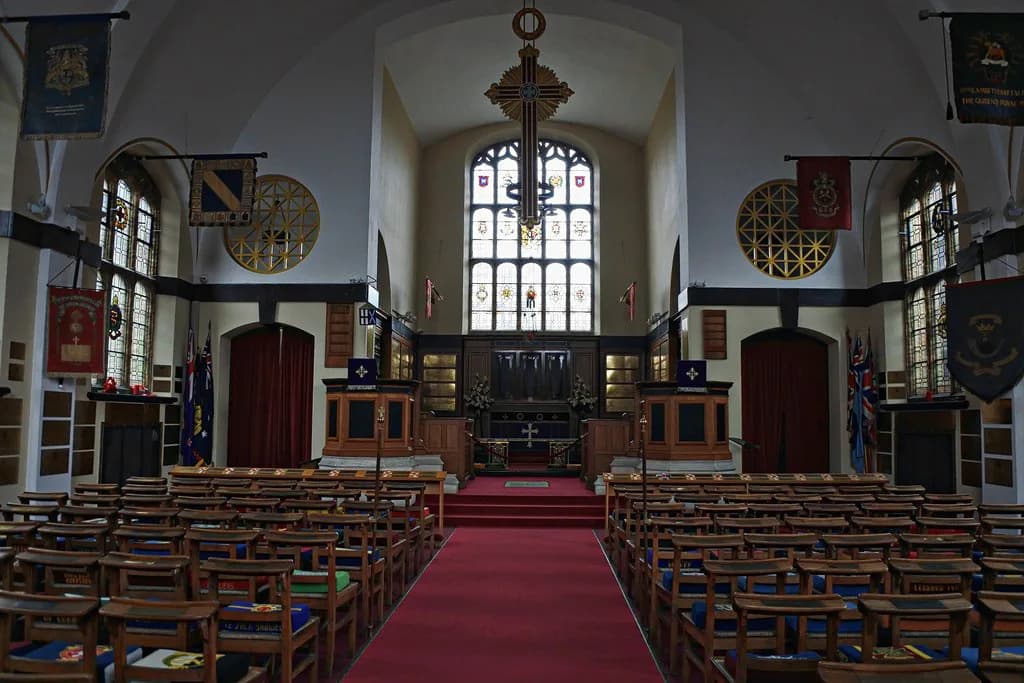
St George's Memorial Church, Ypres: What to See Inside
St George's Memorial Church is worth 30 to 45 minutes of any Ypres itinerary, and the reason to go is the interior rather than the brick shell. Pews, windows, plaques, kneelers and bells were given as memorials to men who died in the Ypres salient, and they turn a modest church into a dense register of remembrance: the sort of place to read slowly. This guide covers where the church stands, what to look for inside, its interwar history and the sights within a few minutes' walk.
What St George's Memorial Church is and why it matters in Ypres
St George's is an Anglican church in Ieper that serves both the local community and the many British and Commonwealth visitors who come to the battlefields. Its twin anchors in the town's memory are the Menin Gate (Menenpoort) and this church, which holds perpetual remembrance in a different register: quiet, interior and personal rather than monumental. Where the gate lists names on a vast scale, St George's holds the objects families and regiments gave in memory of individuals.
The church was built for mourners who had no grave to visit in Britain. After the war, families wanted a peaceful Christian place in Ypres where they could remember sons and husbands whose bodies were never returned, and the building was funded and fitted out by donations from families, schools and military units. That origin explains why so much of the interior is inscribed, glazed or embroidered with names.
Where it stands: Elverdingsestraat 1, a short walk from the Menin Gate
The church address is Elverdingsestraat 1, Ieper, on the eastern side of the town centre. From the Menin Gate it is a walk of a few minutes, and it sits comfortably on a circuit that also takes in the Lakenhalle and the Grote Markt. If you are coming from the station, allow ten to fifteen minutes on foot through the centre.
Because it is a working church rather than a museum, entry is not organised like a sight with a ticket desk and a one-way route. Visitors come in between services and parish activity, and the atmosphere depends on whether a service, rehearsal or a group visit is under way. If your trip centres on a particular memorial or a family name, ask the chaplaincy in advance rather than turning up and hoping for access to a specific corner.
The interior: stained glass windows, brass plaques, kneelers, banners and bells
Begin with the glass. Memorial windows are among the church's defining features, and each one carries its own dedication, so read them rather than scanning the aisle as a whole. The stained glass, together with the bells, kneelers, brass plaques and regimental banners, forms the integral memorial scheme that gives the building its character.
Look down as well as up: kneelers were worked and given in memory, and the embroidery often records a name, a unit or a date. Brass plaques line the walls, and the banners and standards of regiments and associations hang above. The cumulative effect is a roll-call spread across fabric, wood, metal and glass, and it rewards slow reading more than a quick circuit.
The church opened in 1929, so most of what you see was made and given within a decade or two of the war, when bereaved families were still alive to commission it. A church built on that timetable is a document of the 1920s and 1930s as much as of 1914 to 1918, and the style of the lettering and glass tells you so.
Memorials to individuals: reading the church as a register
Most visitors who come for family history arrive with a name, a regiment or a cemetery reference. The plaques, windows and kneelers are the places to look first, because the interior was furnished by the people who knew the dead, and their dedications carry the details a researcher needs. Bring what you know written down, and work methodically along the walls and around the pews rather than relying on memory.
The church also remembers the Second World War, and memorials have been added by later generations tracing relatives. That makes it a layered document rather than a single-period monument, and it explains why some panels look newer than the brickwork around them. Treat each addition as someone's act of remembrance and give the walls the time you would give a cemetery register.
The church's place in interwar remembrance
The foundation stone was laid in 1927 and the church opened in 1929, dedicated by the Bishop of Fulham. Sir Reginald Blomfield, already closely involved with British and Commonwealth military cemeteries around Ypres, was the architect, which links the church professionally to the wider commemorative landscape of the salient. The simple brick exterior gives little away about the density of memorials inside.
A school was founded alongside the church in 1929 for the children of British workers who had moved to Ypres with the Imperial War Graves Commission, later renamed the British Memorial School. It closed during the Second World War, and the church buildings were used by German officers during the occupation. The church itself remained the constant: an active place of worship serving the community and visitors, and the reason the interior still feels cared for rather than curated.
How much time to allow and how to visit respectfully
Allow 30 to 45 minutes if you intend to read the windows and plaques, and longer if you are searching for a specific name. A brisk ten-minute look takes in the architecture and the main glass but misses the detail that makes the church distinctive. Build the visit into a morning or afternoon rather than squeezing it between two fixed bookings.
This is a consecrated, working church, so the usual courtesies apply: keep voices low, avoid flash and tripods during worship, and do not move kneelers or altar furnishings. If a service or a private act of remembrance is in progress, wait or come back rather than walking the aisles. Remember that many of the objects you are looking at were given by grieving families.
Nearby: the Menin Gate, the Last Post and the rebuilt Lakenhalle
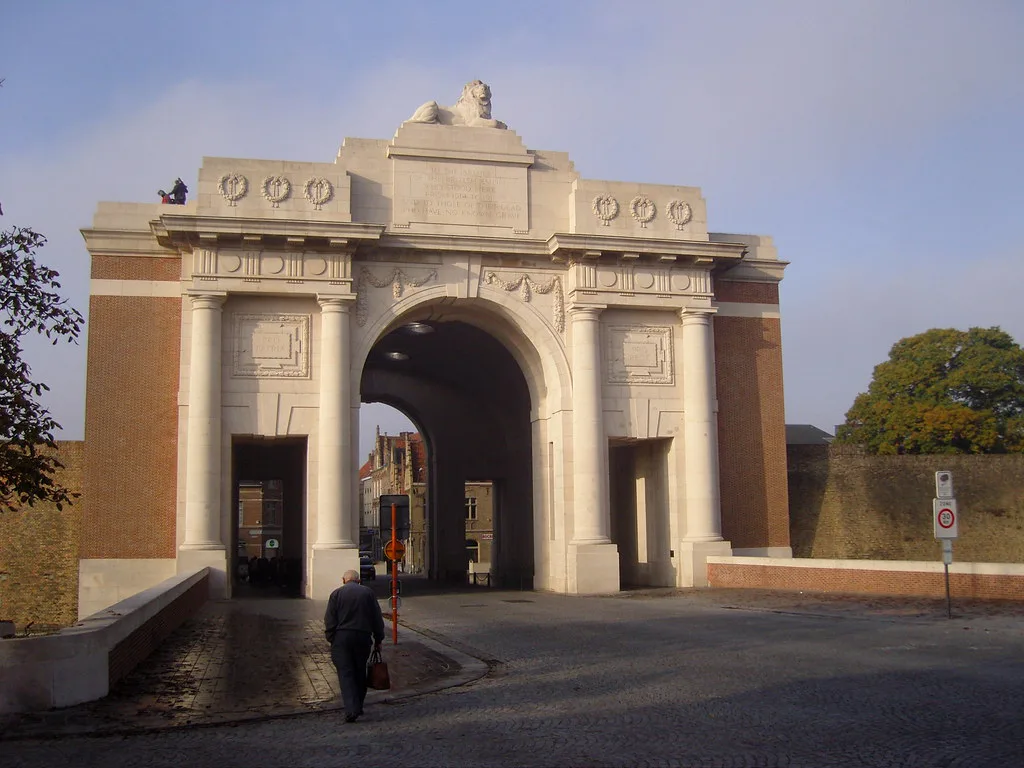
The obvious pairing is the Menin Gate (Menenpoort), a few minutes away on the road east out of the centre. The gate bears the names of more than 54,000 officers and men with no known grave, and its evening Last Post ceremony is the town's daily act of remembrance. The two sites work well in sequence: names on stone at the gate, individual memorials inside the church, which is why St George's pairs naturally with the memorial itself.
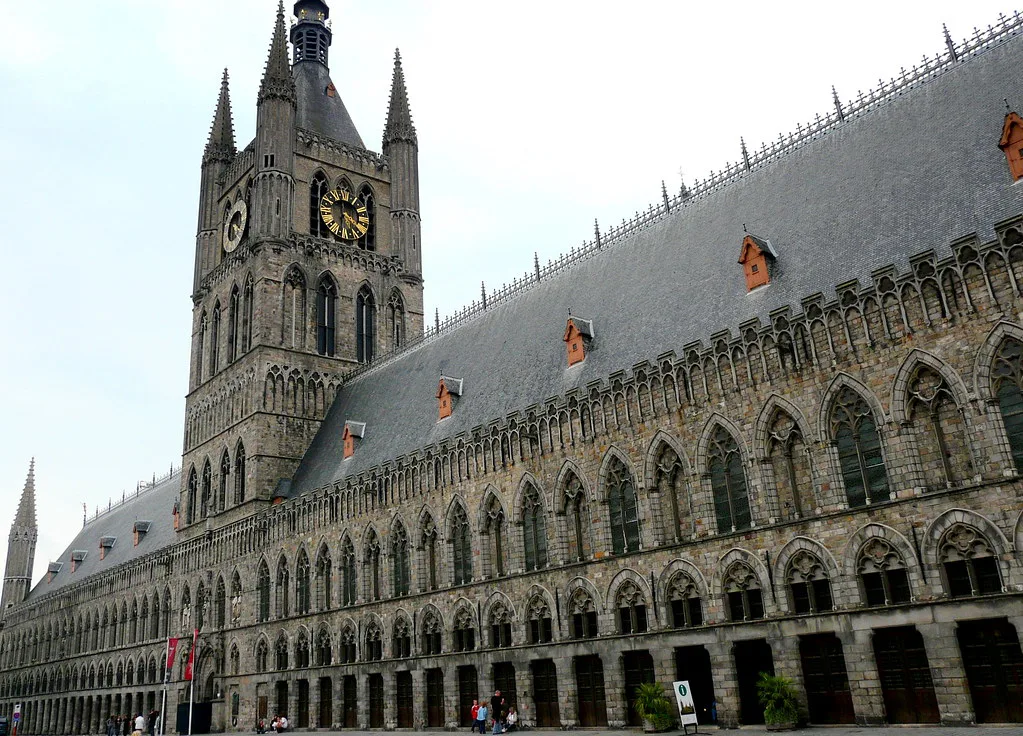
Back towards the centre, the rebuilt Lakenhalle (Cloth Hall) on the Grote Markt houses the In Flanders Fields Museum and dominates the square. St Martin's Cathedral, another postwar reconstruction, stands alongside it, and together they make an easy hour's walk from Elverdingsestraat. If you have a car, the battlefield museums and cemeteries outside town fill a second day, with Sanctuary Wood Museum (Hill 62) and Hooge Crater Museum among the closest options.
Further out, Tyne Cot Cemetery and the Passchendaele museum at Kasteeldomein van Zonnebeke anchor the northern part of the salient, and Hill 60 Ypres and the Langemark German War Cemetery show how differently the combatants commemorated their dead. All of these sit beyond a comfortable walk, so plan transport. The town's own sights and memorial circuit are gathered in the Ypres Attractions: 13 Visitor Guides.
A short walk on from the church: gates and ramparts
If you are following the old fortifications, the Lille Gate (Rijselpoort) and the adjoining Ypres ramparts make a gentle loop south of the centre. The Ramparts Cemetery, Ypres lies on the moat bank, a small and striking burial ground that suits a quiet pause after the church. These are short walks from Elverdingsestraat and combine well with a late-afternoon return to the Menin Gate.
Is St George's worth adding to your Ypres day?
Yes, if you want remembrance with names attached. St George's Memorial Church gives you windows, plaques, kneelers, banners and bells carrying individual dedications, all within a few minutes of the Menin Gate, and half an hour is enough to read the main memorials properly. Pair it with the gate and the Lakenhalle for a coherent day in the centre, then use a second day for the museums and cemeteries out in the salient.
Explore more Ypres guides
Frequently Asked Questions
How many names are on the Menin Gate?
The Menin Gate Memorial bears the names of more than 54,000 officers and men of the British Empire forces who died in the Ypres salient and have no known grave. That scale is exactly why St George's Memorial Church makes a useful companion: the gate gives the collective roll, while the church's windows, plaques and kneelers record individual gifts and dedications.
When did St George's Memorial Church open?
The foundation stone was laid in 1927 and the church opened in 1929, dedicated by the Bishop of Fulham. Sir Reginald Blomfield, who worked on British and Commonwealth military cemeteries around Ypres, was the architect. The interior was fitted out with memorials donated by families, schools and military units.