
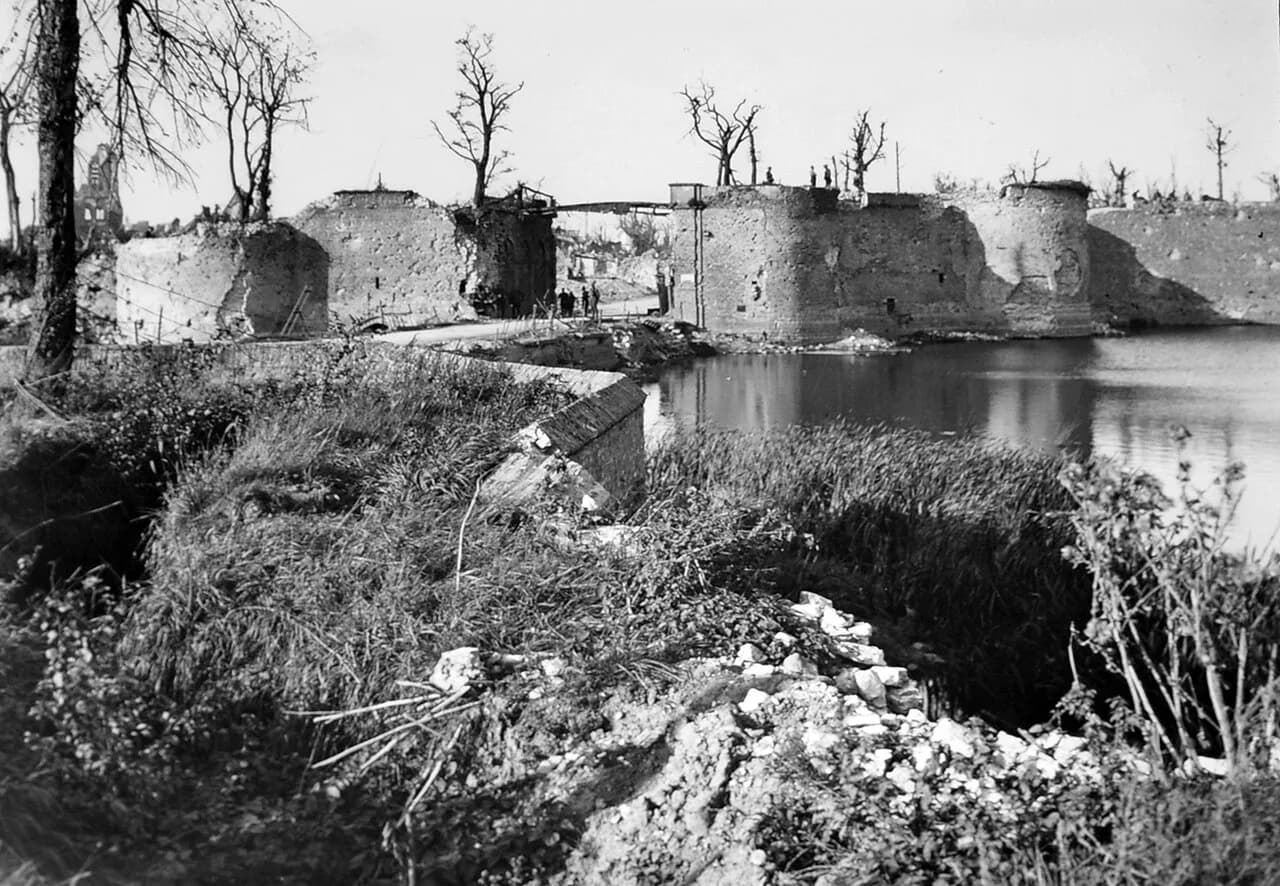
Lille Gate (Rijselpoort), Ypres: what to see and how to visit

Lille Gate (Rijselpoort) needs about five minutes of your time as a standalone stop: it is a working road entrance through the Ypres ramparts, not a ticketed attraction, and you are through the arch almost before you have looked at it. The reason to slow down is what sits beside the gate — the rampart bank itself, the moat and canalised river under the arch, and Ramparts Cemetery on the grass above the road. This guide sets out where the gate sits in town, how to walk to it from the Grote Markt, and how to make it the start of a ramparts walk towards the Menin Gate (Menenpoort).
A surviving gateway on the road to Lille
Lille Gate is one of the old gateways in the Ypres fortifications, and it takes its name from the direction it faces: the road out of town towards Lille, that is Rijsel in Dutch, which gives the gate its local name Rijselpoort. The town's historic core sits inside a ring of ramparts, walls and moat, and this is the surviving entrance on the south-east side. Treat it as part of that defensive circuit rather than a monument you queue for.
Where Lille Gate sits and how to reach it
The gate stands on the south-east edge of the old town, where traffic heading for Menen and onward towards the French border leaves the centre. From the Grote Markt it is a straightforward walk south-east along the street that leads towards the gate, no more than ten or fifteen minutes at an easy pace. Because it is a road, not a pedestrian entrance, you approach it at street level with vehicles passing under the same arch.
If you are coming from the other side of town, the Menin Gate (Menenpoort) is the eastern gateway and the best-known of the Ypres entrances, which makes the two easy to confuse when you are planning a route. The Menin Gate sits on the road to Menen and Courtrai, while Lille Gate is the south-east crossing, so the two are at different corners of the ramparts. If you want the fuller picture of what else sits inside the walls, the guide to Ypres Attractions: 13 Visitor Guides covers the sights within walking distance of the market square.
What you see at the gate: the arch, the walls and the water
What you get is the gate itself: a stone arch carrying the roadway through the rampart, with the thick brick and earth walls rising on either side. Below and beside the road runs the moat and the canalised river that feed the fortifications, and the water is what gives the gate its setting — reeds, still water and a green bank rather than a bare traffic gap. On the town side you are immediately in the streets of the centre; on the country side the road heads out past the cemetery towards the flat Flanders plain.
Walk up onto the ramparts beside the gate and the walls become a path: grass banks, mature trees and views over the water on both sides. This is a stroll, not a hike, but it is uneven in places and can be muddy after rain, so flat shoes help more than any ticket would.
Ramparts Cemetery beside the gate
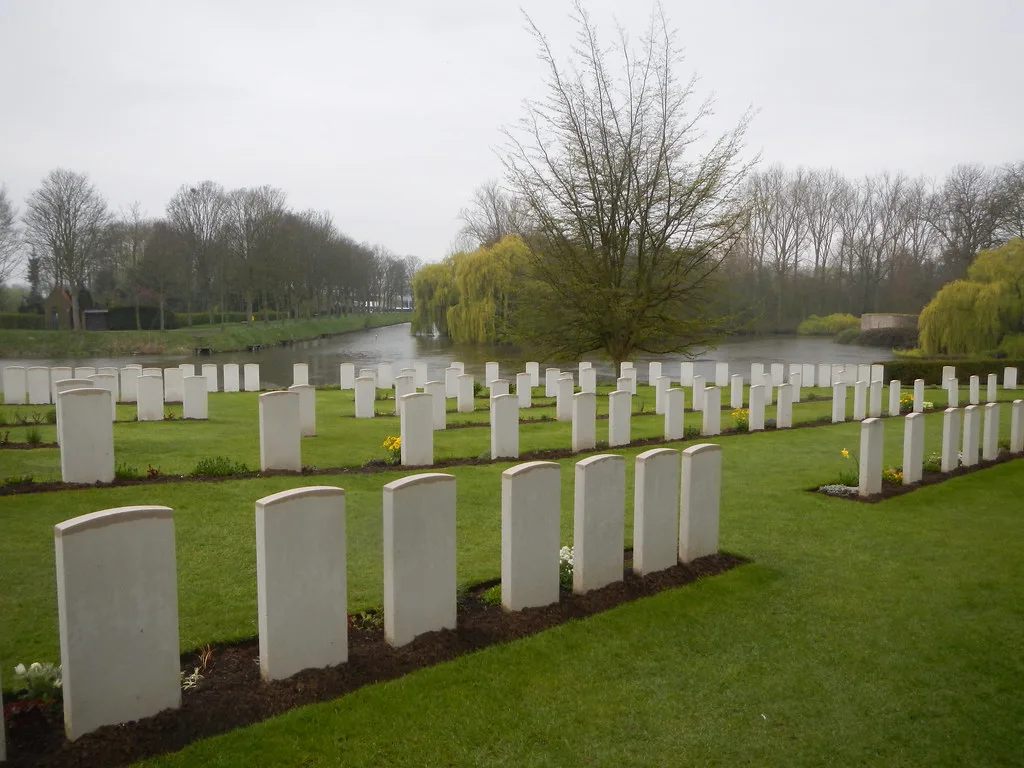
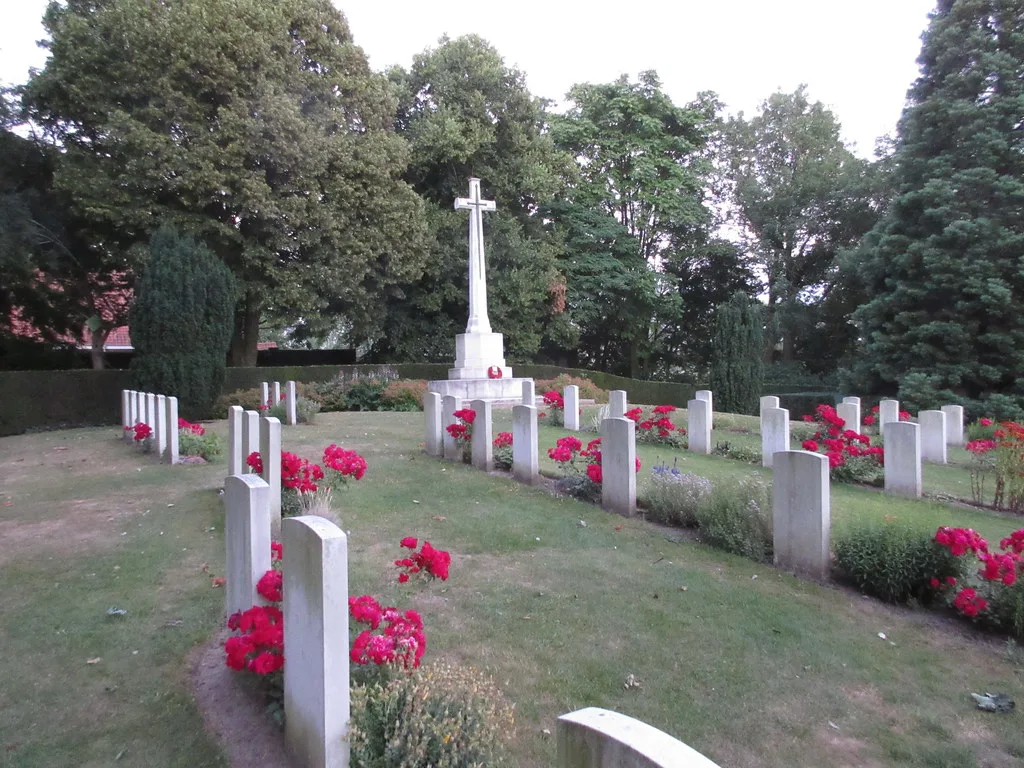
Ramparts Cemetery, Ypres lies on the rampart bank right by Lille Gate, which is the strongest reason to stop at the gate rather than drive through it. It sits on the grass beside the walls, with the ramparts at its back, and it is the kind of war cemetery you find across this part of West Flanders. The graves sit in rows against the green bank, and the ground itself is undisturbed even though traffic passes a few metres away.
Treat it as a cemetery, not a viewpoint: keep your voice low, stay on the grass paths between the rows, and do not sit or stand on the headstones. Photographs are fine if you keep them respectful of the names. Walking the rows takes minutes, but reading a few headstones slows you down more than the size of the plot would suggest.
Walking the ramparts from Lille Gate towards the Menin Gate
The obvious route from here is to follow the fortifications north and east along the rampart path towards the Menin Gate, which turns a five-minute stop into a proper walk of the walls. The trees, the moat and the occasional bastion break up the route, and the path gives you the town on one side and the water on the other. On the outside of the ramparts the ground opens out towards the Verdronken Weide, a low, wet meadow whose name means drowned meadow, and the ramparts path links the two.
The gate-to-gate stretch is the part of the ramparts most visitors actually walk, and it works in either direction: start at Lille Gate and finish at the Menin Gate, or reverse it if you are staying on the east side of town. Give it an hour at a relaxed pace with a stop at the cemetery, or less if you walk briskly.
How long to allow
A quick stop at the gate is five minutes: a look through the arch, a glance at the water and the walls, and you are moving again. With Ramparts Cemetery beside it, allow fifteen to twenty minutes, which is what most people want from the visit. If you walk the ramparts to the Menin Gate, give the whole thing an hour and treat the gate as the start rather than the destination.
Combining Lille Gate with the Menin Gate and the Ieper Visitor Centre
The Menin Gate is where the town gathers for the Last Post: each night at 8 pm traffic is stopped under the memorial's arches while members of the local fire brigade sound the Last Post in the roadway. That timing shapes the walk, because you want to finish at the Menin Gate rather than be halfway along the ramparts when it starts. Arrive early enough to find a place under the arches, and keep in mind that the memorial records 54,370 officers and men with no known grave.
Before walking out to the gate, the CWGC's Ieper Visitor Centre near the Menin Gate is the place to orientate yourself on the war graves and memorials of the Ypres Salient, with a shop and information on the war graves in Belgium and battlefield tours from Ypres. It is also where to pick up information on the battlefields if you plan to go further out to sites such as the Hooge Crater Museum, Ypres or the Sanctuary Wood Museum (Hill 62).
The gate to Menin Gate walk is the natural way to finish a day of sightseeing in the centre, and the rest of the town's sights fit around it. St Martin's Cathedral, Ypres (Sint-Maartenskathedraal) and the cloth hall on the Grote Markt are a short walk back through the centre, and the Passchendaele museum out at Zonnebeke is the obvious next step if you want the wider story of the Salient.
A road, not an attraction
Expect cars and bicycles under the arch, because Lille Gate is still the way out of town towards Menen and the border. There is no ticket desk, no turnstile and no exhibition inside the gate; the whole experience is the arch, the ramparts and the cemetery on the bank. That is also why it works as a short stop on the way to somewhere else rather than a place to build a day around.
If you are choosing between the town's memorials and museums on a short break, the gate earns its place as a free half-hour that gets you out of the market square and onto the walls. The wider list of things to do in Ypres is the place to sort the rest of your time.
Is Lille Gate worth the walk?
Yes, if you combine it with Ramparts Cemetery and the walk along the walls — and not really, if you are expecting an attraction. The gate rewards people who treat it as the start of a ramparts circuit towards the Menin Gate, and it costs nothing to see. Give it the hour, bring shoes that cope with wet grass, and finish at the Last Post under the arches.
Explore more Ypres guides
Frequently Asked Questions
Is the Last Post ceremony held at Lille Gate?
No. The nightly Last Post at 8 pm is sounded under the arches of the Menin Gate, where traffic is stopped while members of the local fire brigade play. Lille Gate is a short ramparts walk away and has no ceremony of its own.
How many names are on the Menin Gate?
The Ypres (Menin Gate) Memorial records 54,370 officers and men of the Commonwealth forces who died in the Ypres Salient and have no known grave. Only some United Kingdom casualties are named there; others appear at Tyne Cot.