
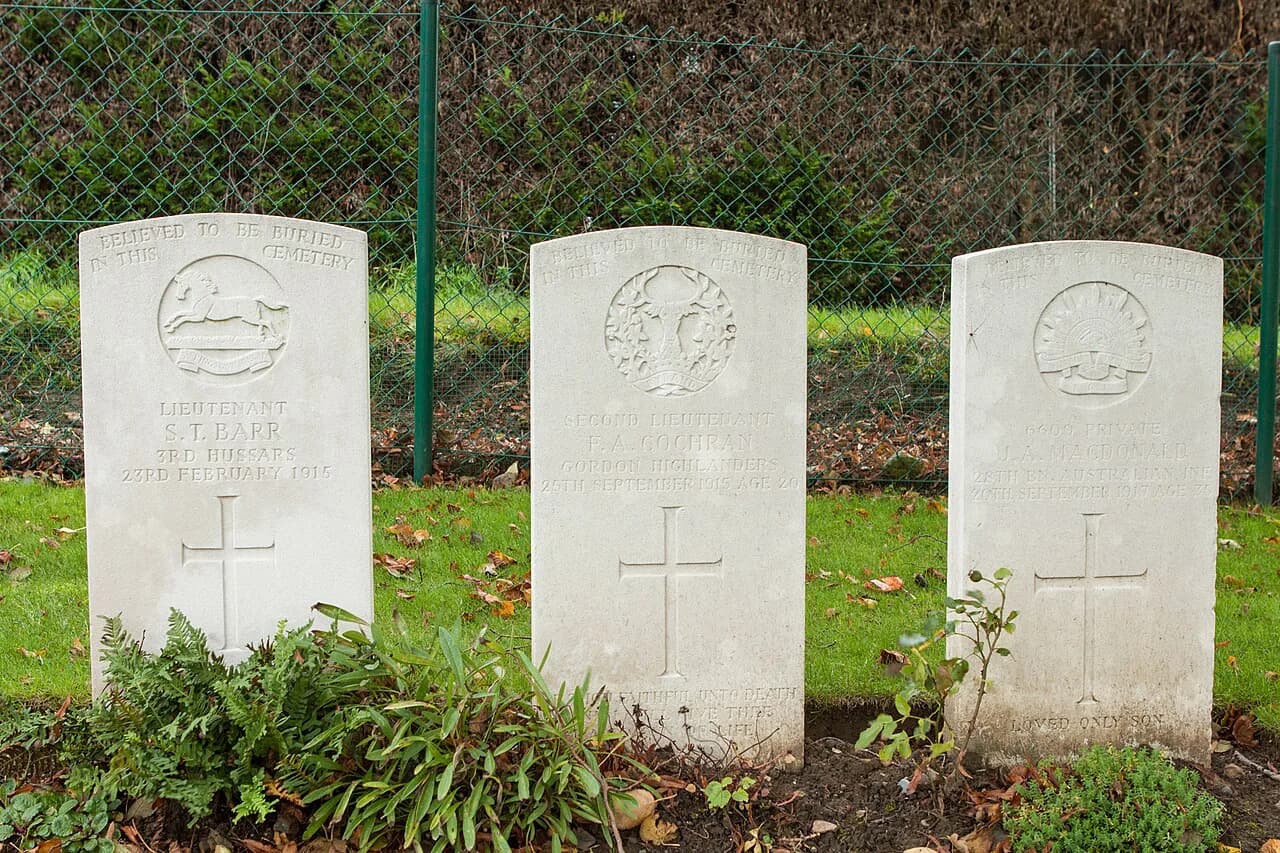
Hooge Crater Cemetery: A Visitor's Guide to the CWGC Burial Ground near Ypres

Hooge Crater Cemetery is a Commonwealth War Graves Commission burial ground 4 km east of Ieper (Ypres) town centre on the Meenseweg (N8) towards Menen, and it holds 5,916 Commonwealth servicemen of the First World War, of whom 3,568 are unidentified. It is a quiet, formal place rather than a museum, and it pairs naturally with the crater site and museum across the road. This guide covers what the cemetery is, how to reach it from Ypres by road, what you will see among the headstones, and how much of your day to give it.
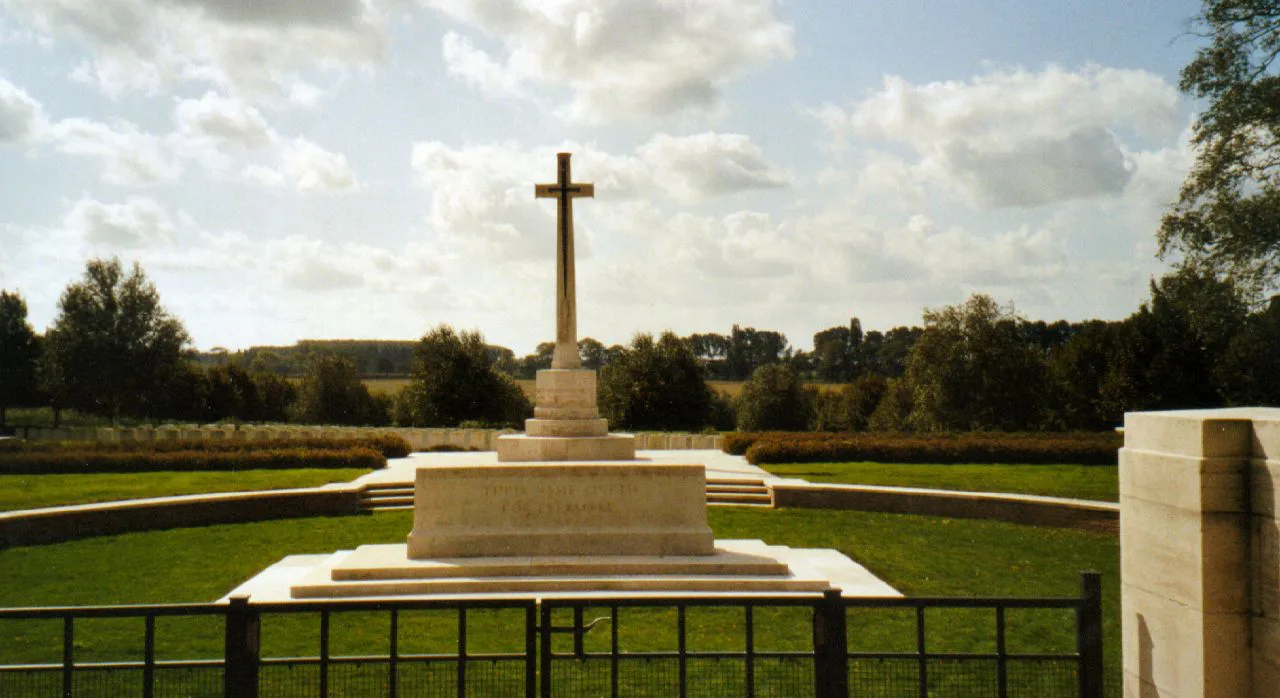
Two names shape the layout: Sir Edwin Lutyens and Noel Ackroyd Rew designed the cemetery, which is why the headstone rows sit within a composed architectural setting rather than spreading informally. Because so many of those buried here were never identified, the special memorials carry as much weight as the named headstones.
What the cemetery is and who lies there
Of the 5,916 Commonwealth servicemen buried or commemorated here, 2,348 are identified. The identified casualties break down as 1,864 from the United Kingdom, 337 from Australia, 78 from New Zealand and 69 from Canada, a mix that reflects the Commonwealth divisions that fought over this ridge. The remaining 3,568 are unidentified.
The proportion of unidentified graves changes how a visit feels. Instead of reading name after name, you walk past long runs of headstones without personal inscription, and the special memorials at the site record casualties known or believed to be buried among them, or whose graves elsewhere were destroyed by shellfire.
One name worth seeking out is Private Patrick Joseph Bugden VC of the 31st Battalion, Australian Infantry Force, killed in action at Polygon Wood on 28 September 1917 at the age of 20 and buried in Plot VIII, Row C, Grave 5. His headstone bears the inscription "Thy Will Be Done Not Mine"; the award was for silencing machine-gun posts and rescuing wounded men under fire.

Where it stands on the Meenseweg
The cemetery is on the Meenseweg, the N8 road connecting Ieper to Menen, 4 km east of the town centre. Coming from Ypres, take Torhoutstraat and turn right onto Basculestraat, which ends at a main crossroads; the Meenseweg begins directly across that junction, and the cemetery is 3.5 km along it on the right-hand side.
That route follows the old Menin Road, the axis of so much of the fighting in the Ypres Salient, so the drive itself passes a succession of cemeteries and memorials. If you are building a half-day out of Ypres, this is the corridor to do it on, with the Menin Gate behind you at the town ramparts and open farmland ahead.

The ground: Hooge Chateau and the crater
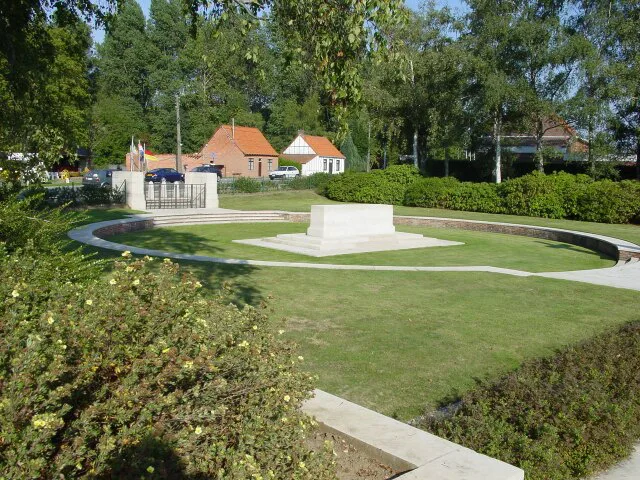
Hooge Chateau and its stables stood on ground fought over throughout the war. On 31 October 1914 the staff of the 1st and 2nd Divisions were wiped out when the chateau was shelled; in July 1915 the crater itself was made by a mine sprung by the 3rd Division, and the chateau and crater changed hands repeatedly through 1915 and 1916.
Knowing that history makes the headstone rows read differently. The cemetery was begun by the 7th Division Burial Officer in early October 1917 with 76 graves in Rows A to D of Plot I, then greatly enlarged after the Armistice when graves were brought in from the battlefields around Zillebeke, Zantvoorde and Gheluvelt along with several smaller cemeteries. That consolidation is why a site with such modest origins now runs to almost 6,000 burials.
What to see on a visit
Start at the entrance and read the cemetery register and the commemorative panels; they frame the scale of the place before you walk the rows. The headstones are set in the Lutyens and Rew design, and the special memorials to the unidentified are the element most visitors linger over.
Photographs of individual headstones are straightforward in open light, and the rows reward a slow walk rather than a quick circuit. The Hooge Crater museum sits close by on the same stretch of the Meenseweg, so a visit here and a museum stop make a natural pairing.
How long to allow
Give the cemetery around 45 minutes: enough to walk the main rows, find Bugden's grave and read the register without hurrying. Add an hour if you are also visiting the museum nearby, which turns the stop into a half-day when combined with the drive out from Ypres.
Wheelchair access to the site is possible, though it may be by an alternative entrance rather than the main one, so plan your approach rather than assuming the front gate is the step-free route.
Nearby sites in the Ypres Salient
The wider Salient holds several CWGC cemeteries and memorials within a short drive, so Hooge Crater fits neatly into a loop rather than a single stop. Sanctuary Wood Museum (Hill 62) and its preserved trenches are a short distance away on the same side of Ypres, and the Passchendaele museum at Zonnebeke with Tyne Cot Cemetery lies further out along the ridge.
The Menin Gate (Menenpoort) in Ypres itself is the natural bookend to any day on this ground, and the town makes a sensible base for the whole Salient. If you are planning more than one memorial stop, the Ypres Attractions: 13 Visitor Guides collection maps out the options across the area.
Is Hooge Crater Cemetery worth the drive from Ypres?
Yes, if you are already heading east on the Menin Road. It is a short, dignified stop with a specific grave to find and a clear story behind its scale, and it combines easily with the museum next door and Sanctuary Wood Museum (Hill 62) further along.
If you have only a few hours in Ypres, the Menin Gate (Menenpoort) and the town centre will fill them; save Hooge for a day when you have a car or a tour booked and can take in the wider Salient.
Explore more Ypres guides
Frequently Asked Questions
How many soldiers are buried at Hooge Crater Cemetery?
There are 5,916 Commonwealth servicemen of the First World War buried or commemorated at Hooge Crater Cemetery. Of those, 3,568 are unidentified, and the identified casualties include 1,864 from the United Kingdom, 337 from Australia, 78 from New Zealand and 69 from Canada.
Is Hooge Crater Cemetery the same as Hooge Crater Museum?
No. The cemetery is a Commonwealth War Graves Commission burial ground on the Meenseweg east of Ypres, while the Hooge Crater museum is a separate museum nearby on the same stretch of road. Many visitors combine the two in one stop.
Can I visit Hooge Crater Cemetery by public transport?
The cemetery sits on the N8 towards Menen, 4 km east of Ypres town centre, and the surrounding Salient is spread across open farmland. A car or an organised tour is the practical way to cover the cemetery and nearby sites in one outing.