
Ypres Reservoir Cemetery: What to See and How Long to Allow
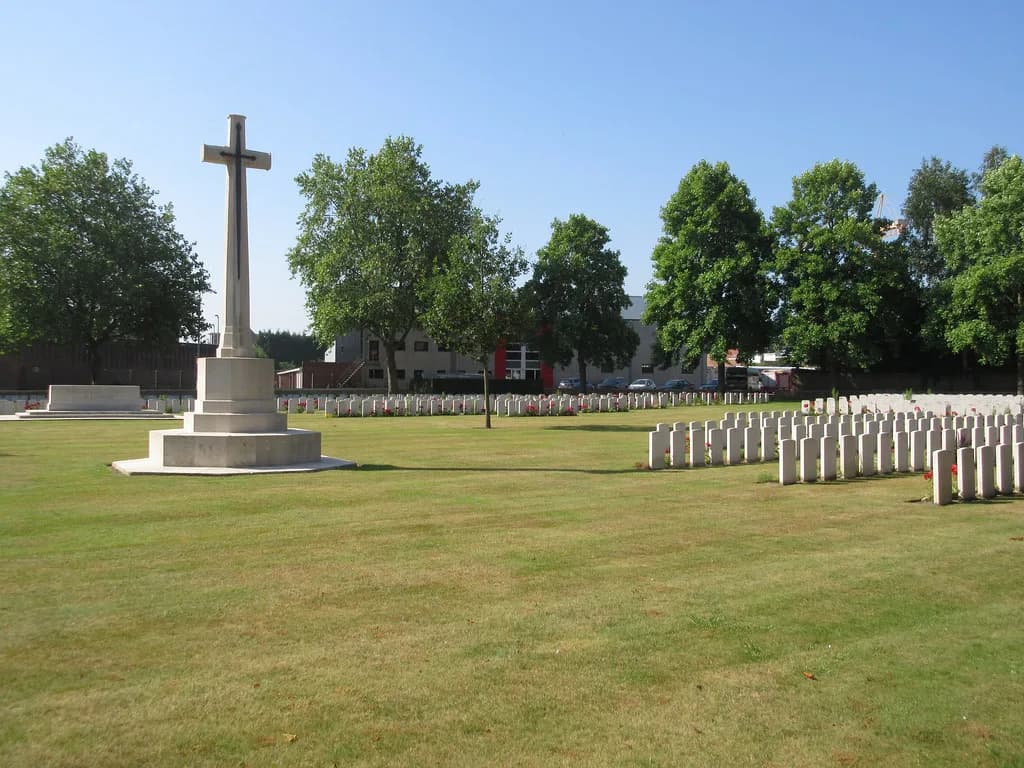
Ypres Reservoir Cemetery is a Commonwealth war cemetery on the north-west edge of Ypres (Ieper), holding more than 2,600 graves, of which over 1,000 are unidentified. Allow 30 to 45 minutes for a focused visit, longer if you want to work through the register and read inscriptions row by row. It suits a quiet hour on the same walk as the town's other wartime sites rather than a separate trip.
The cemetery began as a burial ground beside an Advanced Dressing Station in October 1915 and was used throughout the war. It is not the town's memorial to the missing — that is the Menin Gate (Menenpoort) — but a place of named and unnamed graves, including the Knott brothers and a plot of 16 men of the 6th Duke of Cornwall's Light Infantry. This guide covers where the site sits, how to reach it on foot, which headstones to look for and how to fit it into a day in Ieper.
Where Ypres Reservoir Cemetery is in Ypres
The cemetery lies in the north-west quarter of Ypres, on the north side of the site of the old town prison. It is the largest cemetery within the town itself, close enough to the centre to reach on foot rather than by car or taxi. Use the prison site and the reservoir as your landmarks: both names attach to the cemetery, which was once known as Ypres Prison Cemetery and also as Ypres Reservoir North Cemetery.
For orientation, the Menin Gate sits on the eastern side of the town and the Lille Gate on the south-eastern ramparts, so the reservoir cemetery is on the opposite, quieter side of the centre. Walking from the Grote Markt takes roughly 10 to 15 minutes at an unhurried pace. If you are plotting a route on a phone, search for the cemetery by name rather than the reservoir, which covers a wider area.
How to reach the cemetery on foot and what to expect on arrival
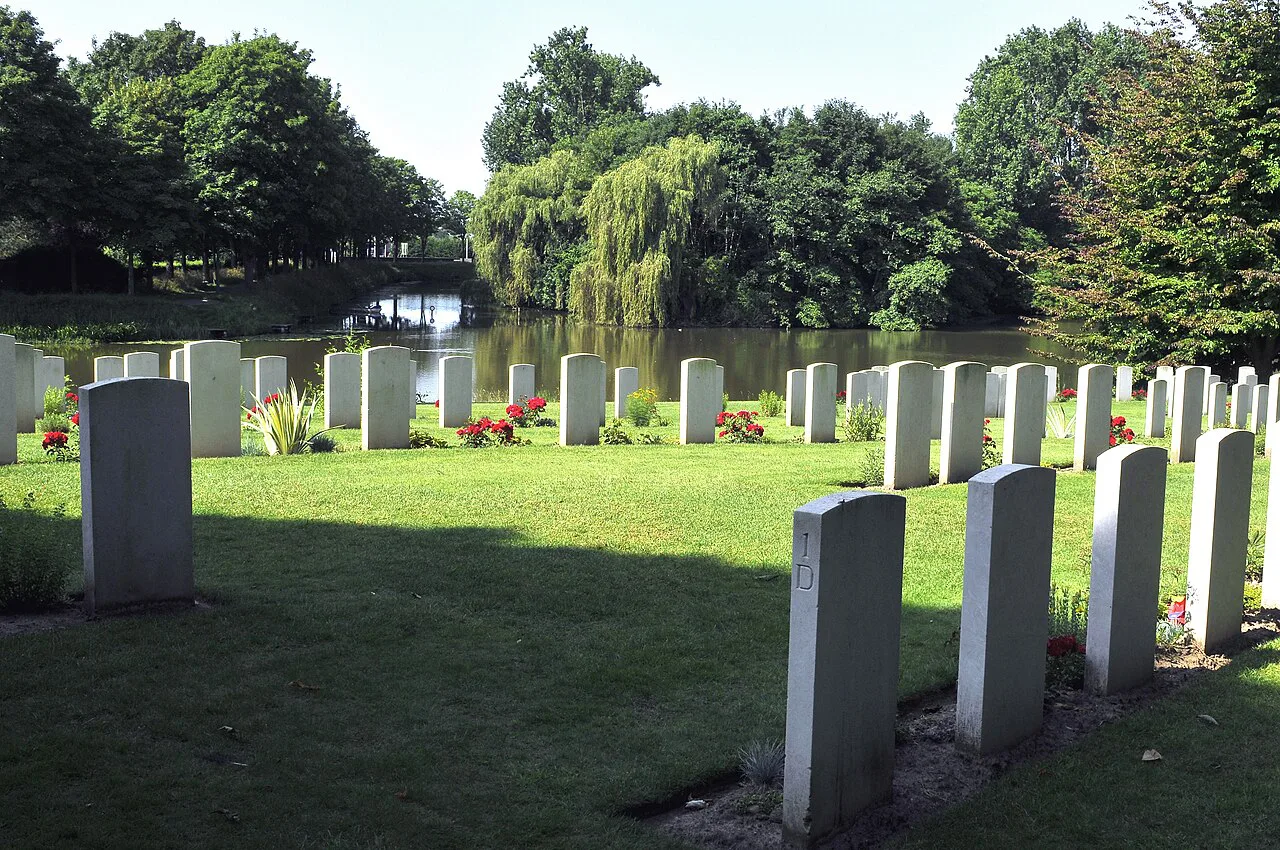
The walk from the centre passes ordinary residential streets rather than a formal visitor route, so treat the last stretch as a quiet approach and keep noise to a minimum. The cemetery is a walled burial ground with rows of Portland stone headstones set in grass, entered directly from the street. There is no ticket desk and no turnstile: you walk in and move among the rows.
The ground is level apart from grass verges, and the rows are wide enough to walk between without stepping on grave edges. Group the visit with the town's other memorials rather than making a separate journey: the Menin Gate, St George's Memorial Church and the Ramparts Cemetery all sit within the same compact centre. The Ramparts Cemetery, a much smaller ground of fewer than 200 graves beside the moat, makes a natural contrast on the same loop.

What the cemetery is: a dressing-station burial ground
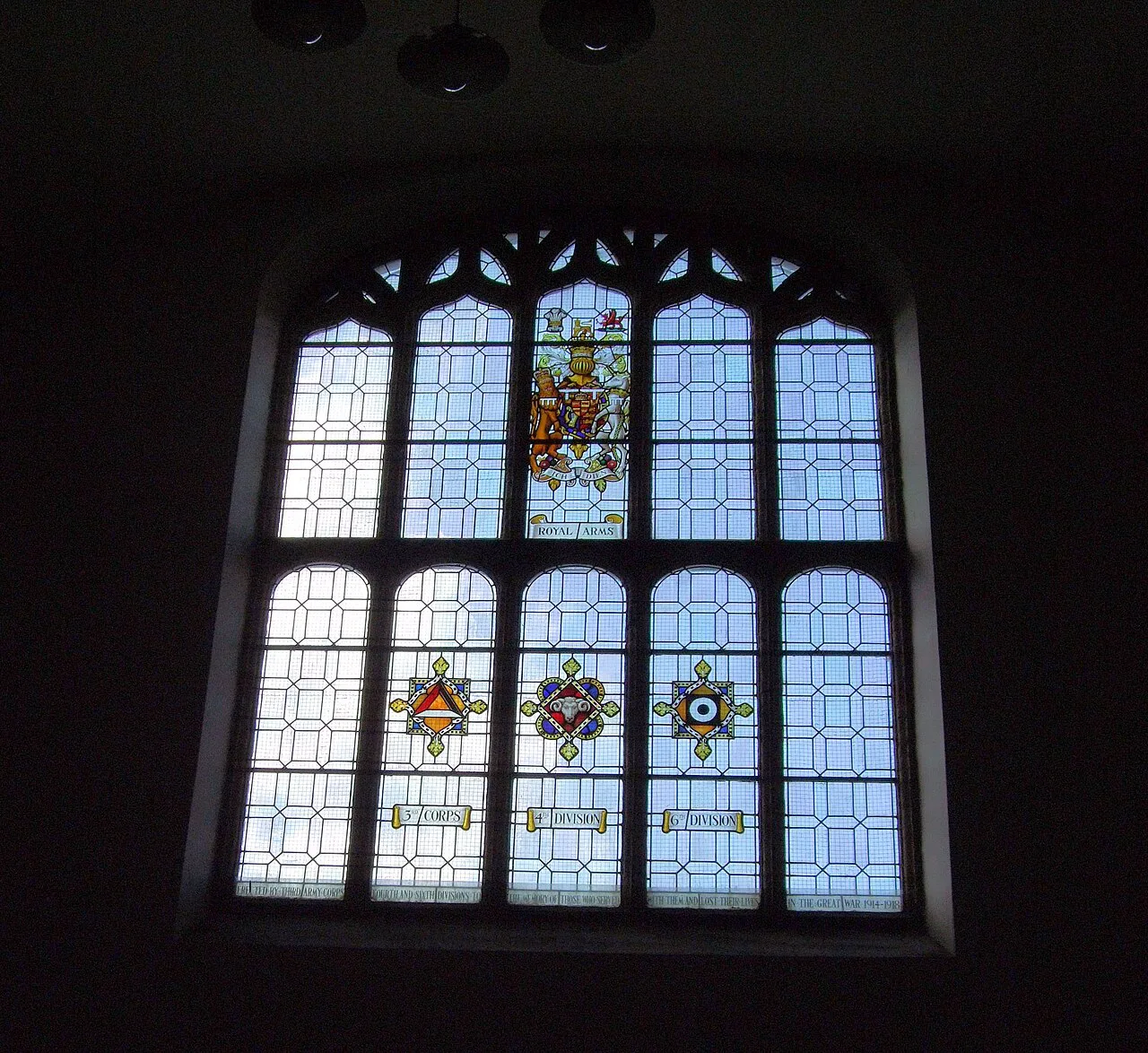
Ypres Reservoir Cemetery began in October 1915 beside an Advanced Dressing Station, where casualties who had survived the journey back from the front lines were buried. Two smaller cemeteries near the town's western gate, between the prison and the reservoir, were later concentrated into this third site after the Armistice. That consolidation is why the cemetery is larger now than its wartime origin suggests: around 1,100 graves stood here after the Armistice, and the site now holds 2,613.
The Royal Army Medical Corps graves and the proximity of the dressing station give the site its character: many of the men buried here died of wounds after being carried back, rather than falling in the front line. Reading a few registers with that in mind changes how the rows read. If you want deeper context on the Salient's fighting, Hooge Crater Cemetery, with its wartime crater and chateau associations, and the Passchendaele museum at Zonnebeke cover the battles themselves.
Why the headstones outnumber the names: unidentified graves
Of the 2,613 graves, over 1,000 are unidentified, marked simply as soldiers known unto God. The register held at the cemetery lists the named burials plot by plot and is the practical tool for finding a specific headstone. Look for the register near the entrance before you start walking the rows; working from it saves a great deal of wandering.
The CWGC's visitor centre in Ieper is the place to ask about burial records and enquiries if you are tracing a name. Come with the name, regiment and, if you have it, the date of death; those three details narrow the search to a plot and row. For a family enquiry, allow more time than a passing visit.
The graves to look for: the Knott brothers
Two brothers lie side by side here: Captain Henry Basil Knott of the 9th Battalion Northumberland Fusiliers, who died on 7 September 1915, and Major James Leadbitter Knott of the 10th West Yorkshire Regiment, killed on 1 July 1916 near Fricourt on the Somme. James was first buried where he fell at Fricourt New Military Cemetery and was moved to Ypres after the war to lie next to his brother, an unusual arrangement. Their father, Sir James Knott, funded the tower at St George's Memorial Church in Ypres in their memory.
The 6th Duke of Cornwall's Light Infantry in Plot 5 Row AA
Plot 5 Row AA holds 16 soldiers of the 6th Duke of Cornwall's Light Infantry, all killed on 12 August 1915. They were billeted in the vaults of the cathedral and were killed by shelling from a large-calibre German gun firing from the Houthulst Forest, known to the troops as the "Ypres Express". Their bodies were not recovered until after the Armistice.
The plot is a single stop that repays the walk: 16 headstones of one battalion, one date, one incident. Compare it with the scattered dates across the rest of the cemetery, which run from October 1915 to the end of the war. If you are following a particular battalion, the register's plot-and-row index is quicker than scanning dates on stones.
Layout and scale: plots, rows and the former prison site
The cemetery is laid out in numbered plots with lettered rows, so a reference such as Plot 5 Row AA is enough to find a grave. The ground is compact enough to cross in a few minutes, and the rows run in orderly lines that make navigation straightforward. Because the site sits on the north side of the former prison, its earlier names — Ypres Prison Cemetery and Ypres Reservoir North Cemetery — appear in older records.
How long to allow, and how to combine the visit
This guide budgets around 30 minutes for the cemetery itself, or 45 to 60 minutes if you plan to find named graves and read inscriptions. It works best as one stop on a walking loop that takes in the Menin Gate, the Ramparts Cemetery beside the moat and St George's Memorial Church, all within the town. A half-day covers the centre on foot; a full day adds one of the battlefield museums outside the town.
If you want the wider story of the Salient rather than individual graves, the Passchendaele museum at Zonnebeke and the preserved trenches at Sanctuary Wood suit a longer outing by car or bike. Both are outside the town, so pair only one of them with the centre in a single day. For an overview of what else the town offers, see the guide to things to do in Ypres.

Is Ypres Reservoir Cemetery worth the walk?
Yes, if you want a quiet, named place rather than a ceremonial one: the walk from the centre takes 10 to 15 minutes each way, and 30 to 45 minutes on site covers the cemetery well. Go for the Knott brothers, the Duke of Cornwall's Light Infantry plot and the register, not for spectacle. Check with the CWGC visitor centre in Ieper for burial records and current arrangements before a family visit.
For the rest of the town's memorials and museums, use the Ypres Attractions guide to plan the sequence, and keep the Menin Gate for its own separate stop. Pair the cemetery with the ramparts walk and St George's Memorial Church for a compact, respectful half-day on foot.