
Passchendaele Museum: What to See and How Long It Takes

The Passchendaele Museum is worth a visit if you want the Battle of Passchendaele explained where it was fought, and it needs 1.5 to 2 hours of your day. It sits in the Kasteeldomein van Zonnebeke, the castle grounds in the middle of the former battlefield. This guide covers what you see inside, how the visit runs and what lies within walking distance.
What the museum is and where it sits
The Passchendaele Museum tells the story of the First World War in Flanders Fields with the 1917 offensive as its centrepiece. Nearly 600,000 casualties were suffered for a ground shift of about eight kilometres, and the museum's displays make that arithmetic plain. It occupies the Kasteeldomein van Zonnebeke, the castle estate in the village of Zonnebeke, a short drive from Ypres.
The visit is arranged in three movements: interactive displays, the underground Dugout and a reconstruction of German and British trenches. That structure means you move steadily from context to experience to aftermath rather than wandering a single gallery. For a wider picture of the area's war sites, the Ypres Attractions: 13 Visitor Guides collection sets this museum alongside the salient's other memorials.

Getting there: Berten Pilstraat 5a, Zonnebeke
The address is Berten Pilstraat 5a, 8980 Zonnebeke, in the grounds of the castle domain. Motorists get free parking on site, which makes the museum an easy first stop before driving on to the cemeteries north and east of Ypres. Walking and cycling routes connect the museum to the surrounding network of First World War sites in Greater Zonnebeke.
Visitors coming from Ypres by car should allow a short regional drive rather than a walk, and those relying on public transport should plan the final leg in advance. The museum's practical pages are the place to confirm how the day fits together.
Opening hours, last entry and closures
The museum is open daily from 10.00 to 17.30, with last admission at 16.30, an hour before closing. That last-entry rule matters: arriving at 17.00 leaves no time to go round, so aim to be at the desk by mid-afternoon. The ticket desk and tourist office share the same daily pattern.
The museum closes on 24, 25 and 31 December and 1 January each year, and it shuts for a maintenance period in January 2027, from 4 to 31 January, reopening daily from 1 February 2027. Additional closure dates are published on the museum's own openings page, including an April 2027 date that was sold out at the time of listing. Check the page against your dates before travelling.
What you see inside: displays and the 1917 experience
The interactive displays use personal stories as well as chronology, including a family trail following Lisa, Louis and Maurice that gives younger visitors a thread to hold on to. The experience exhibition Passchendaele 1917 then places you inside the landscape of that year through large-scale visualisations. It is the part of the museum that does most to convey the conditions of the campaign.
An audioguide is included with admission, so bring your own headphones if you prefer not to hold a handset for the whole route. Budget your time so the displays do not consume the entire visit; the underground and trench sections are still to come.
The Dugout: British quarters underground
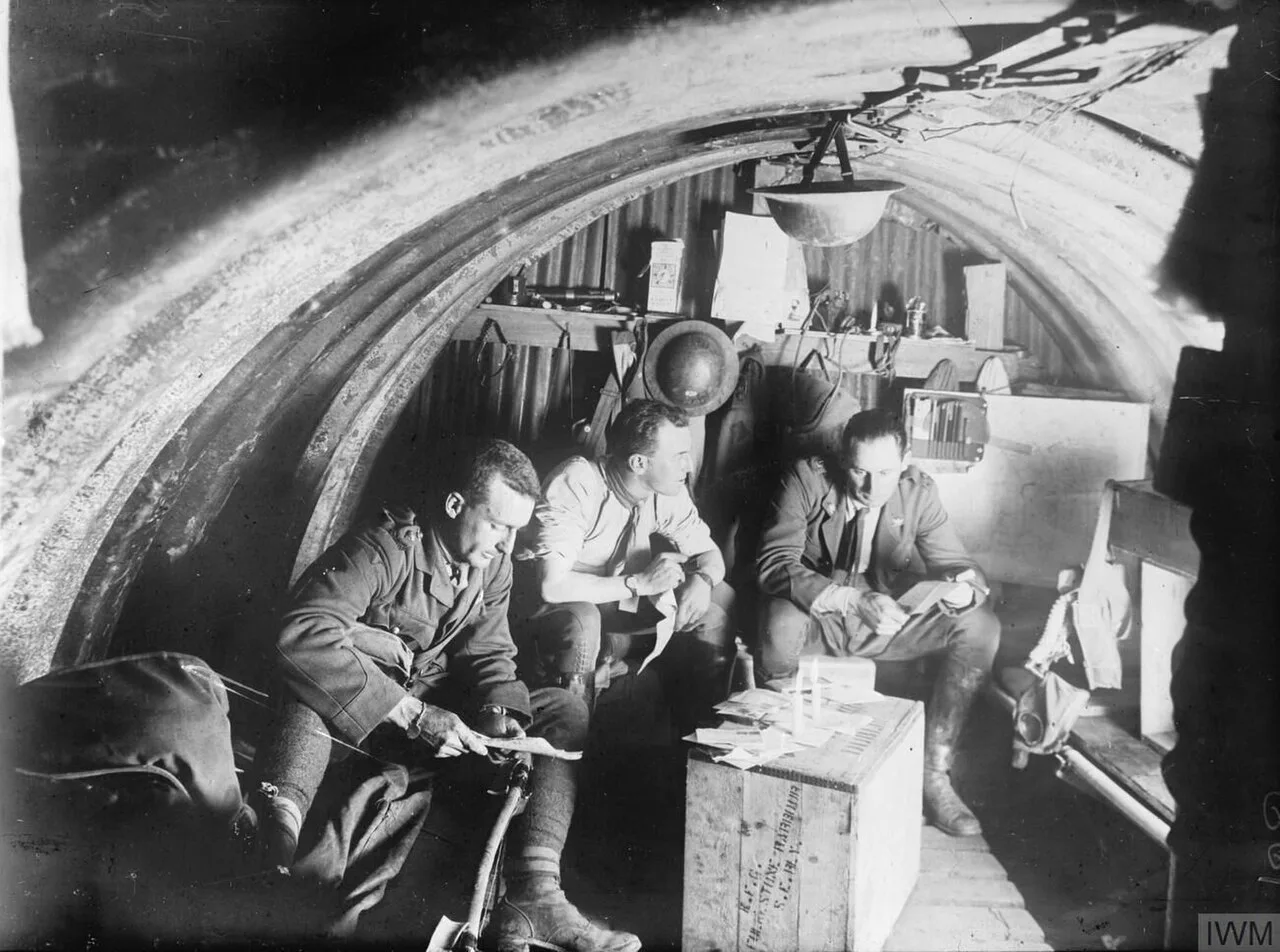
The Dugout reconstructs how British soldiers lived below ground in 1917, and it is deliberately cramped, dark and unsettling. It communicates the claustrophobia and poor conditions of sheltering under shellfire better than any panel of text could. Visitors who dislike enclosed spaces should know this section is the tightest part of the route before they commit.
It is also the section that stays with people longest, so give it attention rather than hurrying through to the trenches. The contrast between the cramped underground and the open landscape above is the museum's central idea.
The reconstructed German and British trenches
The visit finishes outdoors in a faithful reconstruction of German and British trenches, with original shelters rebuilt alongside them. Walking the two lines in sequence makes the proximity of the opposing forces tangible in a way maps rarely do. This final stretch is the natural point to slow down and read the interpretive material.
For a second, more artefact-led account of trench warfare nearby, the Sanctuary Wood Museum (Hill 62) keeps original British trench lines and a collection of period material. It suits travellers who want the physical traces as well as the reconstruction.
How long a visit takes and how to pace it
Allow 1.5 to 2 hours. The museum itself estimates roughly ninety minutes at an even pace, and the extra half hour covers the audioguide stops and the outdoor trench walk. Groups are guided in parties of up to 25 people per guide.
A comfortable pattern is an hour for the displays and the 1917 experience, half an hour in the Dugout and trenches, and a short buffer for the shop and the memorial gardens outside. If you plan the Tyne Cot walk as well, the museum is the first half of a half-day rather than the whole outing.
Memorial Park, the Pou Maumahara and the remembrance gardens
Immediately beside the museum are the eight remembrance gardens of the Passchendaele Memorial Park, laid out in the castle grounds. From the gardens you can see the Pou Maumahara, an eight-metre wooden sculpture commemorating Māori soldiers and other New Zealand troops of the First World War. Both sit outdoors in the memorial park and add a few minutes to the visit.
The sculpture is best seen in decent light, so leave it until after the museum rather than before. Taken with the gardens, it gives the visit a quiet close before you move on to the cemetery.
Tyne Cot Cemetery and the 3 km walking loop
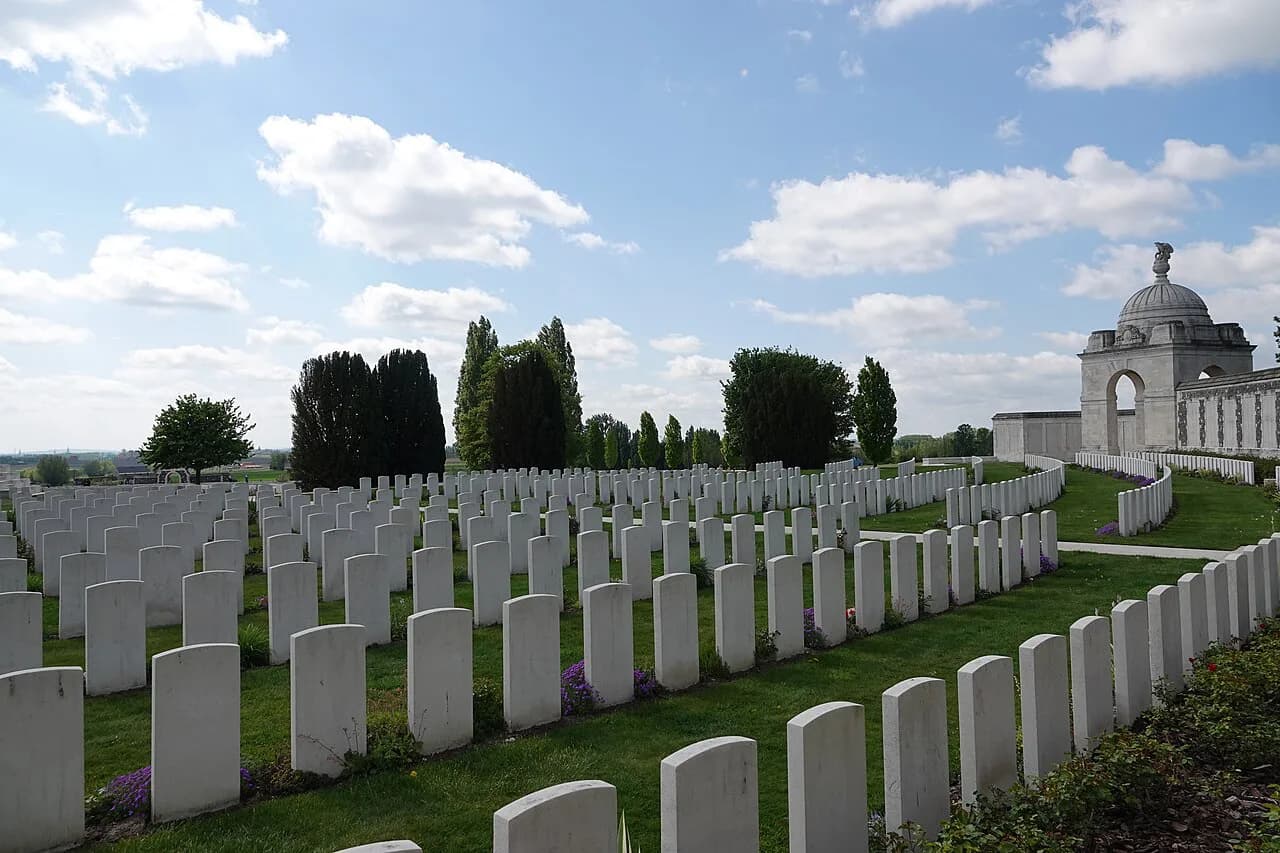
A three-kilometre walking loop with thematic information panels links the museum to Tyne Cot Cemetery, the largest Commonwealth cemetery in the world, with nearly 12,000 graves and some 35,000 names on its memorial to the missing. The visitors' centre at the cemetery is free. Walking the loop makes the museum and the cemetery one coherent visit.
Tyne Cot sits within easy reach of the museum by car, but the walk is the better choice on a dry day, when the scale of the former battlefield becomes legible across open ground. Remember that the cemetery is an active memorial ground and behave accordingly. The wider Ypres collection covers memorials nearer the town, including the Menin Gate (Menenpoort), Ypres, where the Last Post is sounded.


The Zonnebeke church tower exhibition and its view
The church tower in Zonnebeke holds a free exhibition, Getekend landschap, on the landscape of the salient, and its top floor gives a wide view over the surrounding fields. The tower is a short walk from the museum and rounds off the visit without another ticket. Go up on a clear day, when the flat ground and the distant town spires explain the geography of the battles.
Cyclists and walkers can extend from here into the Polygoonbos and the bunkers scattered through the woods around Zonnebeke. These are outdoor sites without opening hours, so they fit around the museum's timetable rather than dictating it.
Practical points for your visit
The museum is accessible to visitors with reduced mobility, has toilets and a café, and offers free parking on site. Group visits can be guided for up to 25 people per guide, which is worth booking ahead for parties. The audioguide comes with admission, so the main variable in your budget is the ticket itself, which the museum publishes on its tariffs page.
Keep the day flexible: the museum, gardens and tower can fill a morning, while the cemetery and the broader Ypres battlefields justify a second day in West Flanders. Other First World War collections in the area add depth if you want to extend the theme.
Is the Passchendaele Museum worth your time?
Yes, if the 1917 campaign is the reason for your trip to Ypres, and especially if you want the battlefield explained before you walk it. The combination of displays, Dugout and trenches justifies the 1.5 to 2 hours on its own, and the memorial gardens, tower exhibition and Tyne Cot walk make the journey to Zonnebeke worthwhile. Book the museum early in the day, keep the afternoon free for the cemetery, and confirm the day's opening times and closures before you set out.