
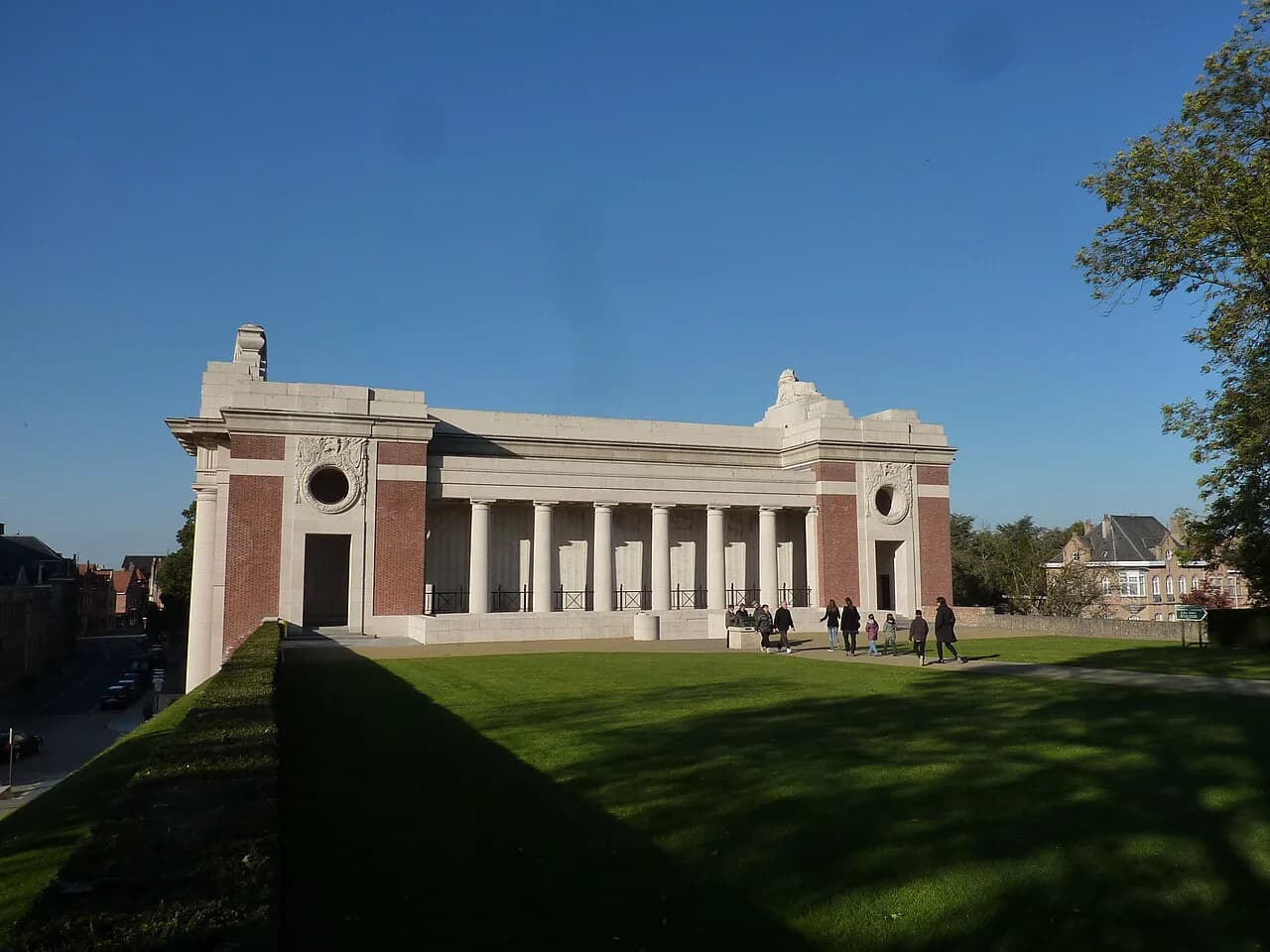
Menin Gate (Menenpoort), Ypres: A Visitor's Guide

The Menin Gate, or Menenpoort, is the memorial arch on the eastern edge of Ypres (Ieper) carrying the names of British and Commonwealth soldiers who died in the Ypres Salient and have no known grave. It takes about 20 to 30 minutes to see properly, and is worth timing for the Last Post ceremony, which begins at 8pm each evening. This guide covers what the memorial commemorates, how to read its panels, how to move through it and what is close by.
The arch stands on the road that historically left the walled town towards Menen, and that road still runs through the central Hall of Memory. The gate is a working street as much as a monument, so visitors share it with traffic for most of the day and with the ceremony crowd in the evening.
What the Menin Gate commemorates
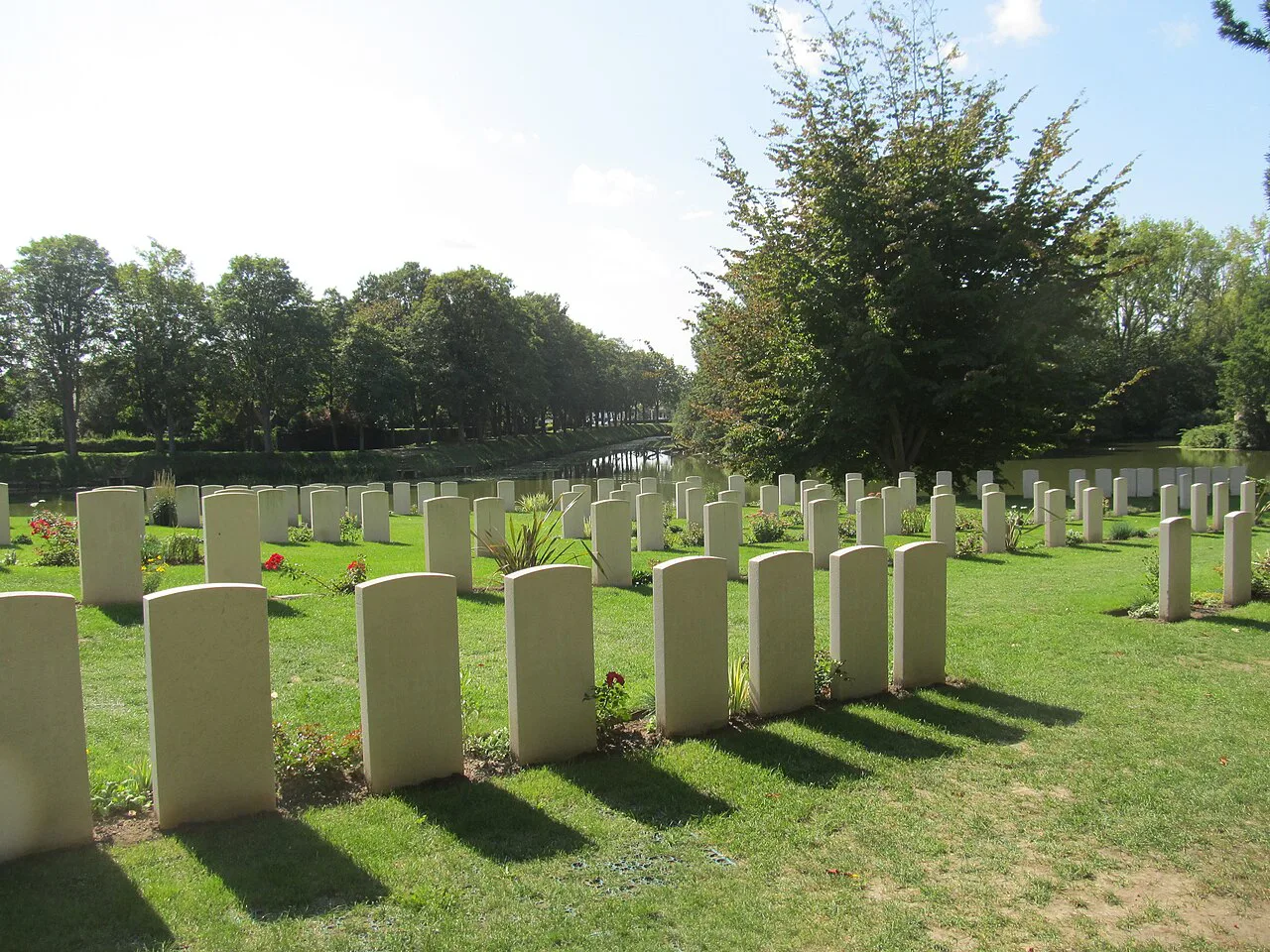
This is the Ypres (Menin Gate) Memorial to the Missing, the best-known of the memorials in the Ypres Salient, and it has stood for around a century. The Commonwealth War Graves Commission lists it among its memorials to those with no known grave, so there are no burials under the arch: the memorial's purpose is names, not graves.
The men named here served with forces from the United Kingdom, Australia, Canada, India, South Africa and the West Indies, and their bodies were never found or never identified after the fighting around Ypres. The gate commemorates 54,896 men. Approaching it as a register of the missing rather than as a triumphal arch changes how you read the building.
The memorial was designed in classical style by Sir Reginald Blomfield and unveiled on 24 July 1927, after Ypres itself had been rebuilt from ruin. Its scale comes from the number of names it had to hold, which is why the panels run the length of the inner walls and up the staircases.

Where the gate is and how to reach it
The gate sits two or three minutes' walk from the Markt, the central square of Ypres, at the point where the town's eastern road heads towards Menen. If you are already in the centre, you do not need transport: walk east from the square and the arch closes the end of the street.
Because it marks a road junction rather than sitting in a park, the memorial is easy to combine with the rest of the rebuilt centre. The Cloth Hall and the town's other sights lie back towards the Markt, which makes the gate a natural first or last stop on a walk through Ypres.
What you see inside the arch
The road itself forms the central Hall of Memory, so you walk through the memorial rather than around it. Names cover the stone panels on both sides, and above and beside the roadway the loggias and staircases lead to further panels and give views back over the town.
Climb the staircases on the north or south side for the quieter upper level, where you can read panels away from the roadway. Allow a little extra time for this: the ground level is where most visitors stop, and the upper loggias are where the memorial makes sense as a whole.
The panels are arranged by regiment and unit, with panel numbers rather than a single alphabetical list. The Passchendaele Archives indexes soldiers by name and gives the panel on which each is commemorated, which is the quickest way to find a particular man before you arrive.
Reading the names panel by panel
Each name on the gate belongs to a soldier of the British or Commonwealth forces killed in the Ypres Salient whose grave is unknown. Many entries carry a rank, a name and a panel reference; the variety is the point, since these are individuals rather than a collective.
If you are tracing a relative, note the panel number in advance and go straight to that section of stone. Panels list several numbers together, so read the whole panel rather than only the first line, and photograph it for your own records.
For context on the fighting that produced so many missing, the Passchendaele Museum and the Tyne Cot Cemetery nearby explain the Salient and the cemetery where many identified dead now lie. Both are a short drive from Ypres and pair naturally with a morning at the gate.
How long to allow
Twenty to thirty minutes covers the Hall of Memory, the main panels and the stairs; add fifteen minutes if you are searching for a name. If you stay for the ceremony, plan on being in place well before it starts, since the road closes in the hour beforehand.
The memorial is not a ticketed building in the usual sense: the road through it remains a public street, but the Commonwealth War Graves Commission's own guidance notes that the memorial is not open at night. Check current access before a late visit.
Wear shoes you can stand in, and keep to the pavement when traffic is running: the roadway is shared with vehicles for most of the day, and the walk through the arch is short but exposed.
The daily Last Post ceremony
The Last Post ceremony takes place at 8pm every evening, when buglers of the Last Post Association sound the Last Post under the arch. The ceremony has been held since 2 July 1928, was suspended only during the German occupation of the Second World War, and resumed on the evening the town was liberated in 1944.
The road through the archway is closed between roughly 7.30pm and 8.30pm so the ceremony can go ahead, which is the practical detail to plan around. Arrive inside that window and you join the crowd on the roadway; arrive later and you may be held back.
The ceremony goes ahead even when almost no visitors attend, and visiting bands, dignitaries and organisations lay wreaths as part of it. That regularity is what makes it worth building an evening in Ypres around rather than treating it as an occasional event.
Taking part and where to stand
Stand on the roadway facing the buglers for the clearest view, or take a place on the pavement at the edge of the arch if you prefer to watch from slightly back. The space under the arch is the focus, so positions further up the street lose the sound and the ceremony's shape.
If your group is laying a wreath, arrange it through the Last Post Association in advance rather than turning up with one. Individual visitors can simply attend, keep quiet once the buglers begin and follow the crowd's lead on when to move.
The tone is solemn and the crowd large on commemorative dates, so treat the hour as a service rather than a photo opportunity. Photography is possible, but keep it brief and out of other people's sightlines.
Nearby in the rebuilt centre of Ypres
Everything in central Ypres is within a few minutes' walk of the gate, including the rebuilt Markt and the Cloth Hall. A sensible half-day pairs the memorial with the town's museums and the rebuilt streets between them.
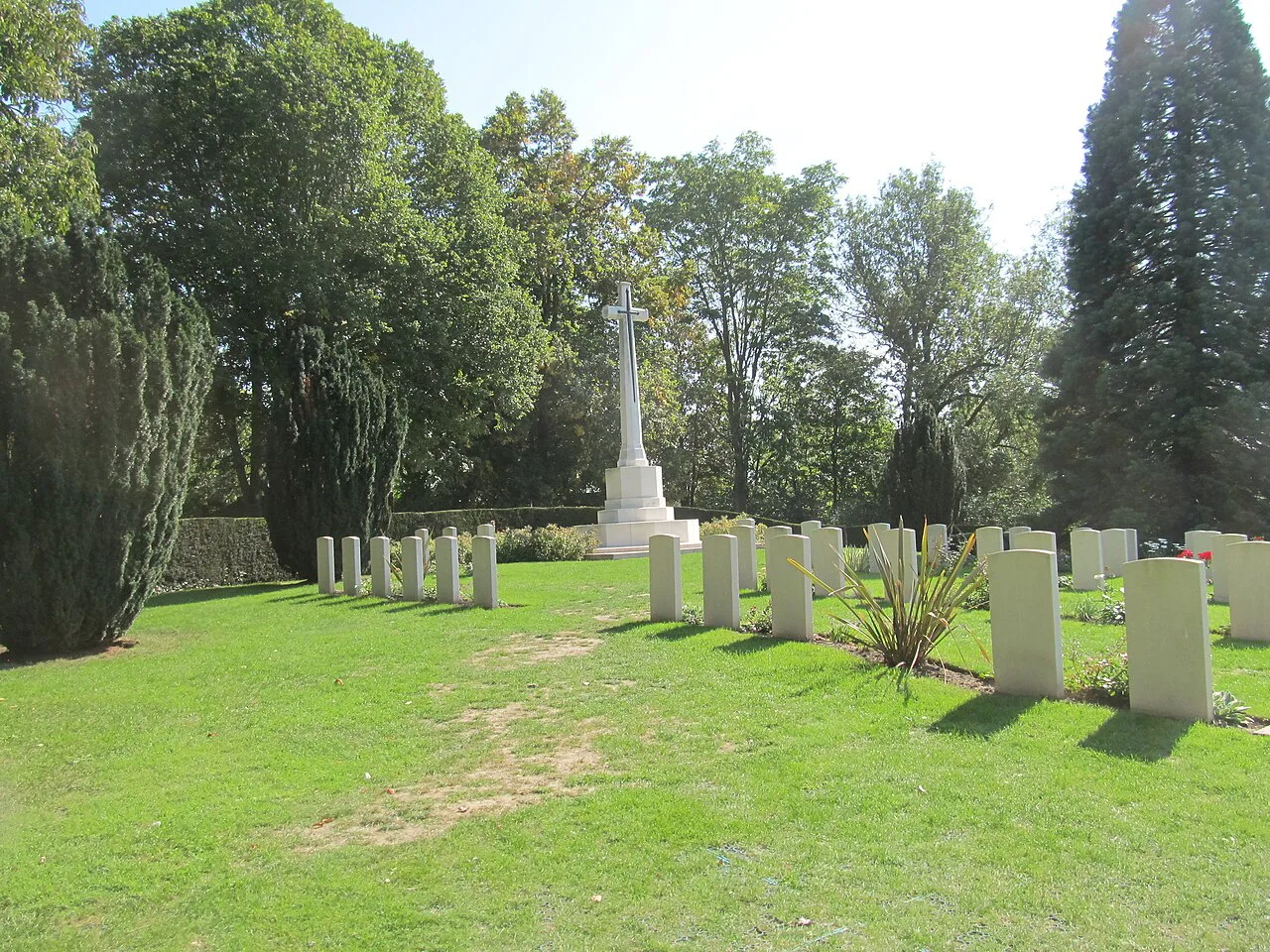
The Lille Gate (Rijselpoort) and the Ramparts Cemetery, Ypres sit on the old ramparts a short walk south, and St George's Memorial Church, Ypres is close to the centre. Together they make a compact circuit of remembrance without needing a car.
For the wider battlefield landscape, the Hooge Crater museum and Hill 60 Ypres lie east and south-east of town, while the Langemark German cemetery to the north gives the German side of the Salient in one visit. Each needs its own transport, so pick one or two rather than trying to cover them all on foot from the gate.

Is the Menin Gate worth the evening?
Yes, if you give it an evening rather than a photograph. Walk through in daylight to read the panels, then come back for the 8pm ceremony, which is the part most visitors remember and the reason the gate remains part of daily life in Ypres.
If your time in Ypres is short, see the memorial in the late afternoon and stay for the ceremony on the same visit; if you have a full day, add Sanctuary Wood Museum (Hill 62) or the Passchendaele Museum for the battlefields behind the names.