
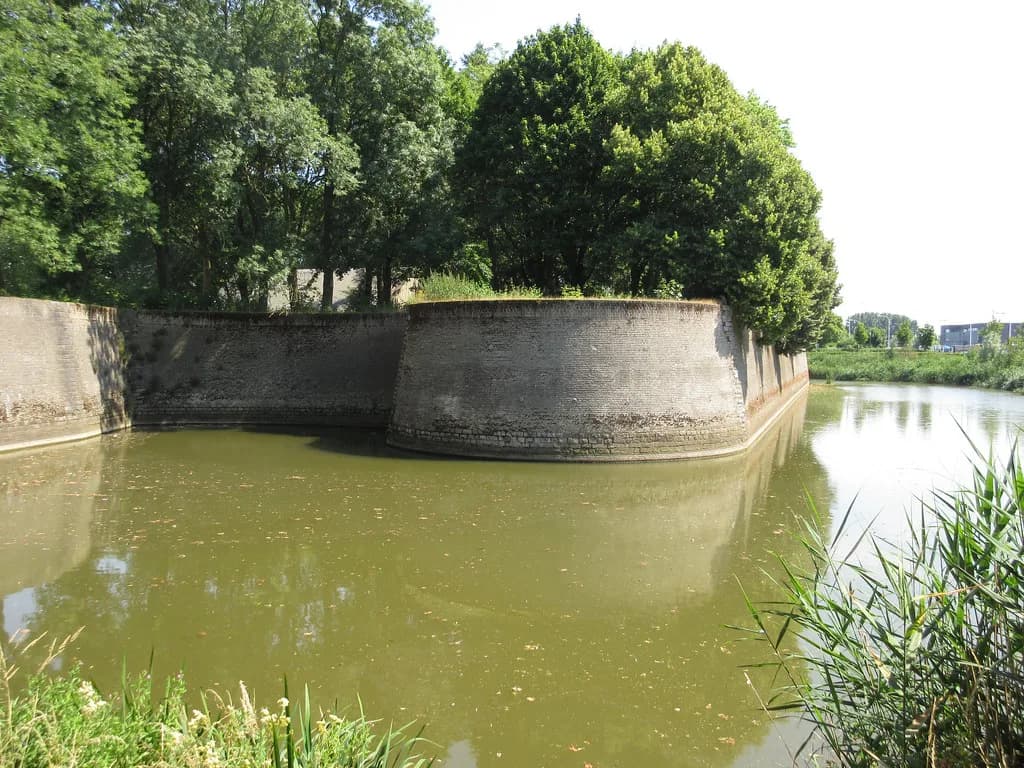
Ypres Ramparts: A Walking Guide to the Vauban Walls
The Ypres ramparts are the town's surviving fortifications, and the best way to see them is on foot: a circuit of walls and moat that you can join at the Menin Gate or the Lille Gate. Plan the walk around the stretch between the Lille Gate and Ramparts Cemetery, then decide whether you have time for the full loop. This guide covers where the walls sit in the town, how to join the circuit, what you see along the way and how long to allow.
What the Ypres ramparts are
The ramparts are the town's surviving fortifications, laid out in the seventeenth century on plans associated with Vauban. That scheme is why the walls, bastions and moat still read as a single defensive system around the old centre. Treat the walk as a circuit through landscape rather than a museum visit: you move at your own pace between the entry points, at the gates or where a path meets the street.
Most visitors meet the walls first at the Menin Gate or the Lille Gate, the two points where the circuit is easiest to pick up from the streets of the centre. The scale surprises people who have only seen the Markt and the Lakenhalle: the walls run well beyond the immediate centre and take in stretches of green and water. If you only have an hour, choose one stretch rather than trying to close the loop.
Where the walls sit in relation to the Markt and the Menin Gate
The Markt, with the Lakenhalle (Cloth Hall) along one side, is the heart of the town and the natural starting point for a day in Ypres. From there, the Menin Gate (Menenpoort) is a short walk east along the street of the same name and marks the most familiar entry to the ramparts. The Lille Gate sits on the opposite side of the circuit, so the two gates make convenient bookends for a walk across the town.
Think of the walls as a ring around the old centre: the Markt and Lakenhalle inside it, the moat and the outer green outside. That geometry matters when you plan a day, because you can walk a section of ramparts and step back into the centre without committing to the whole loop. It also means the walk slots easily between other sights.
How to join the walk
The practical entry points are the Menin Gate and the Lille Gate, with the Ramparts Cemetery sitting on the wall near the Lille Gate. Starting at the Menin Gate gives you the easiest approach from the Markt, while starting at the Lille Gate puts you straight onto the stretch most people come for. The Ramparts Cemetery suits anyone who wants the memorial part of the walk first, before continuing along the wall.
Whichever gate you choose, the walk is outdoors and follows paths along the walls and beside the moat rather than a signed visitor route, so bring a map on your phone instead of expecting waymarks at every turn. Paths connect the gates, and you can leave the circuit where a path meets the street. Wear shoes you would walk a park in, and carry water if you plan the full loop.
The Lille Gate and Ramparts Cemetery
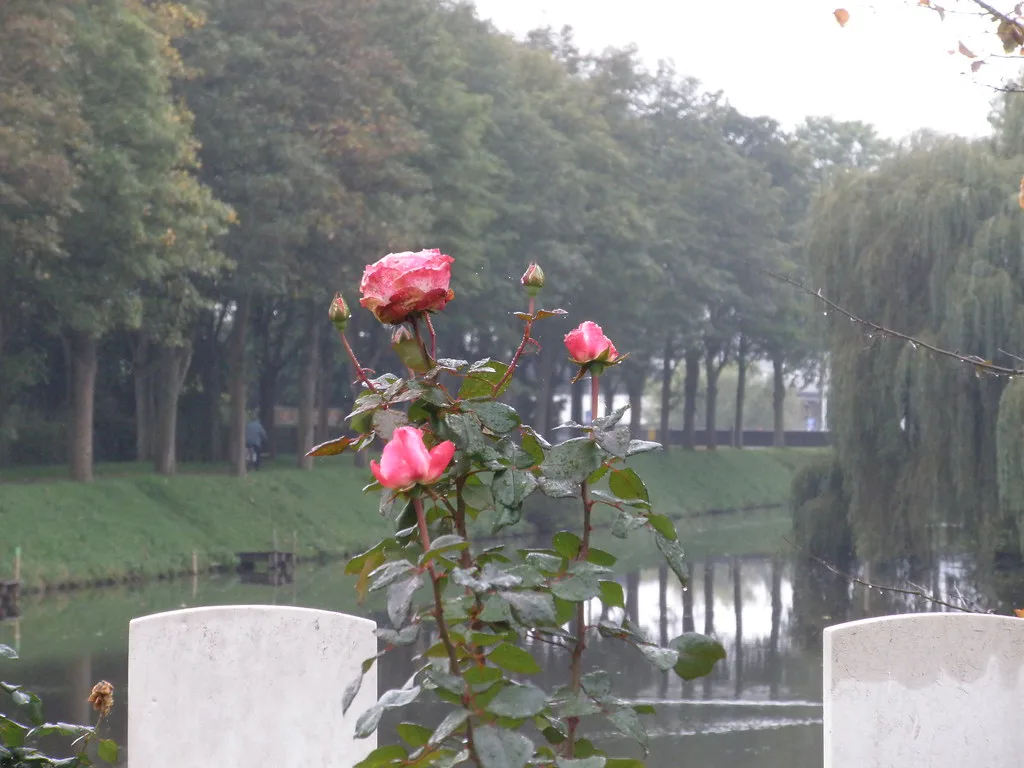
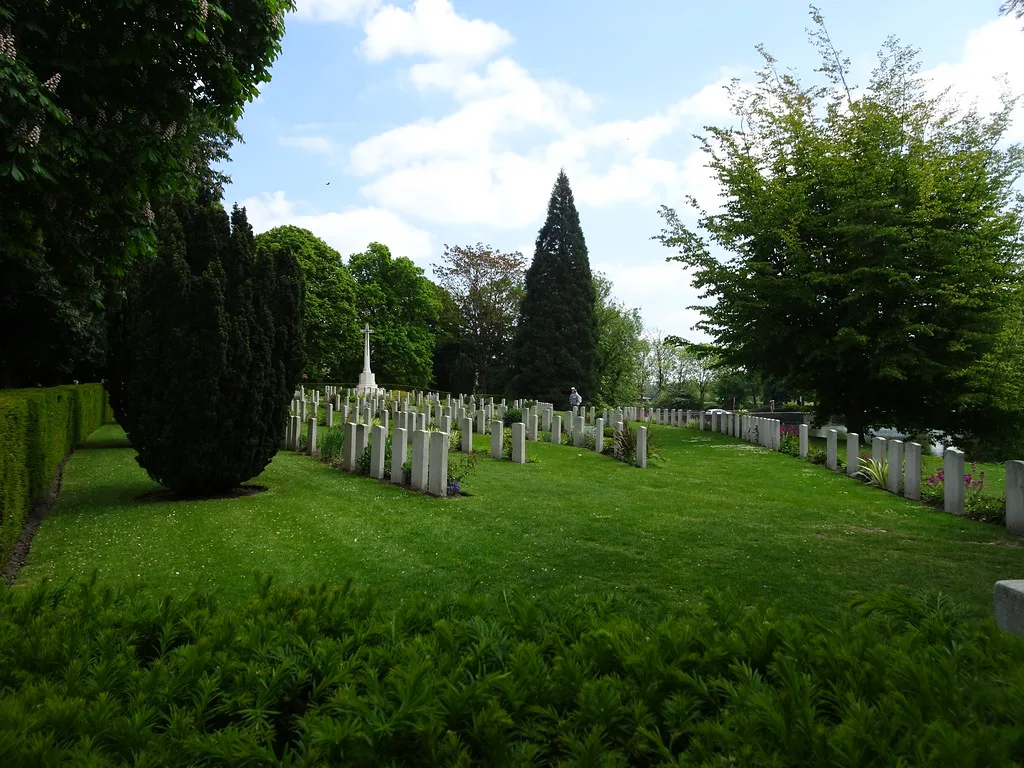
The stretch between the Lille Gate and the Ramparts Cemetery is the most evocative part of the circuit, because the memorial and the fortifications sit in the same frame. The cemetery lies on the wall above the moat, so the graves are read against the defences rather than in a separate, walled-off plot. Give this section time instead of walking past it on the way to somewhere else.
Treat the cemetery as a memorial first and a viewpoint second: keep voices low, stay on the paths and photograph headstones only with care. The Lille Gate is part of the circuit as well as an entrance to the town, so you see it from both sides of the walk. This is where a short visit can feel complete, even if you skip the rest of the loop.
Views over the moat and the town
The reward of the circuit is the combination of water, grass and the town behind the walls. The moat and the green space beside it open up long views across the water, and the height of the walls gives you a perspective on the town you do not get at street level. The Verdronken Weide, the watery meadow beside the fortifications, is one of the open stretches on the circuit.
The walk is mostly level along the top of the walls but uneven underfoot in places, with steps and slopes where you climb up or drop down to the gates. Light matters more than season: early morning and late afternoon give the best contrast on the water and the brickwork. Allow about an hour for a half-circuit that takes in the Lille Gate stretch comfortably.
The full circuit or a shorter half-loop
The full circuit takes in the whole ring of walls and moat but adds distance and repeated scenery, so choose it only if you have a free half-day. A half-loop from the Menin Gate to the Lille Gate, or the reverse, gives you the cemetery, the moat views and a sense of the Vauban scheme without the long return leg. For a one or two-day visit, the half-loop is the better use of time.
If the weather turns or you are walking with people who flag, the gates give you an easy exit back into the centre. The walls are a public circuit with no single entrance, so you can split the walk across two visits without paying twice. Build the cemetery stretch into whichever version you choose, because it is the part worth returning to.
Nearby after the walk
Finish at the Markt, where the Lakenhalle (Cloth Hall) anchors the square and the surrounding streets give you chocolate shops and beer cafés for a sit-down after the walk. Both are a few minutes from the Menin Gate side of the circuit, and the town's wartime story is the obvious continuation if you want to go deeper.
If the ramparts leave you wanting more of the war landscape, the Sanctuary Wood Museum (Hill 62) and the Hooge Crater Museum lie outside the town and are usually paired with a wider circuit of sites. Menin Gate (Menenpoort), Ypres is the natural place to end a walking day, and the memorial sits on the walk rather than a detour from it.
Is the ramparts walk worth your time?
Yes, if you give it an hour and plan around the Lille Gate and Ramparts Cemetery rather than treating the walls as background to the Menin Gate. The half-loop suits a one or two-day visit; the full circuit is for a slower day when the weather holds. Slot it between the Markt and the Menin Gate and it becomes the thread that ties the town together.
Explore more Ypres guides
Frequently Asked Questions
What is Ypres called today?
The town is Ieper in Dutch and Ypres in French and English, and both names appear on signs and maps. Belgians usually say Ieper when speaking Dutch; English-language guides and memorials generally use Ypres.
Are there World War I graves on the ramparts?
Yes. Ramparts Cemetery sits on the wall above the moat near the Lille Gate, so graves are part of the walk rather than a separate site. Treat it as a memorial and keep to the paths.
How long does the ramparts walk take?
Allow around an hour for a half-loop that takes in the Lille Gate and Ramparts Cemetery, and a good half-day for the full circuit at an unhurried pace. The ground is uneven in places, with steps at the gates.