
Trappist Breweries in Belgium: Which Abbeys Welcome Visitors
Belgium's Trappist breweries sit inside working abbeys, and most breweries never open. Here is what you can visit, taste and buy at each Belgian abbey.
On this page
You can visit some of Belgium's Trappist abbeys, but almost none of their breweries. Orval opens the historical part of the abbey and its abbey shop, while the brewery is open to visit only during the annual open house. Westmalle opens its abbey shop and prayer services to visitors, but its abbey and brewery buildings are not open to the public, and beer is sold at the brewery shop rather than the abbey shop. Of the abbeys profiled by the International Trappist Association, only a handful offer anything for day visitors, so a beer-minded trip is really about abbey grounds, an occasional tasting room and the bottle you take home.
This guide sorts the six Belgian Trappist brewery sites into those that welcome you and those that do not, explains what the label guarantees, and sets each one against the city you are likeliest to base yourself in. If you want the background first, our guide to Trappist Beer: What the Label Means and What to Order covers what the word means on a bottle and what to order in a café.
Which Belgian Trappist breweries you can actually visit
Belgium has several brewing abbeys among the International Trappist Association's members: Sint-Sixtus at Westvleteren, Westmalle, Scourmont at Chimay, Orval and Rochefort among those profiled. The most open is Orval, where you can walk the historical part of the abbey and buy from an abbey shop stocked with Trappist products; the brewery is open to visit only during the annual open house. Westmalle runs no abbey tours, and its abbey and brewery buildings are not open to the public, but you can sign in for its prayer services and buy cheese and other home-made goods from the abbey shop, with beer sold at the brewery shop.
Chimay's Scourmont Abbey brews and makes cheese on site with about a hundred employees, mostly lay people from the area. The Trappist association's abbey profile describes the community and its Chimay Wartoise Foundation but sets out no public visitor offer for the monastery itself, so plan Chimay primarily as a beer and cheese destination rather than a monastery tour. Rochefort appears in the same member list with no visiting details given, so treat it as a beer name first and confirm any access separately before building a day around it. The practical rule is simple: buy the beer anywhere, and expect a gate rather than a ticket desk at most monasteries.
What the Authentic Trappist Product label means for visitors
The Authentic Trappist Product label is the reason so few breweries take visitors. To carry it, a product must be made inside a Trappist abbey or beside it under the supervision of monks or nuns, the monastic community must be involved in managing the operation, and the income must be substantially channelled to charity and building upkeep. Trappist brewing is not a hospitality business but a livelihood for a contemplative community, so a working brewhouse on your walking route is the exception, not the rule.
Can you tour the breweries at Belgium's Trappist abbeys? Generally no. Orval's brewery is open to visit only during its annual open house, and Westmalle's abbey and brewery are closed to the public.
What does the Authentic Trappist Product label require? Three criteria: the product must be made inside a Trappist abbey or nearby under the supervision of the monks or nuns, the monastic community must be involved in managing the operation, and the income must be substantially used for charity and building upkeep.
Can you visit Westmalle Abbey? The abbey and brewery are closed to the public, but visitors can attend the monks' prayer services by arriving at the gatehouse ten minutes early to sign in, and the abbey shop sells home-made Trappist cheese, fresh eggs, postcards and craft products. Beer is sold separately at the brewery shop.
Orval makes the link plain: royalties from its name fund social work and maintenance of the buildings, and brewing is adjusted to monastic wishes rather than to visitor demand. The brewery produced 25 million bottles in 2026 according to the abbey, with more than 88% sold in Belgium, which explains why some Trappist beers are hard to find abroad. The three criteria for the Authentic Trappist Product label explain why a tour is not part of the deal.
Westvleteren and Sint-Sixtus Abbey: the hardest beer in Belgium to buy
Sint-Sixtus at Westvleteren is the Trappist abbey most associated with scarcity, and the village sits in open farmland west of Ypres (Ieper). The abbey is a member of the International Trappist Association, but its profile sets out no visitor centre or tasting room, so treat Westvleteren as a beer to hunt down rather than an abbey to tour. Read our guide to Westvleteren before you set off.
The most sensible pairing is a morning in the Westvleteren area with an afternoon in Ypres, where the Menin Gate (Menenpoort) and the rebuilt Lakenhalle give the day its historical weight. Ypres is a compact town, and the run out to the abbey is a short detour by car rather than a walk. If you are relying on public transport, check rural West Flanders connections before committing.
Westmalle Abbey: prayer services, the abbey shop and the brewery shop
Westmalle Abbey, north of Antwerp (Antwerpen), is a working Cistercian monastery where the monks brew Westmalle Dubbel and Tripel and make a semi-hard cheese from their own cows' milk. The abbey and brewery are closed to the public, but two doors are open: the abbey shop sells home-made Trappist cheese, fresh farm eggs, postcards and craft products from other Trappist communities, while beer is sold in the brewery shop. Keep that split in mind, because turning up for beer at the abbey shop sends you to the wrong counter.
You may attend the monks' prayer services, arriving at the gatehouse ten minutes early to sign in. On weekdays Terce with Eucharist falls at 10.45am, Sext at noon, afternoon prayer at 2pm, Vespers at 5.15pm and Compline at 7.30pm; on Sundays Terce and Eucharist are at 10am, Sext at 12.15pm, Vespers at 4pm and Compline at 7.30pm. These are acts of worship rather than attractions, so dress and behave accordingly and sit at the back if you are simply curious.
The guesthouse takes people wanting a few days of silence and reflection, and it closes for a silent day around the first Sunday of each month plus longer breaks in late summer and early winter; the abbey publishes the exact closing dates each year. For the full background on the beers and the site, see our Westmalle Abbey guide.
Orval Abbey: the historical abbey, abbey shop and annual open day
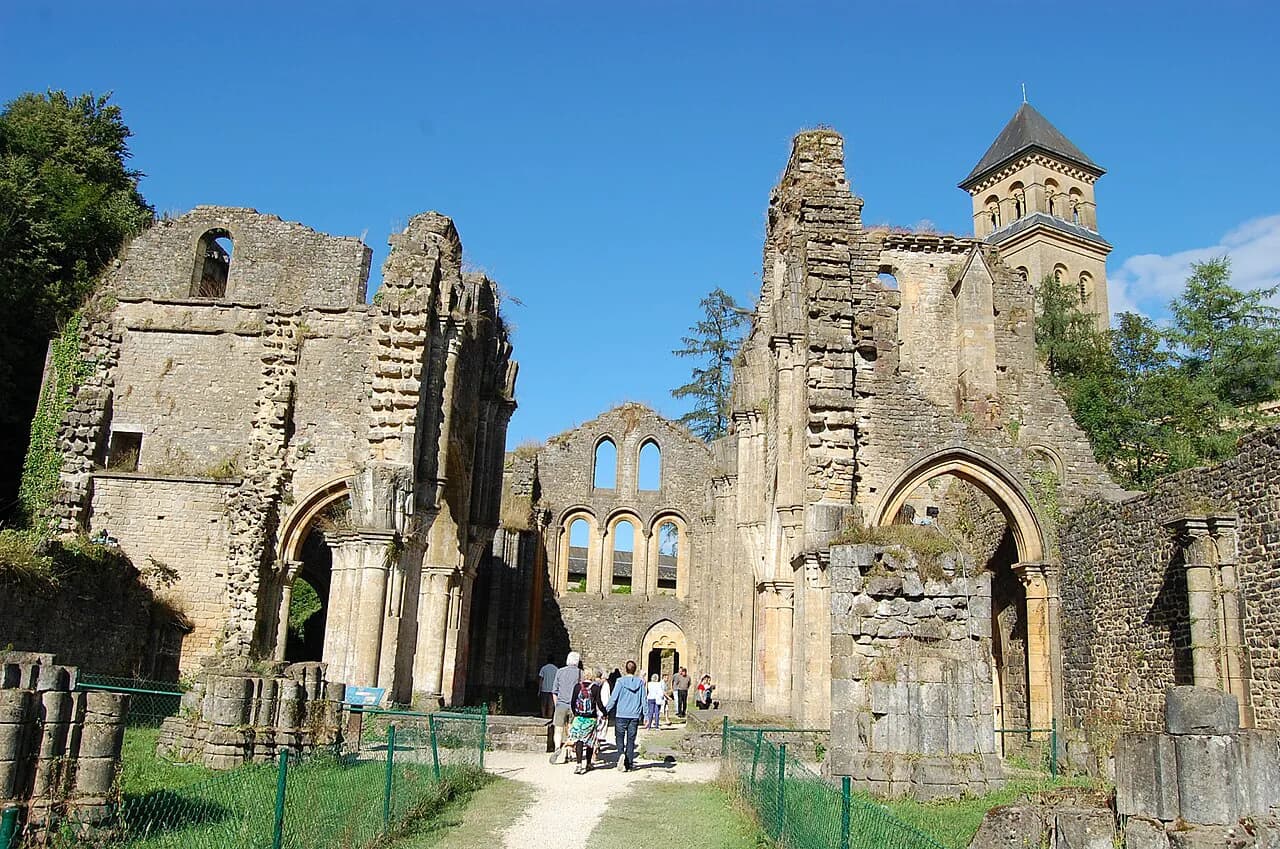
Orval is the fullest abbey day out in Belgium, set in the Gaume forest near the French border, with a community on the site since 1070 and the present community returned to the rebuilt abbey in 1926 after earlier destruction. You can visit the historical part of the abbey, and the abbey shop sells a broad range of Trappist products. The brewery, founded in 1931 to pay for reconstruction, is open to visit only during the annual open house, so book around that date if the brewhouse itself is your goal.
Orval's beer is the outlier among Trappist bottles: a dry-hopped, bitter beer with a fruity edge from wild yeast and bottle ageing, brewed by the same manufacturing methods for over eighty years. The abbey also runs an artisanal cheese-making facility on site, in production since 1928, so a visit gives you both Trappist foodstuffs in one stop. The site is rural, so a car makes the day far easier than stringing together regional buses from Namur (Namen) or Liège (Luik).
Orval offers a guesthouse where people can make a retreat for several days of reflection, which suits travellers who want the abbey at dawn rather than in a coach-party rush. Our Orval abbey page has the layout and what to see inside the walls.
Chimay and Scourmont Abbey
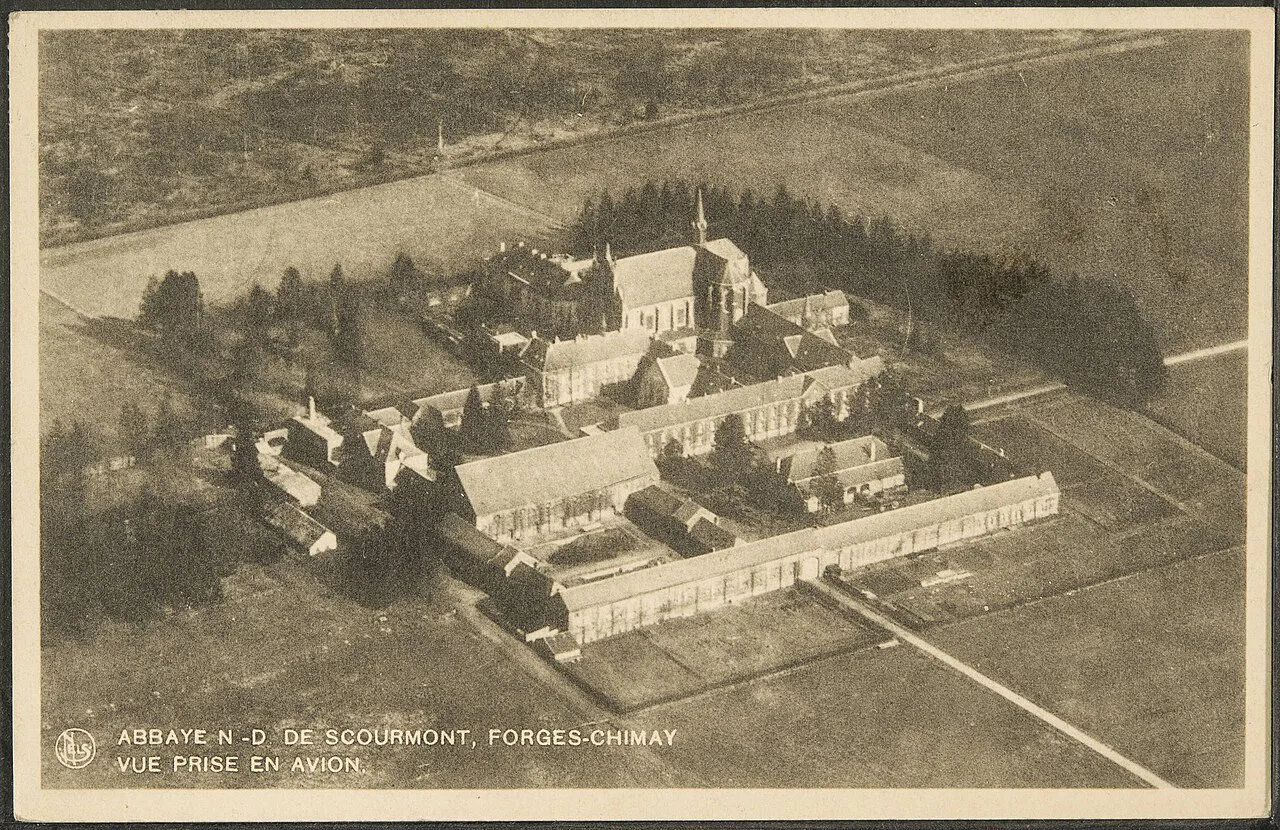
Scourmont Abbey near Chimay was built in 1850 by a group of monks from Westvleteren Abbey and has brewed Chimay beers and made Chimay cheese on site for more than a century, with a workforce of about a hundred people drawn largely from the surrounding area. The community also runs the Chimay Wartoise Foundation for social projects. The Trappist association's profile sets out no public visitor offer for the abbey itself, so a Chimay trip is about the town, the beer and the cheese rather than a monastery tour.
Chimay sits in the far south of Hainaut, well beyond the usual Bruges, Ghent and Antwerp loop, which makes it a deliberate detour rather than a hop from a city break. If the beer is what you are after, you can drink it across Belgium at almost any good beer café, and our Chimay guide covers the beers themselves.
Rochefort: a beer name rather than a day out
Rochefort's abbey, Our Lady of Saint-Remy, appears in the International Trappist Association's list of member abbeys, which gives no public visitor offer for Rochefort. Treat it as a beer to seek out in cafés rather than a monastery to tour, and do not anchor a day of your trip on it without confirmed access.
The honest trade-off is that Belgium's Trappist map is mostly religious houses in farmland, not a circuit of taprooms. Aim your days at the cities and let the abbeys be one outing, with the beer drunk in cafés and carried home from shops instead of tasted at source.
Beer cafés and tasting rooms near each abbey
The nearest thing to a Trappist tasting room in Belgium is over the border at Koningshoeven Abbey in the Netherlands, where the monks have brewed La Trappe since 1884 and visitors can taste the beer in the Tasting Room, housed in a café in the abbey's public gardens, with an abbey shop open April to October from Tuesday to Sunday and on Monday afternoons. That model is the exception: in Belgium you generally drink Trappist beer in ordinary cafés and restaurants, and Westmalle's beers are sold through selected shops and food-service outlets rather than at the gate.
In practice, choose your base by beer rather than by abbey. Ghent (Gent) and Antwerp have the widest choice of beer cafés within walking distance of the centre, Leuven (Louvain) is compact enough for an evening of tasting near the Grote Markt, and Bruges (Brugge) and Liège both reward a slow afternoon with a Trappist bottle. Ask for the Trappist list rather than a single brand, and you will find Westmalle, Orval and Chimay side by side.
Building an abbey visit into a city break
Antwerp is the natural base for Westmalle: the abbey lies to the north of the city, making it a short trip out from the Grote Markt and the cathedral rather than a cross-country expedition. Bruges works for a day that mixes a West Flanders abbey run with the Markt, Burg and Belfort, though the distances make a car or a tour the realistic option. From Liège or Namur, Orval is the abbey to choose, with its forest setting and border location rewarding a full day out.
Keep the structure of your trip city-first and abbey-second. A three-day Antwerp break, for example, can absorb Westmalle in a morning and leave the afternoon for the Vleeshuis and the riverside, while a similar Ghent stay gives you the Graslei, Korenlei and Gravensteen without a rural detour. One abbey per trip is usually enough, and the beer tastes just as good back in town.
Should you plan a trip around a Trappist abbey?
Yes, if you pick Orval or Westmalle and treat the visit as a monastery day rather than a brewery tour. Orval gives you the historical part of the abbey and its shop; Westmalle gives you a shop, cheese and the monks' prayer services, with the abbey and brewery closed. Westvleteren rewards the patient beer hunter rather than the sightseer.
Either way, build the trip around Antwerp, Ghent, Bruges or Liège and let one abbey be the excursion, with the rest of your beer drunk in town. That way a rural bus timetable or a closed gate never spoils a short break.
Frequently Asked Questions
Can you tour the breweries at Belgium's Trappist abbeys?
Generally no. Orval's brewery is open to visit only during its annual open house, and Westmalle's abbey and brewery are closed to the public. At Orval you can instead visit the historical part of the abbey and its shop, and at Westmalle you can attend prayer services and buy cheese and other goods from the abbey shop, with beer sold at the brewery shop.
What does the Authentic Trappist Product label require?
Three criteria: the product must be made inside a Trappist abbey or nearby under the supervision of the monks or nuns, the monastic community must be involved in managing the operation, and the income must be substantially used for charity and building upkeep.
Can you visit Westmalle Abbey?
The abbey and brewery are closed to the public, but visitors can attend the monks' prayer services by arriving at the gatehouse ten minutes early to sign in, and the abbey shop sells home-made Trappist cheese, fresh eggs, postcards and craft products. Beer is sold separately at the brewery shop.
Can you visit Chimay's Scourmont Abbey?
The Trappist association's profile of Scourmont Abbey describes its Chimay beer and cheese production and the Chimay Wartoise Foundation but sets out no public visitor offer for the monastery itself, so plan Chimay as a beer and cheese destination rather than a monastery tour.
Which city is the best base for visiting Westmalle Abbey?
Antwerp (Antwerpen) is the natural base. Westmalle lies to the north of the city, so the abbey is a short trip out from the Grote Markt and cathedral rather than a cross-country expedition.
Sources
Useful notes for your next trip
Optional updates to our guides.
You might also like



Continue reading
More guides you'll find useful





