Is Ghent Worth Visiting? An Honest Answer for a City Break
Yes, Ghent is worth visiting for its medieval centre, canals, Gravensteen castle and the Ghent Altarpiece. Here is who will Love it and how long it needs.
On this page
Yes, Ghent is worth visiting, and one full day is the minimum that does it justice. The old town packs a medieval castle, two towering churches, a UNESCO-listed belfry and one of Europe's most photographed canal corners into a compact, walkable centre. This guide covers what you actually see, the two paid sights that decide your timing, the honest trade-off against Bruges, and who should give Ghent a miss.
The city also has a life beyond its postcard views: students, cyclists and street art keep it from feeling like an open-air museum. That energy is the reason many travellers rate it above more polished Flemish stops.
Is Ghent worth visiting? The short answer
Ghent suits travellers who want a real city with a medieval heart rather than a single preserved set piece. Its historic centre is walkable, with most of the sights sitting within a short walk of each other; one resident writer describes it as the largest low-traffic pedestrian zone in Europe.
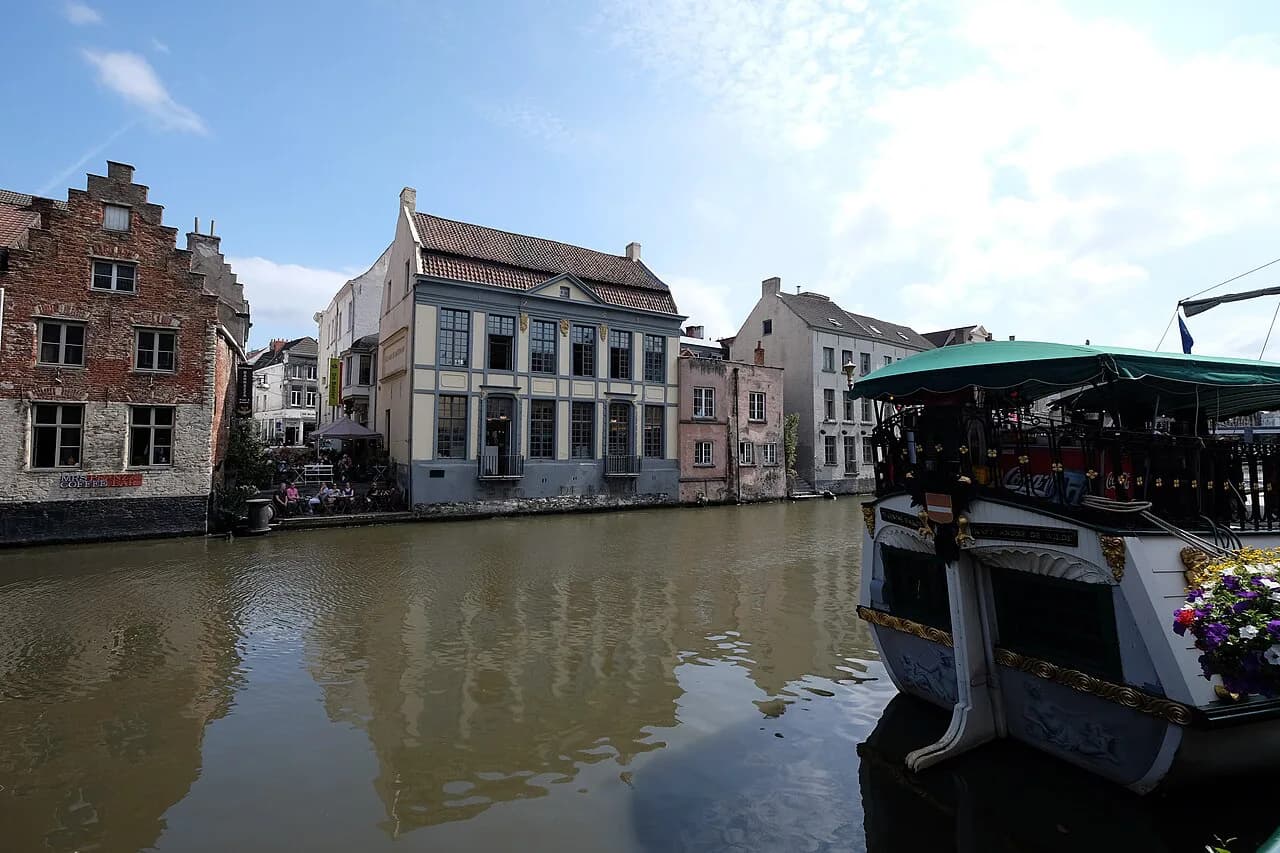
The main cluster runs from Korenmarkt, the square in front of Sint-Niklaaskerk, along the Leie to Graslei and Korenlei, where the gabled guild houses line both banks. Sint-Michielsbrug, the bridge just downstream, gives you the elevated view of that stretch that everyone photographs.
Two sources describe the city as larger and more spread out than the usual medieval core. That scale is a plus for a two- or three-night stay and a mild drawback if you hoped to tick everything off in an afternoon.
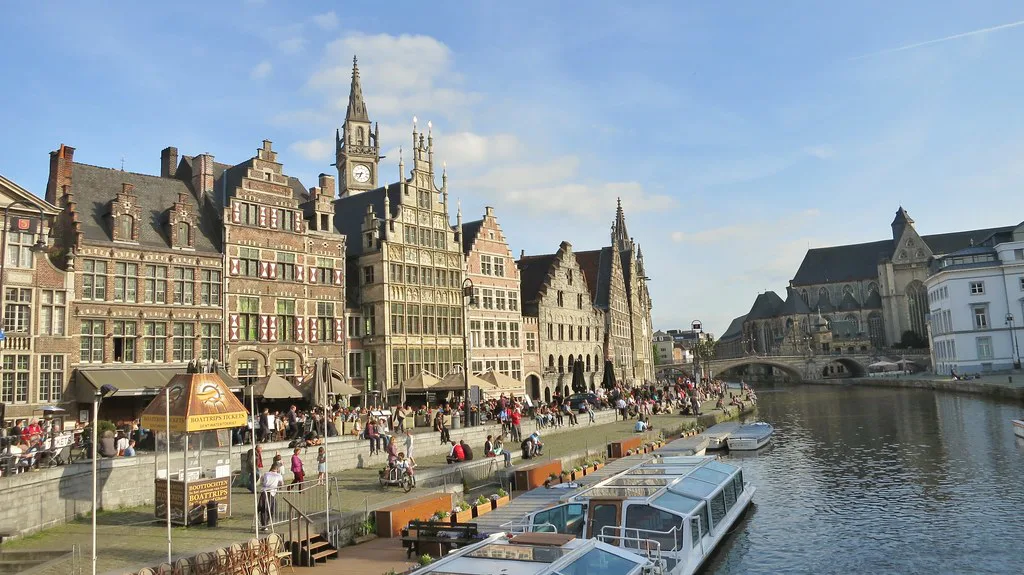
What you actually see in a day: Graslei and Korenlei, Korenmarkt, the Belfry and Sint-Baafs
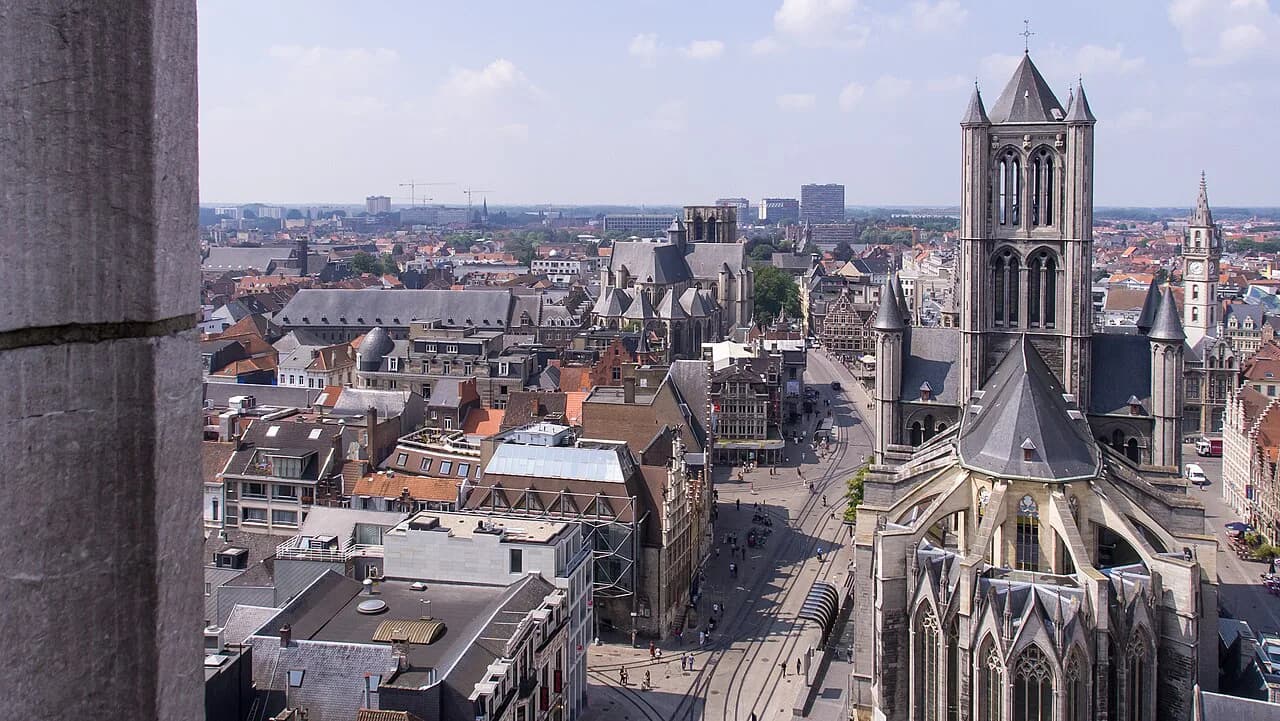
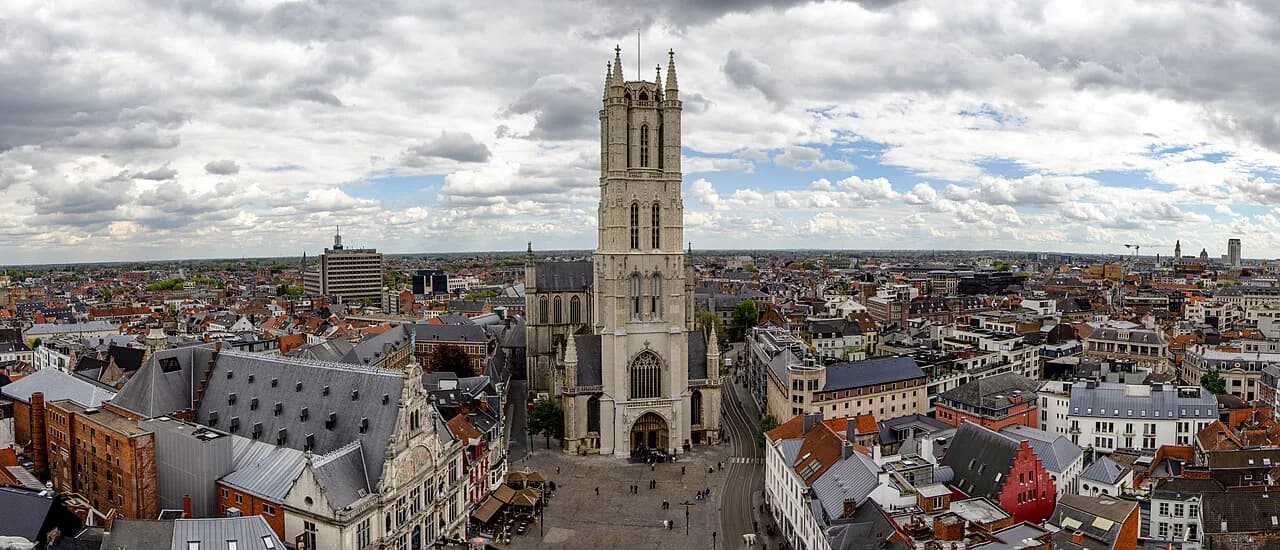
Start at Korenmarkt and Sint-Niklaaskerk, then walk the few minutes to Graslei and Korenlei for the canal frontage. From there, Sint-Baafskathedraal and the Belfry are both a short walk inland, with the Vrijdagmarkt and the Great Butcher's Hall (Vleeshuis) beyond.
The Belfry is the one climb worth making time for: a 14th-century tower with city views from the top, and the belfries of Belgium hold UNESCO World Heritage status. Tickets are sold at the Belfry shop, and one guide lists the climb at eleven euros; treat that as indicative and check the current tariff when you book.
A single loop of these stops plus a coffee on Graslei fills most of a day comfortably. If you want the pace set out stop by stop, the 2 days in Ghent plan covers the same ground with a second day attached.
Vrijdagmarkt is the quieter alternative to Korenmarkt, still a proper city square with the same gabled architecture and far fewer camera phones raised. Vleeshuis, the old butchers' hall, is worth a look from the outside even if you do not go in.
The two big sights: Gravensteen castle and the Adoration of the Mystic Lamb at Sint-Baafskathedraal
Gravensteen is a genuine moated medieval castle in the middle of the streets, with a small torture museum inside and good views from the walls. It is the sight that most changes the character of a day in Ghent: history you can walk through rather than look at.
The other essential is the Adoration of the Mystic Lamb, the van Eyck altarpiece in Sint-Baafskathedraal. The single most useful thing to know is that the painting's visiting arrangements are separate from the cathedral's own opening, with its own ticket, so plan them as two bookings rather than one.
If either sight matters to you, one day is tight: both are indoors, both reward unhurried attention, and fitting them around the canal walk and the Belfry climb leaves little slack. Doing both properly is the strongest argument for staying two nights.
How Ghent differs from Bruges: a working university city rather than a preserved showpiece
Bruges is the fairytale: a medieval old town of around 430 hectares, immaculately preserved, and the obvious first stop for a first visit to Flanders. It is also the more tourist-worn of the two, and no one pretends otherwise.
Ghent is a university city, which shows in its student population, its vegetarian food and its modern pulse alongside the gabled streets. Against Bruges it is the more affordable neighbour, but the gap is real yet modest — roughly a tenth on lodging and food rather than a different league.
Both cities deliver the classic Flemish rooflines, canals and chocolate, so the choice comes down to atmosphere. If you want one seamless picture-postcard town, pick Bruges; if you want a lived-in city with the same architecture and a bit more edge, pick Ghent.
Ghent's street art and Graffiti Street (Werregarenstraat)
Werregarenstraat, known simply as Graffiti Street, is a narrow alley entirely covered by street art that artists are free to repaint at will. It is a short ten-minute detour and the best single illustration of how Ghent handles its creative streak inside a protected historic centre.
Treat it as a quick photo stop rather than a sight in its own right. It pairs naturally with a wander towards Vrijdagmarkt and the shopping streets between the station and the centre, which are worth the walk in their own right.
Canal boat tours and the view from Sint-Michielsbrug at dusk
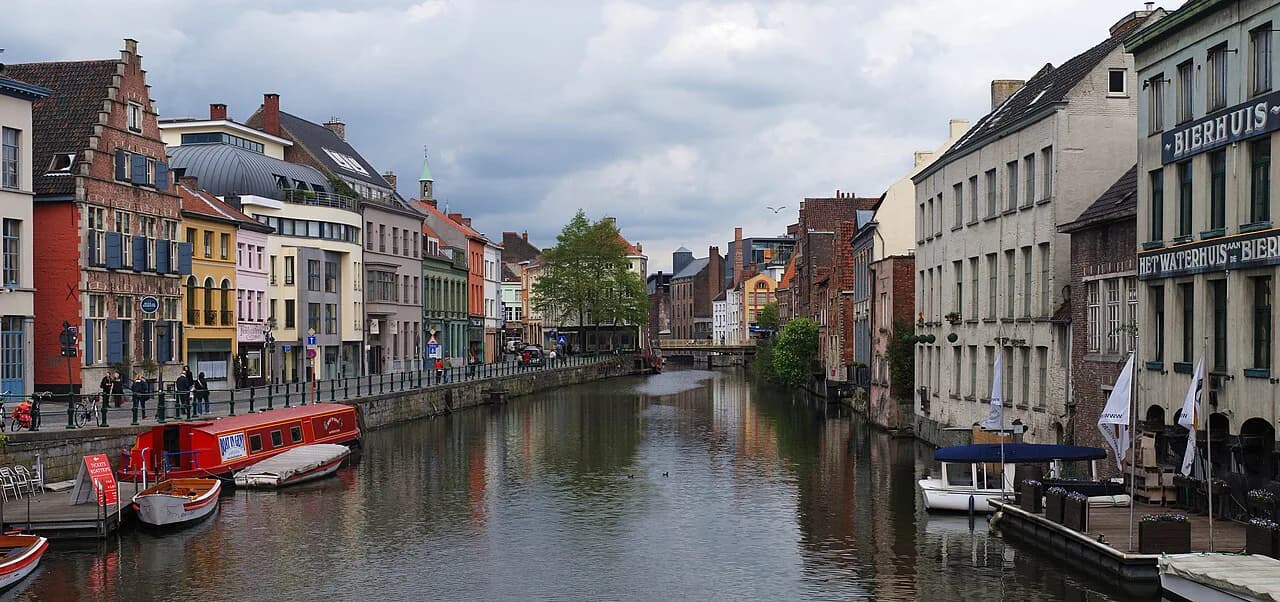
Boat tours leave from the centre and show the city from the water, which no amount of bridge-hopping replaces. One writer took a tour from the town centre and found it a good way to see Ghent from a different angle, so it slots in easily on a first afternoon.
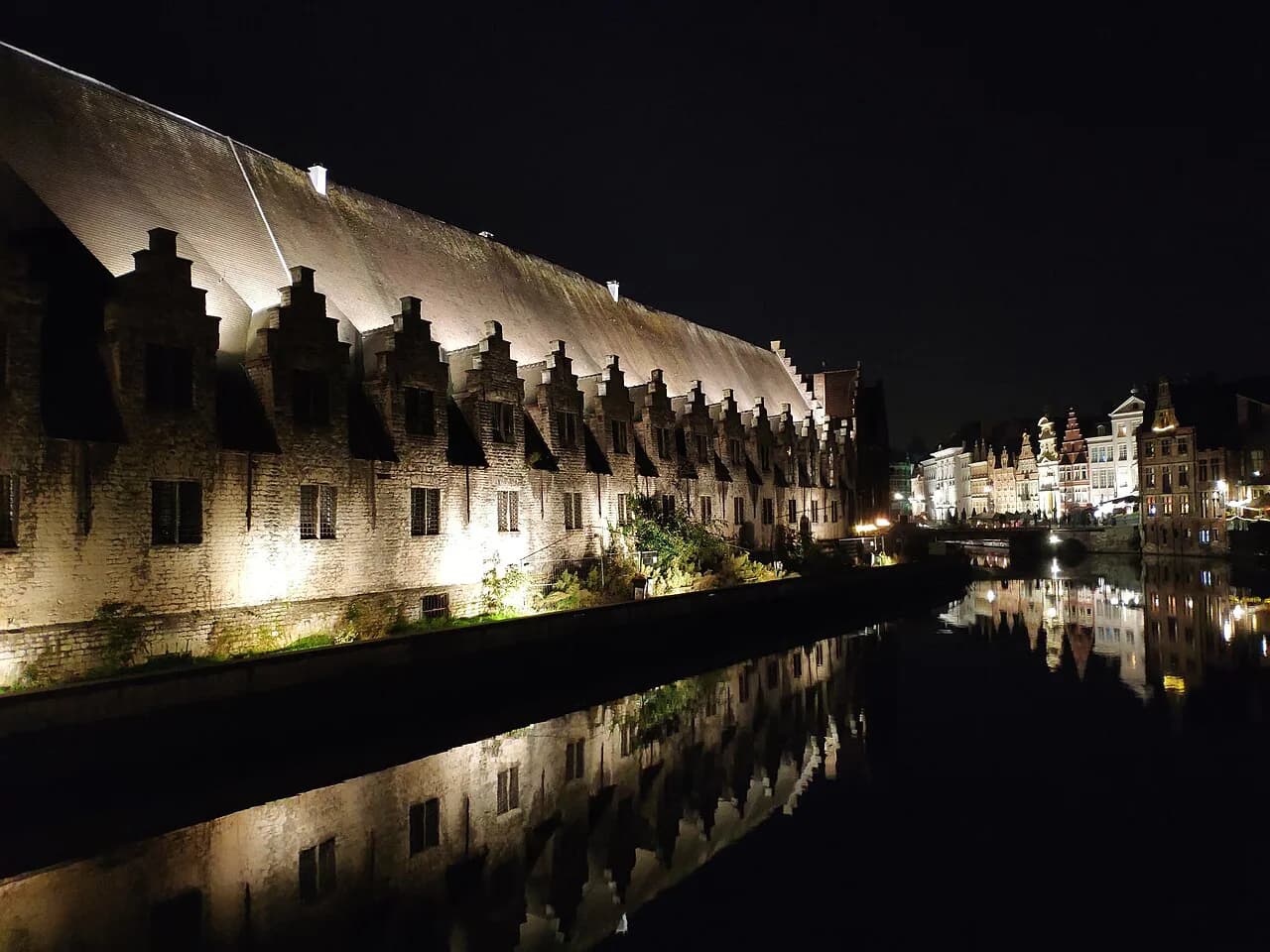
For the best free view, time your evening at Sint-Michielsbrug, where Graslei, Korenlei and the tower skyline line up in one frame. Come back after dark if you can: the city lights the main monuments, and the same walk looks entirely different.
How many days Ghent needs: one full day, or two with a museum or cycling
One full day covers Graslei and Korenlei, Korenmarkt, the Belfry, Sint-Baafskathedraal and Gravensteen at a decent pace. Two days lets you add a museum and a slower evening, and three gives you room for a bike ride out of the city.
Museums are the natural second-day filler: the Design Museum Gent, the Museum of Fine Arts near the station and the city museum all reward a slower schedule. Ghent's reputation as a cycling city is well earned, with bike rental from the Fietsambassade if you want to ride out along the Flemish cycle routes.
Walking from Gent-Sint-Pieters station into the centre takes about 35 minutes, and the station itself is decorated with frescoes of Belgian cities. If you are weighing up a short stop versus a longer stay, the Ghent City Break pairs well with the 2 days option as the sweet spot for most city-break travellers.
Who should skip Ghent
Skip Ghent if what you want is a compact, chocolate-box old town you can exhaust in a single afternoon with a canal ride and a waffle. That is Bruges, and Bruges does it better than anywhere else in Flanders.
Skip it too if you prefer your historic cities polished and quiet. Ghent is studenty, busy and creative in a way that some visitors find lively and others find noisy; Vrijdagmarkt on a Saturday is not the place for solitude.
If you are in Belgium for one day only, or you only have room for one Flemish city, Bruges remains the safer choice for a first trip. Ghent pays off when you give it a night or two.
Where Ghent sits in a Flanders trip alongside Bruges and Brussels
The classic pairing is Bruges first, Ghent second: Bruges for the set-piece beauty, Ghent for the lived-in version of the same architecture. The two are close enough that a day trip between them is feasible, though doing both in one day is rushed and leaves you seeing neither properly.
Brussels is best used as the transport hub rather than a stop in its own right on this trip. If you are arriving from London, the journey is straightforward enough to plan around, and London to Ghent makes a sensible start to a Flanders itinerary.
Is Ghent good value? What the CityCard Gent covers and what it costs
The CityCard Gent is the obvious buy if you plan to hit several sights, and one source lists it as covering the main attractions, public transport and exhibitions, from around forty-two euros for 48 or 72 hours. Confirm the current inclusions and tariff when you buy, since the card's scope changes.
Ghent also operates a low-emission zone in its inner city, so arriving by train avoids both parking fees and potential fines. Day-to-day costs land in the same bracket as Bruges, slightly lower but not dramatically so.
Should Ghent make your Flanders shortlist?
Yes, if you can give it a night or two and want a medieval city with a pulse. Put Graslei and Korenlei, the Belfry and Gravensteen on day one, book the Adoration of the Mystic Lamb separately, and keep your second morning free for a museum or a bike ride.
If you want one perfect, compact Flemish town in an afternoon, Bruges is the better call. Ghent rewards travellers who stay longer and look beyond the postcard.
Explore more Ghent guides
Frequently Asked Questions
Is Ghent nice to visit?
Yes. The medieval centre around Graslei and Korenlei, Gravensteen castle and Sint-Baafskathedraal make it one of Flanders' strongest city breaks, and its student population keeps it lively rather than museum-like.
Is Ghent a lively city?
Very much so. As a university city, Ghent has a large student population and a modern, artistic pulse alongside the medieval centre, which is why many travellers find it livelier and less museum-like than Bruges.
What is Ghent famous for?
The Adoration of the Mystic Lamb in Sint-Baafskathedraal, the medieval Gravensteen castle, its UNESCO-listed Belfry and the Graslei and Korenlei canal frontage are what most visitors come for.
Sources
Useful notes for your next trip
Optional updates to our guides.
You might also like
Continue reading
More guides you'll find useful