
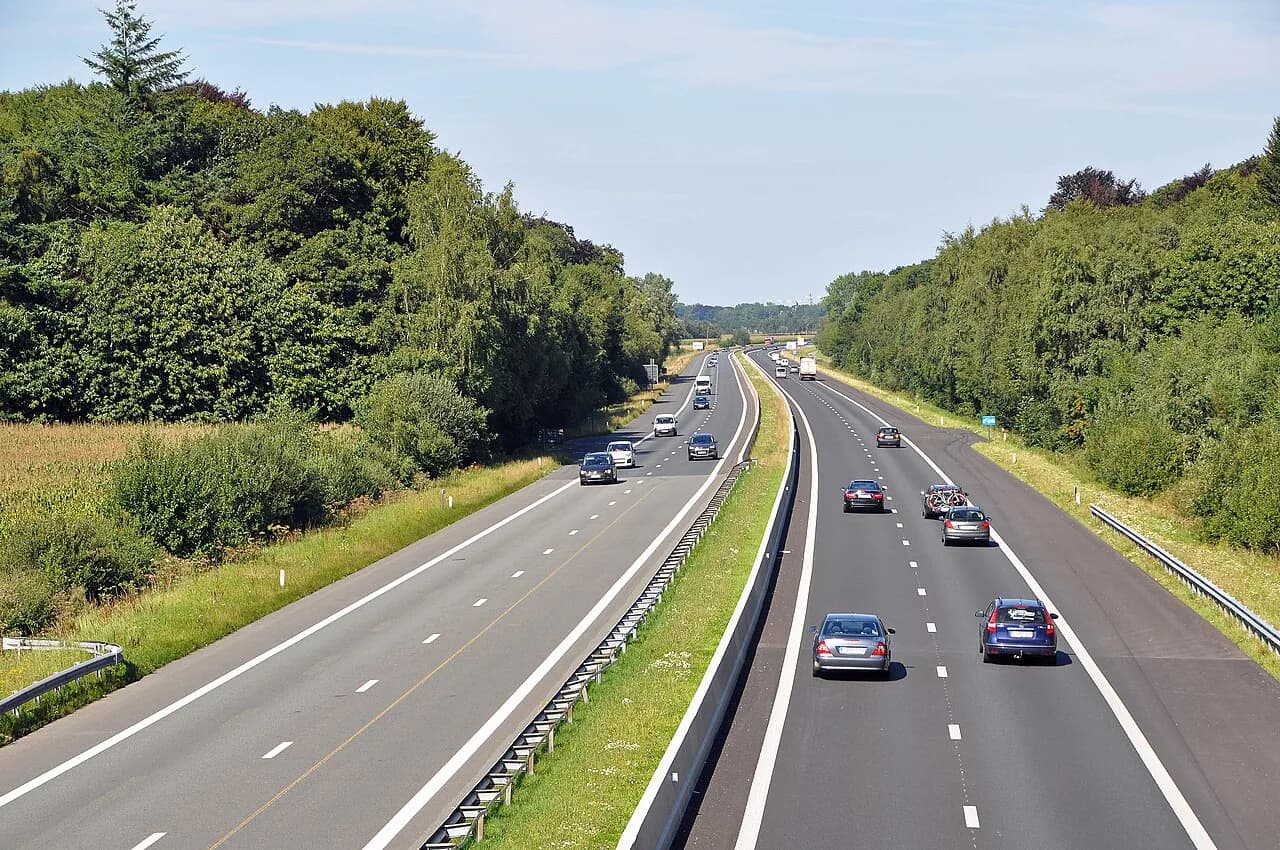
Driving to Belgium from the UK: Rules, Documents and Kit
Driving to Belgium from the UK: the documents and kit Belgian law requires, how priority to the right works, speed limits, low-emission zones and UK stickers.
On this page
A full driving licence held for long enough to hire a car is what you need, and for a one-to-four-day city break you do not need an international permit: international driving licences are recognised but are not required unless your stay runs beyond 185 days. The rules most likely to catch out a British driver are priority to the right at junctions, trams in city centres and paid registration for the low-emission zones in Antwerp, Ghent and Brussels. This guide covers the documents and kit Belgian law requires, the UK sticker question, speed limits and fines, and what city driving feels like behind the wheel.
The paperwork is the same whether you come through the tunnel or by sea, and comparing the options for getting to Belgium from uk ports is the first practical decision. Once you know how you are crossing, the rest of this guide is about the car and the rules that apply when you are behind the wheel.
Can you drive in Belgium with a UK licence?
EU and EEA licences are accepted in Belgium, and international driving licences are recognised but are not required unless your stay runs beyond 185 days. The minimum age to drive in Belgium is 18, so a young driver in the group needs to be named correctly on any hire agreement. Carry your photocard licence with you rather than leaving it in a suitcase at the hotel.
Visitors may drive private or commercial vehicles of up to 3,500 kg with up to nine seats including the driver, which comfortably covers an ordinary family car or estate.
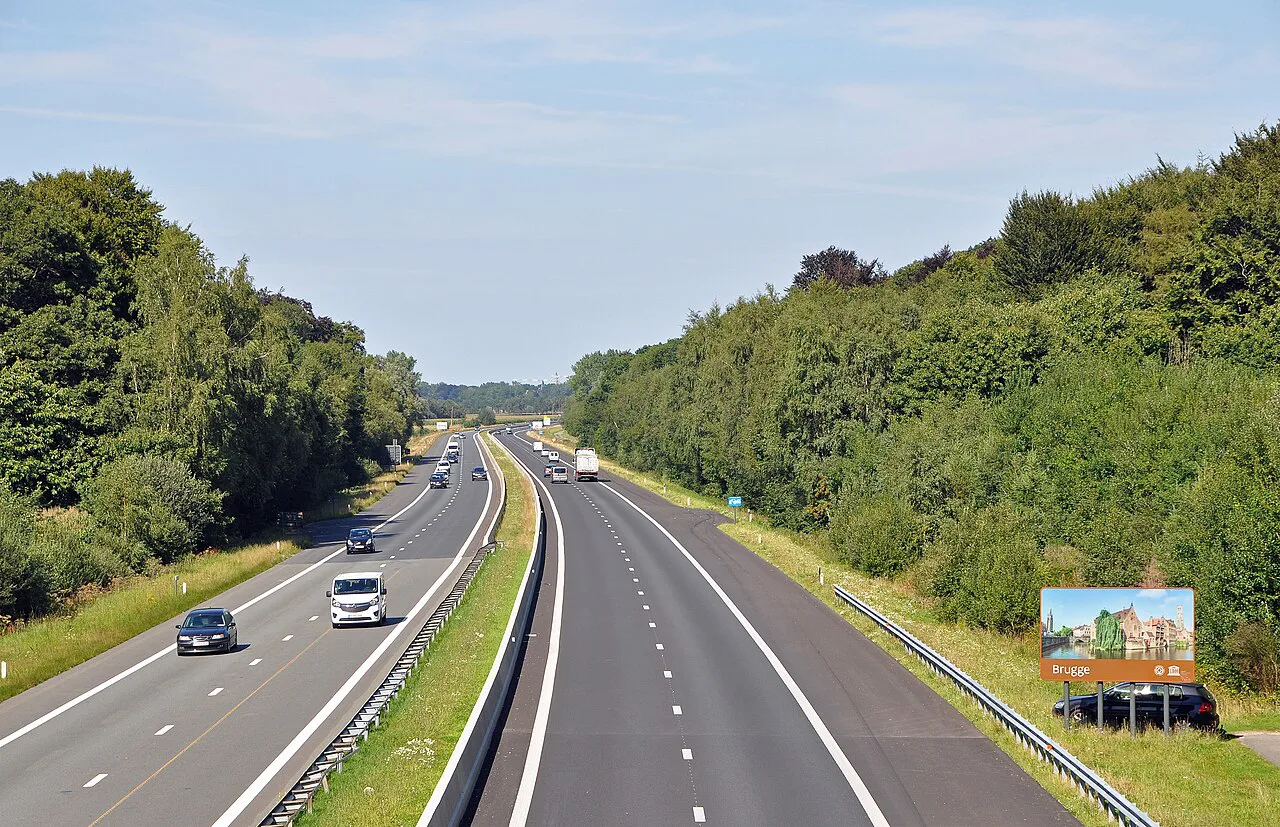
Documents and kit you must carry in a Belgian-registered car
In a Belgian-registered hire car, the rental company supplies the vehicle paperwork along with the mandatory on-board kit: reflective jackets, a warning triangle and headlamp beam deflectors, plus a first-aid kit and fire extinguisher, which Belgian law requires in Belgian-registered vehicles. Check the boot before you leave the hire desk, because the jackets need to be inside the cabin where you can reach them, not buried under luggage.
Do I need an international driving permit for a short trip to Belgium? An international driving licence is recognised but not required unless your stay runs beyond 185 days. Carry your photocard licence and vehicle documents with you.
What is priority to the right and why does it matter? At ordinary junctions in Belgium you must give way to vehicles joining from your right, even if you have already stopped. Motorways and roundabouts are exempt, but in residential streets it is the default rule.
Do I need a sticker for low-emission zones in Antwerp or Ghent? Not a sticker: you register your car's details and pay a registration fee, with a separate registration for each zone you enter.
If you drive your own UK-registered car instead, you carry the same core kit yourself, starting with your licence, insurance proof, the V5C and your passport.

Do you need a UK sticker on a UK-registered car?
A UK-registered vehicle needs a UK sticker displayed clearly on the rear. A Belgian-registered hire car does not need one, which is one practical reason to leave your own car at home for a short city break. If you are towing or driving a van, check the sticker is visible with the trailer or load in place before you set off.
Which side of the road you drive on and driving on the right for the first time
Belgium drives on the right, and a hire car will have the driver's seat on the left, mirroring British roads. Give yourself time to adjust on quieter roads before you join a motorway or thread through a city centre, and remember that your instinct at an empty junction will be to look the wrong way first. Motorway driving is the gentlest place to recalibrate before you reach Antwerp (Antwerpen) or Ghent (Gent).
If you would rather not drive at all, Eurostar to Belgium brings you into Brussels, with onward trains to Bruges, Ghent and Antwerp, so no car is needed.
Priority to the right in Belgium: what it means at junctions
Priority to the right is the single rule most likely to catch out a British driver: you must give way to any vehicle joining from a road on your right, even if you have already stopped at a junction or are letting pedestrians cross. It applies on ordinary roads but not on motorways or roundabouts, so a small unsigned junction in a residential district is exactly where to expect it. Treat every unmarked crossing as a give-way to the right until a sign or road marking tells you otherwise.
Trams and buses: who has priority in Belgian cities
In larger Belgian cities, trams have priority over all other road users. If a tram stops to let passengers off in front of you, stop behind it rather than passing, and slow or stop for a bus indicating to leave a stop. Trams approach quietly and run close to the kerb, so keep your wheels clear of the rails when turning across them.
Roundabouts, traffic lights and turning right on red
Roundabouts are the exception to the priority-to-the-right rule, so give way to traffic already circulating as you would at home. Belgian traffic lights follow a standard sequence, and a right turn on red is not the default, so wait for the green unless a sign or arrow explicitly permits the turn.
Seat belts, mobile phones and smoking at the wheel
Seat belts are mandatory for drivers and passengers. If adults in the vehicle are caught without one, or children under 12 are not wearing a seat belt, fines apply. These enforcement points are worth knowing before you drive into Antwerp (Antwerpen), Ghent (Gent) or Bruges (Brugge).
Low-emission zones in Antwerp, Ghent and Brussels: registering your car
Belgium's low-emission zones sit in the larger cities, including Brussels, Antwerp (Antwerpen) and Ghent (Gent). There is no windscreen sticker to buy: you register your car's details and pay a registration fee before entering, and a separate registration is made for each environmental zone you enter. Failure to register can bring a fine, so sort it online before you drive into the city rather than at the ring road.
If your route brings you in by sea and you plan to drive on to Ghent, Antwerp or Bruges (Brugge), compare the ferry to Belgium before you fix a route.
Driving in Belgian city centres: what to expect from trams and one-way streets
Belgian city centres are compact and many historic streets are narrow, one-way or closed to through traffic, so it usually pays to park once on the edge and explore on foot. In Bruges (Brugge), the Markt and Burg are close together and easily walked; in Ghent (Gent) the Graslei and Korenlei quays and the Gravensteen sit within a short walk of each other. Leave the car parked and walk or take a tram between the squares, the belfry and the museums rather than driving from sight to sight.
Should you drive into the city or park outside it?
Drive to Belgium only if the car earns its place: a cross-country route, several bases or heavy luggage. For a one-to-four-day city break built around Bruges, Ghent or Antwerp, the train removes the emission-zone registration, the tram priority hazard and the search for parking in one-way streets. If you do drive, register the zone before you arrive and keep the reflective jackets within reach.
Explore more Belgium guides
Frequently Asked Questions
Do I need an international driving permit for a short trip to Belgium?
An international driving licence is recognised but not required unless your stay runs beyond 185 days. Carry your photocard licence and vehicle documents with you.
What is priority to the right and why does it matter?
At ordinary junctions in Belgium you must give way to vehicles joining from your right, even if you have already stopped. Motorways and roundabouts are exempt, but in residential streets it is the default rule.
Do I need a sticker for low-emission zones in Antwerp or Ghent?
Not a sticker: you register your car's details and pay a registration fee, with a separate registration for each zone you enter.
Sources
Useful notes for your next trip
Optional updates to our guides.
You might also like



Continue reading
More guides you'll find useful





