
Eurotunnel to Belgium: Driving LeShuttle to Bruges, Ghent and Ypres
Eurotunnel is now LeShuttle, running Folkestone to Calais. Here is how the crossing works and how to drive on to Bruges, Ghent or Ypres.
On this page
There is no direct Eurotunnel service into Belgium: the crossing runs from Folkestone to Calais, and you reach Bruges, Ghent or Ypres by road from there. If you searched for Eurotunnel, you are looking at the same operator under a new name, because it became LeShuttle in 2023. This guide covers the crossing, the three city targets that make sense from Calais, and the Belgian driving rules that differ from Britain's.
Treat the tunnel as the first leg of a driving trip rather than a destination link. That framing matters when you book: you are buying a short Channel crossing and then planning a Belgian itinerary around your car. Compare it with the other options in our guide to getting to Belgium from the UK before you commit to a route.
What the Eurotunnel crossing is now called
Eurotunnel Le Shuttle was rebranded as LeShuttle in 2023, with a new website at leshuttle.com. The service is unchanged in character: you drive your own car onto the train, stay with it for the crossing, and drive off at the other end. Searches for Eurotunnel to Belgium still land on the same operator, so you are not looking for a separate company.
LeShuttle publishes its own traveller guides for Belgium, which is a sensible place to start on what to see once you are across. Fares, departure times and vehicle categories are set by the operator and change with demand and season, so price your dates on the booking page rather than relying on any figure quoted elsewhere.
Where LeShuttle goes from and to
The route is Folkestone to Calais, a short hop under the Channel that puts you in northern France rather than Flanders. From Calais you join the French motorway network and cross into Belgium by road. Nothing about the crossing itself delivers you to a Belgian city, so build the onward drive into your plan from the outset.
Does LeShuttle go directly to Belgium? No. LeShuttle runs from Folkestone to Calais, so you reach Belgium by driving on from the French terminal.
Is Eurotunnel the same as LeShuttle? Yes. The operator renamed the service LeShuttle in 2023 and moved to a new website.
Can you walk through the Channel Tunnel? No. LeShuttle carries vehicles with their passengers aboard, and there is no pedestrian service through the tunnel.
Drivers coming from the north of England or Scotland may find a North Sea ferry a better fit than a long run down to Kent. Our ferry to Belgium guide sets out the sea options, including the Hull to Zeebrugge ferry, which lands you directly in Flanders instead of France. Weigh the driving time at each end before deciding.
How the drive on to Belgium works from Calais
Once clear of Calais, three Belgian cities make the most sense as a first stop: Bruges (Brugge), Ghent (Gent) and Ypres (Ieper). All three sit in Flanders, west of Brussels, and reward a car because the interesting stops between them are scattered. Antwerp (Antwerpen) is a longer push east and better suited to a trip that starts further north.
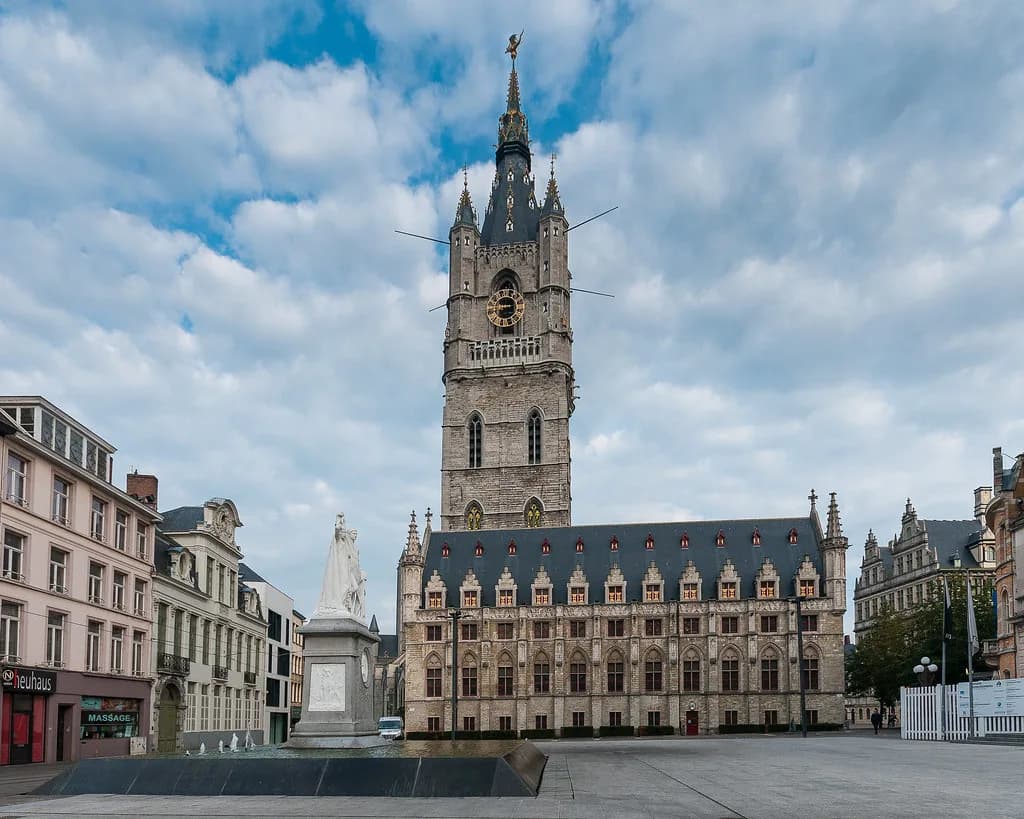
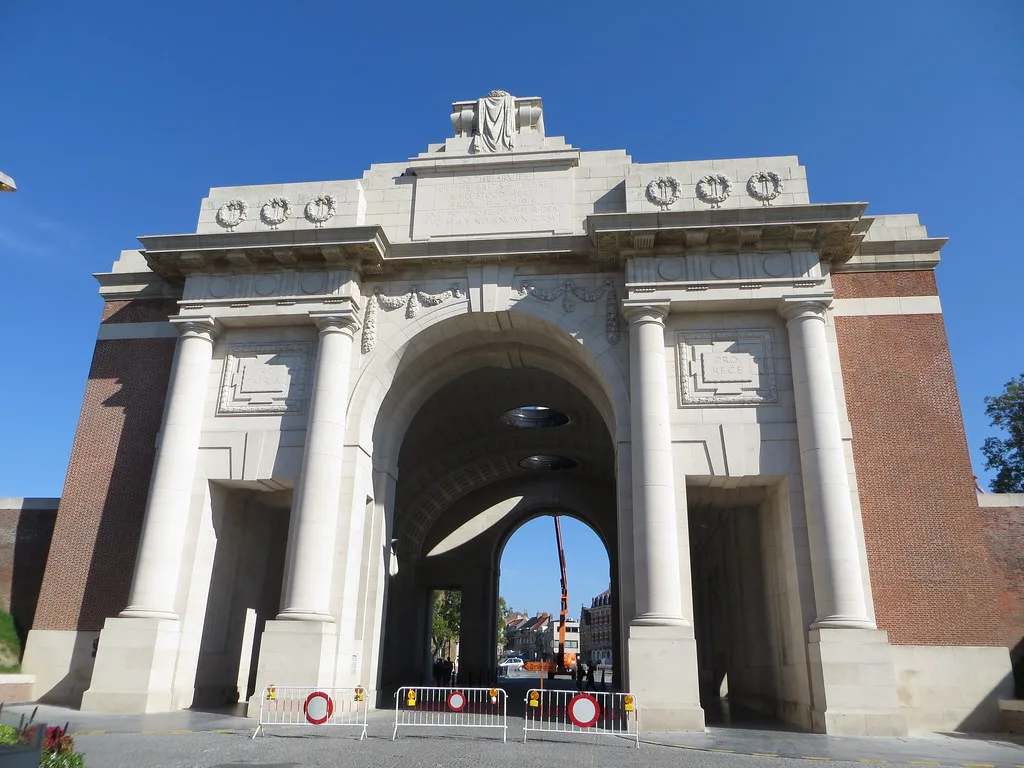
Bruges gives you the Markt, the Burg and the Belfort within a compact centre, with the canals and the Graslei and Korenlei quays in Ghent a short drive east. Ypres is the westernmost of the three and the natural base for the Menin Gate (Menenpoort) and the Lakenhalle (Cloth Hall). Choose one as your arrival city and keep the others as stops on the way home.
If you would rather keep the car parked and arrive by rail, Eurostar to Belgium runs direct to the same Flemish cities and saves the motorway altogether. Our driving to Belgium from the UK guide covers the road route in detail for anyone set on taking the car.
Driving rules that matter once you cross
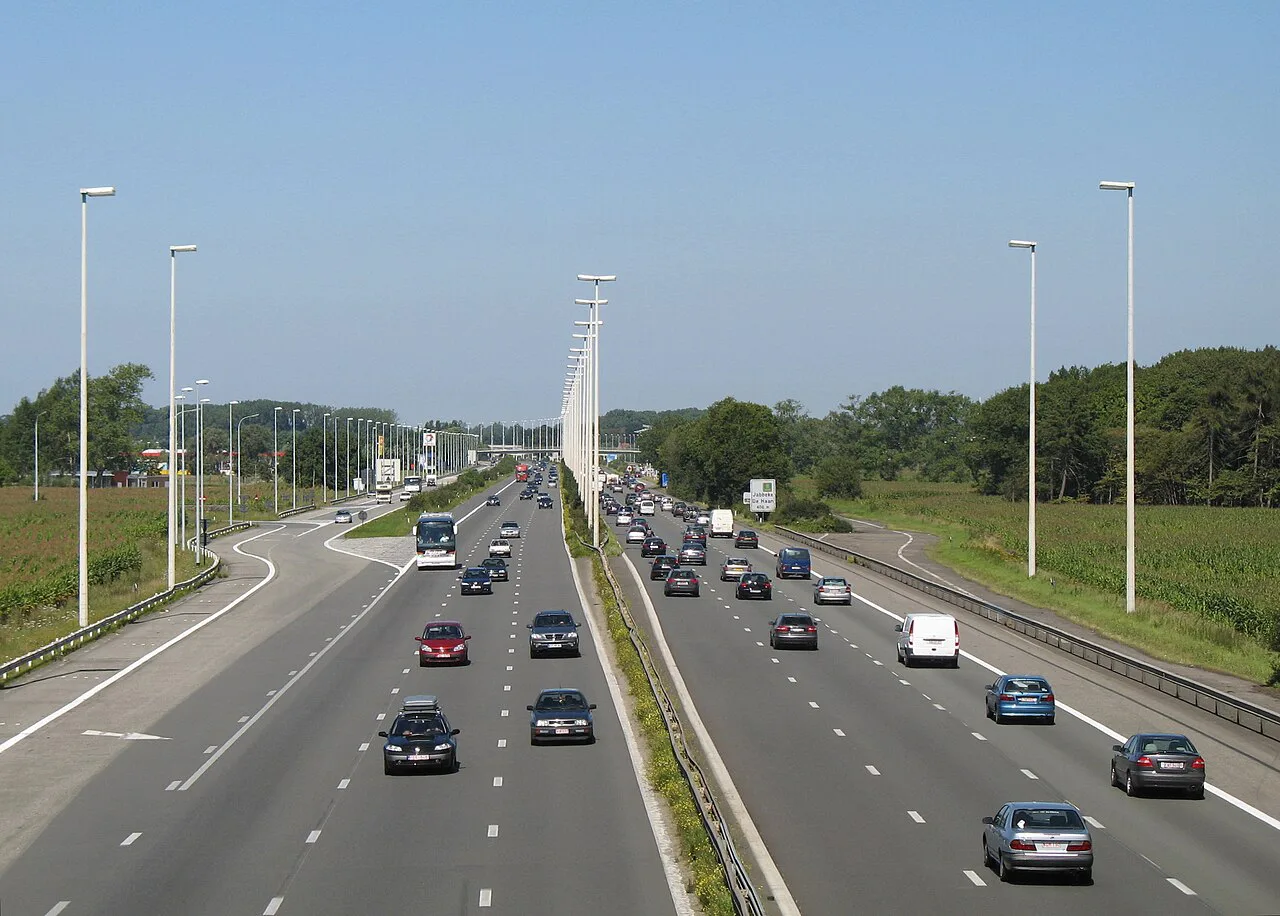
Belgium drives on the right, so everything reverses at the port. Speed limits are 50 km/h in urban areas, 90 km/h on non-urban roads and 120 km/h on motorways unless signs say otherwise, and the Blood alcohol limit is 0.05 per cent. Handheld mobile phone use while driving is illegal, and the priority-from-the-right rule applies at many junctions without markings, so approach unmarked crossroads ready to give way.
Roundabouts work conventionally: give way to traffic already circulating. Trams have priority over other vehicles, which matters most in Ghent and Antwerp where tracks run through the streets. Parking rules vary from city to city, with zones, meters and time restrictions, so read the signs where you leave the car rather than assuming a British-style regime.
Trams, roundabouts and dipped headlights outside urban areas
Dipped headlights are required during the day on all roads outside urban areas, a rule that catches out drivers used to switching lights on only at dusk. Combine that with tram priority and the priority-from-the-right convention and the first hour after Calais is the one to concentrate on. Motorway driving is otherwise straightforward, and Belgium has few toll roads, though some tunnels and bridges may charge.
Take breaks on the way: Belgian rest areas have facilities, so a stop between Calais and Bruges costs little time. Familiarise yourself with fuel-station locations before leaving the motorway for a rural stretch towards Ypres, as they are less frequent off the main routes.
What to carry in the car
Pack a reflective vest for every passenger and a warning triangle, which is mandatory and must be placed behind the vehicle if you break down. Carry the vehicle registration documents, insurance and V5C, plus your driving licence and passport. European breakdown cover is worth arranging before you travel rather than relying on a UK policy to stretch across the Channel.
Child passengers under 1.35 metres need an appropriate child seat, and everyone in the car must wear a seatbelt. None of this is exotic, but it is the sort of detail that is easy to leave until the morning of departure. Keep the documents together in the glovebox so the check at the terminal is quick.
Languages you will meet in Belgium
Belgium has three official languages: Dutch, French and German. Flanders, which covers Bruges, Ghent, Ypres and Antwerp, is Dutch-speaking, while Liège and Namur in Wallonia are French-speaking. Place names appear in the local language first, so Brugge, Gent and Ieper on road signs are the same cities you know as Bruges, Ghent and Ypres.
English is widely understood in tourist areas, which covers most of what a short city break involves: museum tickets, menus and directions. Learning a few words of Dutch or French pays off in smaller places, and greeting staff in the local language before switching to English is the norm. It also helps when reading parking meters and road signs.
Should you take LeShuttle or the ferry?
Take LeShuttle if you want the shortest possible sea leg and a straightforward run into Flanders from Calais. Choose a North Sea ferry instead if you live in the north or east of Britain and would rather wake up closer to Bruges. Either way, plan the Belgian end around one arrival city and keep the others as stops, so you are not re-packing the car every morning.
Whichever crossing you pick, the onward drive is where the trip is won or lost. Learn the priority-from-the-right rule, switch on dipped headlights outside towns and give trams room, and the run from Calais to your first Belgian square is easy. Book the crossing for your dates on the operator's site, then build the itinerary around the cities you actually want to see.
Frequently Asked Questions
Does LeShuttle go directly to Belgium?
No. LeShuttle runs from Folkestone to Calais, so you reach Belgium by driving on from the French terminal. Bruges, Ghent and Ypres are the natural first stops in Flanders.
Is Eurotunnel the same as LeShuttle?
Yes. The operator renamed the service LeShuttle in 2023 and moved to a new website. Searches for Eurotunnel still lead to the same Folkestone to Calais crossing.
Can you walk through the Channel Tunnel?
No. LeShuttle carries vehicles with their passengers aboard, and there is no pedestrian service through the tunnel. Travellers without a car should look at rail options instead.
Sources
Useful notes for your next trip
Optional updates to our guides.
You might also like



Continue reading
More guides you'll find useful



