
Best Belgian Beers: A Style-by-Style Guide
A style-by-style guide to the best Belgian beers, from Trappist ales and lambic to Flemish red and strong golden ale, with named classics for each.
On this page
The best way to drink Belgian beer is to learn half a dozen styles and order by style wherever you are, because the classics that define each one are easy to name. Chimay and Rochefort cover Trappist ale, Rodenbach and Duchesse de Bourgogne the Flemish reds, Lindemans and Cantillon the lambics, and Duvel the strong golden ales. This guide sorts those bottles by the styles Belgium originated, explains the difference between Trappist and Abbey beer, and finishes with the breweries that genuinely welcome visitors. For the full country overview, see the Belgian Beer guide.
Belgian beer rewards a little planning, because breweries work differently from those in Britain or the United States. Taprooms are uncommon, many producers sell mainly in bottles, and several only admit visitors on set days. Knowing which bottles to look for in a beer café and which breweries fit a short city break will save you a lot of wasted afternoons.
What makes Belgian beer different
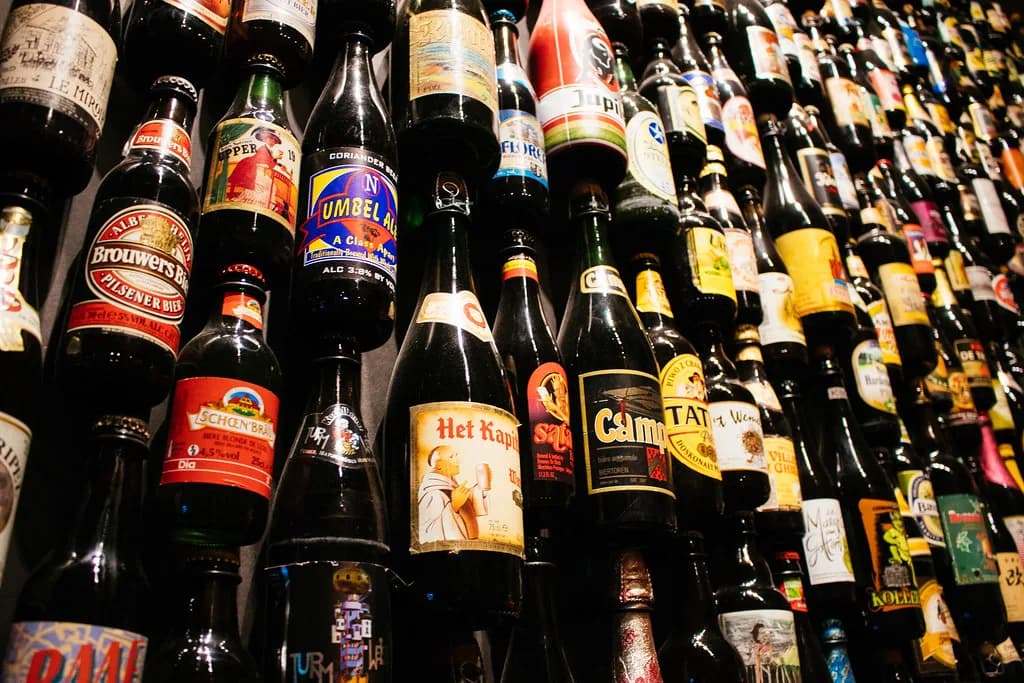
Belgium originated an unusual number of native beer styles: saison, lambic, Flemish red, oud bruin, Trappist ale and witbier all come from here. What unites them in the glass is bottle-conditioning, so the beer carries its own yeast and continues to develop after packaging, and a serious approach to serving. Expect a different shaped glass for each beer, from tulips and chalices to the wooden holder that keeps a Kwak glass upright.
The other practical difference is that beer is treated as an art form rather than a commodity. A good beer café may pour only a handful of draught beers and list a hundred bottles, serving each in its matching glassware. The Belgian Beer Styles Explained page is the place to start if you want to order confidently by name rather than by brand.
Trappist ales: Chimay, Rochefort, Westmalle and Orval
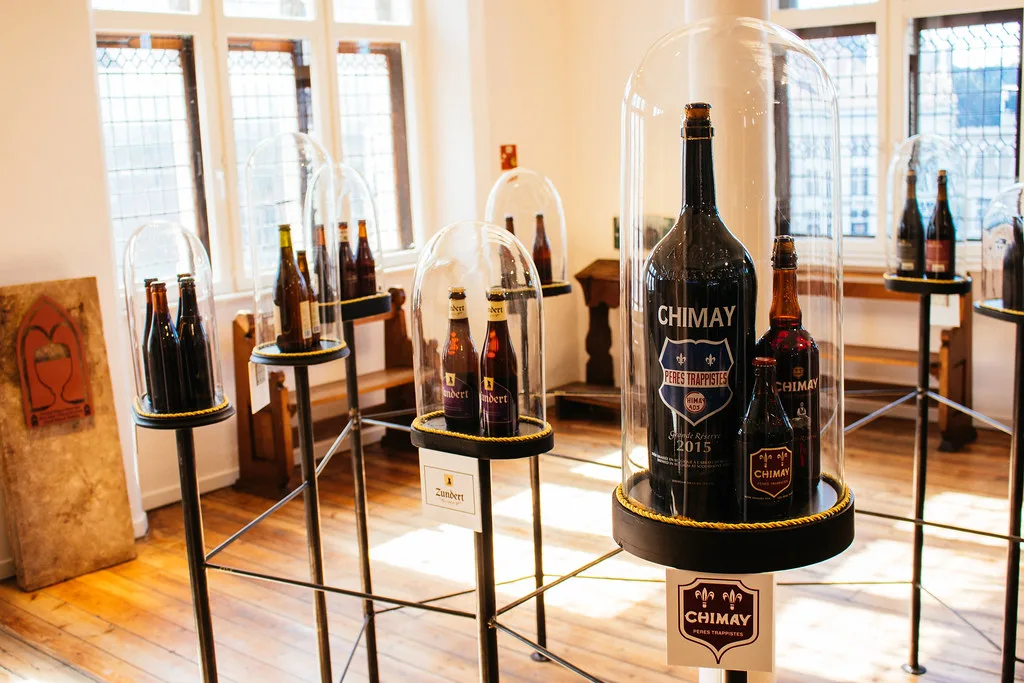
Trappist beers are brewed by monks, or under their supervision, inside a working abbey, and the beers are strong, top-fermented and fruity. Chimay is the best-known and biggest-selling of them, with a core range named after the colour of its caps; Chimay Blue, sold as Grande Reserve in the large cork-and-wire bottle, is a weighty dark ale at 9% with yeast, banana and spice in the aroma.
What makes Belgian beer different. Belgium originated an unusual number of native beer styles: saison, lambic, Flemish red, oud bruin, Trappist ale and witbier all come from here.
Trappist ales: Chimay, Rochefort, Westmalle and Orval. Trappist beers are brewed by monks, or under their supervision, inside a working abbey, and the beers are strong, top-fermented and fruity.
Abbey beers and the Trappist distinction. The test for a genuine Trappist beer is the hexagonal logo with the word Trappist on the label, which protects the name.
The three Trappistes Rochefort beers are simply named 6, 8 and 10 after the old Belgian system for specific gravity. Rochefort 6 is a dubbel in style, reddish-brown and soft-bodied with deep fruit and a warming 7.5% alcohol, while Westmalle is the benchmark for the tripel style. Orval is the odd one out, a dry, highly hopped ale with a Brettanomyces character that changes as it ages.
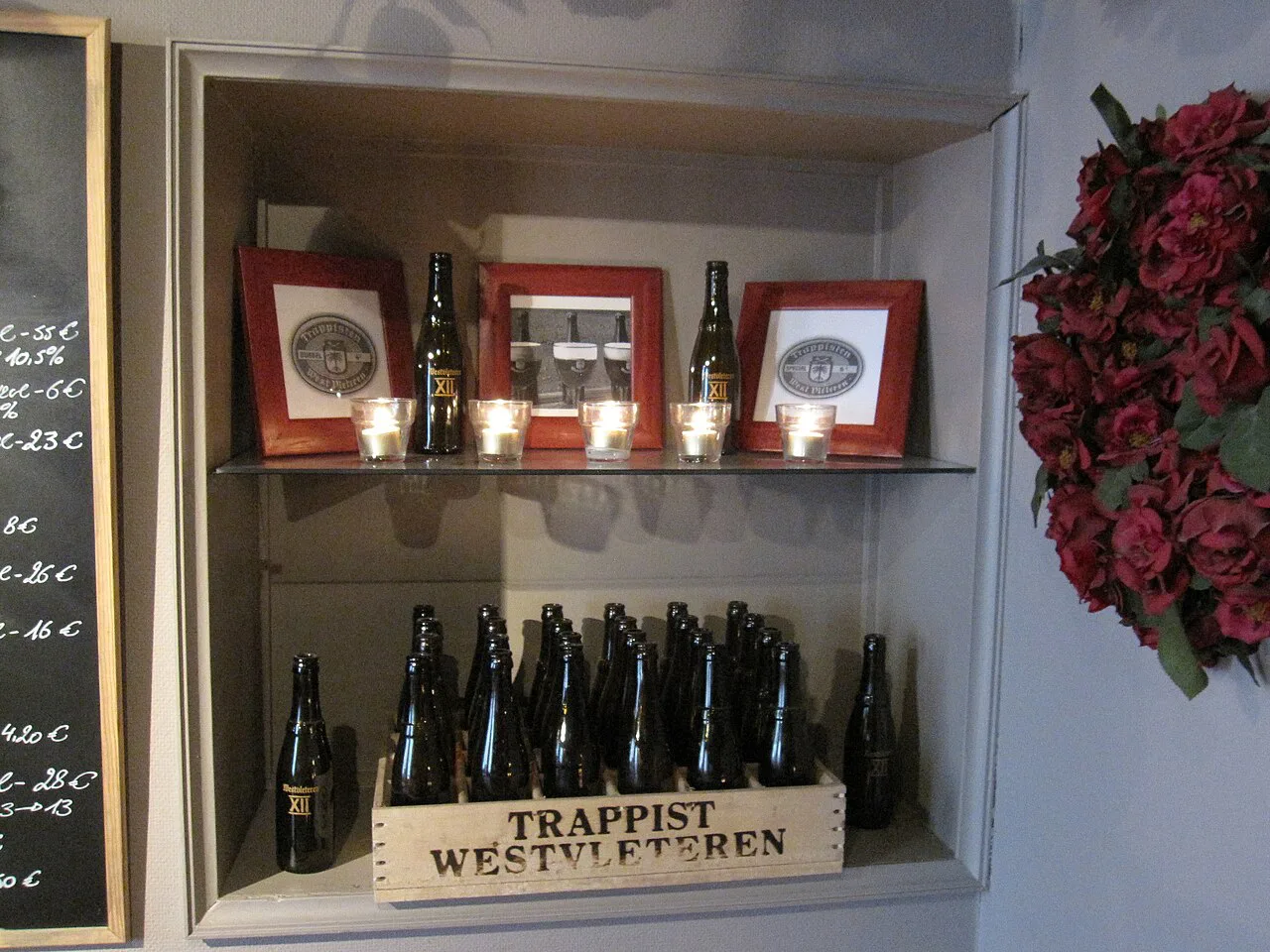
Westvleteren, brewed at St. Sixtus Abdij, is the rarest of the Trappist names, sold in strictly limited quantities and hard to come by outside the abbey. If you see it, treat it as a lucky encounter rather than something to plan a trip around. The Trappist breweries in Belgium page covers the abbey names in more detail.
Abbey beers and the Trappist distinction
The test for a genuine Trappist beer is the hexagonal logo with the word Trappist on the label, which protects the name. Everything else in a similar bottle is an Abbey beer: brewed in the style of Trappist ale by a commercial brewery or by non-Trappist monks. The distinction matters when you are paying a premium, because the label tells you which you are getting.
Leffe is the best known of the Abbey beers, largely thanks to wide distribution, and its Tripel is golden, spicy and fruity at 8.5%. Grimbergen and Corsendonk sit in the same family; Corsendonk's Tempelier is a dark 6% Abbey ale with a yeasty, caramel-and-dried-fruit aroma and a sweet, raisiny taste.
Strong golden and dark ales: Duvel, Delirium Tremens, Gulden Draak and St Bernardus Abt 12
Strong golden ale is a Belgian invention, and Duvel remains its most famous example: pale, highly carbonated and deceptively strong. Delirium Tremens sits alongside it, less refined but punchy, with a dense white head and a noticeable 8.5% alcohol in the finish. Order either in a beer café rather than a pub and you will get the proper chalice.
Strong dark ales go darker and heavier, often between 9% and 14% alcohol, with a full malty body and a touch of sweetness. Gulden Draak is heady at 10.5% with a firm malt backbone, while St Bernardus Abt 12 is the standard-bearer of the quadrupel style, dark-fruited and dry-finished. Gouden Carolus Classic, with aromas of caramel and raisins, sits just below them in weight.
Pauwel Kwak is worth trying once for its showy branded glass in a wooden holder, but the beer itself is a solid golden-brown ale at 8.4% with a sweet, caramelly aroma and a drying hop finish. The equipment is a piece of Belgian theatre; the glassware shapes are covered in more detail on the Belgian beer glasses page.
Flemish red and oud bruin: Rodenbach and Duchesse de Bourgogne
Flemish red ale is tart to the point of sourness, aged in oak to build complexity, and pours a hazy brown with a small beige head. Rodenbach Classic is the definitive example, a deeply sour blend, and Rodenbach's cellars in Roeselare hold hundreds of giant oak foeders, some in use for more than 150 years. Duchesse de Bourgogne is the other benchmark: vinegary, puckering and dry, with prunes in both aroma and taste.
Oud bruin is the darker, softer cousin of Flemish red, malty rather than sharply sour. Liefmans Goudenband is the classic to look for, and it makes a good bridge for drinkers who find Rodenbach too aggressive. Both styles work best served cool rather than cold, in a wide-mouthed glass.
Lambic and fruit lambic: Lindemans, Boon and Cantillon
Lambic is brewed by spontaneous fermentation: the wort is left open to the air so wild yeasts can do the work, which is why the style is tied to the Senne valley around Brussels. The result is sour and winey, and the sweetened fruit versions are the easiest entry point. Lindemans Cassis is a blackcurrant lambic at just 3.5%, semi-sweet with a tart, woody finish that reminds many drinkers of Ribena.
Boon and Cantillon make the more traditional, unsweetened lambics and gueuzes, and Cantillon in Brussels is a working brewery that welcomes visitors. Lindemans Faro is the sweetened, caramel-tinged variant and makes an easy introduction for drinkers who find straight lambic too sharp. Lambic beer rewards a little curiosity, so try one sweet and one unsweetened side by side.
Saison, witbier and tripel: Saison Dupont, Hoegaarden and Westmalle Tripel
Saison began as a farmhouse beer for summer drinking: dry, peppery and refreshing. Saison Dupont from Tourpes in Hainaut is the benchmark, and it is the bottle to order if you want to understand what the style is supposed to taste like. Witbier is the wheat-based, coriander-and-orange-peel style, with Hoegaarden the widely available example.
Tripel is the strong pale ale of the Belgian canon, and Westmalle Tripel is its reference point: golden, complex and deceptively drinkable at high strength. Ordering a tripel by style rather than by brand works well in any decent beer café, which is the practical argument for learning the categories. The wider Belgian Beer guide covers the city-by-city picture.
Breweries you can actually visit
Brewery access in Belgium takes planning, because taprooms are uncommon and opening is often limited. De Struise Brouwers in the West Flanders village of Oostvleteren opens to visitors only on Saturdays from 14:00 to 18:00, and De Dolle Brouwers in Esen is similarly restricted. Trappist breweries are rarely open to visitors at all, so build a trip around the brewery that does admit you rather than assuming you can drop in.
Rodenbach in Roeselare is the standout visit in West Flanders, with a nineteenth-century red-brick brewing complex, a retired malting kiln and cellars of oak foeders where the red ale matures. Cantillon in Brussels gives an unvarnished look at spontaneous fermentation. Both reward booking ahead and travelling to the brewery rather than squeezing it into an afternoon.
Buying and drinking: brewery shops versus café prices
Belgian beer is remarkably cheap to buy and considerably dearer to drink out, so decide which experience you want. Brewery gift shops sold 750 ml bottles of Rodenbach Alexander and Cantillon Gueuze, and Saison Dupont. The same kind of large bottle of Chimay Grand Reserve or Westmalle Tripel could be found in many cafés and restaurants.
The practical consequence is to buy bottles at a brewery shop for drinking at home and to spend your café budget on draught or rare beers you cannot easily carry. Pack an empty suitcase and plenty of bubble wrap if you plan to bring bottles back. Treat the 2019 prices as a historical comparison rather than a current budget.
Which Belgian beers should you seek out first?
Start with four bottles that define their styles: Westmalle Tripel for the tripel, Chimay Blue for Trappist dark ale, Rodenbach Classic for Flemish red and Saison Dupont for saison. Add a lambic once your palate is used to sourness, beginning with a sweetened Lindemans before moving on to Boon or Cantillon.
If you want to see brewing rather than just drink it, plan a city break around Rodenbach in Roeselare or Cantillon in Brussels, and check the brewery's own visitor information before you travel. Everything else can be ordered by style in a good beer café, which is the real skill this guide is trying to teach.
Sources
Useful notes for your next trip
Optional updates to our guides.
You might also like



Continue reading
More guides you'll find useful





