Belgian Pralines: What They Are and How to Buy Good Ones
Belgian pralines are filled chocolates, not nut brittle. Learn what makes a good one, which brands to look for and how to carry a box home intact.
On this page
A Belgian praline is a filled chocolate: a moulded or spun shell with a soft centre of praline paste, ganache, marzipan or cream. It is not the sugar-coated almond sold as praline in France, and it is not nut brittle, so a box labelled Belgian pralines should contain small filled bonbons rather than flat shards of caramelised nuts. This guide covers what makes a good one, which brands to look for, how a supermarket box differs from a chocolatier's counter, and how to buy and carry pralines in Bruges and other Belgian cities.
The word trips up visitors because three different confections share it across Europe. Knowing which one you are being sold takes about ten seconds at the counter and saves a disappointing gift.
What a Belgian praline actually is
In Belgium the term describes a chocolate casing with a filling, the style the industry calls a praline or bonbon. Neuhaus, which sells them by that name, defines a praline as a filled chocolate rather than a solid bar or a coated nut. French praline is a different thing entirely: whole almonds or hazelnuts cooked in caramelised sugar, then often ground into a paste. American praline is a soft fudge-like sweet heavy with pecans.
Because praline paste is itself made from ground nuts, the French and Belgian meanings are cousins rather than strangers. If you are handed something brittle and flat, you have French praline; if you are handed something with a shell and a soft middle, you have a Belgian one.
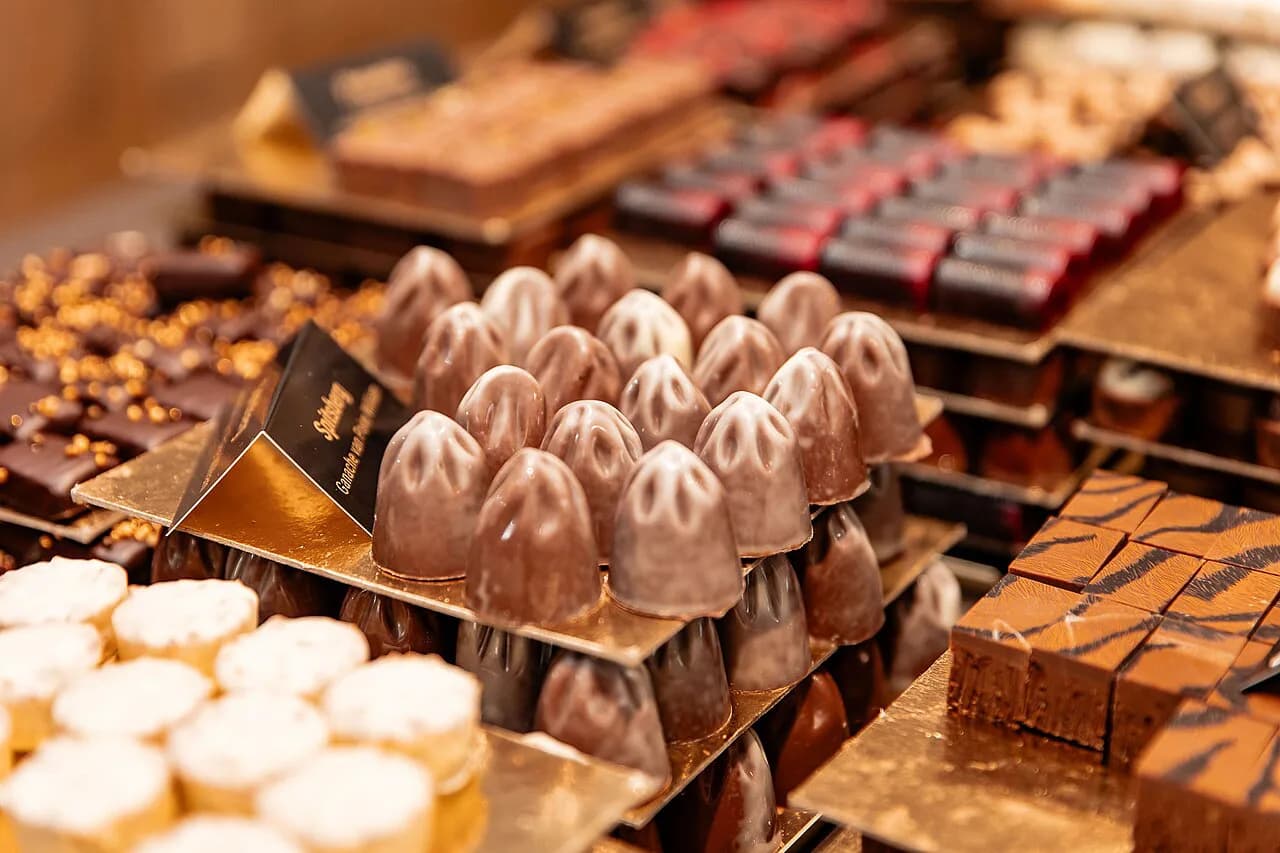
The shell and the filling: what a fresh praline tastes like
Aim for a thin shell that snaps cleanly and a centre that is soft but not runny at room temperature. The filling should come through before the chocolate coating: praline paste should taste of roasted hazelnut or almond, ganache of cream and cocoa, marzipan of almonds rather than sugar. If you want the wider background on Belgian chocolate, the Belgian Chocolate guide covers it.
What is a praline in Belgium? In Belgium a praline is a filled chocolate: a thin shell around a centre of praline paste, ganache, marzipan or cream. It is not the caramelised nut sweet that the same word describes in France, and it is not nut brittle.
What is the difference between a praline and a truffle? A truffle is usually a round ganache centre rolled in cocoa or nuts, while a praline is a moulded or spun shell with a filling inside. Both are sold by the piece at Belgian counters, and the distinction is mainly about how the chocolate is built rather than about quality.
Can I buy Belgian chocolate in the UK? Several Belgian brands, including Leonidas and Godiva, have international reach and are widely stocked outside Belgium. What travels less well is the fresh counter praline, so buy those in Belgium and eat them within a few days.
Freshness shows in the first bite. A praline that has sat too long develops a dull surface called bloom and a filling that has dried or hardened at the edges. Buy from a shop with a fast turnover, and look at the best-before date on the base of the box before you pay.
Which Belgian brands make pralines
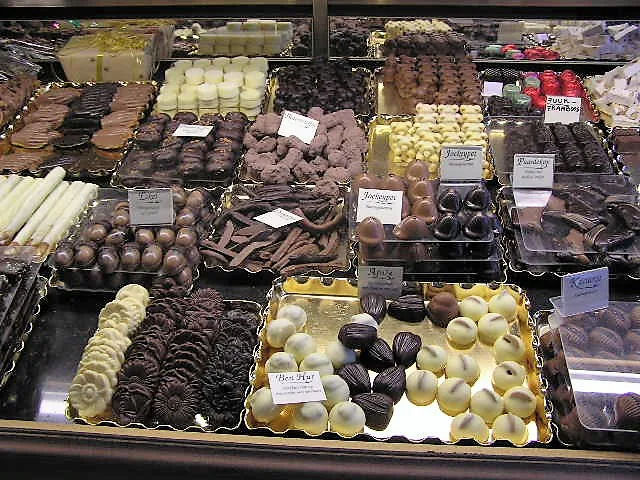
Several of the best-known names started in Belgium and still sell pralines by the box. Godiva began in Brussels in 1926, when Pierre Draps senior made his first praliné chocolates at home; Mary was founded by Mary Delluc in 1919; Leonidas built its reputation on making pralines accessible to a wide audience, with more than a hundred varieties. Côte d'Or was registered as a brand on 24 April 1883 by Charles Neuhaus and is best known for its elephant logo and its bars rather than for a counter of loose pralines.
Behind many shop counters sit large Belgian chocolate houses: VISITFLANDERS names Callebaut and Puratos as two of the biggest chocolate factories in the world and credits their presence, together with easy access to quality ingredients, for the quality of Belgian pralines. VISITFLANDERS also counts more than 320 chocolate shops nationwide, so the choice on any Belgian high street is wider than the brand names suggest.
If you want a wider survey before you shop, the Belgian Chocolate guide covers the wider subject of Belgian chocolate, and Best Belgian Chocolate compares the names worth seeking out.
Supermarket box versus chocolatier's counter
These are two different purchases with two different jobs. A supermarket box, the sort built around Côte d'Or or Leonidas, is reliable, sealed and dated, which makes it a sensible gift for an office or a neighbour. A chocolatier's counter is for eating within a few days: the fillings change with the season, and you can buy four or five pieces rather than a fixed assortment.
For a gift you want the sealed box with a clear best-before date. For your own room, buy a small mixed selection from a counter and eat it within a few days, when the shells are still crisp. The best box for a gift is not necessarily the most expensive one; it is the one that will still be intact when it reaches the person you bought it for.
Where to buy pralines in Bruges
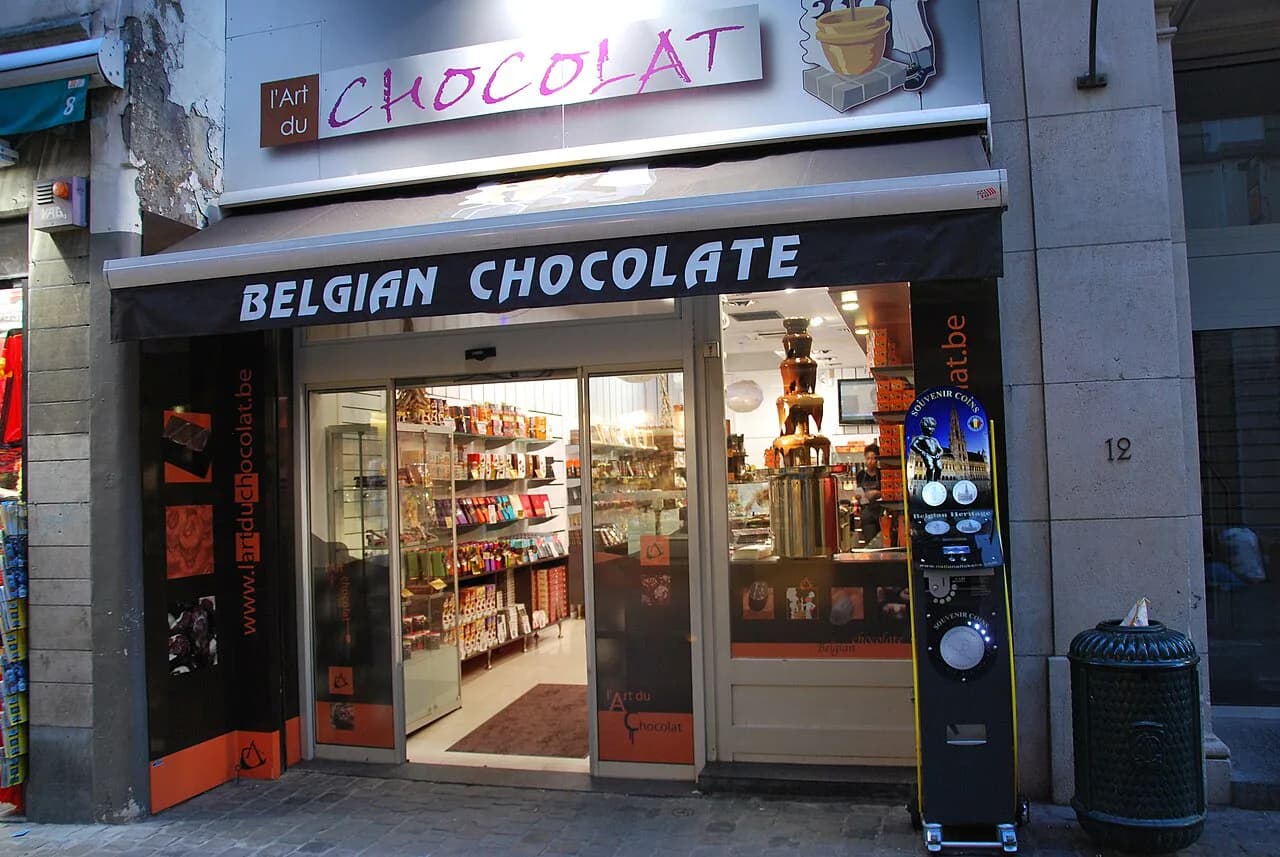
Bruges (Brugge) clusters its chocolate shops around the Markt, the square beneath the Belfort, with the tourist office at Markt 1. The Markt is the obvious starting point for a praline hunt.
Two Bruges chocolatiers have their own guides on this site. Dumon chocolatier and The Chocolate Line in Bruges are each worth reading up on before you set out, and a chocolate workshop in Bruges lets you temper and mould your own if you want a hands-on session.
For a wet afternoon, Choco-Story on Wijnzakstraat 2 traces the history of cocoa and chocolate across four floors, with an audio guide and hand-made chocolates produced on the premises. Entry is 16 euros for adults, 14 euros for seniors aged 65 and over and for students, and 10 euros for children aged 3 to 11, with under-threes free; combi-tickets with the Fries Museum or the Diamond Museum are also sold. It is a museum about chocolate rather than a shop, so buy your pralines elsewhere.
The city's art collections pair naturally with a chocolate afternoon: the Groeningemuseum, the Museum Sint-Janshospitaal and the Church of Our Lady hold works by the Flemish Primitives, including Michelangelo's Madonna and Child in the church.
Buying pralines elsewhere in Belgium
Antwerp (Antwerpen), Ghent (Gent) and Leuven (Louvain) all have chocolate shops within a short walk of their central squares, and the same rules apply: buy from a counter with fast turnover, ask which pieces are made on site, and take a small box first.
In Ghent, the compact historic centre around the Graslei and Korenlei lets you combine a chocolate stop with the belfry and Sint-Baafskathedraal inside an easy walk. In Antwerp, the Grote Markt and the streets towards the Vleeshuis make a natural circuit for a chocolate-and-sightseeing afternoon.
Reading the box: fillings, cocoa and labelling
Belgian boxes usually list the fillings by type rather than by name, so look for the words praliné, ganache, marzipan, gianduja or truffle on the leaflet inside the lid. Cocoa percentages on the outer chocolate tell you how bitter the shell will be; a 70% dark shell around a sweet praline paste is a very different mouthful from a milk chocolate one. The filled centre dominates the flavour, so choose by filling first and shell second.
Check the best-before date and the storage advice on the base. The filled centre dominates the flavour and texture, so a box kept flat and cool and eaten soon after purchase will taste noticeably better than one forgotten at the bottom of a bag.
How to store and carry pralines home to the UK
Pralines travel best if you keep them cool, flat and protected. Ask the shop for a rigid box rather than a bag, keep the box in the middle of your luggage where it will not be crushed, and avoid leaving it in a warm spot. Warm weather is the main risk: chocolate softens and bloom appears, which does not make it unsafe but does spoil the texture.
If you are flying, put pralines in hand luggage rather than the hold, where low temperatures and handling are harder on the shells. A sealed branded box is the safer bet for a long journey home.
For a short break, buy on your last full day rather than your first, so the pralines spend as little time as possible in a warm hotel room. If you are taking them to a dinner or as a gift, a sealed branded box travels better than an open counter selection.
How many pralines to buy per person
Buy for eating over a couple of days rather than for the whole trip: a small counter box lets you try several fillings without committing to a large assortment. Pralines are rich, and a box that outstays its welcome loses its snap.
If you are buying for a household, one mixed box plus one smaller box of dark pieces covers most tastes. Ask the shop to include a leaflet identifying the fillings so the recipient knows what they are eating.
Choosing your box: counter first, gift box second
Buy a small counter selection to eat in your room within a few days, and a sealed, dated box for anyone you are bringing pralines home to. Keep the box flat and cool, buy it near the end of the trip, and check the fillings before you commit to a large assortment.
If you are in Bruges, start in the lanes off the Markt and finish at Choco-Story if the weather turns; elsewhere, the same rule holds: a busy counter with a visible best-before date beats a pretty box with no information on it.
Explore more Belgium guides
Frequently Asked Questions
What is a praline in Belgium?
In Belgium a praline is a filled chocolate: a thin shell around a centre of praline paste, ganache, marzipan or cream. It is not the caramelised nut sweet that the same word describes in France, and it is not nut brittle.
What is the difference between a praline and a truffle?
A truffle is usually a round ganache centre rolled in cocoa or nuts, while a praline is a moulded or spun shell with a filling inside. Both are sold by the piece at Belgian counters, and the distinction is mainly about how the chocolate is built rather than about quality.
Can I buy Belgian chocolate in the UK?
Several Belgian brands, including Leonidas and Godiva, have international reach and are widely stocked outside Belgium. What travels less well is the fresh counter praline, so buy those in Belgium and eat them within a few days.
How long do pralines keep?
Boxed pralines carry a best-before date printed on the base. Counter pralines with fresh fillings should be eaten within a few days, while a sealed branded box keeps far better and is the safer choice for a gift.
Sources
Useful notes for your next trip
Optional updates to our guides.
You might also like


Continue reading
More guides you'll find useful