
Graslei Ghent: A Visitor's Guide to the Leie Quays

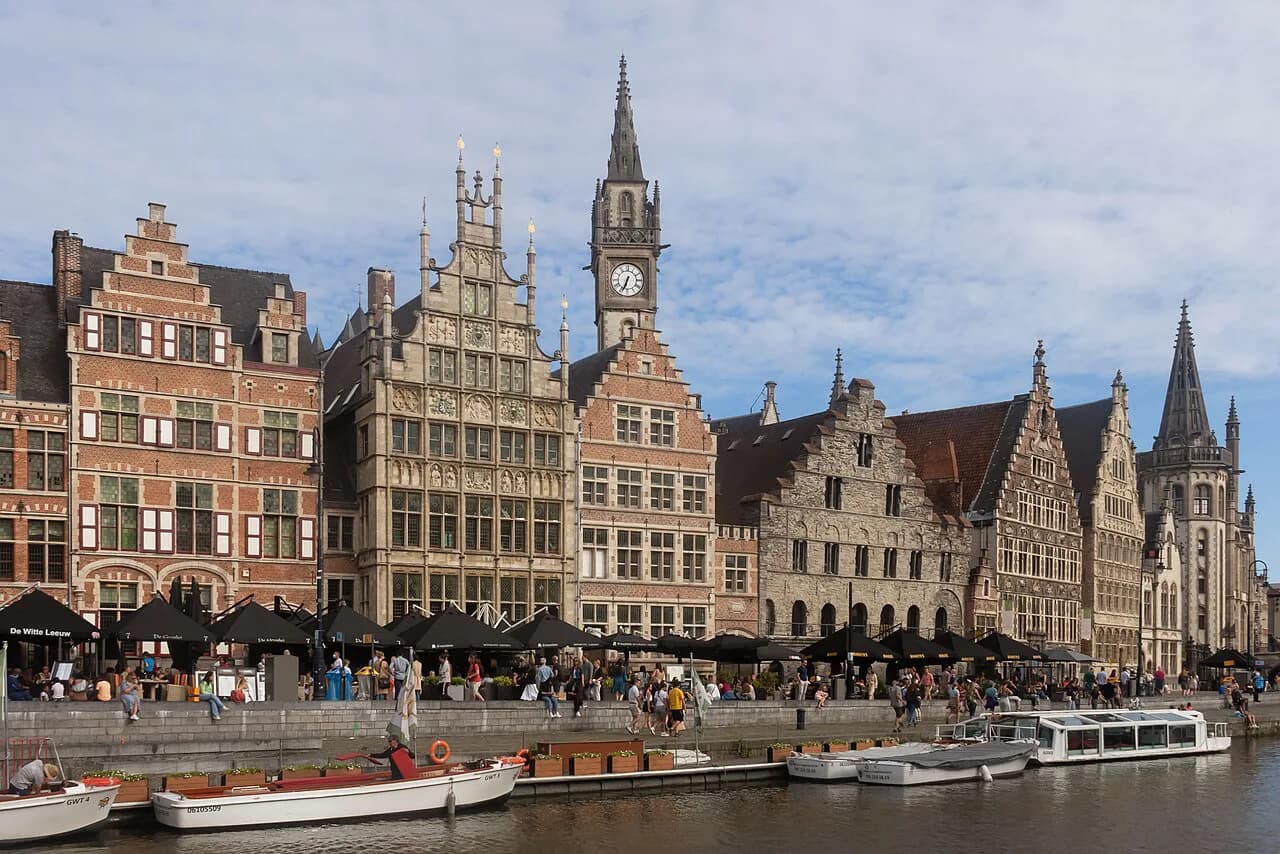
Graslei is the historic quay in the centre of Ghent, on the right bank of the Leie, with Korenlei on the opposite bank. The stone embankment is lined with gabled houses whose fronts reflect in the water. This guide covers where the quay sits, its role as the city's medieval port, which bank to walk and how to fit it into a day in the centre.
Graslei is a public quay you simply walk onto, so treat it as a stop on foot rather than a ticketed visit. That makes it an easy anchor for a city walk, and the reason it rewards a slower pass rather than a photograph from the bridge.
What Graslei is and where it sits on the Leie
Graslei runs along the right bank of the Leie, the river the city also calls the Lys, in the heart of medieval Ghent, with Korenlei facing it across the water. Both banks together form one of the most photographed stretches of the city.
The quay was the city's medieval port, where goods were landed and traded beside the water, and the tourist office's history of the two banks sets out how that commercial role shaped the street. Read it before you go and the fronts read as quayside commercial buildings rather than decoration.
You walk onto the quay from the surrounding streets; the river itself is the thing to see, so plan your pass for early morning when the water is still, or the late afternoon when the light catches the Korenlei side.
Graslei versus Korenlei: which bank to walk
Graslei and Korenlei face each other across the Leie, and walking both takes little longer than walking one. The practical difference is the view: from Graslei you look across at the Korenlei houses, and from Korenlei you look back at the Graslei frontages, so each bank is best seen from the other. Walk one side out and the other back.
Graslei has the tighter run of quayside houses and the busier strip at water level, which makes it the more crowded of the two. Korenlei is quieter and gives you the classic view back across the water. If you only have ten minutes, take Korenlei for the view and Graslei for the architecture.

The quay houses along the water
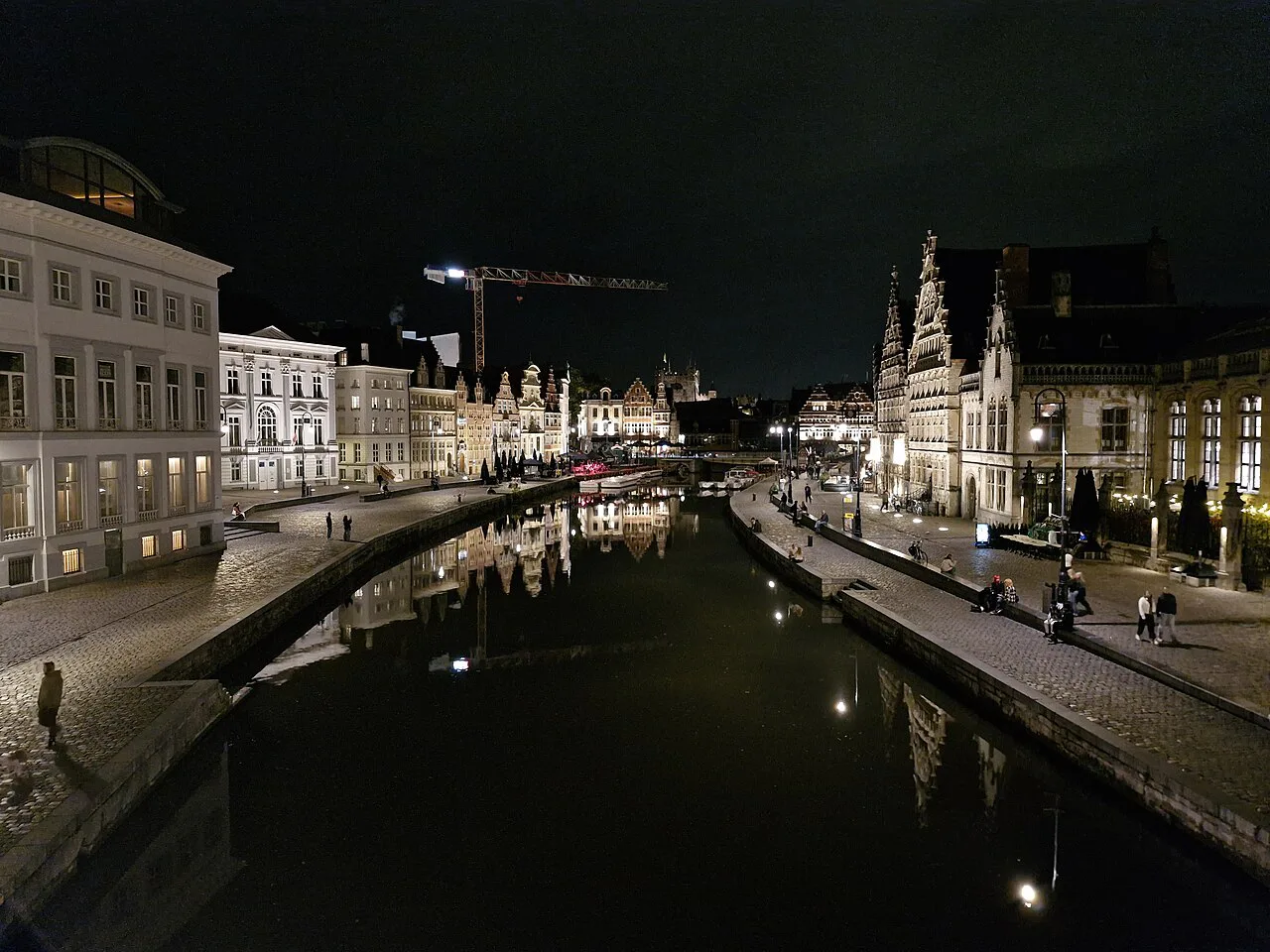
The fronts along Graslei are the point of the visit: a compact row of historic quayside buildings facing the water. Look at the rooflines, the ground floors and the way the buildings step along the embankment rather than standing as a single façade.
The tourist office's account of the Graslei and Korenlei is the most useful short briefing on how the quay worked and how it changed over time. It turns a row of pretty fronts into a sequence you can follow on foot.
Stand at street level rather than on the bridge to see the details: the ground floors, the doorways and the way each narrow plot sits against its neighbours. The embankment edge and the water below are part of the experience, so give the fronts a slow pass.

Where to stand for the view
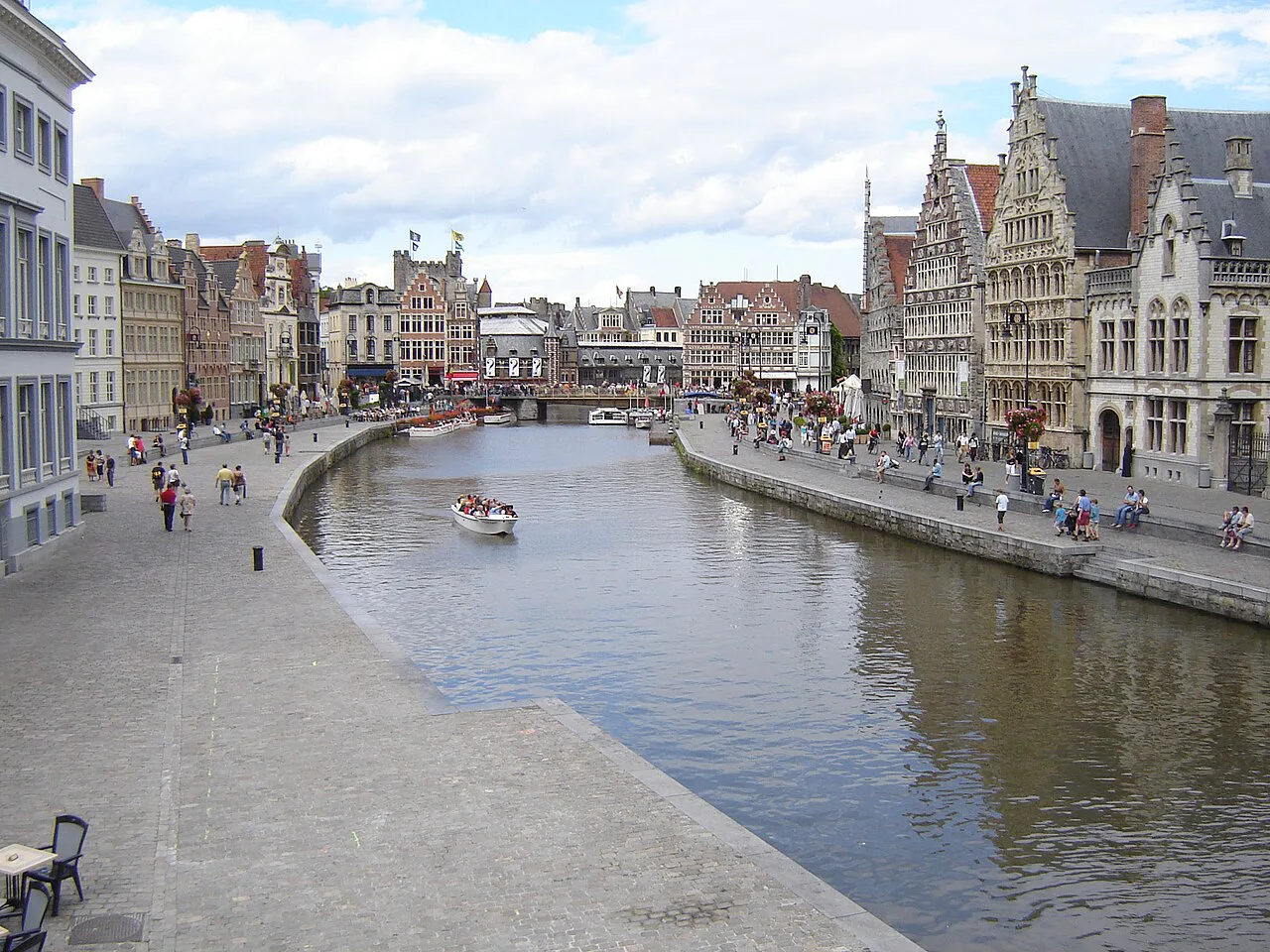
Stand above the water for the quay view, with Graslei on one side and Korenlei on the other. A short walk west brings the wider picture of the centre and its towers behind the river.
Bridges are public crossings you walk over as part of the route, so no queue or ticket is involved. Go to the nearest bridge for the quay itself and the wider viewpoint for the skyline; if you only have time for one, the wider view gives you more of the city at once.
How much time to allow on the quays
Give Graslei and Korenlei twenty to thirty minutes on foot, or longer if you stop for a drink at water level. The quay itself is short, so the time goes on looking rather than walking. It slots naturally into a half-day loop of the centre rather than being a destination in its own right.
If you are building a one-day Ghent walk, start at the quay while it is quiet, then head north towards the Belfry and the surrounding streets. A wider list of things to do helps you sequence the rest of the day around it without doubling back.
Wet weather changes the calculation: the cobbles along the water get slick and there is little shelter on the quay itself, so save it for a dry spell and use the covered streets and churches in between. The reflections are better after rain, but the walk is less comfortable.
Nearby sights in the centre
Ghent's headline sights cluster within a short walk of the water. The Belfry and Saint Nicholas' Church sit just north, Sint-Baafskathedraal is close by, and the Gravensteen castle is a short walk away along the Leie. Together they make the quay the natural start of a walking day in the centre.
If you plan to climb the Belfry, allow for it as a timed element of the day; the churches and the castle exterior you can reach on foot without booking.
Saint Nicholas' Church (Sint-Niklaaskerk), Ghent stands between the quay and the Belfry, its tower visible from the water, and it is the easiest interior to add on the way past. Step in for the nave and the glass, then carry on to the tower.
If you want a contrast to the medieval centre, the MSK Gent and the Design Museum Gent both sit south of the centre, and the STAM Ghent City Museum explains the city's growth outwards. Any of them works as an afternoon after a morning on the quays.
The Prinsenhof lies a short walk north-east and is a quiet counterpoint to the busy water. It suits a slow half-hour at the end of the loop rather than a separate trip.
Riverside cafés and Graslei 7
The ground floors along Graslei are given over to cafés and restaurants with terraces facing the water. Graslei 7 is a riverside venue by the Lys, with a menu of Flemish classics including Gentse waterzooi, group formulas and direct reservations.
Treat the terraces as a pause rather than the purpose of the visit: a coffee with the river in front of you is the point, and you can check the current menu and prices with the venue before you sit down. Booking ahead matters most for groups and for the busiest weekend afternoons, when the waterside tables fill first.
Should Graslei be your first stop in Ghent?
Yes, if you have half a day in the centre: the quay is public ground and puts the Belfry, Sint-Baafskathedraal and the Gravensteen within a short walk of each other. Walk Korenlei for the view back, cross to Graslei, then climb to the tower while the morning is still quiet.
If you only have an hour, choose between the quays and the Belfry rather than trying to fit both. The quay asks nothing of you but time, and it is the version of Ghent most people come to see.
Frequently Asked Questions
Where is Graslei located?
Graslei is on the right bank of the Leie in central Ghent, with Korenlei facing it across the river. Both banks together form one of the most photographed stretches of the city.
Do you need tickets to visit Graslei?
No. Graslei is a public quay and you walk onto it from the surrounding streets, with no ticket or timed entry. The terraces along the water are separate businesses that set their own menus and reservations.