
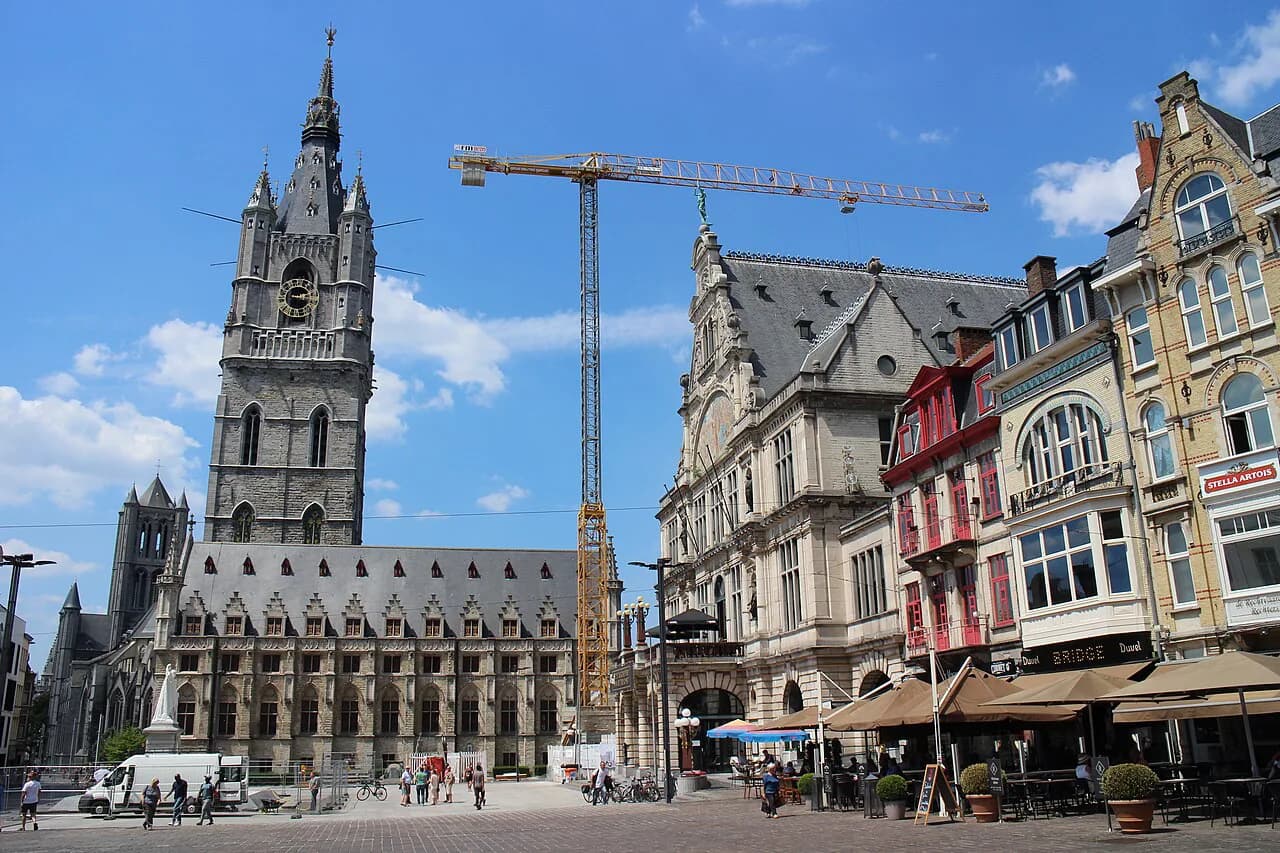
Ghent Belfry (Belfort): What to See and Whether to Climb

Climb the Ghent Belfry and you get the best single view of the medieval centre: the three towers, the Leie quays and the rooftops all line up from the top. It is the tallest of Ghent's three towers and the one that has symbolised the city's independence since the Middle Ages. This guide covers where the Belfort stands, how the lift and staircase combine, what the bells do and how to slot the climb into a half-day in the centre.
Allow around an hour for the tower itself, plus time on Korenmarkt afterwards. Because the Belfry sits on the edge of the main square, it pairs naturally with Sint-Niklaaskerk opposite, Sint-Baafskathedraal a few minutes away and the Gravensteen beyond.
What the Ghent Belfry is and where it stands on Korenmarkt
The Belfort is a medieval bell tower rising directly over Korenmarkt, the square at the heart of the old centre. For centuries it served as a document store and a watchtower, and it still carries the city's alarm bell. Its address and visitor information are listed by the city's museum service.
Reaching it is simple: Korenmarkt is a short walk from the tram stops along the Leie and from Sint-Baafsplein, and the tower is visible from most of the centre. If you are arriving from further out, Ghent is roughly two hours fifty minutes from London via Brussels on Eurostar and a connecting Belgian train.
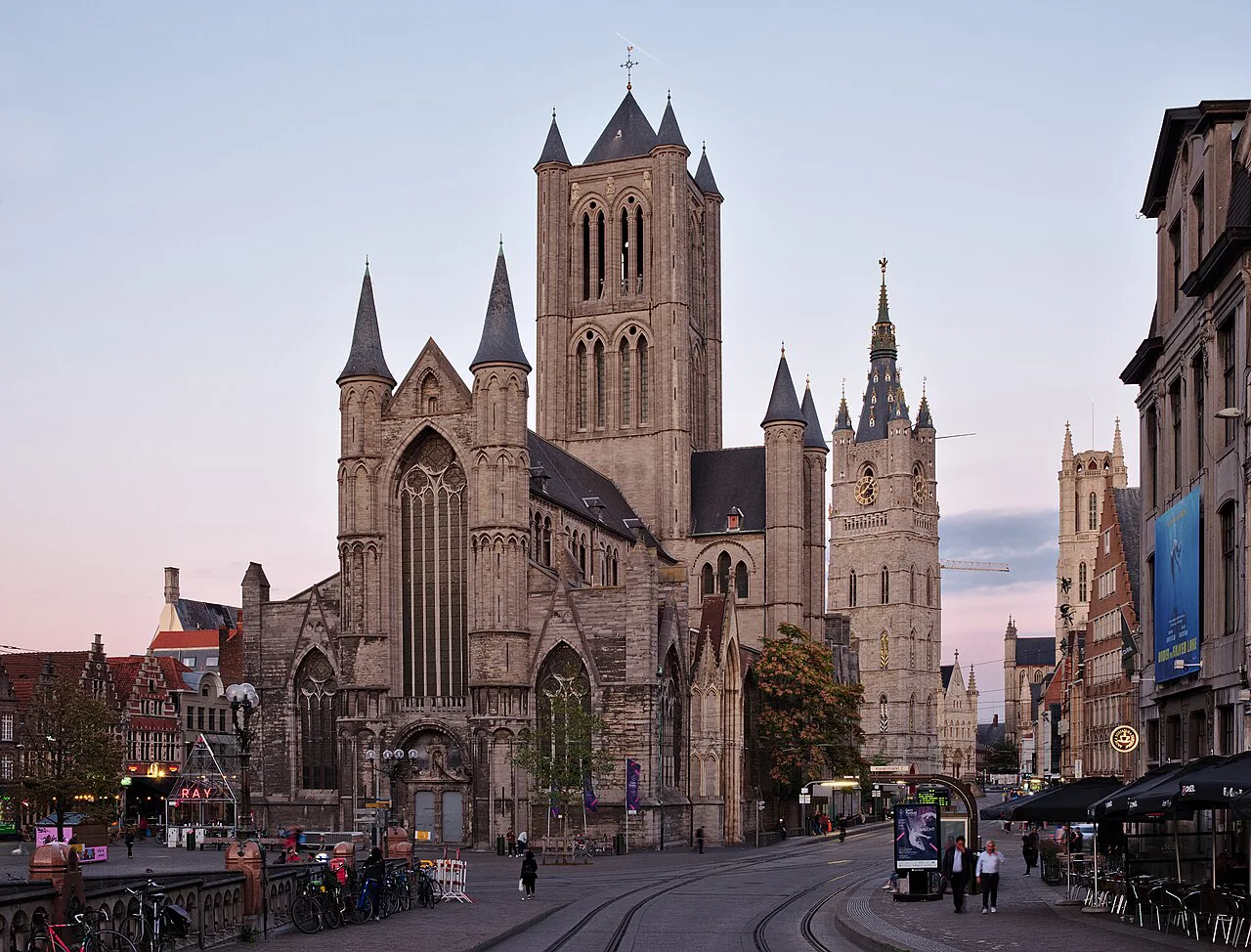

The three towers of Ghent: Belfry, Sint-Niklaaskerk and Sint-Baafskathedraal
Ghent's skyline is defined by three towers standing close together: the Belfry, Sint-Niklaaskerk and Sint-Baafskathedraal. Seen from the Leie quays around the Graslei, they stack up in a row that has become the city's signature image. Plan them as one circuit rather than three separate trips, since each is within a few minutes' walk of the next.
Saint Nicholas' Church (Sint-Niklaaskerk), Ghent faces the Belfry across Korenmarkt, and its weathered Scheldt Gothic stone is a good first stop before you queue for the tower. The cathedral, a couple of minutes south at Sint-Baafsplein, holds Jan van Eyck's Ghent Altarpiece, the painting that anchors most visits to the city.
If you only have one day, do the cathedral interior first when it is quietest, then the Belfry for the view, and leave Sint-Niklaaskerk for a short look on the way past. The Belfry is the only one of the three with a panoramic rooftop terrace open to visitors.
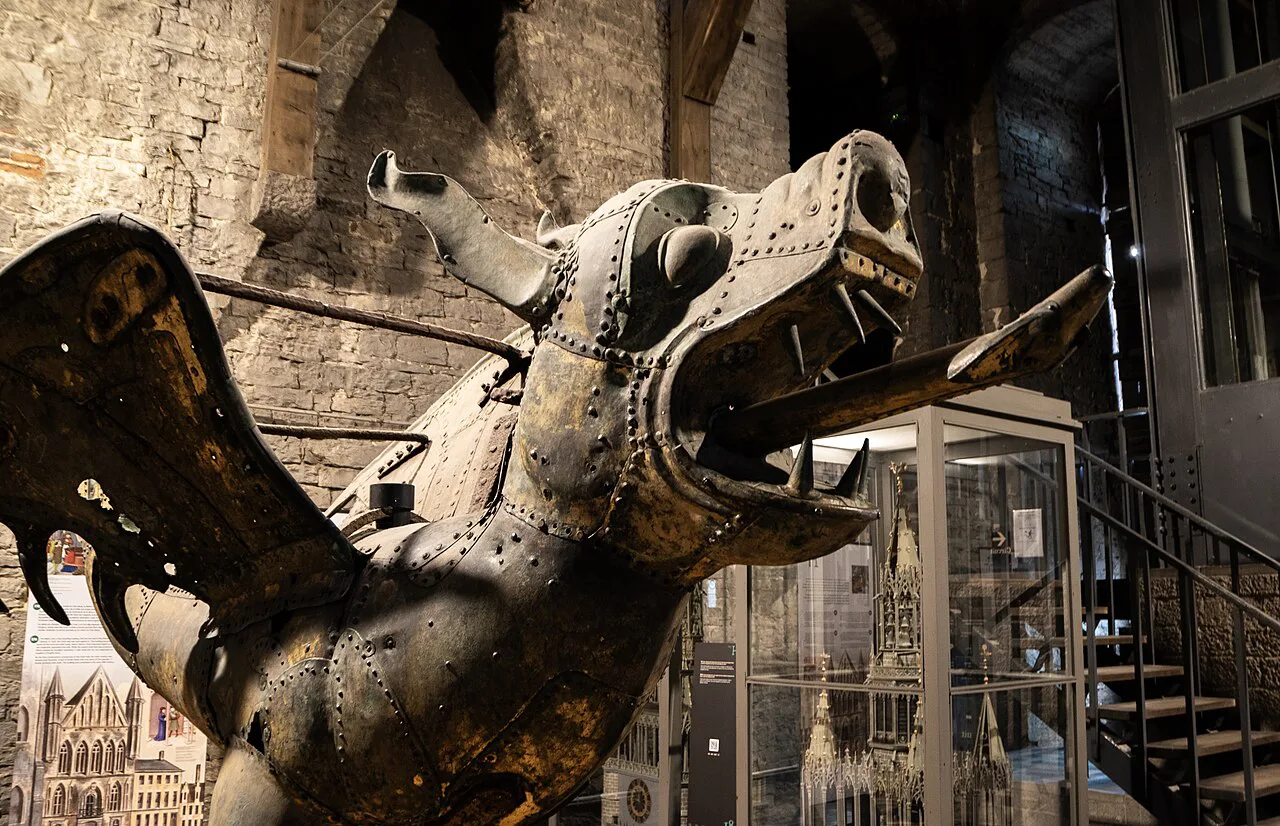

Climbing the Belfry: the spiral staircase and the lift
The climb is not all-or-nothing. A lift carries visitors part of the way up, and spiral staircases finish the job to the top. That combination makes the Belfry far more manageable than a pure staircase tower, though the upper turns are narrow and uneven underfoot.
Wear shoes with grip and leave large bags behind if you can, since the final stairs are tight. The 91-metre tower is a working historic monument, so expect to share the landings and to wait your turn at the top.
Tickets are sold for the tower, and the city's heritage service publishes current admission details alongside any conditions attached to the lift. Check those before you travel if step-free access matters to your group.
What you see from the top: the view over Ghent's old centre
From the top, the old centre opens out below you: Korenmarkt directly beneath, the cathedral and Sint-Niklaaskerk at eye level, and the Leie winding away towards the Graslei and Korenlei. It is the clearest way to understand how compact Ghent is, and it makes the rest of your day easier to plan.
Look for the castle walls of the Gravensteen to the north-west and the towers of the museum quarter beyond. On a clear day the view stretches well past the ring of medieval streets.
The bells: Roland and the carillon
The tower's great bell, nicknamed Roland, once warned locals of danger; today it marks the hour. A carillon of 54 bells plays from the Belfry, and a Sunday morning is the moment to catch it in full voice.
Time your climb so you are on the terrace when the bells start, and the visit gains a soundtrack the pictures cannot capture. The carillon is an instrument, not a recording, so the music changes with the player.
The Belfry's cloth hall and UNESCO listing
The Belfry is inscribed on the UNESCO World Heritage list together with its cloth hall, the Lakenhalle, recognition of the medieval cloth trade that made Ghent wealthy. The cloth hall still wraps around the base of the tower, so the Belfort stands as part of a trading complex rather than a free-standing spire.
That history is why the tower matters beyond the view: it was the symbol of a self-governing city, not a royal or church monument. Reading a little about the cloth trade before you go makes the climb more than a photo stop.
How long to allow and how to fit it into a Ghent day
Budget an hour for the Belfry including the lift, the stairs and time on the terrace, and build the rest of the day around it. A workable order is Sint-Niklaaskerk, the Belfry, then the cathedral for the Altarpiece, with the Gravensteen in the afternoon.
Ghent's museums sit a short walk or tram ride away in the museum quarter. MSK Ghent holds Flemish masterpieces, SMAK covers contemporary work and STAM tells the city's story, so pick one rather than trying all three.
If art and design are your priority, the Design Museum Gent is closer to the centre and pairs well with a morning at the tower. A two-day visit gives you room for the Belfry, the Altarpiece and one museum without rushing.
Nearby: Korenmarkt, Sint-Baafsplein and Werregarenstraatje
Korenmarkt is where the Belfry lands you, with cafés along its edges and the cuberdon sellers' carts a local fixture. From there, Werregarenstraatje, the graffiti alley, is a two-minute detour and a free way to see the city's street art. For the wider set of sights in the centre, see Ghent Attractions: 7 Visitor Guides.
Sint-Baafsplein is five minutes south for the cathedral and the Altarpiece, and the Patershol lanes and Gravensteen lie a short walk north-west. All of it fits into one unhurried afternoon on foot.
Is the Belfry worth the climb?
Yes, if you want the clearest view of Ghent's medieval centre and a sense of how the three towers relate to one another. The lift-and-stairs combination makes it accessible to most visitors, and an hour here sets up the rest of the day.
If you have to choose between the Belfry and the Ghent Altarpiece, do both: the climb takes an hour, the cathedral rather less, and they sit minutes apart. Anyone with limited time should climb first thing and head to Sint-Baafsplein afterwards.
Explore more Ghent guides
Frequently Asked Questions
Can you go up the Belfry in Ghent?
Yes. Visitors reach the top by a combination of lift and spiral staircases, with a rooftop terrace at the end. The city's heritage service publishes current admission details.
How tall is the Belfry of Ghent?
The tower stands 91 metres high, making it the tallest of Ghent's three medieval towers.
When can you hear the carillon?
A carillon of 54 bells plays from the Belfry, and a Sunday morning is when visitors most often catch it. The programme varies with the player.