Ghent in April: What Spring Is Like and How to Plan a Visit
Ghent in April brings longer evenings and changeable spring skies. See how spring works, how many days the city needs and which sights to plan around.
On this page
Plan two full days for Ghent in April, one for the historic core and a second for museums, Patershol and the Gravensteen. That is enough to see the three towers, stand in front of the Ghent Altarpiece and walk the Graslei and Korenlei quays without rushing. This guide covers how a two-day visit runs and where April fits against a high-summer trip.
Ghent (Gent) sits where the Scheldt meets the Leie, and its centre is compact enough to walk. Sint-Niklaaskerk, the Belfort and Sint-Baafs-kathedraal stand within a few minutes of each other, so a short April break works on foot with time left over for a quay in the longer evenings.
What Ghent is like in April
April lengthens the evenings and the city shifts outdoors, and the large student population keeps the centre busy. The trade-off is lighter evenings and milder walking than in winter, set against changeable spring skies and a share of the city with weekend visitors.
Treat spring weather as a matter of layers rather than a guarantee. Plan outdoor stops such as the quays or the Patershol lanes for the middle of the day and hold one indoor anchor in reserve for each day; Sint-Baafs-kathedraal and the museums sit inside the core, so a drenched half-day costs you little.
What April weather means for planning
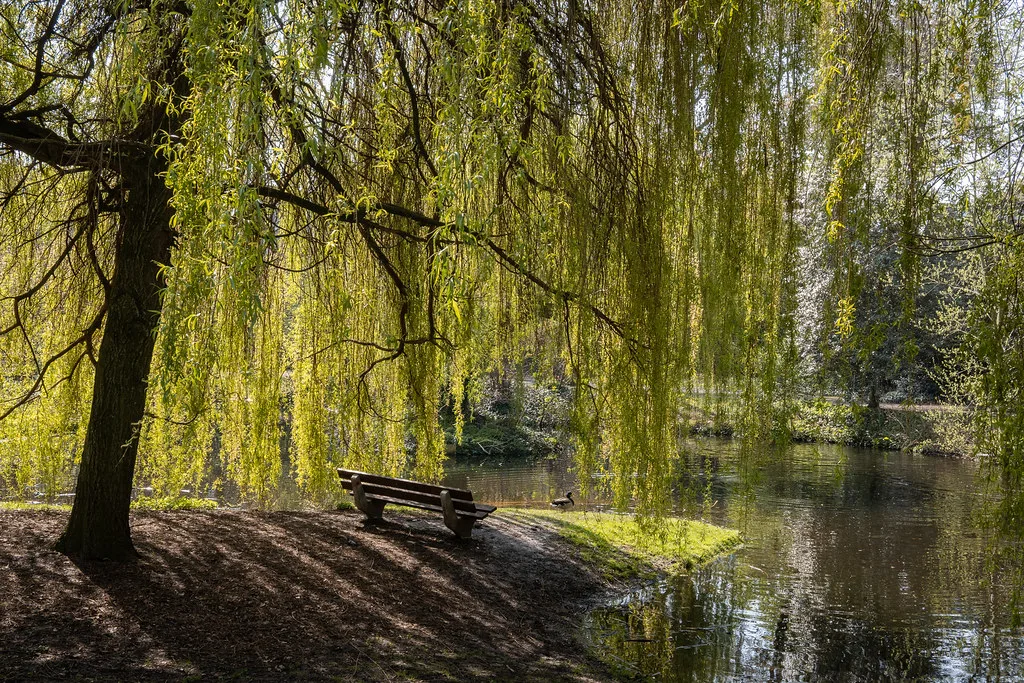
April weather in Ghent is variable rather than settled, so assume at least one wet half-day across a two-day visit and avoid any itinerary that depends on a single fixed outdoor slot.
How busy April gets, and how to pace a two-day visit
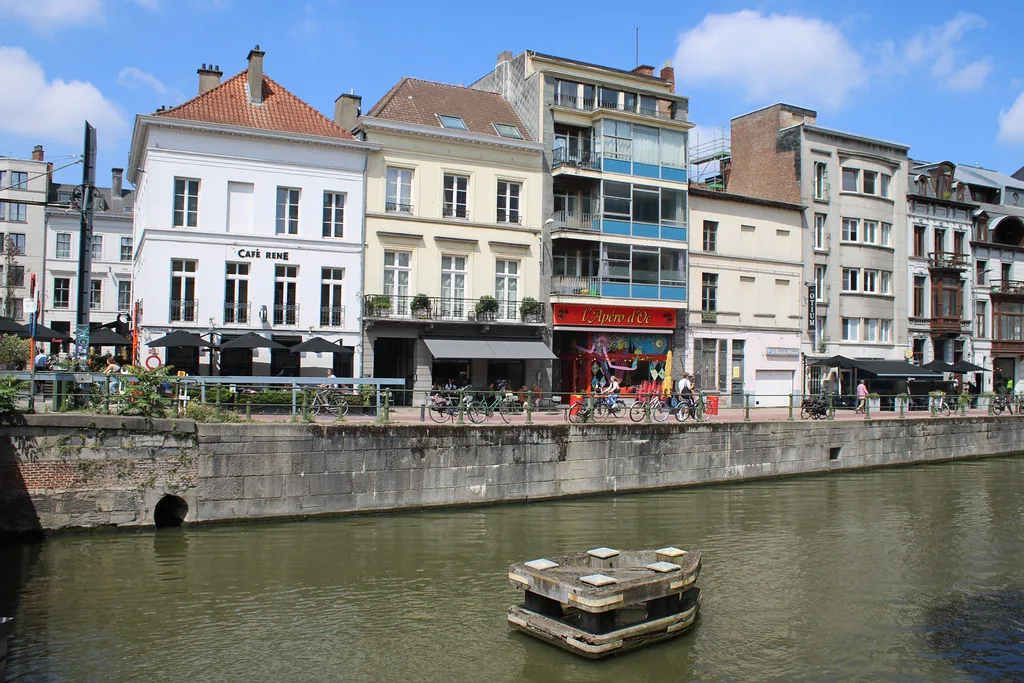
Easter holidays and long weekends are the pinch points. If your dates overlap them, book the anchors first: the cathedral for the Ghent Altarpiece, then the Belfort and Gravensteen around it. The centre between Korenmarkt and the quays stays pleasantly compact either way.
Pace the two days by geography rather than by a ticked-off list. Day one covers the three towers plus Sint-Michielsbrug and the quays; day two takes in Gravensteen, the Patershol lanes and a museum or two. That split keeps you from criss-crossing the centre and gives you a wet-day backup without rewriting anything.
The three towers: Sint-Baafs-kathedraal, Belfort and Sint-Niklaaskerk
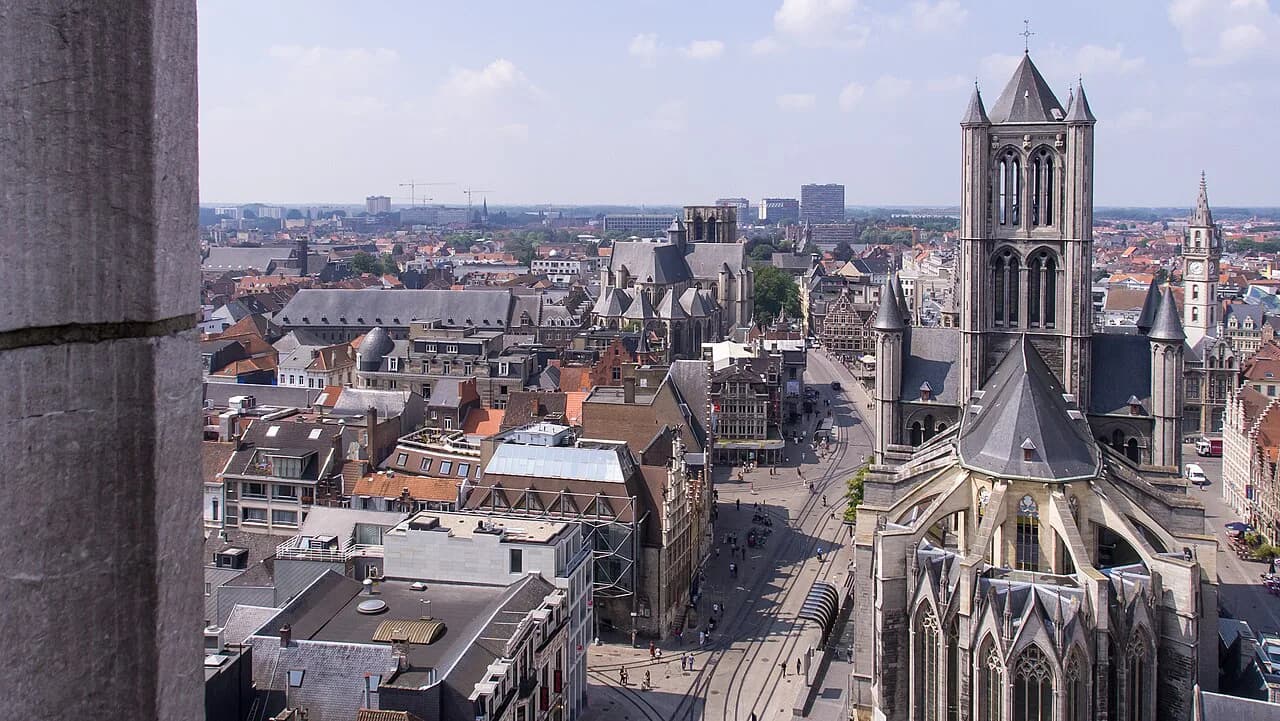
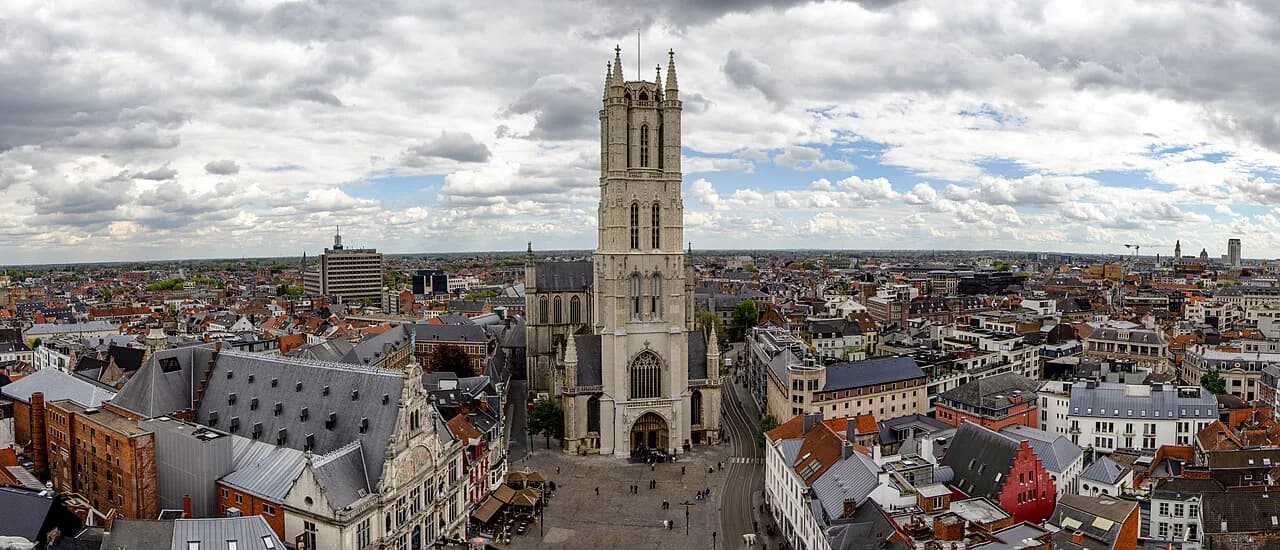
Ghent's three towers define the skyline and stand almost shoulder to shoulder above the centre. Start at Sint-Niklaaskerk, walk the short hop to the Belfort, then finish at Sint-Baafs-kathedraal, which holds the city's most famous artwork. The Belfort has symbolised the city's prosperity and independence since the Middle Ages, so it repays more than a photograph from below.
The Ghent Altarpiece and the cathedral visitor centre
Jan van Eyck completed the Ghent Altarpiece in 1432 and it still hangs in Sint-Baafs-kathedraal, the church it was painted for. A meticulous restoration has brought back its colours and fine detail, which rewards time in front of the panels rather than a quick snap. Read the painting's turbulent history at the cathedral's visitor centre first and the altarpiece itself makes far more sense.
Climbing the Belfort for the skyline view
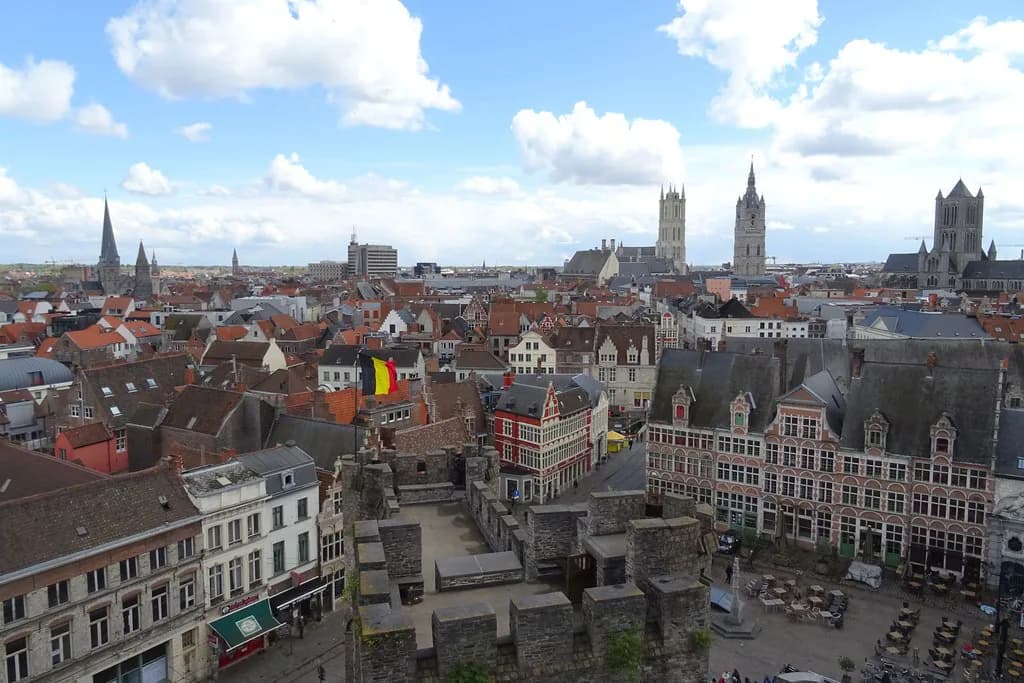
The climb up the Belfort runs by spiral staircases, and the reward at the top is the three towers seen from above, the sweep of the Leie and rooftops stretching towards the Scheldt. Go when the sky is clear for the panorama; in grey weather the climb still pays off, but expect close-up stonework rather than a view.
Gravensteen and the Patershol lanes around it
Gravensteen, the Castle of the Counts, was modelled by Count Philip of Alsace on fortresses he had seen during the crusades and later served as a judicial court and then a prison. Inside you will find knights' armour, weapons and a torture chamber, with a view across the city from between the battlements. It is compact rather than sprawling, so an hour or two covers it comfortably.
Patershol wraps around the castle in a knot of winding alleys and cobbled streets, and its slightly bohemian atmosphere makes it the best place in the city for an aimless wander. Castle and neighbourhood sit together, so one walk covers both. Do them in the same block of the day and the rest of the plan survives a change in the weather.
Graslei and Korenlei quays and Sint-Michielsbrug
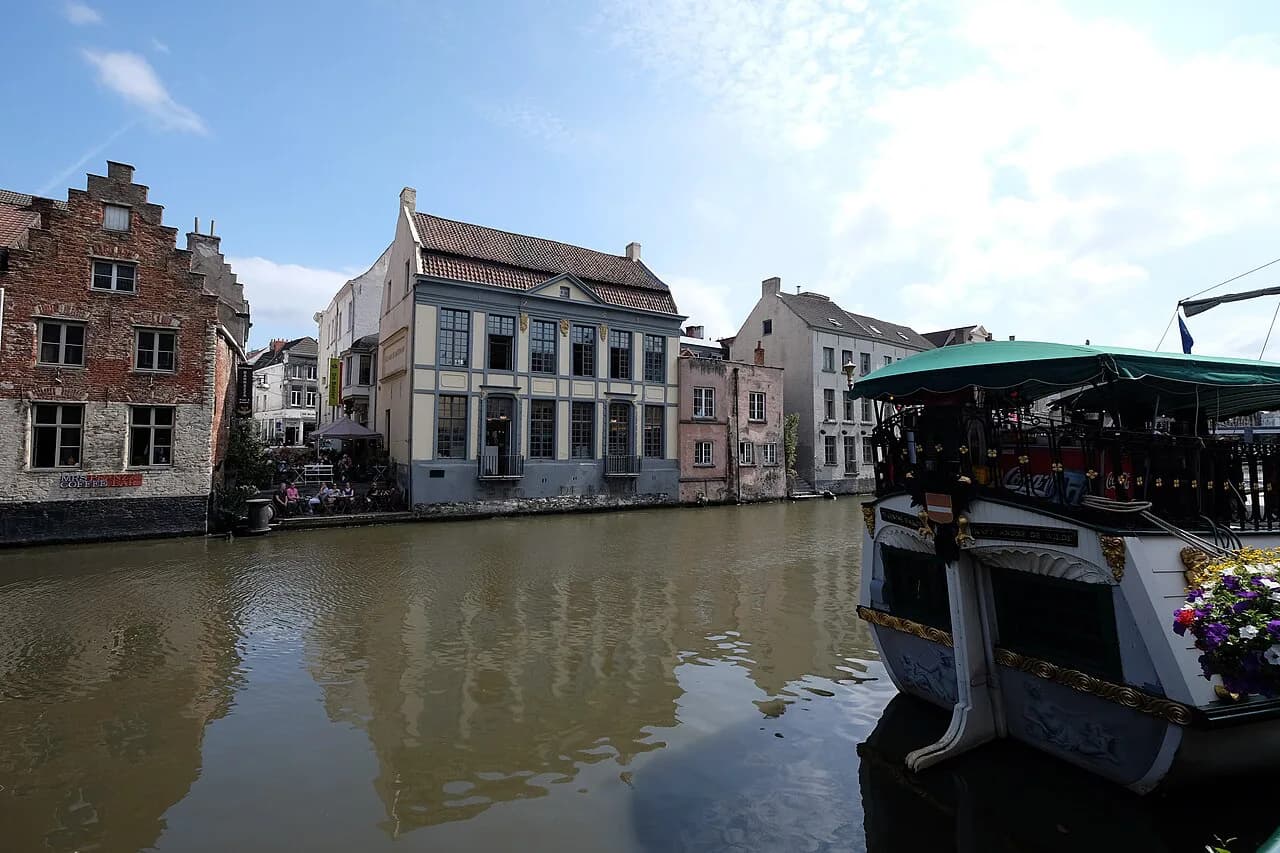
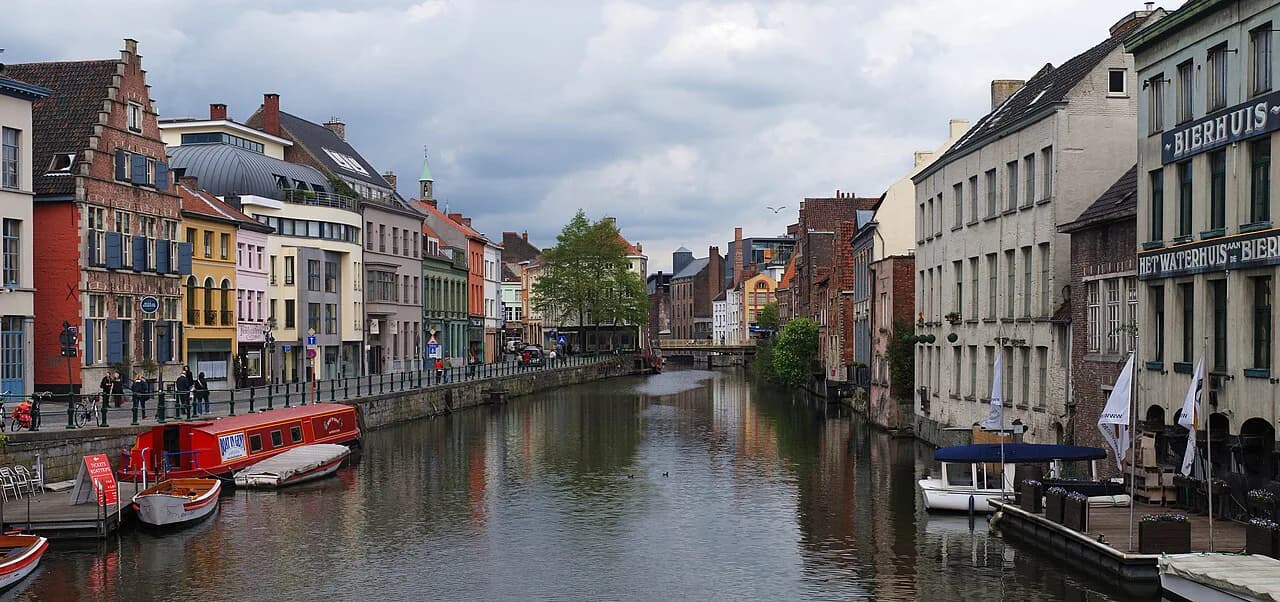
The Graslei and Korenlei line the Leie with stepped gables and old guild houses, and the classic view is from Sint-Michielsbrug. Walk the bridge in the late afternoon, when the light softens and the quays fill up. Guided boat tours run on the river below, giving you a second angle on the same riverbank.
The quays are free to walk and need no booking, which makes them the flexible slot in an April itinerary; use them when the sky clears rather than pencilling in a fixed hour. They are also the best place to end a day, with Korenmarkt a few minutes back from the water.
Korenmarkt, the City Pavilion and the cuberdon sellers
Korenmarkt is the historic square at the heart of the centre, lined with old buildings and busy with cafés. The City Pavilion, an imposing open modern structure, offers a deliberate contrast to the spires around it, and a little further on you will see the carts of the cuberdon sellers, whose conical purple sweets are a Ghent speciality worth trying once.
The square works as a pivot between the towers and the quays, so build it into the middle of a day rather than treating it as a separate stop. Keep the square as a meeting point if your group splits up, with the quays a short walk away.
Werregarenstraatje, the graffiti alley
Werregarenstraatje, known as the graffiti alley, is a short passage where young street artists are free to display their work. The walls change constantly, so what you see on an April visit will not be there next season. It is a five-minute detour rather than a destination, but it adds a contemporary note to a medieval centre.
Museums and the water tram for a wet day
Ghent has museums devoted to daily life as well as art, which makes them a better rain plan than a generic gallery. They sit in the compact centre, so you can switch to one mid-afternoon without abandoning the day.
The other option is the water: a hop-on hop-off water tram gives you a way to plan a route through Ghent along the water, keeping you moving while showing how the river and canal sides of the centre connect.
Finish a wet-day afternoon at one of the smaller museums about daily life, which sit in the compact centre and give the day a different texture when the quays are too wet to walk.
Belgian beer in Ghent's beer cafés
April afternoons suit a slow stop in a beer café more than a rushed evening. Order a local style you have not tried and ask for a small glass to compare two, keeping it as a daytime pause between the towers and the quays.
Spring also brings occasional festivals, so it is worth checking whether a Ghent festival coincides with your dates before you book.
How many days Ghent needs
One day covers the core: the three towers, the Ghent Altarpiece, a walk over Sint-Michielsbrug and the quays. Two days add Gravensteen, Patershol and a museum without running. Three days suit a slower pace or a comparison trip to Bruges, which is smaller and more polished while Ghent keeps a working-city edge.
If you are weighing a longer trip, look at how the season changes the balance. Ghent in summer brings the best of the long evenings but more visitors; the best time to visit comparison sets the seasons side by side.
Is Ghent worth visiting in April?
Yes, on one condition: treat April as a shoulder-season city break rather than a guaranteed sun trip. You get a lively student city, longer evenings on the quays and the Ghent Altarpiece, against changeable weather and weekend crowds, which is why two flexible days beat a tightly booked one.
Compared with Bruges, Ghent is bigger and less polished, with more of a lived-in feel and a strong student presence. With three or four days in Belgium you could make Ghent your base and Bruges a half-day comparison; with only one day, choose between them on character. Our Ghent Attractions: 7 Visitor Guides collection covers the individual sights in more depth.
Book April around the towers, not the weather
Book Ghent for April with a two-day shape: the three towers and the cathedral on day one, Gravensteen and Patershol on day two, and the quays saved for whichever afternoon stays dry. Look up the day-by-day opening details for the cathedral, Belfort and your chosen museum before you travel, and leave the rest loose.
Explore more Ghent guides
Frequently Asked Questions
How much time do I need in Ghent?
One full day covers the three towers, the Ghent Altarpiece and the Graslei and Korenlei quays. Two days add Gravensteen, the Patershol lanes and a museum without rushing, and three days let you slow down or take a comparison trip to Bruges.
Sources
Useful notes for your next trip
Optional updates to our guides.
You might also like
Continue reading
More guides you'll find useful