
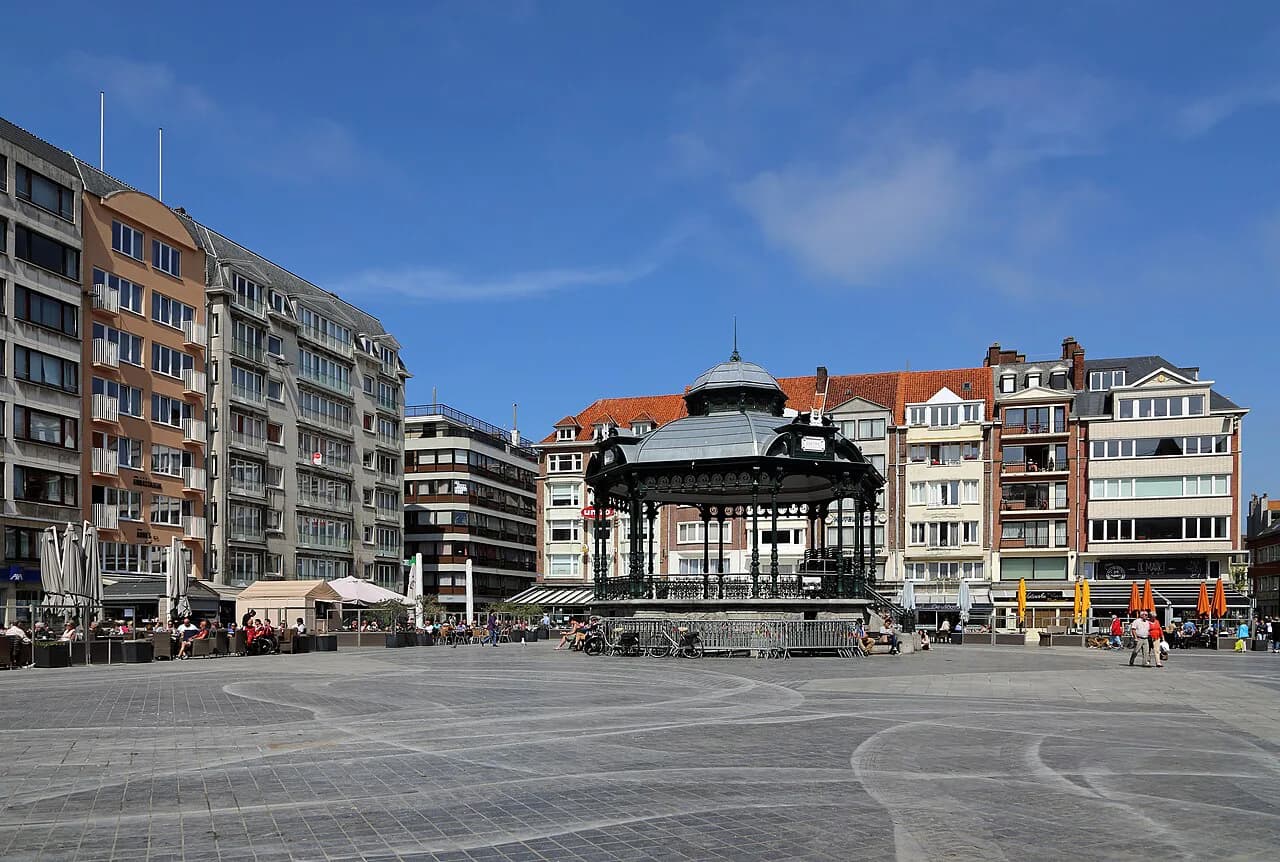
Wapenplein, Ostend (Oostende): the town's central square

Wapenplein is Ostend's central square, an open public space about a five-minute walk from the seafront and immediately beside the main shopping streets. There is nothing to book and no ticket to buy: you cross it on the way between the station quarter, the beach and the museums, and it earns its place in a one- to three-day visit as a waypoint rather than a destination in its own right. Ostend is compact enough to cross the centre on foot in roughly 20 minutes, so the square slots naturally into most walking routes.
What Wapenplein is and where it sits in Ostend
Ostend (Oostende) is a Flemish coastal town where Dutch is the everyday language, but English is widely understood in hotels, museums and restaurants, so a stop on the square needs no phrasebook. The town grew from a medieval fishing settlement into a 19th-century seaside resort favoured by European high society, and Wapenplein sits in the middle of that resort-era centre.
Think of the square as the hinge between the shopping heart of town and the seafront. The beach promenade, the cultural venue at Kursaal Ostend and the marina where the Mercator is moored are all within a short walk, which makes Wapenplein a sensible place to orient yourself before choosing a direction. The wider set of Ostend Attractions: 8 Visitor Guides shows how the pieces fit together if you want to plan the day around it.

How to reach Wapenplein on foot from the seafront and the station area
From the seafront, walk inland from the promenade and you reach the square in about five minutes; from the station side, allow ten to fifteen minutes through the shopping streets. Ostend's centre is small and flat, so this is walking country rather than tram country, though the coastal tram and local buses serve the wider town.
If you arrive by train, the walk from the station doubles as an introduction to the centre, passing the marina where the Mercator is moored between the station and the town hall. The ship is a former training vessel for the Belgian merchant navy and is now a museum ship, a useful landmark to steer by on the way to Wapenplein.
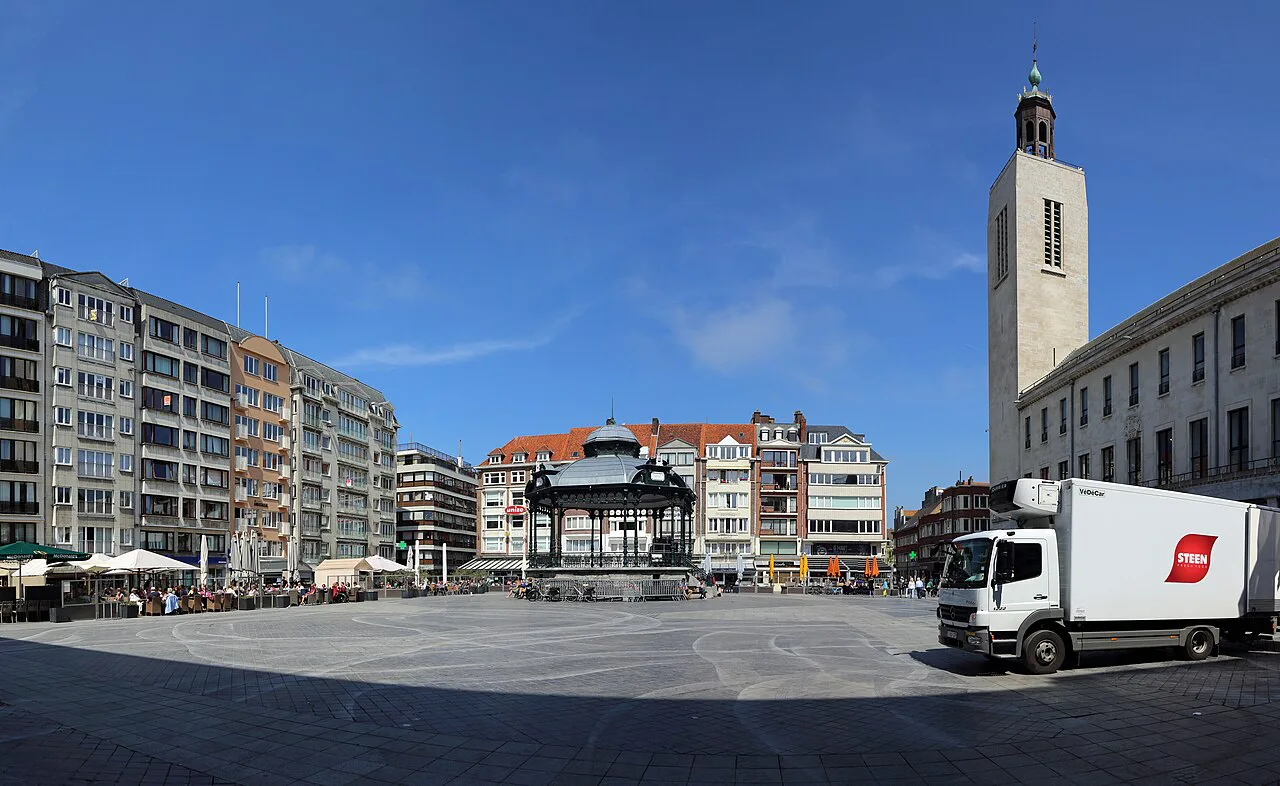

What you see on the square: the open space, the pavilion and the surrounding facades
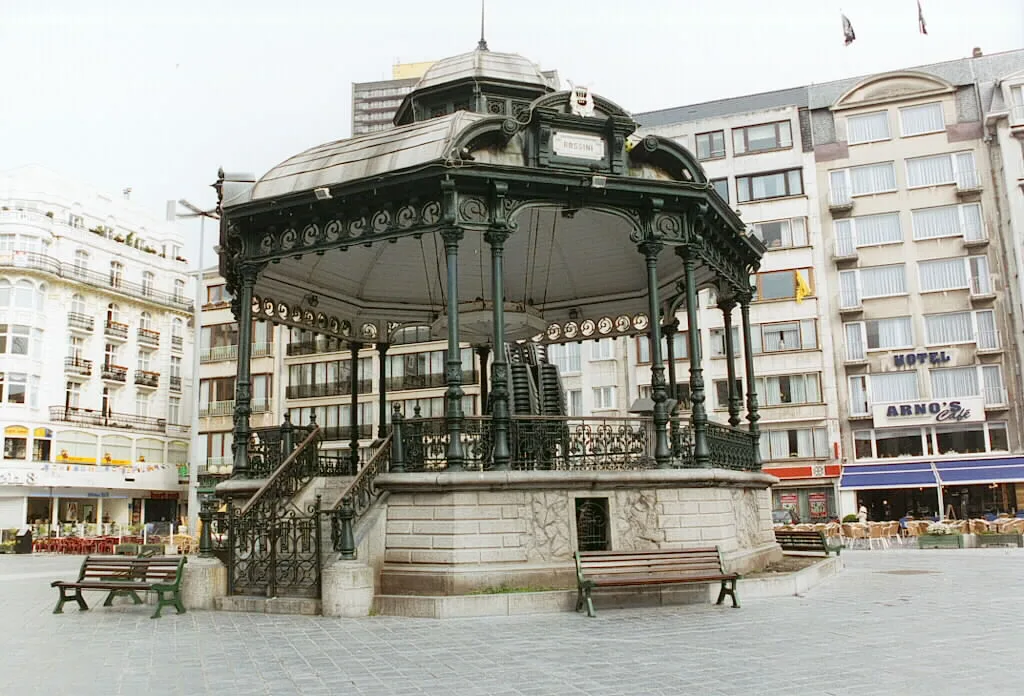
The square itself is broad and open, with a pavilion at its centre that hosts events through the year. Look up rather than down: the surrounding facades belong to the resort-era town, and the pastel terraced houses and elegant villas of the Belle Epoque quarter stretch from near the station towards Leopold Park. That architecture is the reason to slow down for five minutes here rather than hurry through.
This is not a monument with a turnstile. Treat it as a public room in the middle of town where you pause, check the map and move on, and you will enjoy it far more than if you arrive expecting an attraction.
The square as a starting point: shopping streets and the beach promenade within a few minutes
Wapenplein works best as the start of a loop. Head west for the shopping streets, then south to the seafront and the Venetian galleries, the sheltered colonnade along the promenade that King Leopold II had built so strollers could walk regardless of the weather. From the beach you can follow the promenade towards the harbour and the marina.
The galleries and the promenade are free public space, so no ticket or timing constraints apply; the same is true of the square. The things that do need planning are the museums and ships, which is why it pays to decide your order before setting off.
Nearby sights worth pairing with a stop at Wapenplein
The James Ensor House at Vlaanderenstraat 27 is a short walk away and preserves the painter's home and the shop he kept on the ground floor, with an interpretation area covering his work; the house holds copies rather than originals, and the originals hang at Mu.ZEE and the KMSKA in Antwerp. It opens daily except Mondays from 10am to 6pm, with admission at €13 and reduced rates of €6 for 6–14-year-olds and €9 for 15–25-year-olds.
Mu.ZEE occupies a former department store and holds Belgian art from 1830 onwards, with the strongest holdings in late 19th- and early 20th-century work by Ensor, Léon Spilliaert and Constant Permeke. It is the place to see Ensor's actual canvases, so pair the house and the museum in a single afternoon. For a fuller picture of the artist and the town, the things to do in Ostend collection fills in the rest of the route.
Down at the marina, the three-master Mercator is moored as a museum ship, and visitors who skip the audio guide tend to come away with little sense of the vessel, since on-board signage is sparse. Across the harbour, Fort Napoleon is a pentagon of brick behind a ten-metre moat, built between 1810 and 1814 and never tested in action; it now runs self-guided audio tours and changing exhibitions. The Maria Hendrikapark is another nearby green space worth knowing about if you want a break from the streets.
Beyond the centre, the Atlantikwall Raversyde preserves German coastal defences and makes a sobering half-day for anyone interested in the two world wars. Closer in, Kursaal Ostend is the town's cultural venue and a landmark in its own right.
How long to allow and when the square is at its liveliest
Give Wapenplein five to ten minutes on its own and half a day if you use it as the start of a loop through the shopping streets, the Ensor House, Mu.ZEE and the seafront. The town suits a long weekend, but three days lets you cover the centre properly without rushing the museums.
The square is busiest in fine weather and during events, when the pavilion and surrounding space fill up. Ostend's cultural programme runs year-round, so a wet day costs you the beach but not the museums; check the Visit Ostend agenda for what is on during your dates.
Practical points: seasonal events on the square
In season, a Christmas market spreads across Wapenplein and around its pavilion, which changes the character of the square for a few weeks. It is a seasonal note rather than a reason to plan a whole trip around the square: check the Visit Ostend listing for the Wapenplein Christmas market before you go.
At other times the square is simply open public space, free to walk through at any hour, with the shopping streets and the seafront a few minutes away in either direction. That is the honest appeal: a central, useful, unpretentious space that gets you from the station end of town to the beach without a detour.
Is Wapenplein worth building into your Ostend day?
Yes, as a hinge rather than a highlight. Cross it on the way from the shops to the seafront, look at the pavilion and the Belle Epoque facades, then commit your time to the James Ensor House, Mu.ZEE, the Mercator or the promenade, which are the stops that justify the day.
If you are in Ostend for three days, use the square twice: once on arrival to orient yourself, and once on a museum day when the Ensor House and Mu.ZEE are on the agenda. Keep the Christmas market as a bonus if your dates happen to coincide, not as the plan itself.
Explore more Ostend guides
Frequently Asked Questions
Is Wapenplein free to visit?
Yes. Wapenplein is an open public square in the centre of Ostend, so there is no ticket, no booking and no opening time to work around. The museums and ships nearby charge their own admission, which you check with each venue.
How far is Wapenplein from Ostend's beach?
About a five-minute walk. The square sits just inland from the seafront promenade, so you can step off the beach and be in the shopping streets almost immediately, which makes it a natural midpoint for a walking loop through the centre.
What is there to see around Wapenplein?
Within a short walk you have the James Ensor House on Vlaanderenstraat, Mu.ZEE, the marina with the Mercator museum ship, the seafront and its Venetian galleries, and the Kursaal Ostend on the Albert I promenade. The square itself is the pause between them.