
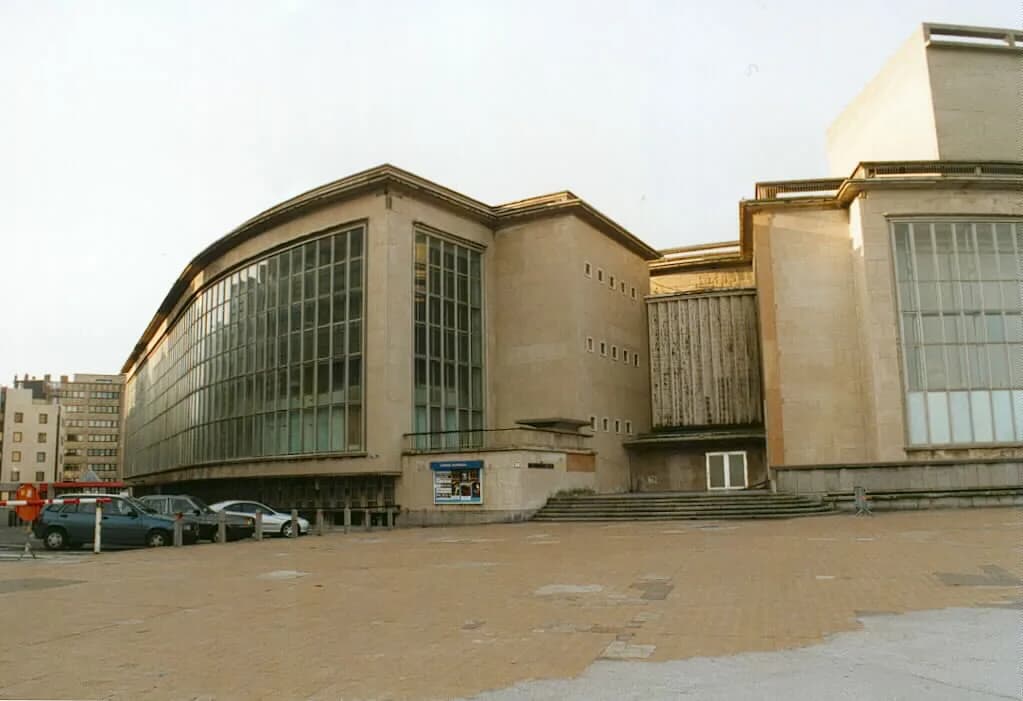
Kursaal Ostend: what to see at Ostend's seafront Kursaal

The Kursaal is Ostend's seafront events and casino building, standing on the Albert I promenade by the Oosthelling, a short walk from the Venetian galleries. It is a landmark you pass on a promenade stroll rather than a museum you tour, so give it minutes, not an afternoon, and let it anchor the western end of a walk along the seafront.
This guide covers where the building sits, how to walk to it from the centre and the station, the different uses inside it, and the sights within a few minutes of its doors. What happens on stage and in the gaming rooms is a matter for the venue's own published programme and conditions.
Kursaal Ostend: the short answer
Treat the Kursaal as a piece of Ostend's seafront architecture and civic life, not as a single attraction with a turnstile. The original hall on the site was built in 1878 as a theatre and events venue, according to a construction case study of the building, which is the origin of the name that still marks the address today.
For a city break, that makes it a ten-minute stop on the promenade rather than a half-day booking. If you want a performance, look at the venue's own listings before you travel; if you simply want to see the building and the sea in front of it, fold it into a walk.
Where the Kursaal stands on the seafront
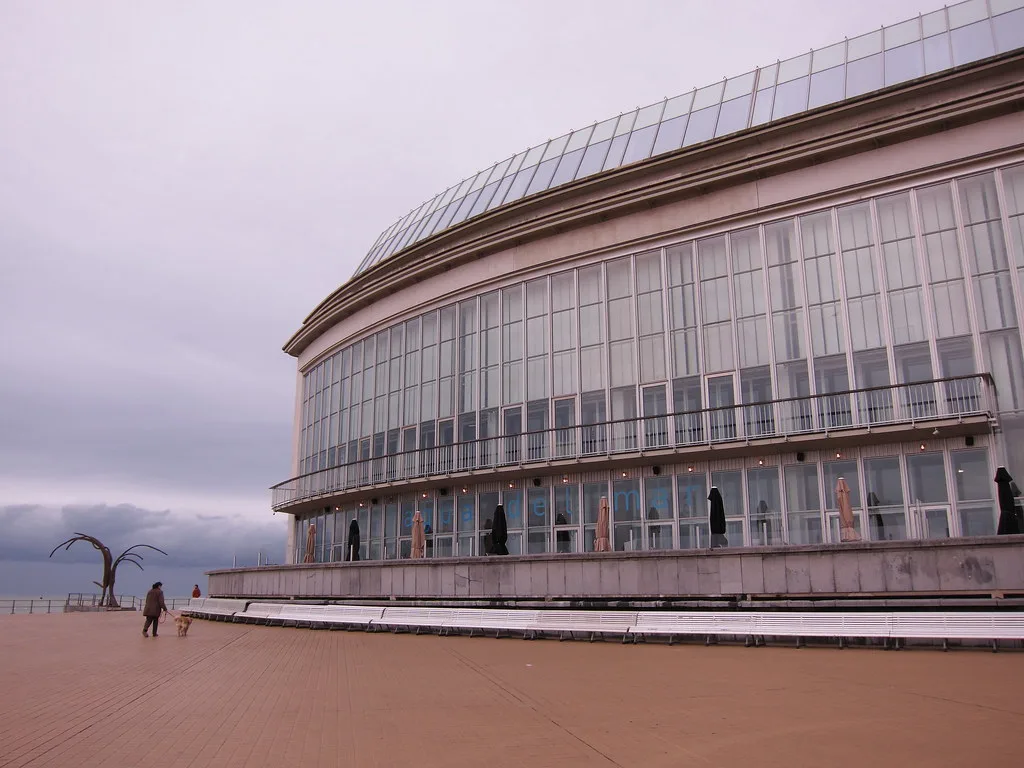
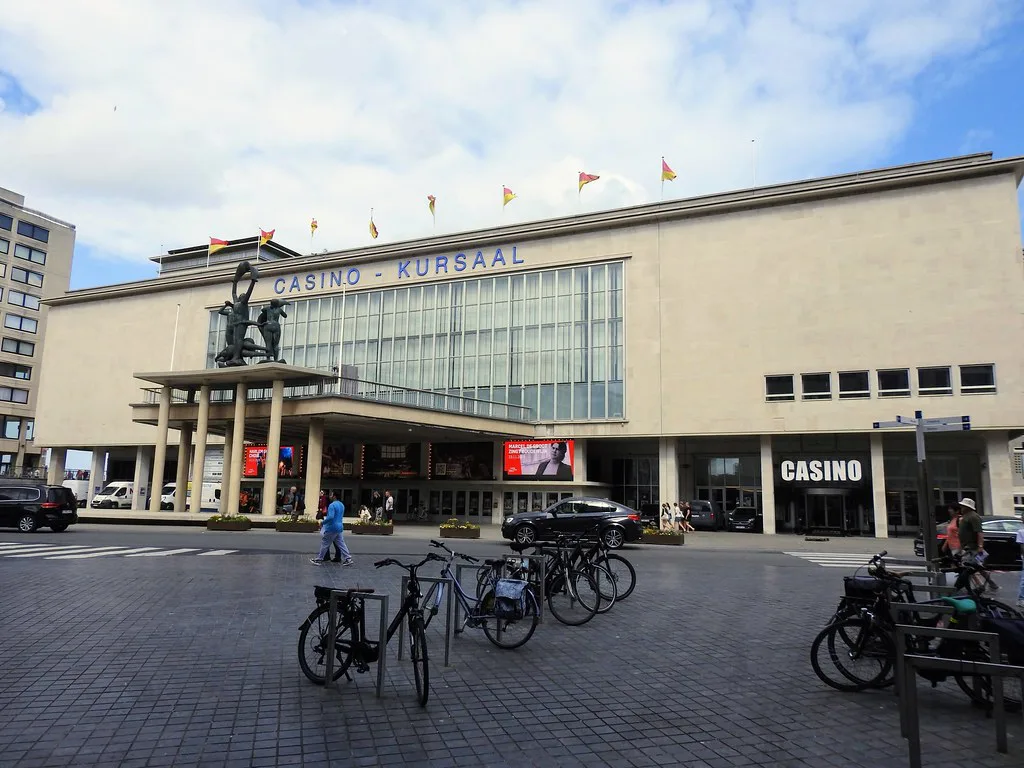
The building occupies the seafront near the Oosthelling, the sloping street that runs down towards the beach and the promenade. Its neighbour is the Casino Ostend, listed at Kursaal-Oosthelling 12, so the two names sit on the same stretch of frontage.
That position puts the Kursaal on the seaward edge of the Belle Epoque quarter, the area of pastel terraced houses and villas that runs from near the Koning Station towards Leopold Park. Walking the seafront here gives you the building in the context of the 19th-century resort that made Ostend fashionable.
How to reach the Kursaal: walking from the town centre and the station
Ostend is compact enough to cross the centre on foot in about 20 minutes, which makes the Kursaal an easy walk from the shopping streets around the Wapenplein and from the station side of town. Head for the seafront and turn west along the promenade; the Oosthelling is the cue that you have arrived.
If you are coming from further out, the coastal tram and city buses serve the seafront, and single tickets on the Flemish network can be bought online or at the stop. Stay on the promenade side of the road rather than cutting through the streets behind it, because the sea view is the point of the walk.
What happens inside: concert hall, theatre and casino under one roof
The Kursaal is a multi-purpose venue, combining a concert hall and theatre with the casino operation that shares the building. That split matters for planning: a concert or show is a ticketed evening with its own start time, while the gaming rooms run to the casino's own rules on access and dress.
The simplest approach is to decide which of the two you want before you go. A performance needs booking through the venue's programme, and a casino visit needs checking the operator's conditions; turning up hoping to wander the halls is not a plan.
The Kursaal and the Venetian galleries: a sheltered walk along the seafront
King Leopold II left his mark on Ostend with the Venetian galleries, the covered colonnade that lets you stroll the seafront out of the wind and rain. They make the Kursaal reachable in almost any weather and turn the seafront into a walk rather than a dash between doorways.
Use the galleries as your spine: walk their length, step out at the Kursaal end for the sea view, then rejoin them for the return. In summer the promenade itself is the draw, with the beach on one side and the terraces on the other.
How much time to allow and when to walk past
For the building alone, allow ten to fifteen minutes: enough to see the facade, read the frontage and take in the sea in front of it. If you are attending a performance, add the running time of the show and arrive early enough to find your seat without rushing.
Late afternoon works well, when the light comes off the water and the promenade is busy without being packed. Ostend's cultural programme runs all year, so a grey day costs you the beach but not the walk; the galleries keep the seafront usable when the wind is up.
What to see within a few minutes: Leopold Park, the seafront promenade and the marina
Leopold Park sits inland from the seafront, a green pause between the Belle Epoque streets and the town centre, a short walk back from the Kursaal. It is a natural next stop on a loop that takes in the promenade and the park before heading back into the centre.
The marina lies a short walk away, and the three-masted Mercator is moored there as a museum ship between the station and the town hall. The preserved trawler Amandine is another floating museum nearby, and both reward an hour if ships interest you.
Inland, the Mu.ZEE holds Belgian art from 1830 onwards, with strong holdings of the coastal painters, including work by James Ensor. It is the indoor counterpart to the seafront walk and a sensible swap when the weather turns.
Where to taste Belgian beer near the Kursaal
For Belgian beer rather than a night out, the city-centre brewery 'T Koelschip brews its own and sells bottles of others, a short walk back from the seafront. It is a tasting stop, not a bar crawl, and fits neatly at the end of the promenade loop.
If you would rather keep walking, the terraces along the Albert I promenade serve the same purpose with a sea view. Either way, treat beer as a tasting rather than a session if you still have the galleries and the park to cover.
Nearby: Fort Napoleon and the Atlantic Wall sites
Across the harbour, Fort Napoleon is the pentagon-shaped brick stronghold built under Napoleon, its last stone laid in 1814 and now visited with a self-guided audio tour and used for changing exhibitions. It sits on the far side of the port, so plan it as a separate half-day rather than tacking it onto a promenade stroll.
Further along the coast, the Atlantikwall Raversyde preserves German bunkers and open-air defences from both world wars, including the Saltzwedel Neu battery. It is a memorial landscape as much as a museum, and it needs its own transport plan from the centre.
Closer to home, Maria Hendrikapark, Ostend offers a large green space with a boating pond and recreation areas on its island. It is a different mood from the seafront and a useful counterweight if the promenade feels too built-up.
Is the Kursaal worth a stop on your Ostend walk?
Yes, as a landmark on a seafront walk rather than a destination in its own right: ten minutes to see it, with the Venetian galleries and the promenade doing the heavy lifting either side. Book a performance only if the programme has something you want to see.
Build the day around the promenade, add Mu.ZEE or the Mercator for substance, and keep Fort Napoleon and the Atlantikwall sites for a second afternoon. The venue's own site is the place to confirm what is on and how to get in.
Explore more Ostend guides
Frequently Asked Questions
Why is Ostend famous?
Ostend made its name as the Belgian seaside resort of the 19th century, when Leopold II and European high society summered here and the Venetian galleries were built along the seafront. Its other claim is painting: James Ensor was born and worked in the town, and the Mu.ZEE holds a major collection of Belgian art.
Can you visit the Kursaal without seeing a show?
The building is a concert hall, theatre and casino rather than a museum with a general admission ticket. Whether you can step inside depends on the venue's programme and the casino operator's rules, so check with the venue before you go rather than assuming the doors are open.
What can you do in Ostend in a day?
Walk the Albert I promenade past the Kursaal and through the Venetian galleries, then loop inland via Leopold Park and the Belle Epoque streets. Add the Mercator or the Amandine if you like ships, or Mu.ZEE for the Ensor and coastal painters, and finish with Belgian beer in the centre.