
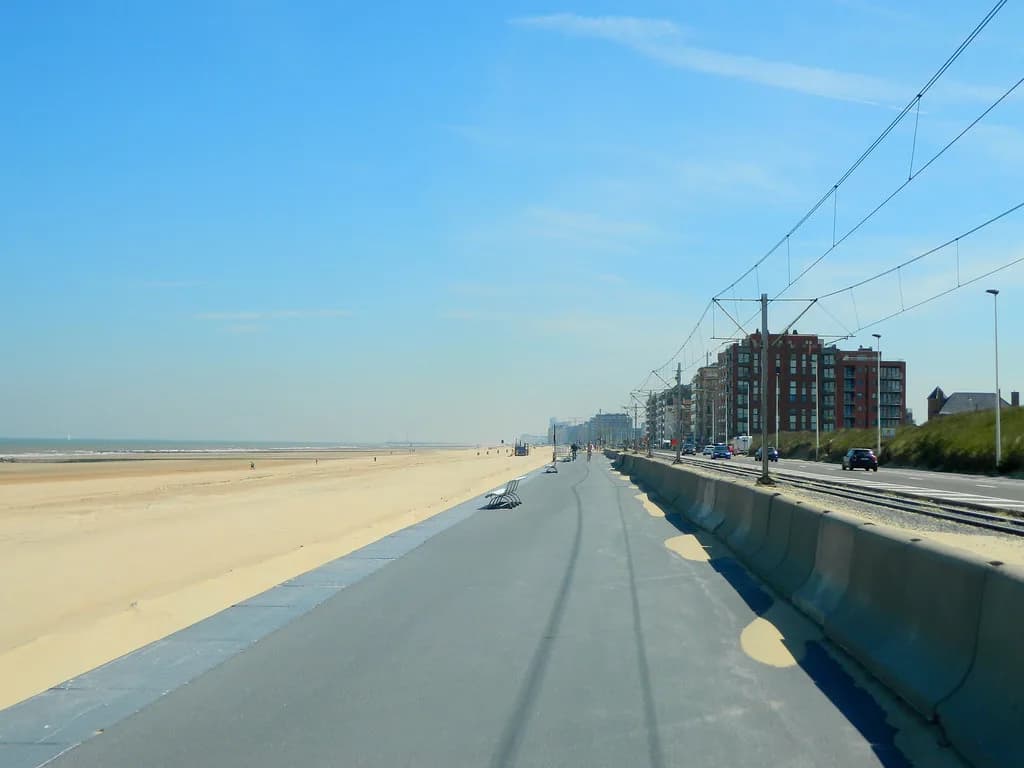
Atlantikwall Raversyde: A Visitor's Guide to Ostend's Open-Air Bunker Site
Atlantikwall Raversyde is worth a half-day from Ostend: it is an open-air museum in the dunes at Raversijde with more than sixty bunkers, open and underground passages, observation posts and artillery from the German Atlantic Wall, plus a separate First World War coastal battery on the same site. Everything is spread across a walkable provincial domain, so the visit is as much a dune walk as a museum. This guide explains what you are looking at in each layer, how to pace the bunkers and the landscape, and how the last-entry rule works.
What Atlantikwall Raversyde is
Atlantikwall Raversyde is a preserved stretch of the German Atlantic Wall, the coastal defence line built during the Second World War, with more than sixty bunkers, open-air and underground passages, observation posts and artillery pieces. The centrepiece is the Saltzwedel Neu battery, and its condition is why the site ranks among Europe's main museums of defensive works. It is an outdoor site in the dunes, so you walk between structures rather than through galleries.
The Atlantic Wall is only one of two wartime layers here. The site also contains the First World War Batterie Aachen, a German coastal battery restored into an exhibition about daily life on the occupied coast. Seeing both in one visit is the reason to come, because the two wars left different kinds of concrete and different stories in the same dunes.
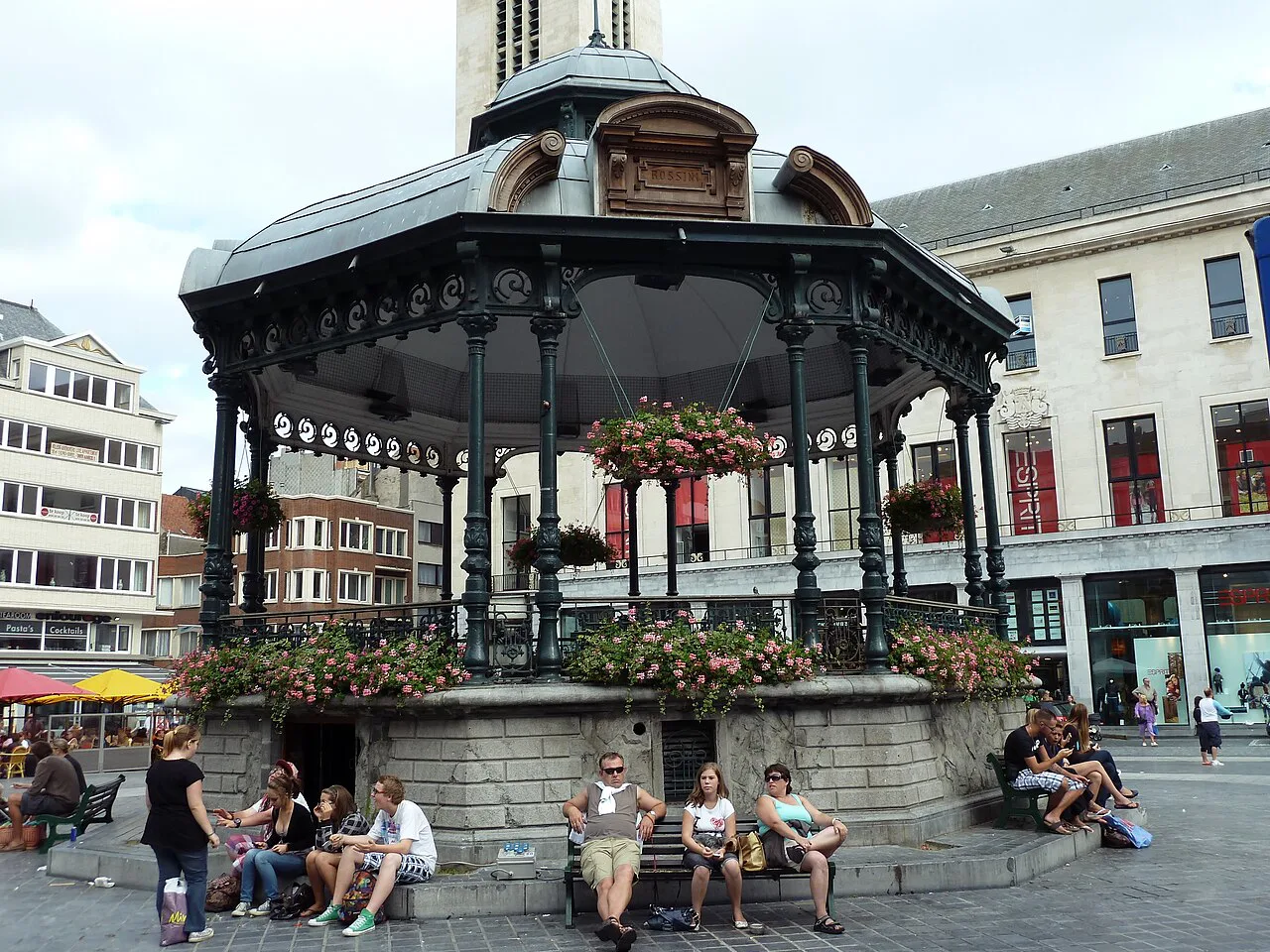

Where it sits: Raversijde, between Ostend and Middelkerke
The site is at Nieuwpoortsesteenweg 636 in Raversijde, a coastal village west of Ostend. The address is the one the museum publishes for the provincial domain and the museums on it. The dunes and sea views give the site the feel of a coastal excursion rather than a city-centre attraction.
Because it lies outside the centre, it is best paired with Ostend rather than slotted between two town-centre sights. Allow for travel in both directions. The dunes are the setting for the bunkers, with views out over the sea from parts of the battery.
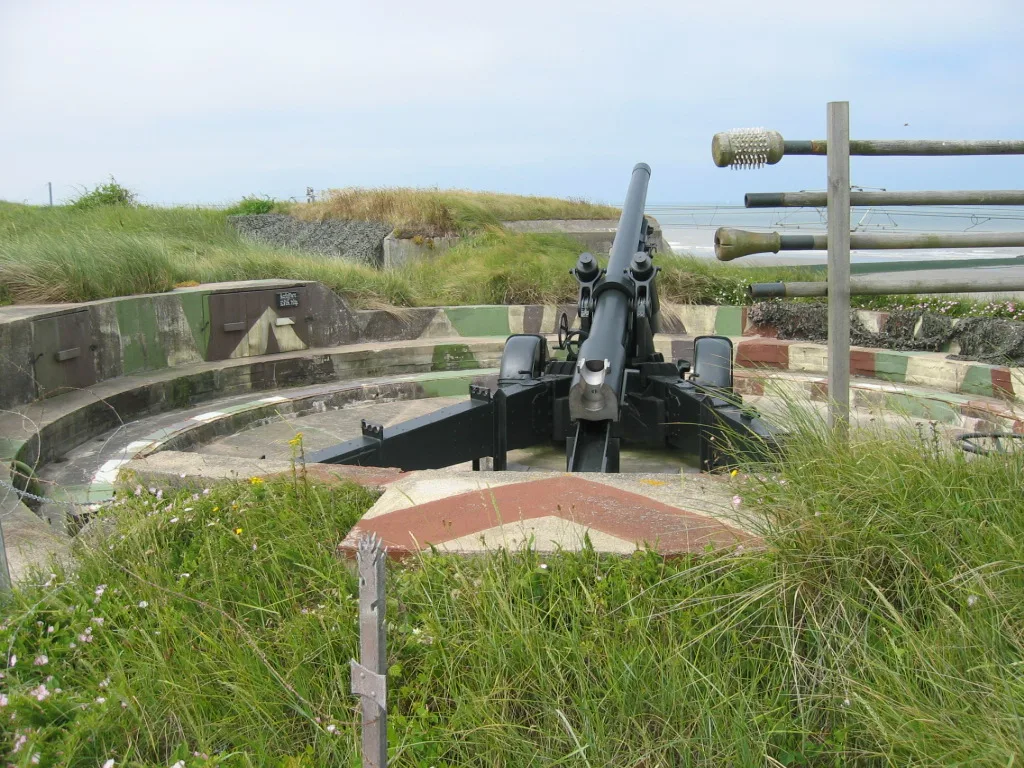

The Atlantic Wall: bunkers, passages, observation posts and artillery
At the heart of the site is the Saltzwedel Neu battery, a Second World War complex of bunkers, passages and gun positions that you walk through in the open air. The remains include both surface structures and underground passages, so the visit mixes claustrophobic concrete interiors with open dune paths. The sheer number of bunkers is what makes the site feel like a landscape rather than a single building.
The site has been laid out as an open-air museum, with the bunkers left largely in place rather than reconstructed in a hall. That means steps, uneven ground and changing light, and it rewards a slower walk rather than a checklist of rooms. If you want the Second World War story first, start with the Atlantic Wall section before moving on to the older battery.
Batterie Aachen: the First World War coastal battery
Batterie Aachen is a First World War German coastal battery set in sloping dunes with a view of the sea, fully restored and refitted as an exhibition. Displays include images, animations, scale models and a 3D reconstruction that explain the battery's daily life and the war at sea. The museum describes it as the best-preserved German coastal battery of the First World War.
Treat the two layers separately, because the Atlantic Wall is about the 1940s occupation and Batterie Aachen is about the 1914–18 coast. Seeing them in sequence makes the continuity of the dune defences clear, since the same dunes were fortified in both wars. Allow time to read the panels rather than rushing through to the next bunker.
The wider provincial domain: dunes, paths and the Testerep play forest
Atlantikwall Raversyde sits inside the Provinciedomein Atlantikwall Raversyde, a provincial domain of dune landscape, grassland, woodland and water near the coast. Walking and cycling paths cross it, and there is a play meadow, a dog meadow and the Speelbos Testerep play forest built from reclaimed materials. The domain also holds four reconstructed fishermen's houses from the medieval fishing village of Walraversyde.
The domain is also home to a bird and wildlife rescue centre, the Opvangcentrum voor Vogels en Wilde Dieren, and a free photographic exhibition is set out through the park area. The landscape was reshaped in the 2010s, when large areas of grassland were restored and trees and water features were added.
Art in the dunes: Lily Van der Stokker's green chequered house
One of the more unexpected sights at Raversyde is a green chequered house by the artist Lily Van der Stokker, made for the Beaufort art project. She took inspiration from the artistic past of Prince Charles and from camouflage techniques used on ships, and set out to bring a feminine note to a site she saw as masculine. It sits among the bunkers as a deliberate contrast to the grey concrete.
Look for the house on the walking route through the site rather than treating it as a separate stop. It is a useful pause between the heavy material of the batteries and a reminder that the dunes have been reused for many purposes.
How much time to allow, and how to pace the visit
Expect to spend a good half-day if you want both the Atlantic Wall and Batterie Aachen plus a walk through the domain. The bunkers and the dune paths easily fill two hours or more, and the play forest and art add more. Last entry is 1 hour 45 minutes before closing, so plan your arrival around that rather than around the closing time alone.
A sensible order is to start with the Second World War bunkers while you are fresh, then move to Batterie Aachen, and finish with the open dune paths and the art. The open-air site can close in bad weather, so check the museum's notice before setting out on a windy day.
Tickets, opening hours and last entry
The site's published hours are 10:30 to 18:00, with last admission 1 hour 45 minutes before closing. Buy tickets online before you go, since the museum sells them through its own booking page rather than at a city-centre desk.
Because the museum is an outdoor site, the opening calendar can change, and the museum has posted storm closures on its homepage. Check the calendar for your date before travelling, especially outside the main season.
Getting there from Ostend and what to combine it with
From Ostend, make your way along the coast road to Raversijde, at Nieuwpoortsesteenweg 636. The same corridor serves Middelkerke if you want to continue along the coast afterwards.
In Ostend itself, the Kursaal Ostend and the Albert I promenade make a natural pairing with a Raversyde morning, since both sit on the seafront side of town. For a contrast to the bunkers, Maria Hendrikapark, Ostend offers a green walk on the town side. If you have a full day, do Raversyde first and return to Ostend for the afternoon.
Is Atlantikwall Raversyde worth the trip from Ostend?
Yes, if you want to see a wartime landscape rather than a single museum. Atlantikwall Raversyde combines more than sixty Second World War bunkers with the First World War Batterie Aachen in one walkable dune domain, and the half-day commitment is modest for what you get. Go in the morning, buy tickets online, and plan around the 1 hour 45 minute last-entry rule.
If you have only a short stay in Ostend, treat Raversyde as your main excursion and keep the seafront for the rest of the day. The site rewards curiosity about the two wars and a willingness to walk between the bunkers, so wear shoes that handle uneven ground. For more ideas in town, see Ostend Attractions: 8 Visitor Guides.
Explore more Ostend guides
Frequently Asked Questions
Are the bunkers at Raversyde from the First or Second World War?
Both. The Atlantic Wall bunkers, including the Saltzwedel Neu battery, are Second World War German defences, while Batterie Aachen is a First World War German coastal battery restored as an exhibition on the same site.
Can you walk around Raversyde without a ticket?
The provincial domain has walking and cycling paths through the park landscape, but the Atlantic Wall and Batterie Aachen are ticketed museums. If you want to see the bunkers and the exhibitions, buy an online ticket.
How long does a visit to Atlantikwall Raversyde take?
Allow a half-day. The bunkers and Batterie Aachen can fill two hours at an unhurried pace, and the dune paths, play forest and art add more. Last entry is 1 hour 45 minutes before closing.