
Leopold Park (Leopoldpark), Ostend: A Visitor's Guide
Leopold Park needs under an hour. It is a compact city-centre green space rather than a large landscape park, laid out in 1860 on the old town fortifications, and the two fixed points worth aiming for are the bandstand and the floral clock.
This guide covers where the park sits in Ostend (Oostende), how to walk in, what to look at inside, how much time to give it, and which sights lie within a few minutes of the gate. It is written for a slot in a one-to-four-day city break, not as a destination in itself.
Where Leopold Park sits in Ostend
The park occupies ground on the old town fortifications close to the seafront, a short walk from the casino and the Albert I promenade. Treat it as a middle stop between the beachfront and the streets behind it rather than a separate excursion.
For orientation, the park's own information point is given as Leon Spilliaertstraat 41, Oostende, which is the address to use if you are navigating to it or asking directions. Approach from that side and you arrive at the green edge of the park rather than its middle.
It is a small, enclosed green space with ponds, flower beds and paths, so you will cross it quickly on foot. The trade-off is scale: you get a pleasant pause with water and trees in the centre of town, not a long afternoon of walking.

Getting in: gates, paths and layout
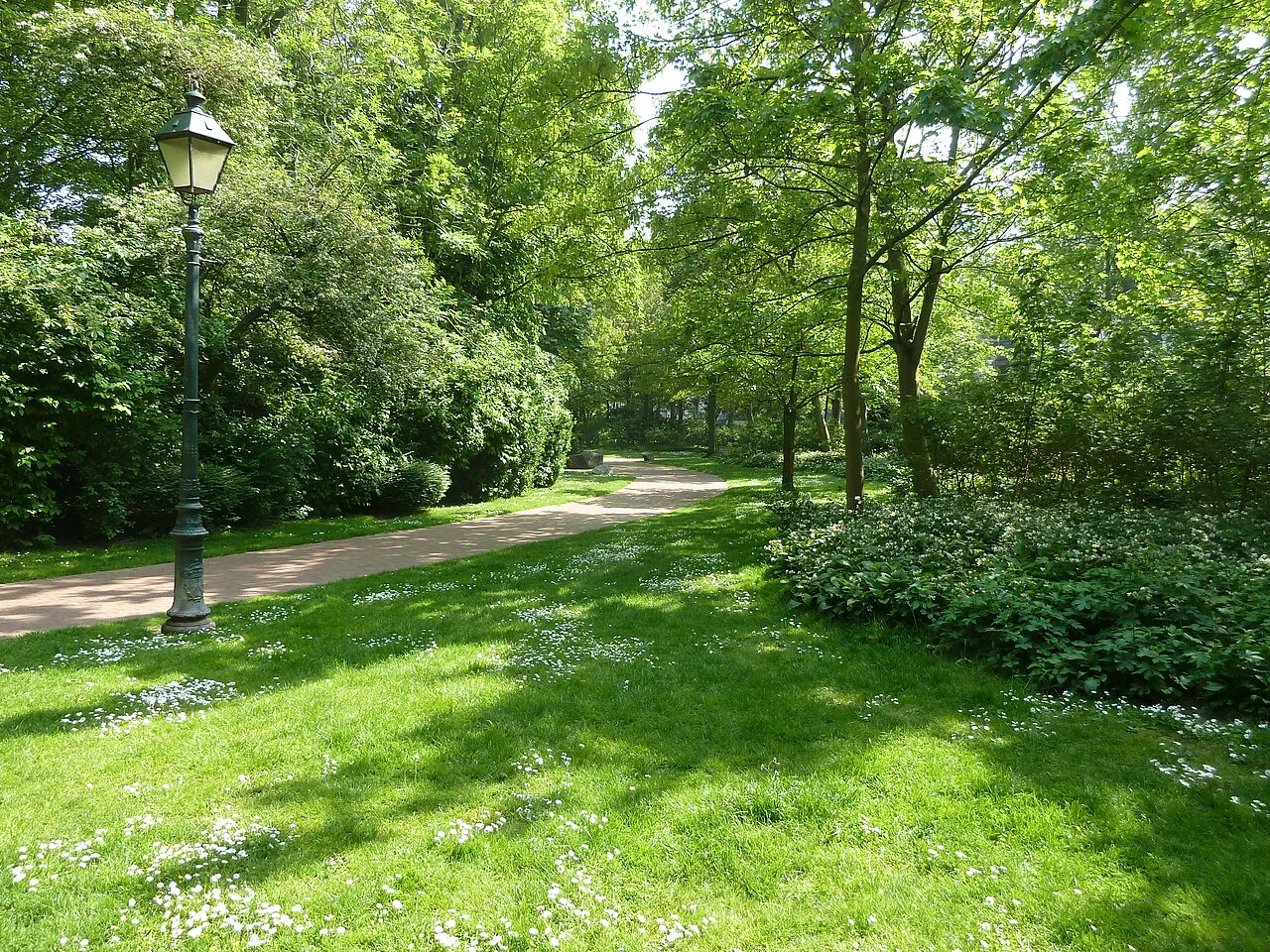
Paths are well maintained and loop past the water rather than running in straight lines, so a simple circuit takes you by the main features without a map. Walk in, follow the water, and you will pass the bridges, the fountains and the flower beds in sequence.
Entry is in the ordinary way of a public town park, and Leopold Park is one of the easier green stops to slot in, unlike the belfries and towers elsewhere in Belgium that limit numbers. Use the park as a cut-through if it suits your route.
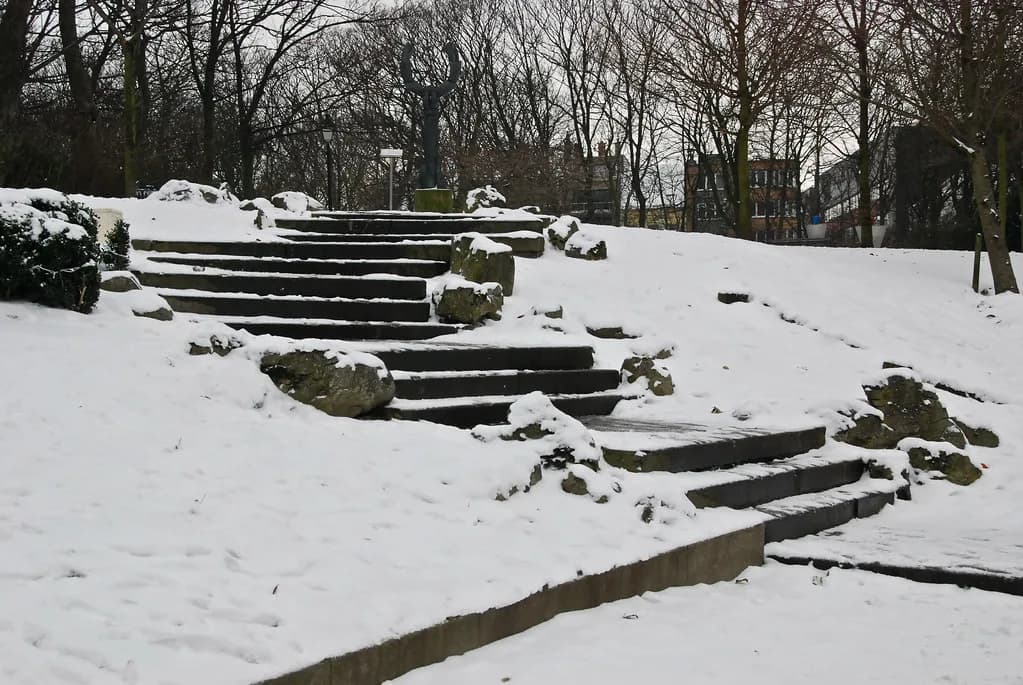
Because the park sits on the old fortifications, the ground is gently shaped rather than dead flat, with the ponds set below the paths in places. That gives the romantic bridges and waterfalls their drop, and it means a short flight of steps may be part of your circuit.

The bandstand and the floral clock
Two historic features anchor a visit. The bandstand, inaugurated in 1885, still stands as the park's formal centrepiece, and the floral clock is the other landmark most visitors come to see. The park itself was laid out in 1860 on the old town fortifications.
The floral clock sits about 60 metres away, close enough to double as an exit marker when you leave. Use it to orient yourself towards the casino and the seafront.
Neither feature needs a long stop: a few minutes at each is enough, and the interest is in seeing them in place rather than studying them. If you have limited time in Ostend, this is the pair to prioritise inside the park.
Ponds, bridges, waterfalls and fountains
The water is what gives the park its character. Ponds, small waterfalls and graceful fountains sit among the paths, with romantic bridges crossing the water at photogenic points, and the sound of falling water carries across the quieter corners.
Walk the full circuit rather than cutting straight through, because the bridges and falls are spread around the water and a direct line misses most of them. Ten minutes of unhurried walking covers the whole loop.
This is the part of the park that rewards a camera, particularly where a bridge frames a fountain and the trees behind. Early in the day the paths are quietest, which suits anyone wanting an uncluttered view.
The rose garden and flower beds through spring and summer
Colourful flower beds run through the park, and the rose garden is at its best in spring and summer when the blooms are out. Outside those months the structure of the park, the water, the trees and the bandstand, carries the visit instead.
If flowers are the reason for your stop, plan the park for late spring or summer and treat the rest of the year as a pleasant walk rather than a garden visit. That is the honest difference between the two seasons here.
Lush trees and planting make the park a green lung in the city, which matters most on a warm day when the seafront is exposed. The shade along the paths is a practical reason to choose this stop in the middle of a summer afternoon.
Statues, sculptures and the historic fabric
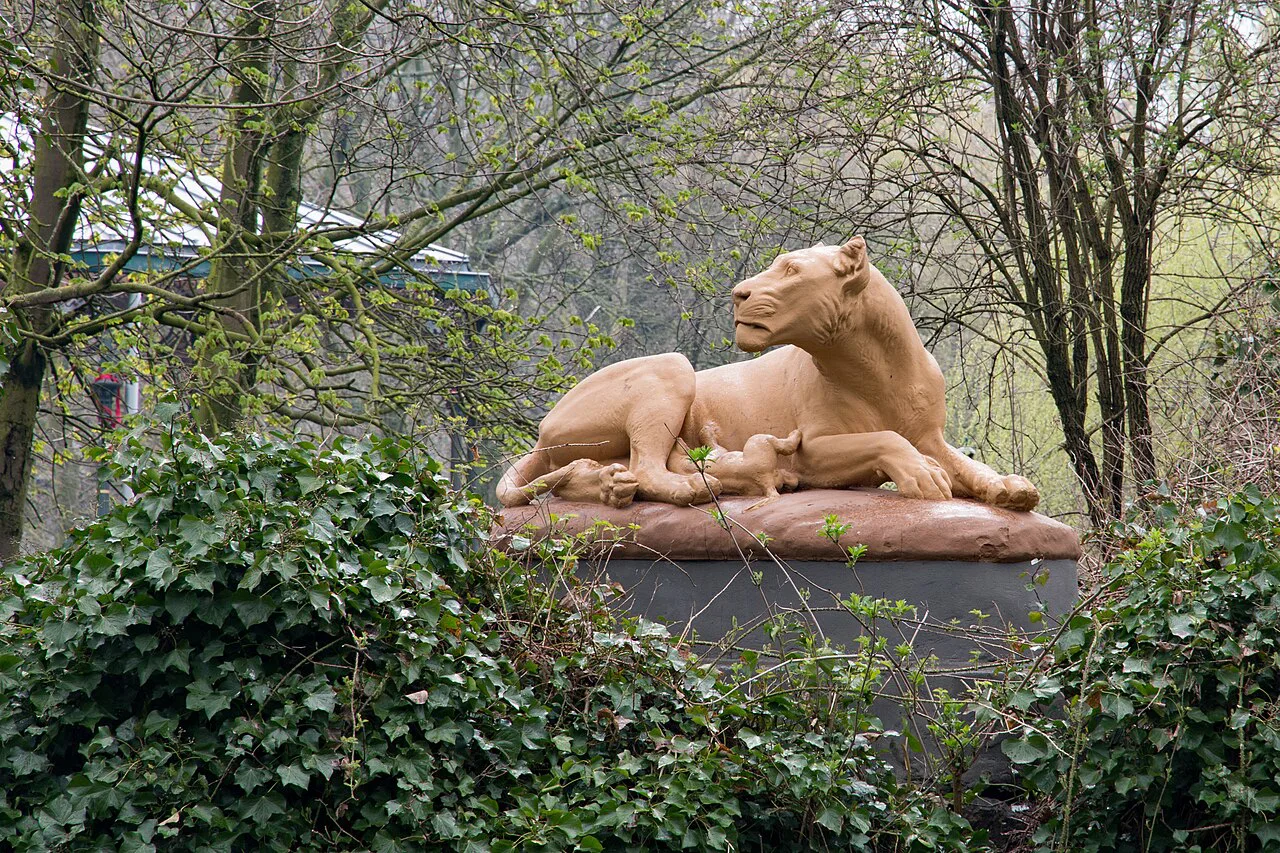
Statues and sculptures are placed around the park, part of its historic fabric alongside the bandstand and the flower clock. They are incidental rather than a sculpture trail, so notice them as you pass rather than seeking each one out.
The park is named after King Leopold II. The interest for a visitor is in the layout and features rather than in any single monument.
The playground and a pause with children
A playground sits within the park, so adults can rest on a bench within sight of it while children use the equipment. That makes the park a workable pause in a day of sightseeing rather than a stop the whole group has to endure.
A second playground, the Chalet Playground, is about 175 metres away, which gives you a fallback if the park's own equipment is busy. Both are close enough to combine without a detour.
There is seating along the paths and around the water, so a picnic works well here in fine weather. Bring what you need, since the park is a green space rather than a venue with facilities of its own.
How long to allow and when to go
Give Leopold Park 30 to 45 minutes. That covers the circuit of the ponds, a stop at the bandstand and the floral clock, and time on a bench, without stretching a small park into a half-day.
Spring and summer are the best months for the rose garden and flower beds; at other times come for the walk and the water. Avoid building a day around the park alone, because its scale does not support it.
Pair it with the seafront rather than treating it as a separate trip. The Albert I promenade and the casino are minutes away, so the park fits naturally between a walk along the coast and a look at the town behind it.
If you want a longer green walk instead, Maria Hendrikapark is the larger alternative on the other side of Ostend, with more space and water. Leopold Park's advantage is its position in the centre.
What is within a few minutes' walk
Five named sights sit close to the park gate, and each distance is short enough to walk without planning. The Flower Clock is about 60 metres away, the Minigolf Chalet and the Chalet Playground about 175 metres, the City Brewery 't Koelschip about 200 metres and Casino Ostend about 250 metres.
The casino and the promenade give you the seafront half of the day, and the brewery gives you a place to taste Belgian beer nearby. Chain the three together in one loop and the park becomes a natural pause in the middle.
For a different kind of stop, Mu.ZEE and its James Ensor holdings are in the same central area, and the Atlantikwall Raversyde open-air museum lies further out along the coast for a separate outing.
Is Leopold Park worth a stop?
Yes, as a short stop of under an hour, not as a headline sight. The 1860 origins, the 1885 bandstand, the floral clock and the ponds give it enough substance to justify a walk through on the way to the seafront.
Build it into a half-day with the casino, the promenade and a beer at the nearby brewery, and skip it if your time in Ostend is down to a few hours and the sea is the priority.