
Place Saint-Lambert: Liège's Central Square and What to See Around It

Place Saint-Lambert is Liège's central square and the simplest place to start a visit to the city. It is an open public space rather than a ticketed sight, and you can walk across it, read the palace frontage and move on in around 20 to 30 minutes. This page explains what the square is, how to reach it on foot and which sights sit within a short walk of it.
What Place Saint-Lambert is and why it matters in Liège
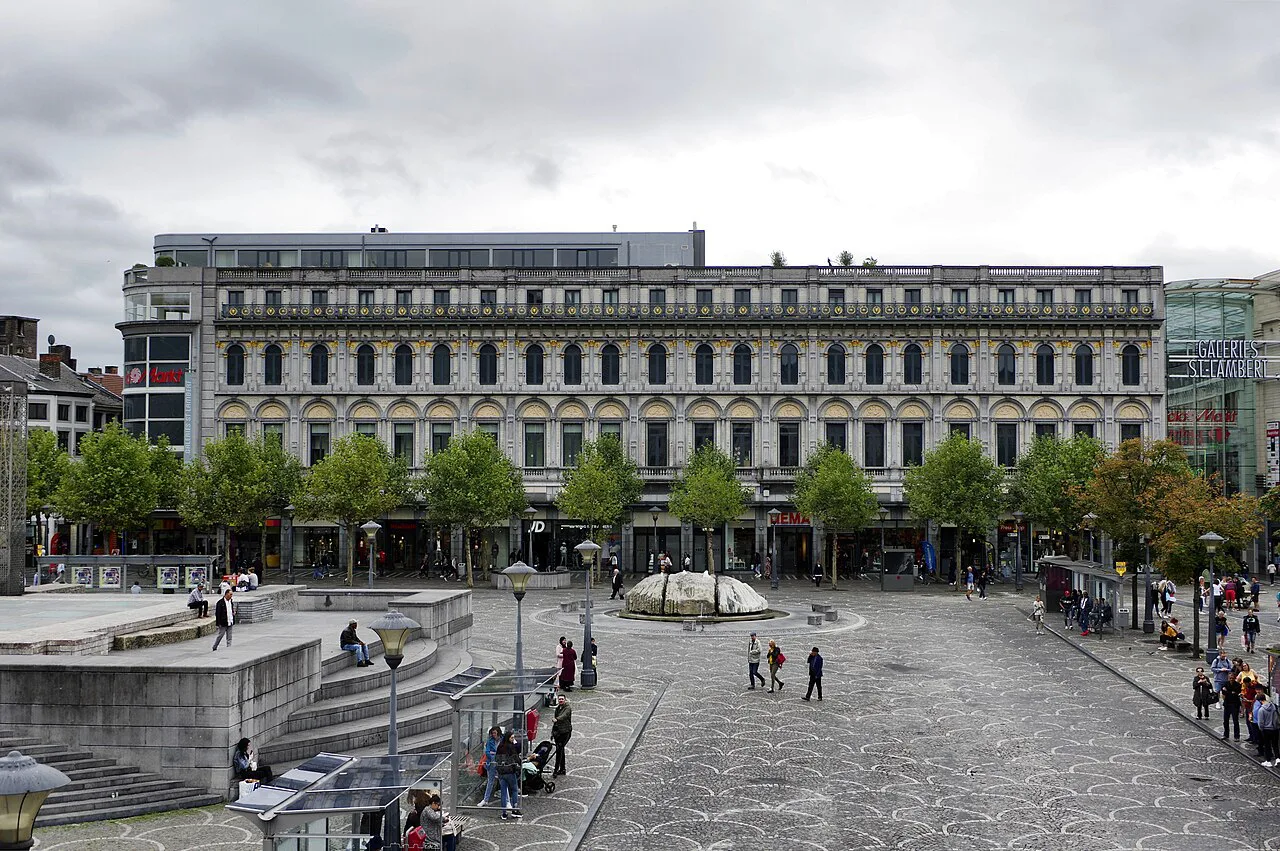
The square sits in the middle of Liège and was created on the site of St Lambert's Cathedral, which stood here until 1794. That history is what makes the space interesting: you are looking at a void where the city's great church once dominated the skyline, not at a reconstruction. Treat it as the hinge of a walking day rather than a destination you queue for.

Where the square sits in the historic centre and how to reach it on foot
The square lies inside Liège's historic centre, the district from which the city grew from the 6th century onward, and it links naturally to Place du Marché, the Prince-Bishop's Palace and Rue Hors-Château. Arriving on foot from the main shopping streets puts you on the square within minutes, and from there the old lanes run uphill towards the citadel slopes. Use the square as a landmark to get your bearings before choosing a direction, because the palace and the surrounding monuments sit within a short walk.
The cathedral that once stood here, destroyed in 1794
St Lambert's Cathedral was destroyed in 1794, and the square now occupies the site. Knowing that gives the square its meaning: the wide paved expanse stands where the city's great church once rose, and the surrounding street pattern still bends around where it stood. Read a little about the cathedral before you arrive and the space will look different from the way it does to most passers-by.
The Prince-Bishop's Palace on the edge of the square
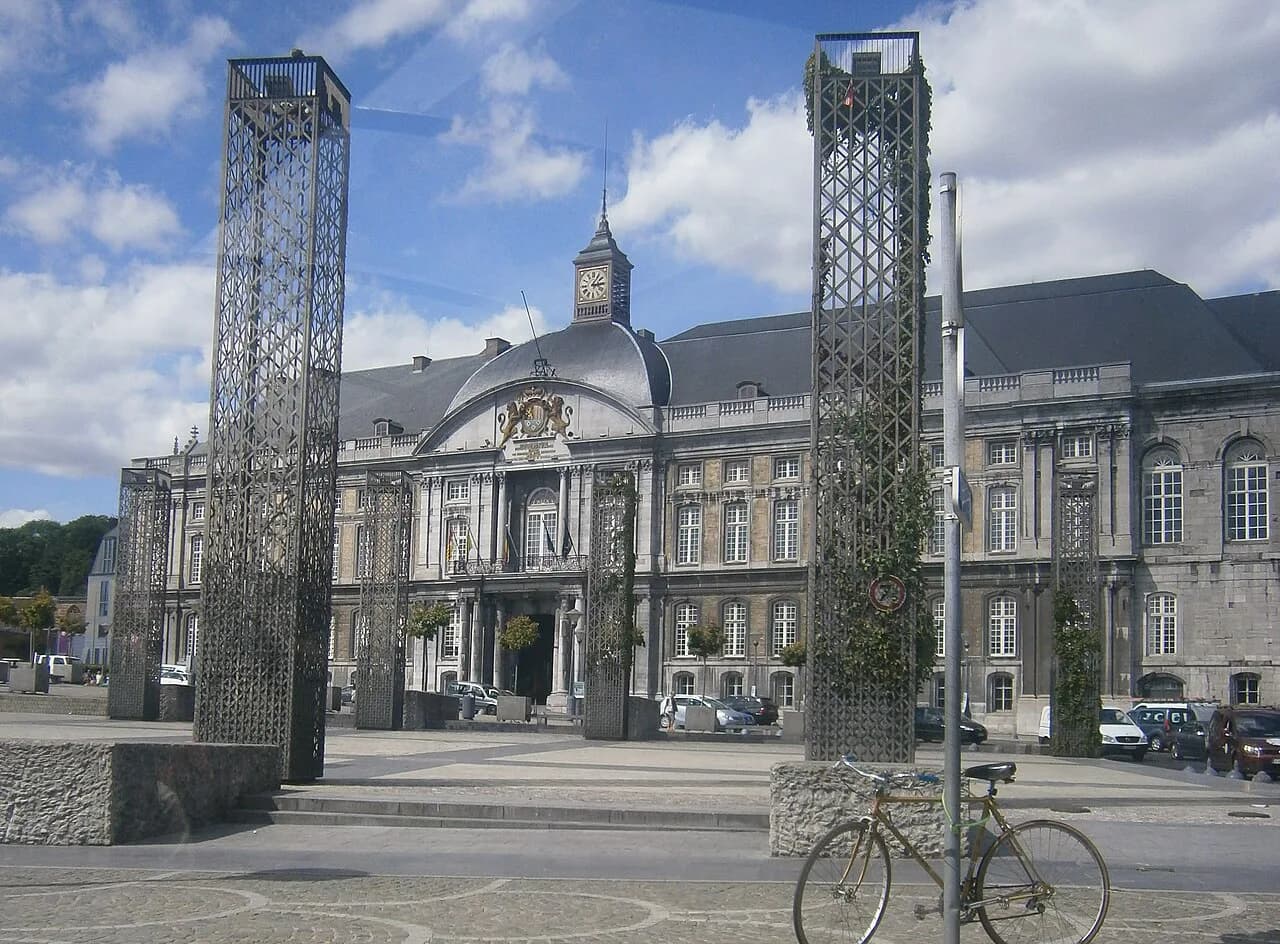
The Prince-Bishop's Palace stands on one side of the square, a reminder that Liège was ruled by prince-bishops rather than by a distant monarch. You see it from outside as you cross the square, and it is the single most useful building for orienting yourself in the centre. Pair it with the lanes behind Place du Marché, where the old civic heart is compressed into a few hundred metres.
What else to see on and around the square
The square is the point where the historic-monument circuit begins: Place du Marché, Rue Hors-Château and its courtyards all sit within a few minutes of it. Use the open paving to get your bearings, then follow the lanes towards the old civic heart.
Place du Marché nearby
Place du Marché lies in the same historic centre, a few minutes from the square, and the regional tourist board calls it lively and shady. Together with Rue Hors-Château, which carries listed architectural heritage and cul-de-sacs, it turns the centre into a walkable loop from Place Saint-Lambert. Take the side passages along Rue Hors-Château slowly and the centre opens up beyond the main streets.

Montagne de Bueren and the Citadel slopes above the centre
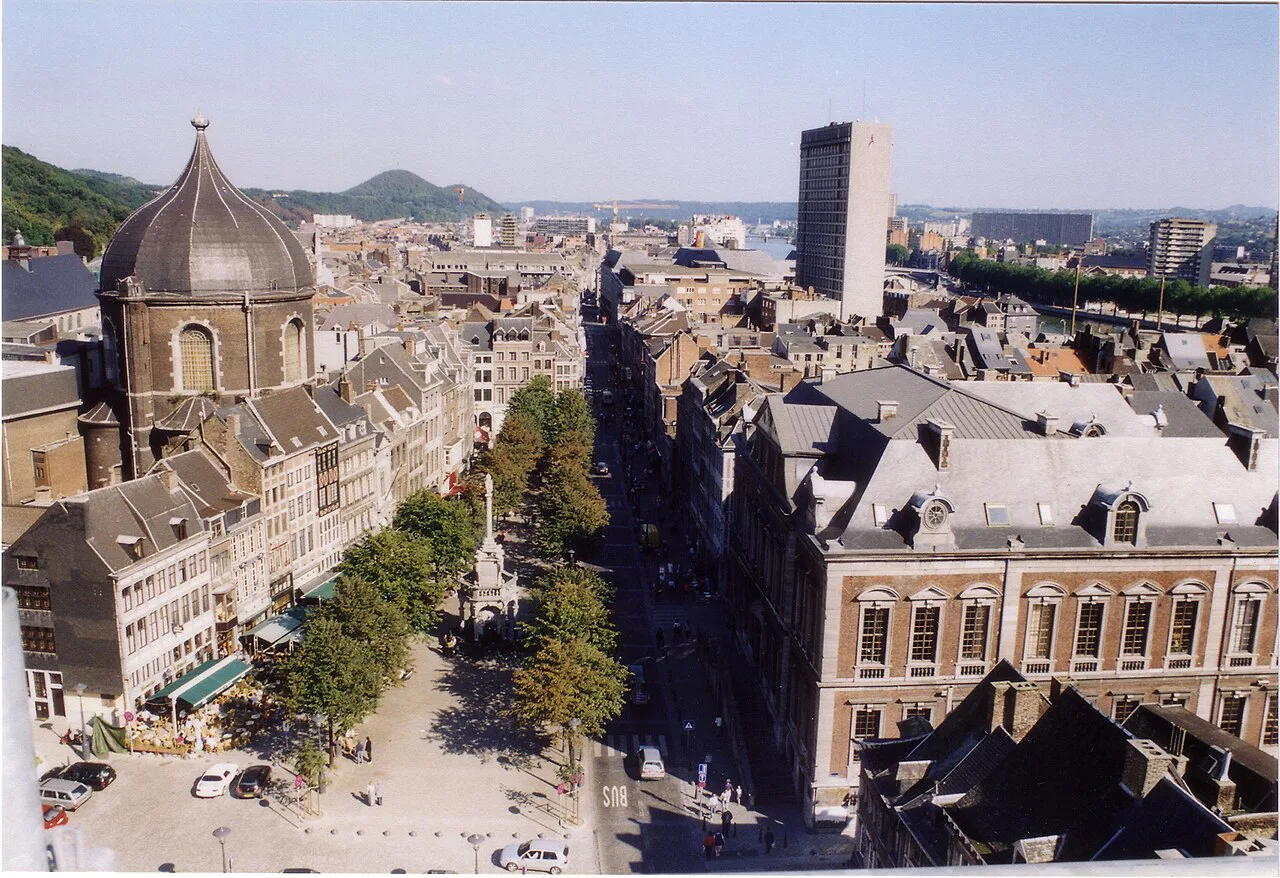
The Montagne de Bueren staircase climbs from the lower town towards the citadel slopes, and it is the most photographed walk in the centre. Go up early or late in the day, take the climb slowly and use the height to look back over the roofs rather than treating it as a race. Above the stairs, the Coteaux de la Citadelle path, rated three stars in the Michelin Green Guide, offers quieter walking and wide views over the Meuse valley.
St Barthélemy and the Grand Curtius beyond the immediate centre
Beyond the immediate centre, the Collégiale Saint-Barthélemy and the Grand Curtius make a worthwhile second leg of the walk. The Grand Curtius brings five museum collections together in one building, including an arms department descended from the Arms Museum that opened in 1885, when Liège was one of the world's leading centres for portable weapons. Allow a couple of hours there if the displays appeal, and less if you only want the building and the Romanesque church nearby.
Art lovers can add La Boverie, the city's fine arts museum and exhibition centre. It works best as a separate stop rather than a quick detour, so decide before you set out whether you are walking the centre or heading across the river to the museum.
How much time to allow on and around the square
Give the square itself 20 to 30 minutes: enough to cross it, look at the palace frontage and read the explanation of the lost cathedral. Add a further hour for the walk to Place du Marché and up the Montagne de Bueren. A half day covers the centre comfortably; a full day lets you add the Grand Curtius or La Boverie without rushing.
When to go: crowds, seasons and the square as a meeting point
The Cité ardente, the nickname Liège carries for its cultural abundance and festive atmosphere, is busy on shopping Saturdays when the centre fills with people using the square as a meeting point. Weekday mornings are calmer and better for seeing the palace and the surrounding streets without crowds. For a walking day built around the square, a dry forecast matters more than a warm one.
Should you build your day around Place Saint-Lambert?
Yes, but as a starting point rather than a stop. The square is free to walk through, quick to see and perfectly placed for the palace, Place du Marché, Rue Hors-Château and the climb to the citadel. Use it to get your bearings, then spend your time on the streets and museums that radiate from it.
Explore more Liège guides
Frequently Asked Questions
Is Place Saint-Lambert free to visit?
Walking across the square costs nothing, because it is a public space in the city centre rather than a ticketed attraction. It is an open paved square, so there is no admission charge to cross it or to look at the Prince-Bishop's Palace from outside.
What happened to the cathedral on Place Saint-Lambert?
St Lambert's Cathedral stood on this site until 1794, when it was destroyed, and nothing of it remains above ground. That is why the square reads as a wide open space rather than a monument: the cathedral footprint is now the paving you walk across.
How long does it take to see Place Saint-Lambert?
Most visitors need 20 to 30 minutes to cross the square, look at the Prince-Bishop's Palace and get oriented. Budget a half day if you want to add Place du Marché and the Montagne de Bueren staircase in one continuous walk.