
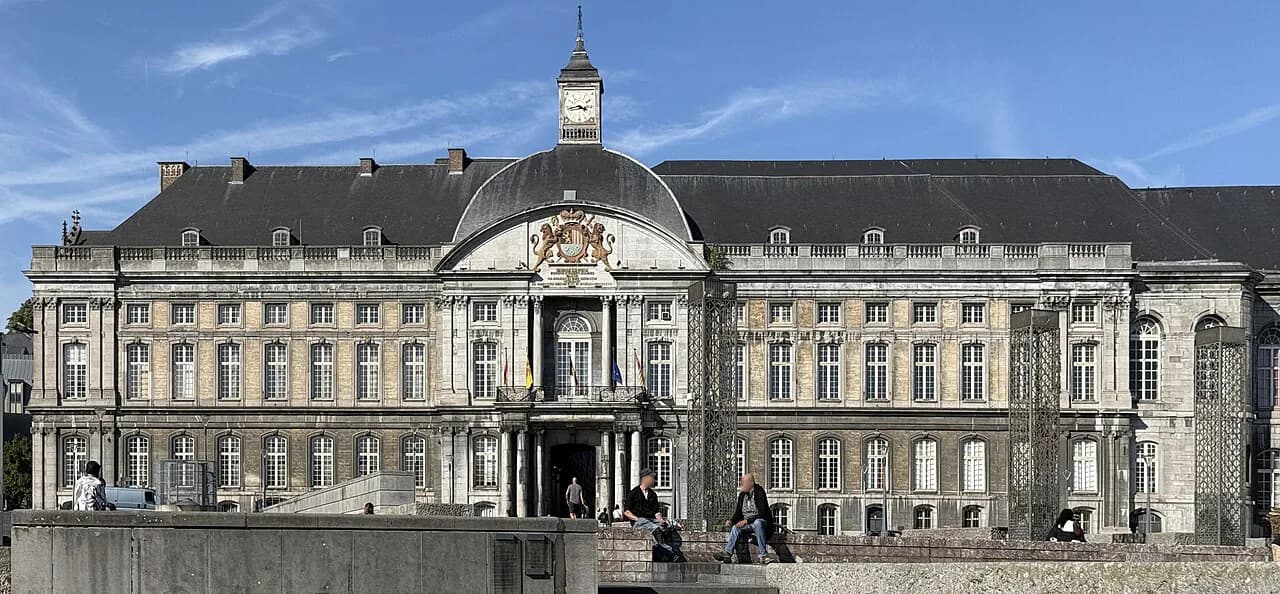
Palais des Princes-Évêques: Liège's Prince-Bishops' Palace

The Palais des Princes-Évêques is a sight you take in from the outside, not a museum you tour: it stands on Place Saint-Lambert in the heart of Liège and houses the city's courts and tribunals, so the visit is about the square, the courtyard and the façade rather than a sequence of rooms. Allow 20 to 30 minutes for the palace itself, more if you linger on the square. This guide covers where it sits, the walk to it, what to look at and what else is within a few minutes on foot.
What the Palais des Princes-Évêques is
The Palais des Princes-Évêques, or Prince-Bishops' Palace, is the episcopal palace on Place Saint-Lambert in the centre of Liège, and it now accommodates the city's courts and tribunals. That dual identity shapes the visit: you are looking at a seat of power that still functions, which is why the draw is the setting and the architecture rather than an exhibition inside.
Its name points to the prince-bishops, the clerical rulers who governed Liège as a prince-bishopric, and the palace's presence on the city's central square makes it the natural starting point for a day in the centre. Treat it as a landmark to read and photograph, then build the rest of your walk around it.
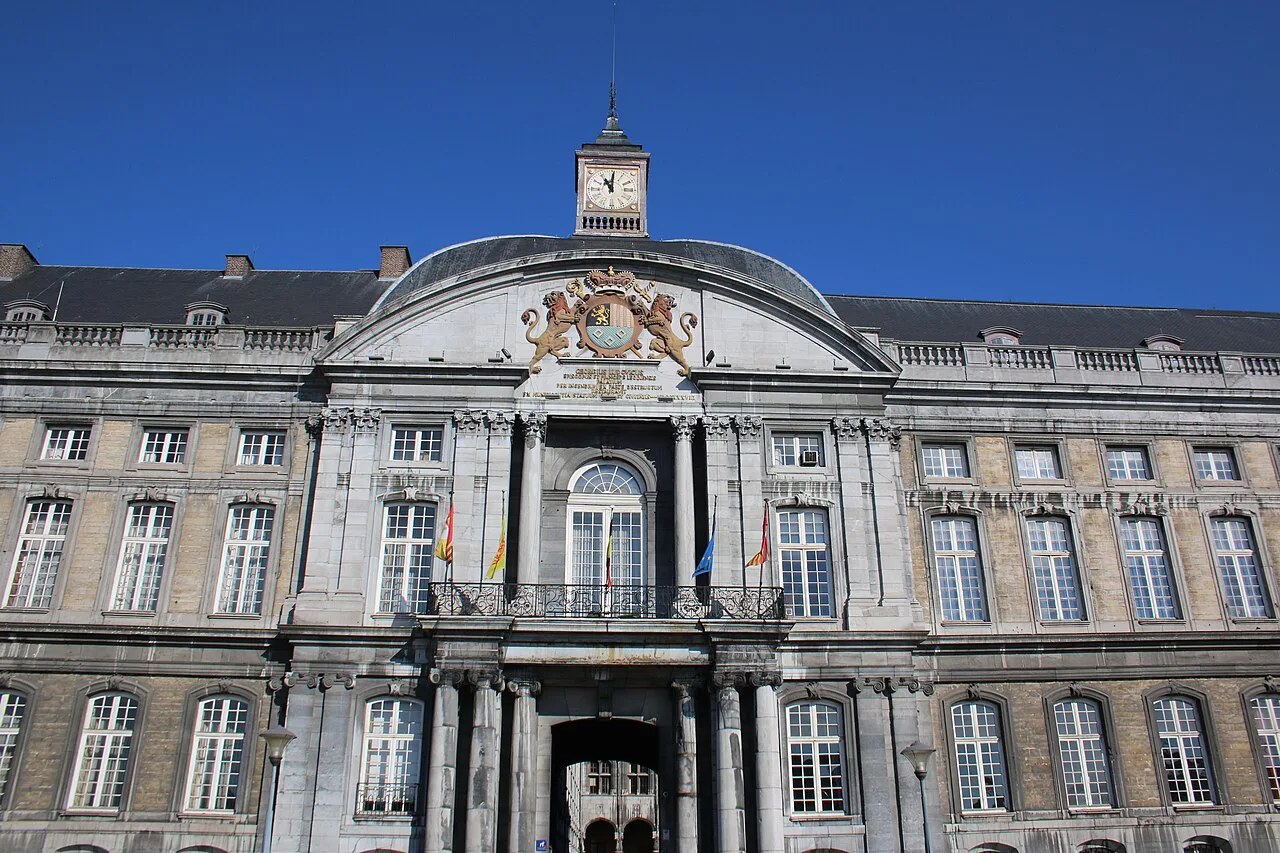

Where it sits in Liège
The palace faces Place Saint-Lambert, the square from which the historic centre radiates, and the surrounding streets hold the core of the old city. The historic centre is where Liège has developed since the sixth century and includes the lively, shady Place du Marché, the collegiate church of Saint-Barthélemy, the Museum of Walloon Life and the Grand Curtius.
Because the palace is on the main square rather than tucked down a side street, you will pass it on almost any walk between the centre's sights. Orient yourself here first, then head off in whichever direction your next stop lies.
Place Saint-Lambert is the palace's address and its frame, and the square repays a slow circuit before you move on. For what else the square offers, see the guide to Place Saint-Lambert, Liège.
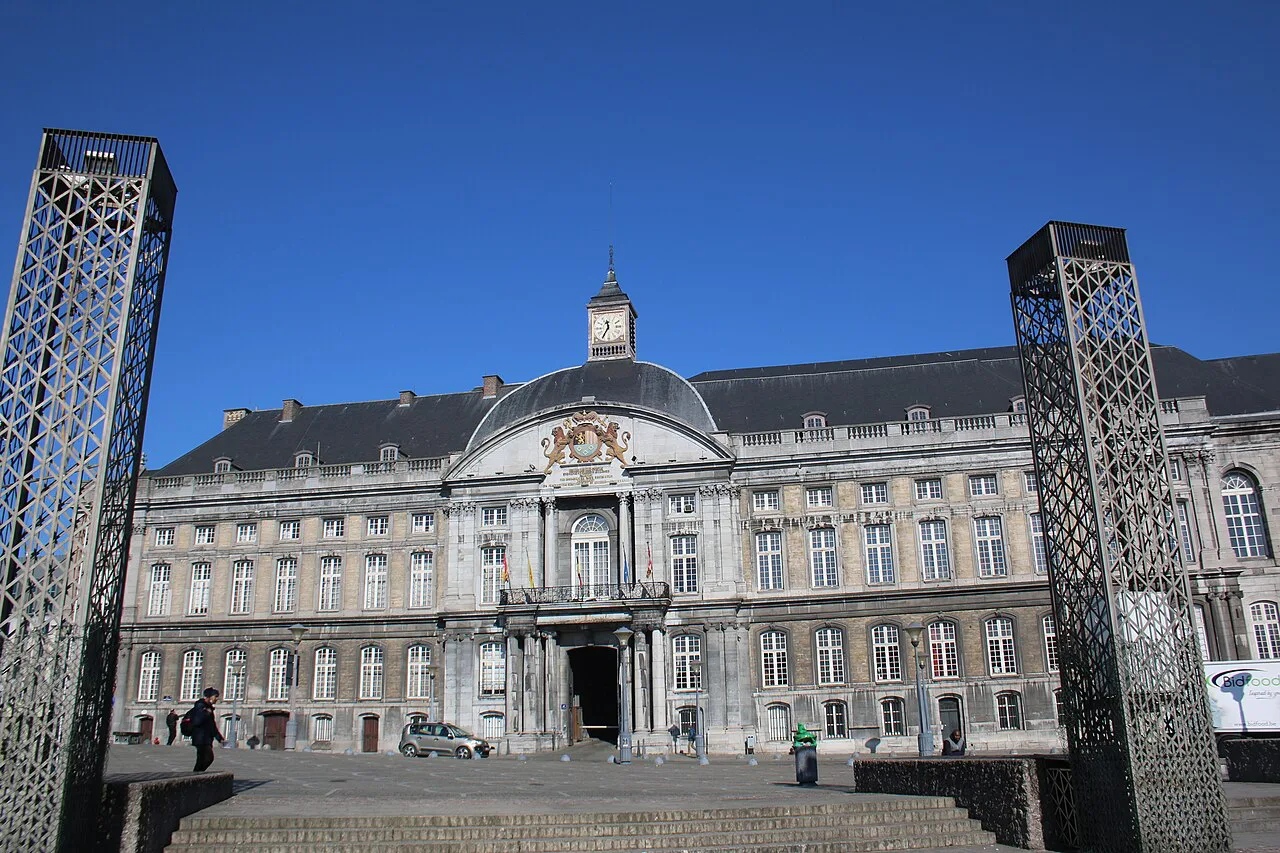

Getting there on foot from the historic centre
The palace is a walk, not a trip: from the streets around Place du Marché you reach Place Saint-Lambert in a few minutes on foot, and the palace is the large building on the square. Coming from the Meuse quays or the main shopping streets, head for the square and you will find it.
Allow the walk itself to be part of the visit. Rue Hors-Château, with its listed architectural heritage and cul-de-sacs, is a natural approach to the centre's historic core, and the small squares and courtyards along the way are worth the detour.
If you are planning the city as a whole, the wider Liège Attractions: 9 Visitor Guides collection helps you group the centre's sights into a sensible order before you set out.
What to look at from the square
Start with the façade. The palace presents a formal front to Place Saint-Lambert, and the Cour d'Honneur is the part of the building most often singled out as its set piece. Walk the square's edge to take in the whole elevation rather than just the entrance front, and remember that the palace is a working court building, so the interior is not on the visitor route.
Read the building as a working institution as well as a monument. It houses the courts and tribunals, so the fabric you see is cared for and in use, and the impression is of civic weight rather than museum display.
Photographers should work the square's open side, where the full width of the palace fits into the frame, then cross to the courtyard for the closer view. The best light is a matter of the hour rather than the season, so plan the palace for whichever part of the day suits your route.
The palace in Liège's story
The prince-bishops were the clerical rulers of Liège, and the palace on Place Saint-Lambert was their seat at the centre of the city's government. That history is why a single building carries such weight in a city whose identity is bound up with its ecclesiastical past.
Today the same address serves the courts, so the palace's story runs from episcopal rule to civic justice without leaving the square. That continuity is the most interesting thing about it for a visitor, and it takes only a few minutes of looking to grasp.
How much time to allow
Give the palace 20 to 30 minutes: a circuit of the square, a stop in the courtyard and a few photographs. That is enough to see what there is to see, because the visit is architectural rather than curated.
In a one-day Liège visit, the palace fits neatly as the opening move before a walk through the centre; in a two- or three-day trip, treat it as a ten-minute anchor between longer stops. Liège packs its historic monuments into a compact centre, so the palace rarely needs a slot of its own.
If your time in the city is short, plan the centre on foot and let the palace be the fixed point you return to. The wider list of things to do in Liège helps you decide what deserves the longer slots.
Other sights within a short walk
Place du Marché, with its lively, shady square, is a few minutes away and pairs naturally with the palace on the same loop. Collégiale Saint-Barthélemy, the collegiate church with its distinctive exterior, is another short walk and a worthwhile stop even if you only see it from outside.
The Museum of Walloon Life and the Grand Curtius sit close by, and both reward a proper visit rather than a passing glance. The Musée de la Vie Wallonne covers the region's everyday culture, while the Grand Curtius brings together several collections, including an arms department that grew out of a museum first opened in 1885 and now displays thousands of weapons in the Curtius Palace.
For art, La Boverie holds the fine arts museum and exhibition centre on the Meuse, and it is the city's other major museum building alongside the Grand Curtius. Work it into a half-day rather than squeezing it between the palace and lunch.
Among the churches within reach, Église Saint-Jacques is a short walk from the centre and makes a quiet counterpoint to the square.
Grand Curtius and the Museum of Walloon Life nearby
The Grand Curtius is the bigger commitment of the two: its arms collection alone runs across the first three floors of the Palais Curtius, with between two and three thousand weapons on display, so allow real time rather than a flying visit.
The Musée de la Vie Wallonne is the more human-scale stop, and it works well as a shorter visit when you want context on the region between the big sights.
Two other options round out a day in this part of the city: the Aquarium-Muséum and the Cité Miroir, the latter a former public building turned cultural venue.
Practical points: access, tickets and hours
The palace is not a standalone ticketed museum, so there is no ticket to buy for seeing it from Place Saint-Lambert. It houses the city's courts and tribunals, and access beyond the public square is a matter for the courts and their own rules, not for a visitor pass.
If you are combining the palace with a museum visit, check the museum's own site for opening days and ticket prices, because Belgian museums often close on one fixed weekday. The Liège destination page lists the city's museums and monuments and is the place to start.
Should the palace be on your Liège shortlist?
Yes, but as a landmark rather than a destination in its own right. Build a walk that opens on Place Saint-Lambert, takes in the palace's façade and courtyard, then continues to Place du Marché, Rue Hors-Château and one museum of your choice.
That sequence gives you the city's historic core in half a day without overcommitting to any single stop. For the surrounding options, the Liège Attractions guide covers everything within walking distance.
Frequently Asked Questions
Is the Palais des Princes-Évêques open to visitors?
The palace on Place Saint-Lambert is not a museum with visitor galleries; it houses the city's courts and tribunals. Visitors see it from the square, which is public, and should not expect to tour the building's interior.
Who were the prince-bishops of Liège?
The prince-bishops were the clerical rulers of the prince-bishopric of Liège, and the palace on Place Saint-Lambert was their seat of government. The building's name and its position at the heart of the city reflect that ecclesiastical rule.
How long should I spend at the palace?
Allow 20 to 30 minutes to walk the square and take photographs. The visit is architectural, so it works best as the opening stop before a walk through the historic centre rather than as a half-day outing.