
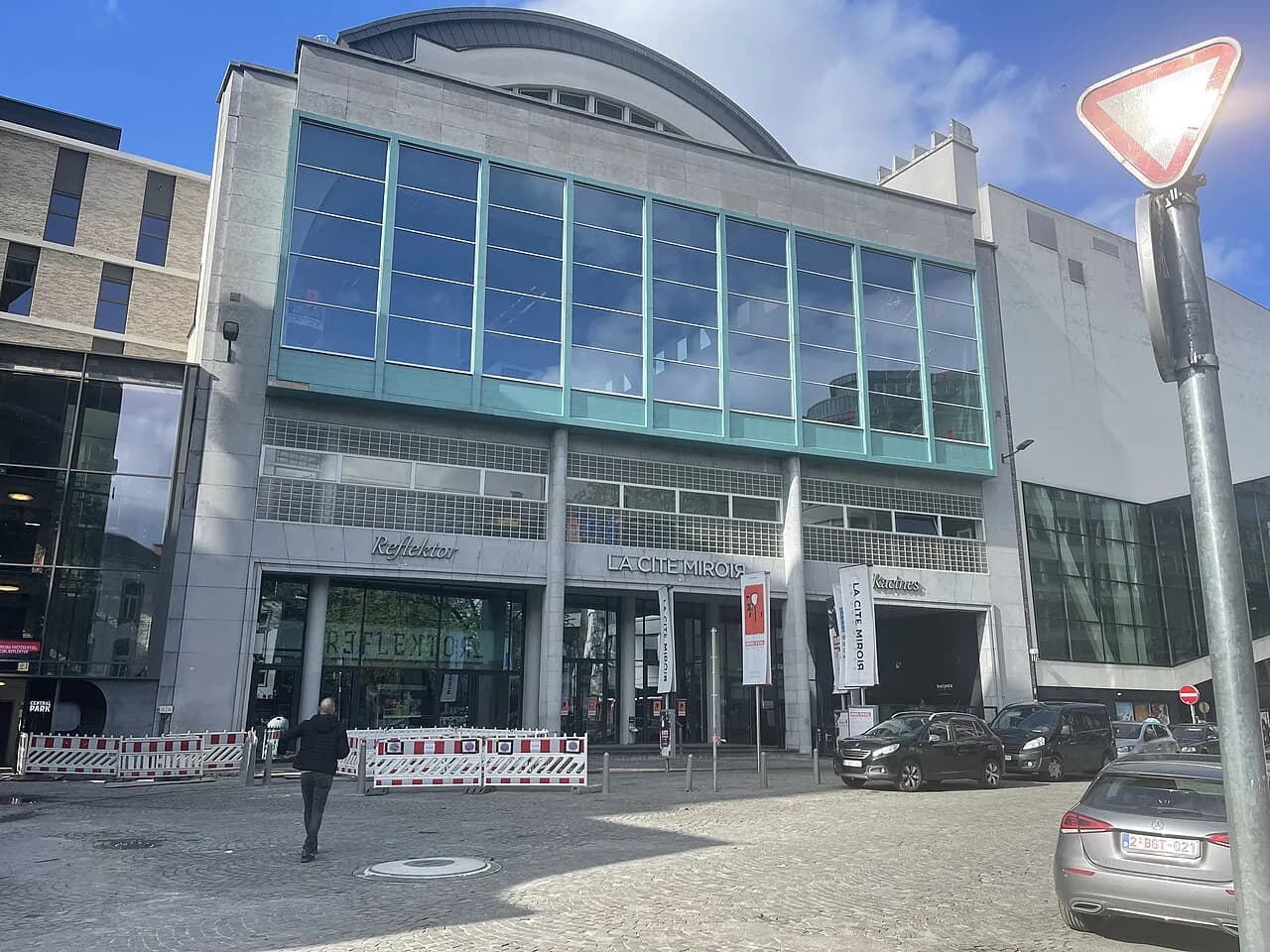
Cité Miroir, Liège: Visiting the Former Sauvenière Baths

La Cité Miroir is a culture and memorial centre in central Liège, housed in the former Sauvenière baths and built around exhibitions, talks and events rather than a conventional museum collection. Allow roughly one and a half to two hours for the two permanent exhibitions, and plan the order of your visit around the fact that they stop admitting visitors at different times. This guide covers what the building is, where to find it, its hours and ticket prices, and what sits nearby in the city centre.
A former swimming baths turned culture and memory centre
The Sauvenière municipal baths were converted into La Cité Miroir, a venue dedicated to culture, critical thinking and remembrance work. Its programme is broad: exhibitions, performances, talks, immersive trails, workshops and guided visits run through the year, with more than 300 events listed annually, all angled towards citizenship, dialogue between cultures and resistance to anti-democratic ideas. Treat it as a civic and memorial space first and a gallery second, and the visit makes more sense.
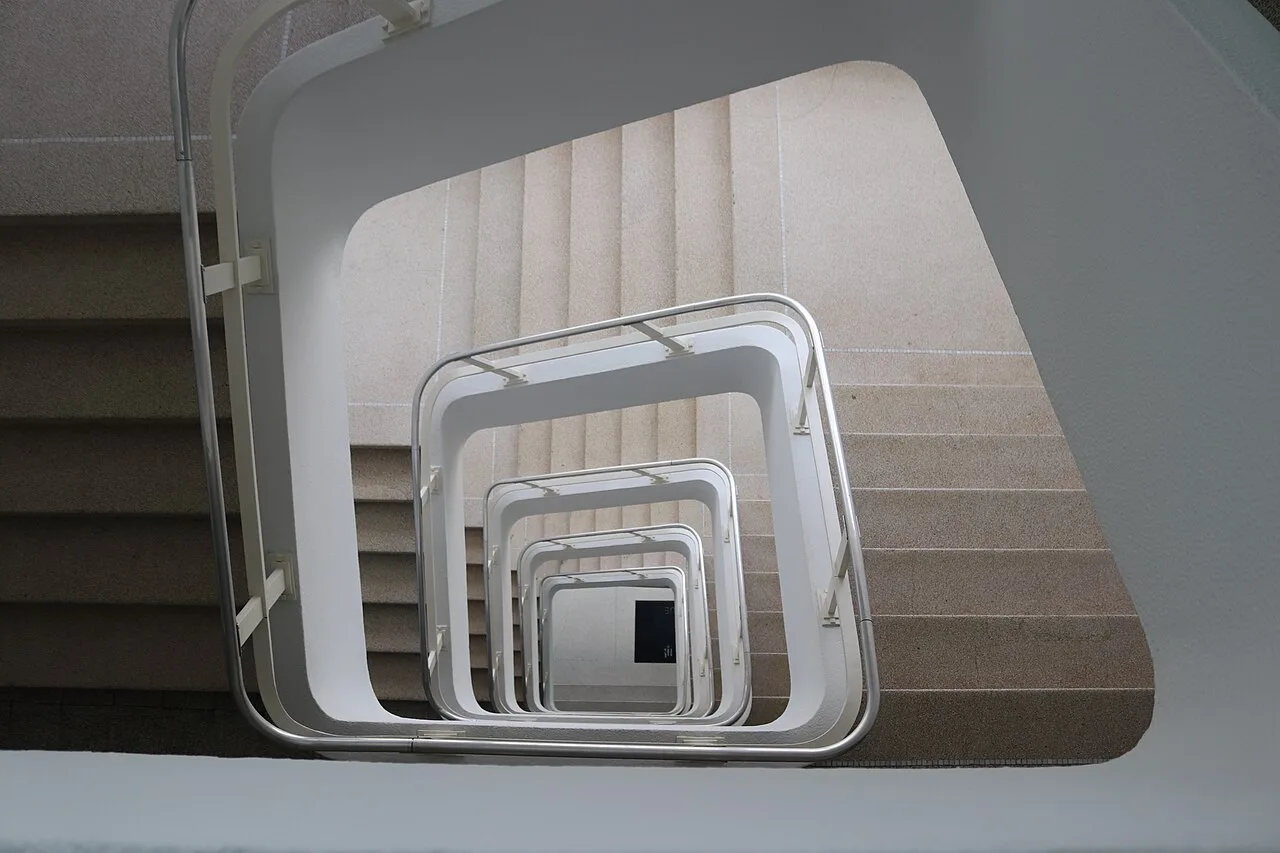
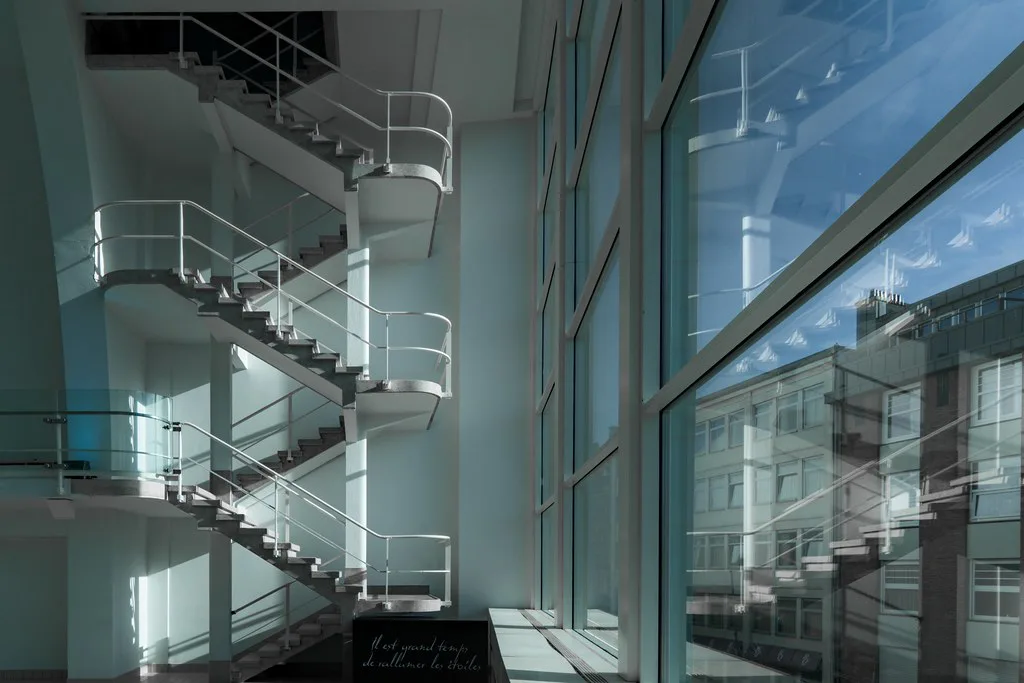
That framing shapes what you get. The two permanent displays deal with struggle and with memory, and the rest of the building flexes around temporary shows and one-off events. If you want a quiet room-by-room art collection, look elsewhere in the city; if you want a place that asks you to think about how societies remember and resist, this is the point of the building. The architecture of the old baths is itself part of the appeal, and the venue is counted among Liège's established stops.

Where La Cité Miroir is in central Liège
The entrance is on Place Xavier Neujean in the 4000 Liège postcode, in the flat city centre rather than up the hillside. The simplest landmark is the Sauvenière cinema next door: find the cinema and you have found the building. From the central shopping streets and the Meuse bridges the walk is short and level, so it slots easily between other city-centre stops.
Because it sits in the middle of town, there is no need to build a half-day around the journey. Come on foot from the main squares and walk the last few minutes. The venue takes group bookings and publishes a phone number and reservation address for them, which is worth using if you are bringing a party rather than turning up as a pair.
If you are mapping a wider day in the city, this is one of several stops worth grouping together; Liège Attractions: 9 Visitor Guides shows how the centre pieces fit. Place Saint-Lambert, the city's main central square, is an easy reference point for orienting yourself before walking down to Place Xavier Neujean.
Opening hours through the week and in summer
From Monday to Friday La Cité Miroir opens from 9am to 6pm, on Saturday from 10am to 6pm and on Sunday from 1pm to 6pm. During the summer school holidays the pattern shifts to 10am to 6pm Monday to Saturday, so a late-morning start is the safe bet in July and August. Sunday afternoons remain the shortest window, which matters if the permanent exhibitions are your priority.
Build your day around those windows rather than assuming a full day of access. A weekday morning gives you the longest stretch and the most room to take in both permanent displays without hurrying. If you are in Liège across a weekend, Saturday is the more generous of the two days, while Sunday suits a shorter, focused stop.
Tickets for the permanent exhibitions
The permanent exhibitions are ticketed separately from the rest of the programme. En Lutte and Plus jamais ça! each cost 7 euros for adults, with a reduced rate of 5 euros for visitors under 26 and for seniors over 65. Entry to the permanent collections is free on the first Sunday of the month, which is the cheapest way to see both if your dates are flexible.
Temporary exhibitions, conferences and shows are priced according to the activity, so the permanent-collection rates do not cover everything on the calendar. Budget for the two permanent displays as your baseline and treat anything else as an add-on.
En Lutte and Plus jamais ça !: the two permanent exhibitions
The permanent programme is built on two displays. En Lutte closes its doors to new visitors at 3pm, while Plus jamais ça! takes last entry at 4pm. That one-hour gap decides your order: go to En Lutte first, then move on to Plus jamais ça! afterwards, and you will not be turned away from the earlier cut-off. Aim to arrive with enough time before 3pm to see the first display properly.
Both are remembrance-oriented displays rather than object-heavy museum rooms, so pace yourself accordingly. Give the first roughly 45 minutes and the second a similar stretch, and you will have seen both without rushing. On the first Sunday of the month, when permanent-collection entry is free, expect more company and start earlier in the afternoon.
Temporary exhibitions, talks and events
Beyond the permanent displays, La Cité Miroir runs temporary exhibitions, conferences, shows, debates and educational courses, and the calendar changes regularly. Rates for these vary with the activity, so the programme is the thing to check rather than a fixed price list. The venue publishes its own agenda, and that is the place to confirm what is on during your dates and what it costs.
If you are asking what exhibition is scheduled in Liège in 2026, the honest answer is that it depends on the date: consult the current programme on citemiroir.be in the weeks before you go rather than relying on a fixed list. Talks and evening events can also change the feel of a visit, filling the building with a different audience than the afternoon exhibition crowd. Check the day you plan to come and match the visit to what is actually running.
How long to allow and the best order for a visit
One and a half to two hours covers both permanent exhibitions at a reasonable pace, plus a look at the converted baths themselves. Start with En Lutte before 3pm, continue to Plus jamais ça! before 4pm, then use whatever time is left for the temporary displays or a coffee nearby. If a temporary show is running and you want to see it properly, add another 45 minutes or so.
Mornings are the calmest slot on weekdays, when the doors open at 9am and you have the longest run before the first last-entry cut-off. Sunday visitors should arrive close to the 1pm opening to leave room for both displays.
Closures to plan around
The venue closes on public holidays and on 1 January, as well as on 24, 25 and 31 December and the second Monday of December. If your trip overlaps a Belgian bank holiday, move La Cité Miroir to another day rather than losing the slot. The second Monday of December is the least obvious of these, so note it if you are in Liège that week.
These closures affect the whole building, not just one exhibition, so they are worth checking against your itinerary before you settle on a day. A quiet Monday in Liège is a common museum-closing problem across Belgium, and this venue does open on weekdays outside the listed dates, which gives you some flexibility.
What else is nearby in central Liège
La Boverie, the city's fine arts museum, sits across the Meuse in its own park setting and pairs naturally with a culture-focused day in Liège. A short walk from the centre puts you at the Grand Curtius, which covers archaeology, decorative arts and arms in a former riverside house. Both give you more museum time if La Cité Miroir has whetted your appetite.
For a change of register, the Collégiale Saint-Barthélemy holds medieval metalwork in a Romanesque church, and the Musée de la Vie Wallonne covers everyday life in the region. If you want to stretch your legs, the Montagne de Bueren staircase and the city's other sights are gathered in the broader things to do in Liège guide. The Palais des Princes-Évêques on Place Saint-Lambert is another central reference point on the walk back.
Is La Cité Miroir worth your afternoon in Liège?
Yes, if you want a memorial and civic space in an unusual building rather than a conventional museum. Go on a weekday morning, see En Lutte before its 3pm last entry and Plus jamais ça! before 4pm, and you will have covered the core in about two hours. The first Sunday of the month is the obvious choice if free permanent-collection entry matters to you.
If exhibitions about memory are not what you are after, put La Boverie or the Grand Curtius at the top of your list instead. Either way, wedging La Cité Miroir into a central walking day costs you little, since the entrance sits on Place Xavier Neujean next to the Sauvenière cinema. Check the programme for temporary shows, talks and closures before you lock in the day.
Explore more Liège guides
Frequently Asked Questions
What are visitors' impressions of La Cité Miroir?
The most useful measure of the place is its own programme. It runs more than 300 events a year, all around citizenship, dialogue between cultures and resistance to anti-democratic ideas. Read what is on during your dates and decide whether the theme interests you. Avoid relying on review sites for a verdict on a memorial space.
Are there unusual places to visit near La Cité Miroir?
The building itself is the unusual part: it is a former municipal swimming baths converted into a culture and memory centre on Place Xavier Neujean. For more offbeat Liège stops, use the city's attractions list and pick by theme, then walk between them in the flat centre. The Montagne de Bueren staircase is the classic leg-stretching detour if you have energy left.