
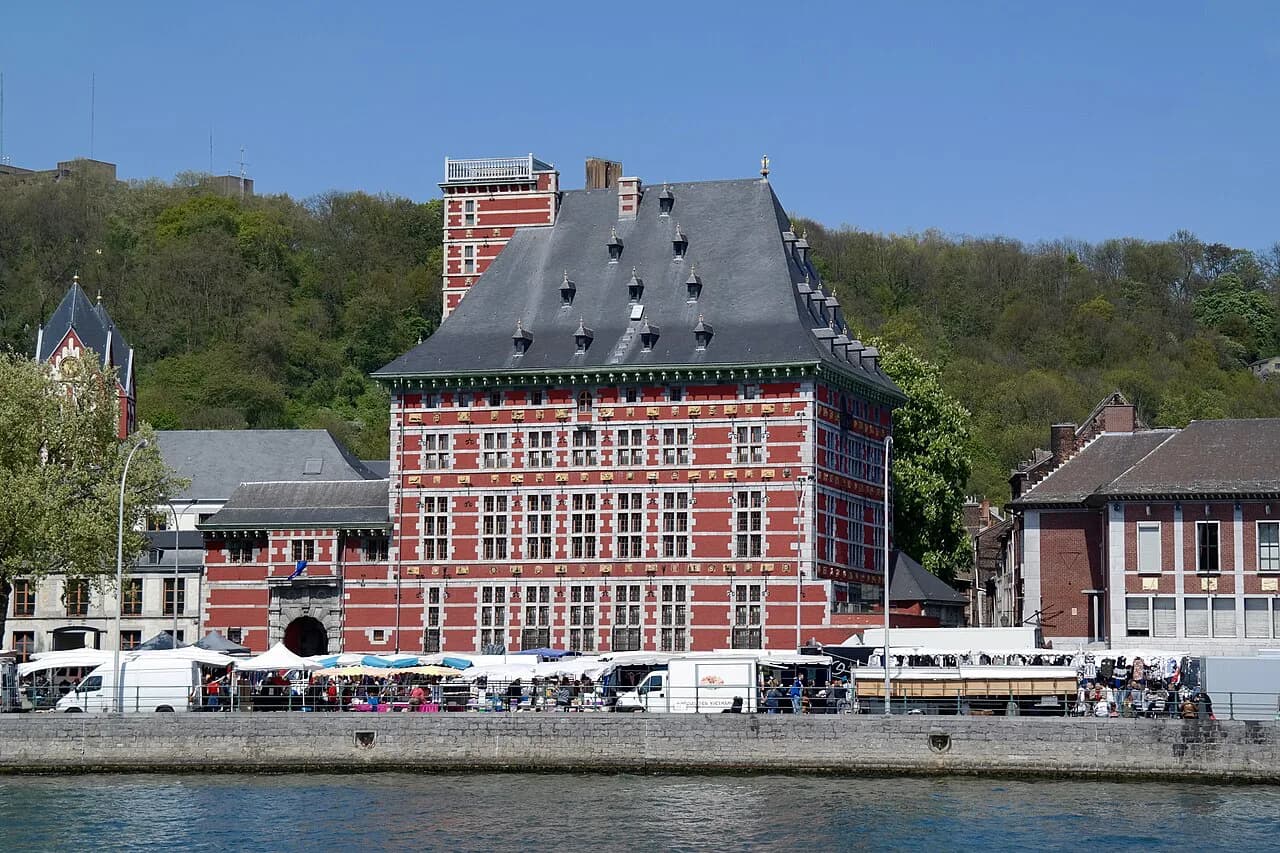
Grand Curtius: Visiting Liège's Museum by the Meuse

The Grand Curtius is worth two to three hours if you want Liège's art and history in one place, and half a day if arms and glass are your interests. It is a museum campus of more than 5,000 square metres in the Féronstrée and Hors-Château quarter, spread across several buildings rather than one palace, and it opened to the public in March 2009.
This guide covers what the complex actually is, where its two entrances sit, which collections deserve your time, and how to fit the visit into a walk through one of the oldest parts of the city.
What the Grand Curtius is
Think of the Grand Curtius as one museum in several adjoining buildings, gathered around the Palais Curtius on the edge of the historic centre. Its collections cover art and history across the departments of arms, glass, religious and mosan art, decorative arts and archaeology, which is why a single lap of the display rooms takes longer than the facade suggests.
The campus took shape after several years of works and was opened to visitors in March 2009, making it one of the newer major museum sites in a city with a long collecting tradition. Expect to move between wings and staircases rather than follow one linear route, and pick up a floor plan at the entrance if you want to avoid doubling back.
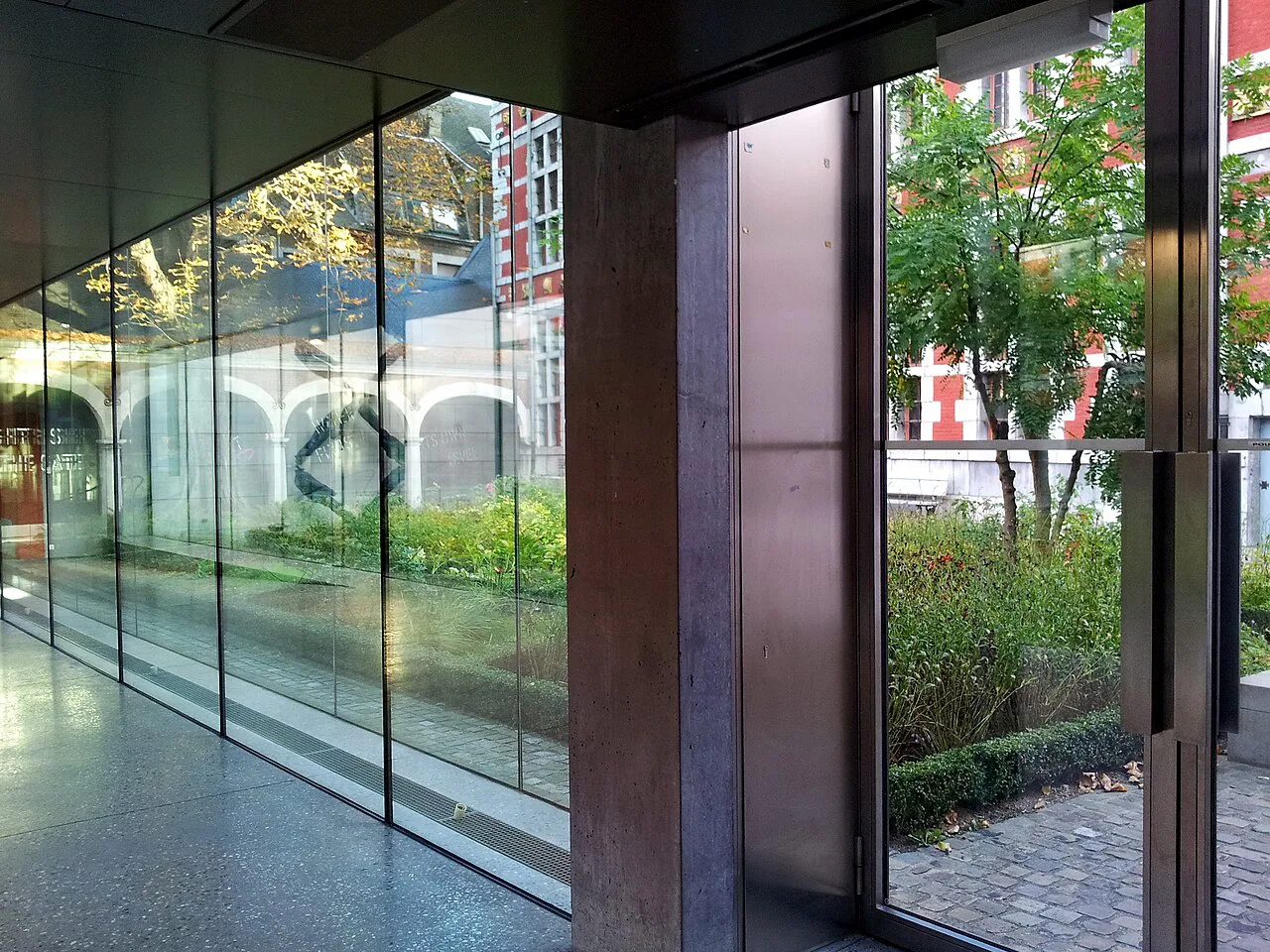

Where it is: Féronstrée 136 and Quai de Maestricht 13
The museum has two addresses, Féronstrée 136 and Quai de Maestricht 13, both in the 4000 Liège postcode. The Féronstrée side faces the old shopping street of the same name in the Féronstrée and Hors-Château quarter; the Quai de Maestricht side looks out over the Meuse.
That double frontage is useful for planning. Walkers coming from the river quays can enter from the water side, while anyone wandering the narrow streets behind the museum arrives from Féronstrée, so you can cross the complex rather than retrace your steps.
The Palais Curtius and Jean de Corte
The Palais Curtius is the building that gives the museum its name, a patrician house built in the late sixteenth to early seventeenth century for Jean de Corte, the wealthy arms and gunpowder merchant who latinised his name as Curtius. It is a mosan Renaissance house in red brick and Meuse stone, with carved masks on the facade, and it is listed among Wallonia's exceptional heritage.
The palace was once part of a much larger family compound that took in the Curtius residence on Féronstrée, servants' lodgings, stables, a gallery and a garden noted for its splendour in the seventeenth century. Knowing that helps you read the site: what survives is the showpiece of a merchant estate, not an aristocratic château.
Inside: 5,000 square metres of art and history
Across more than 5,000 square metres, the museum holds an exceptional group of art and history collections in a mosan Renaissance setting. That size is the main practical point: neither wing is huge on its own, but the total adds up, and a hurried forty minutes will only get you through a corridor or two.
The display is organised by department rather than by period alone. The five strands are arms, glass, religious and mosan art, decorative arts, and archaeology, so you can choose a theme and follow it instead of reading every label in sequence.
Which collections to prioritise
Arms should come first if you have a short window. The museum's own identity grew out of an arms merchant's house and a dedicated weapons department, so start there while your attention is fresh, then take the glass collection, which rewards close looking at small pieces rather than quick scanning.
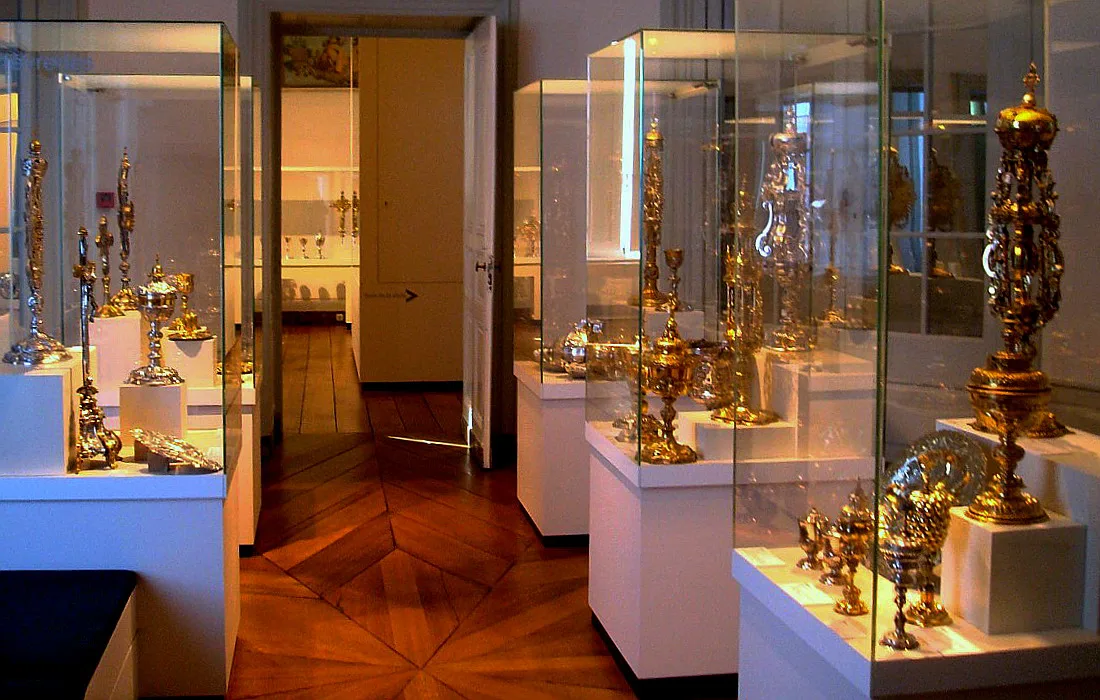
Religious and mosan art is the strand that anchors the museum in the region, with metalwork and church pieces that explain Liège's role as a prince-bishopric; decorative arts and archaeology fill in the domestic and older layers. If you have seen the treasury at the Collégiale Saint-Barthélemy, the mosan rooms here give the wider context.
One honest trade-off: visitors after a single blockbuster object may find the pleasure here is cumulative, in the breadth of departments and the building itself. Treat the palace architecture and the river frontage as part of the visit rather than a preamble to it.
How much time to allow, and how to pace it
Allow about two hours for the arms and glass departments with a walk through the Palais Curtius, and three to four hours if you also want the mosan religious art, decorative arts and archaeology. Because the museum is a multi-building campus, budget a little extra for moving between wings and for stairs.
A sensible order is to arrive at the Féronstrée entrance, do the palace first, then work through the departments that interest you most, and finish on the Quai de Maestricht side by the river. If you are visiting with someone who tires of display cases, split the visit: one hour of collections, then a short break before the second half.
Tickets and opening
The museum runs its own ticket desk online, so sort your admission and opening times there rather than relying on second-hand listings. Its pages also set out the temporary exhibitions running alongside the permanent collections, which can change how long you need.
If you are planning several museums in the city, look at the Liège Attractions: 9 Visitor Guides before booking, so you can see what sits within walking distance of Féronstrée and build the day around one area rather than criss-crossing the centre.
Orientation on foot, and the shop and bistro
On foot, the simplest approach from the centre is down through Féronstrée, which brings you to the museum's street frontage after a short walk from Place Saint-Lambert. Coming from the river side, follow the Meuse quays to Quai de Maestricht and use that entrance instead.
The site includes a museum shop and the Bistro du Musée, both listed on the museum's own pages, which makes it easy to break a long visit without leaving the building. Neither is a reason to come on its own, but a coffee between the palace and the arms rooms is a practical way to pace the collections.
What to see nearby in Féronstrée and Hors-Château
The quarter around the museum is the reason to give it a whole afternoon. The Musée de la Vie Wallonne sits a few minutes away in the old Hors-Château area, and the Église Saint-Jacques, one of Liège's oldest churches, is a short walk back towards the centre; both pair naturally with the Grand Curtius.
For a longer walk, head uphill to the Montagne de Bueren staircase for the view back over the rooftops, or drop to the Meuse and cross to La Boverie, the museum and park on the opposite bank. Both make a good second half of the day if you have already done the Grand Curtius in the morning.
If you are building a full Liège itinerary, the Palais des Princes-Évêques on Place Saint-Lambert and the Cité Miroir on the other side of the centre are both within comfortable walking distance, as is the Aquarium-Muséum for a change of register.

Is the Grand Curtius worth your afternoon?
Yes, if you want one museum that explains Liège rather than a greatest-hits gallery, and if you can give it two to three hours. The arms and glass departments plus the Palais Curtius make the strongest combination, with the mosan religious art as the reward for a longer stay.
Build the visit into a walk through Féronstrée and Hors-Château, finish on the quayside, and you get the quarter and the museum in a single afternoon. Check admission and times on the museum's ticket page before you set out.
Explore more Liège guides
Frequently Asked Questions
Can you visit the Palais Curtius without entering the museum?
The Palais Curtius is the heart of the museum site, and its Féronstrée address is one of the two entrances to the complex. Its exterior can be seen from the street, but the palace interior is part of the museum and reached through the ticket desk, so plan for admission if you want to go in.
How far is the Grand Curtius from Place Saint-Lambert?
It is a short walk, roughly ten minutes on foot, from Place Saint-Lambert down through Féronstrée to the museum's street entrance. From the Meuse quays, use the Quai de Maestricht entrance instead.
Does the Grand Curtius suit a rainy day in Liège?
Yes. With more than 5,000 square metres of galleries across several adjoining buildings, plus a shop and the Bistro du Musée on site, it fills an afternoon indoors without needing to move between venues.