
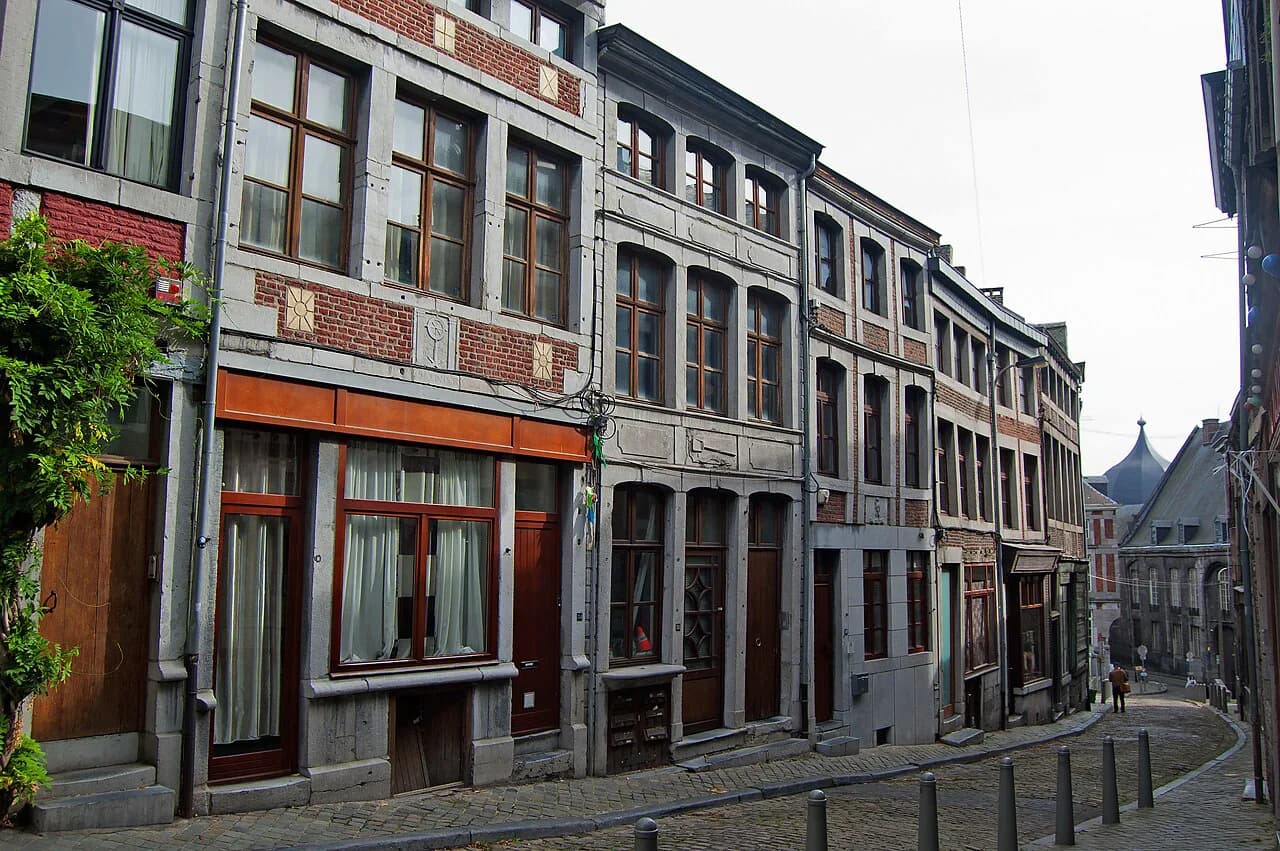
Pierreuse, Liège: A Guide to the Hillside Quarter Behind the Palace

Pierreuse is Liège's oldest hillside quarter, a tight knot of steep streets tucked behind the former Palais des princes-évêques and cut off from the centre by the railway trench and tunnel. It is worth an hour or two if you want old street lines, quarry history and a hard climb rather than polished sights, and it suits walkers who do not mind a gradient of 14%. This guide covers where the quarter sits, which streets make it up, what survives to look for and who should give it a miss.
The whole district is residential and spread across a slope, so there are no ticket desks and no set route. You walk it as a piece of townscape, linking the streets below the palace with the heights of Sainte-Walburge, and the reward is the shape of the place rather than a checklist of attractions.
Where Pierreuse sits in Liège
The quarter lies behind the former prince-bishops' palace, on the far side of the railway cutting and tunnel that slice through the hillside below it. That trench is the practical boundary: from the palace side you look up and across at the slope rather than strolling straight into it.
The rue Pierreuse itself begins at the rue du Palais, behind the law courts, which puts the foot of the climb a short walk from the palace complex and the streets of the historic centre. Because the new law courts were built against this slope, the lower approach now reads as courthouse and roadway before it turns into old quarter. If you are comparing bases in the city, the neighbouring districts are covered in the le carre Liège and Hors-Chateau Liège guides.

The streets that make up the quarter
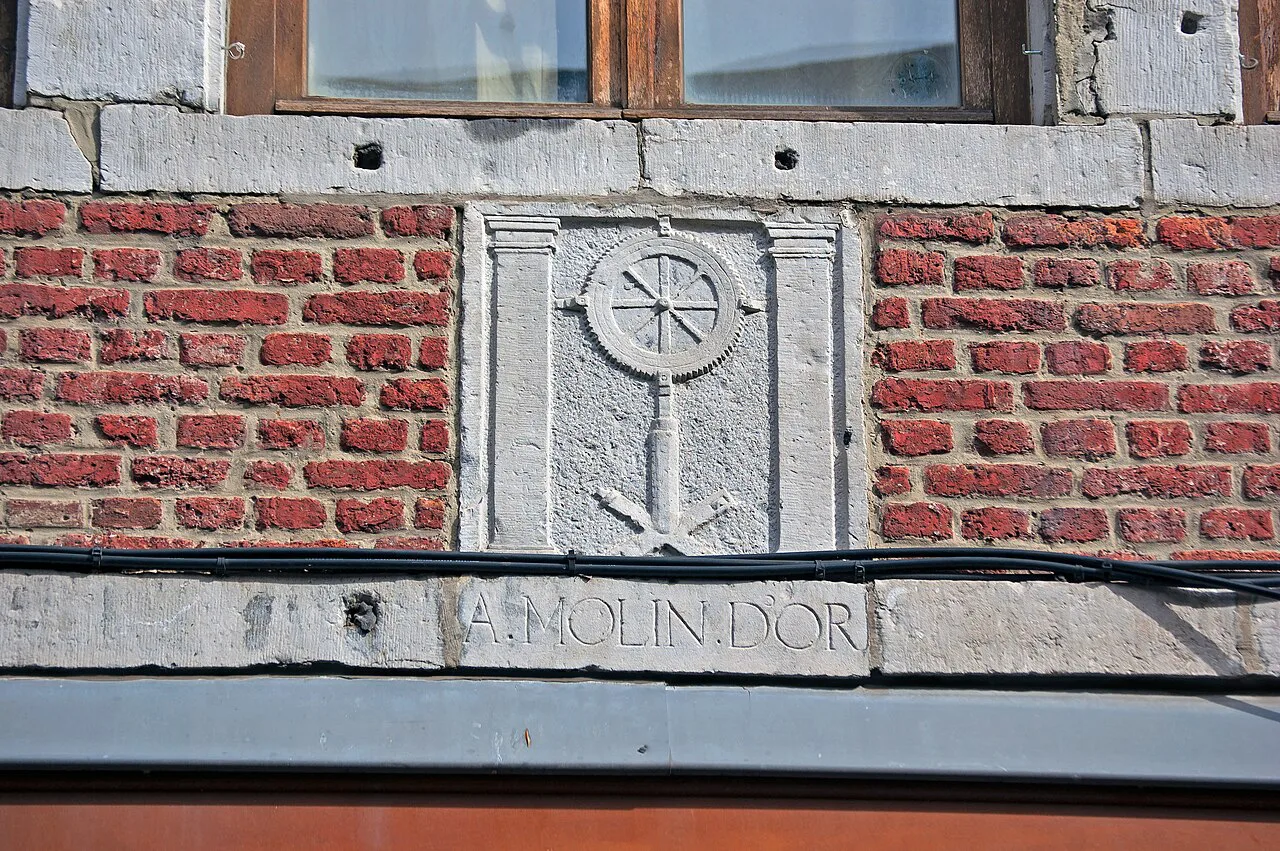
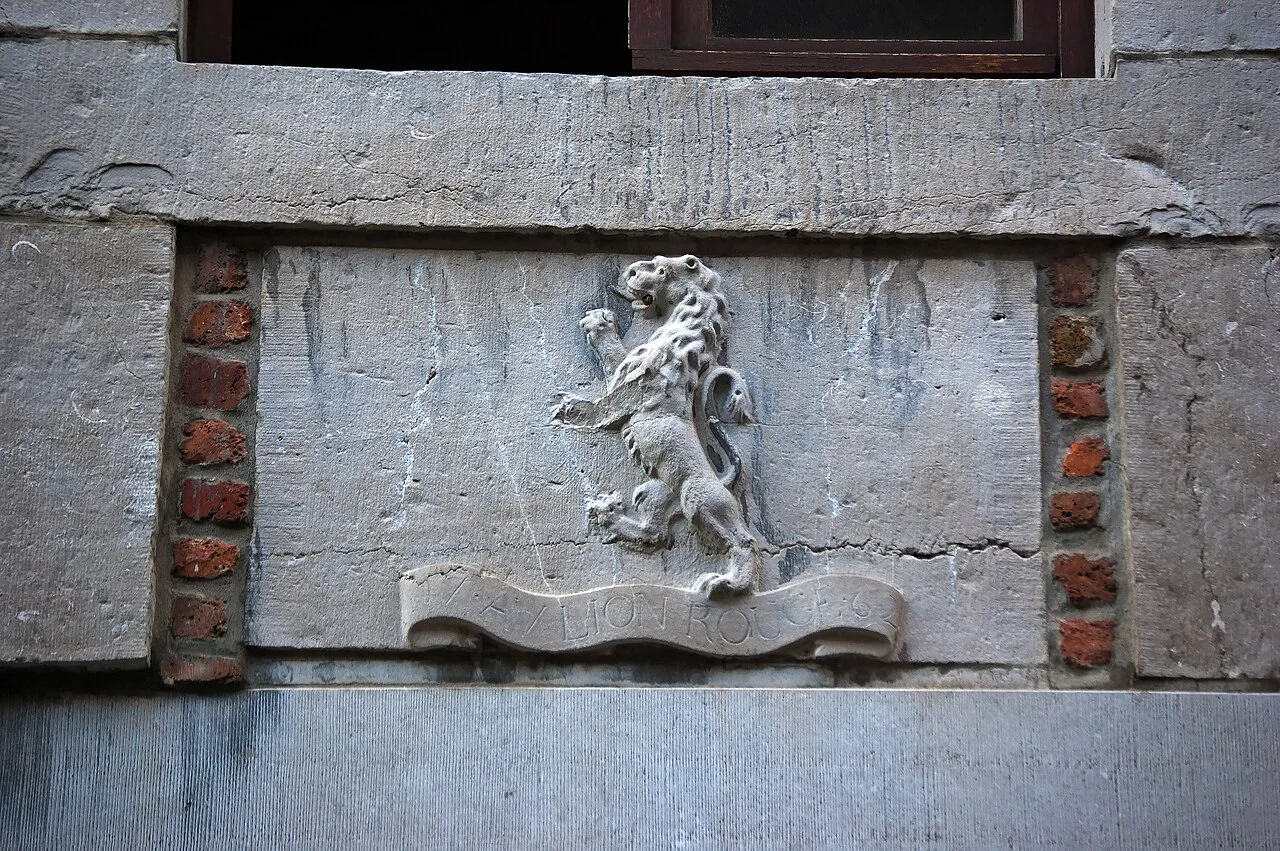
Pierreuse is not one street but a small group of them: the rue Pierreuse, the rue Volière, the rue Fond Saint-Servais, the lane known as Au Pèrî and the cour des Minimes. Knowing the names helps you judge how far you have wandered, because the quarter spreads out above and beside the main climb rather than sitting along a single axis.
The rue Volière is named for the cellite friars' convent that once stood along it, and the Fond Saint-Servais runs through the same pocket of slope. The cour des Minimes is a small courtyard off the same group of streets. Treat these as short detours on the way up, not as separate destinations.

Walking the rue Pierreuse
The rue Pierreuse climbs the hill towards Sainte-Walburge at a gradient of 14%, a pull that shapes the whole experience of the quarter. It is counted among the oldest routes in Liège: in the early eighth century it was already the start of the road towards Tongres, and the first houses are said to have gone up shortly after the death of Saint Lambert in 705, on high ground safe from the Meuse's floods.
Tradition holds that it was the first street in the city to be paved, a response to the torrents of mud that ran down the slope in bad weather. That detail explains the street's character better than any description: this is a road engineered against its own hill. Walk it from the bottom and the climb is steady and unrelenting, with the ground falling away behind you as you gain height.
The name itself is usually traced to the composition of the hill, which was worked for sandstone and coal-bearing shale. The prince-bishop Notger used that stone at the end of the tenth century to build a wall around the city, and nine centuries later the railway tunnel cut through and exposed old quarries again. The slope above the built street was given over to vineyards wherever the ground was not being dug for stone or coal.
What survives to look for
High on the street stands the farme de la Vache, a large complex of buildings, meadows and gardens that goes back to the late sixteenth century and was altered in the nineteenth and twentieth. It was listed in 1981. It is the most substantial old building on the upper stretch, so use it as your landmark for the top of the walk.
The fortified gate of Sainte-Walburge, which stood above the street and formed part of the city wall, disappeared in 1817 when the Dutch rebuilt the citadel. Remnants of the fortification survived until the end of the nineteenth century, which means you are looking at street lines and building fragments rather than standing defences. Read the upper street with that in mind: the gate is gone, and the wall it belonged to has left only traces.
A short history of the quarter
The first residents were notables close to the Prince-Bishop's court and the law courts, alongside quarrymen and coal-pit operators, and inns and drinking houses followed them. As the street filled through the thirteenth and fourteenth centuries it gained bakers, butchers, barbers, furriers and tailors, and in the seventeenth century lacemakers. The mix of courtiers and miners gives the quarter its odd double character: grand institutions at the bottom, hard labour on the slope.
In October 1520 Charles V entered Liège through the Sainte-Walburge gate and down through Pierreuse, invited by the prince-bishop Érard de la Marck. That is history rather than a fixture of the calendar, so do not plan a trip around it. What it tells you is that this steep back lane was once a formal entry into the city, not the cul-de-sac it can feel like today.
Who Pierreuse suits, and who it does not
Pierreuse suits travellers who enjoy reading a city from its street plan, who are happy to climb without a fixed sight at the top, and who want a quiet, lived-in quarter a few minutes from the palace. It does not suit anyone with limited mobility or a pushchair, anyone short of time on a one-day stop, or anyone expecting cafés, museums and viewpoints laid on at the summit. The 14% gradient is real and constant.
Younger visitors often gravitate to Le Carré, the compact grid of streets known for its bars, which makes a livelier contrast to Pierreuse's residential calm.
How to shape a visit
Allow around an hour to walk up the rue Pierreuse with detours into the rue Volière, the Fond Saint-Servais and Au Pèrî, and a little longer if you continue towards the citadel heights above. Start at the rue du Palais behind the law courts so the climb is done in one push and the descent is easy. The palace at the foot of the quarter belongs to the main set of things to do in Liège and pairs naturally with this walk.
Pair Pierreuse with the palace and the streets below it rather than treating it as a half-day on its own: it works best as the steep, quiet counterweight to a morning in the centre. Read the detailed building notes on the rue Pierreuse page before you go, and note that the farme de la Vache is documented as a listed late-sixteenth-century complex rather than a visitor attraction. The wider set of Liège Attractions covers the sights that do have opening arrangements.
Is Pierreuse worth the climb?
Yes, if you take it as a street walk rather than a sightseeing stop. The quarter's value is in the gradient, the old route towards Tongres, the quarry and coal history underfoot, and the surviving bulk of the farme de la Vache on the upper stretch. Give it an hour, start behind the law courts and finish on the heights.
No, if steep ground and a residential streetscape without facilities will frustrate you. In that case stay on the level in the centre and spend the time on the palace and the museums instead.