
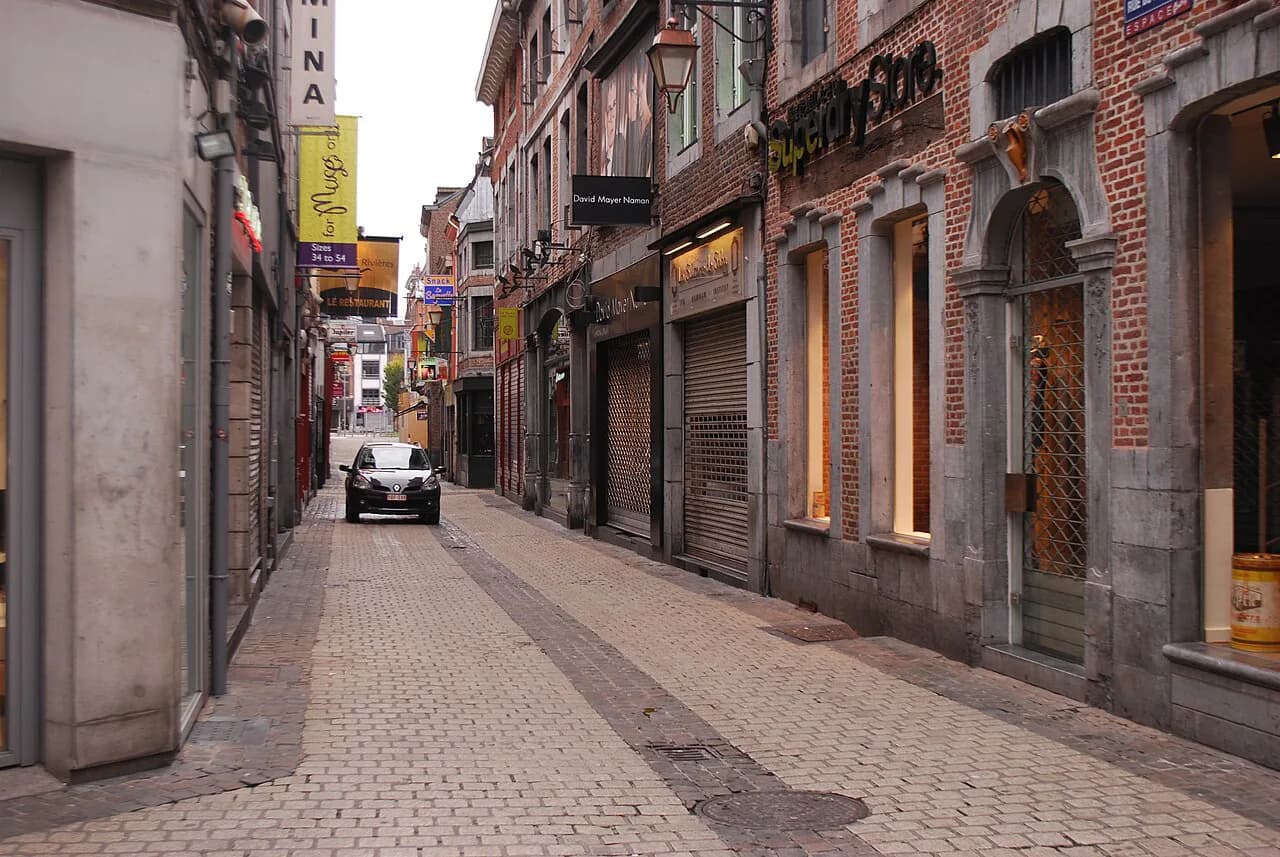
Le Carré, Liège: the square grid of taverns behind the cathedral

Le Carré is the compact pedestrian quarter that opens in front of the Cathédrale Saint-Paul in central Liège, best understood as a grid of medieval streets lined with taverns, cafés and boutiques rather than a single square or nightclub strip. It suits travellers who want bars and shops on the doorstep of their city break; anyone wanting quiet evenings should look at other parts of the city centre. This guide covers what Le Carré is, the landmarks to catch on the way through, and how to slot it into one to four days.
Treat Le Carré as a place to walk through and linger in rather than a ticketed sight: there is no gate, and the pleasure is in the streets themselves and the two small heritage stops most people pass without noticing.
What Le Carré is and where it sits in central Liège
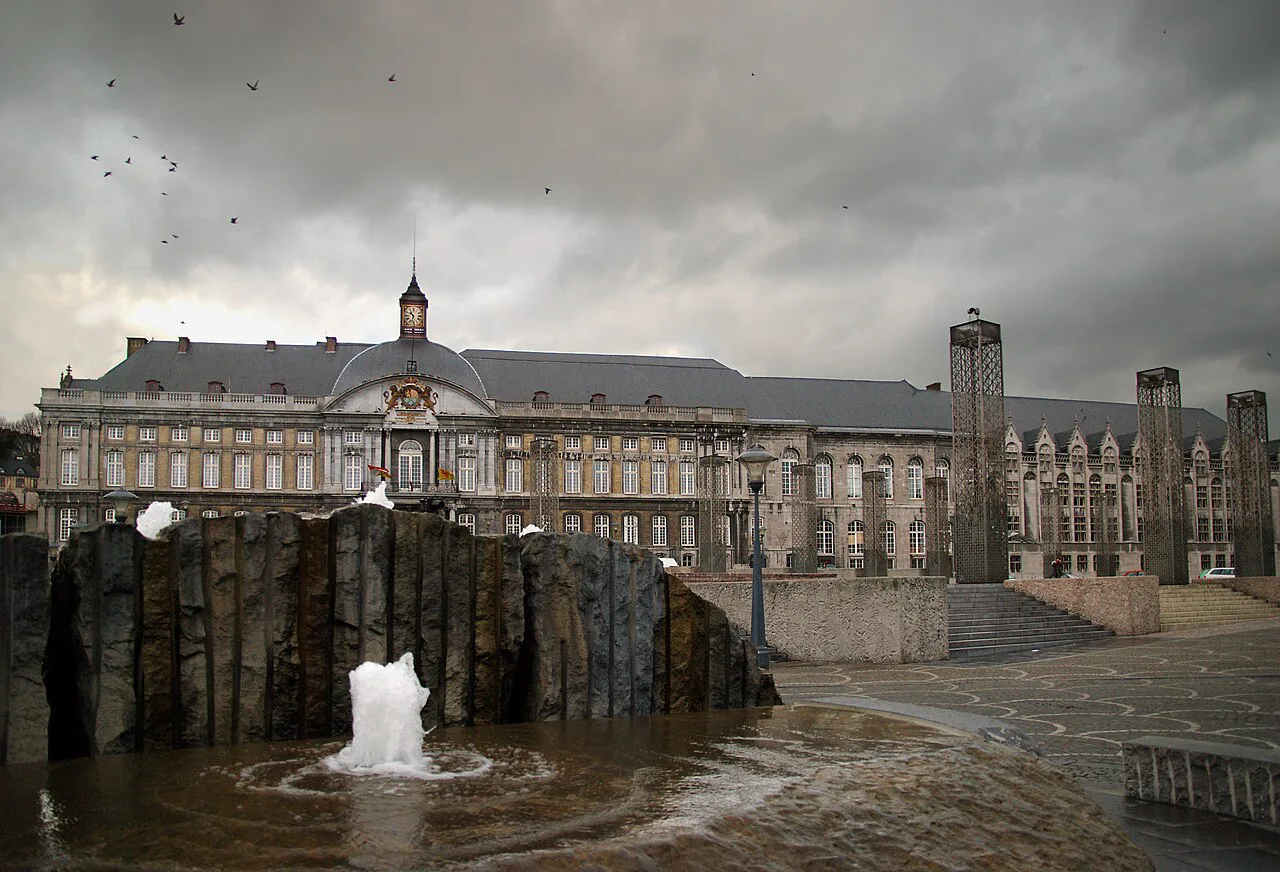
The quarter opens in front of the Cathédrale Saint-Paul, where the Fontaine de la Vierge à l'Enfant, popularly called the Fontaine aux Lions, marks the edge of the pedestrian zone. Behind the fountain the car-free streets run into Le Carré, which the city tourist office describes as one of Liège's best-known shopping and pedestrian districts.
Its listed address is Rue Vinâve-d'Île, the shopping street at the edge of the quarter. Orientation is simple: cathedral and fountain on one side, the grid of Le Carré on the other.
For the wider picture of how this district relates to the rest of the city, the Liège Neighborhoods: 6 Area Guides overview sets Le Carré alongside the riverside and hillside quarters.

The Fontaine aux Lions and why it is the meeting point
The fountain in front of the cathedral is popularly called the Fontaine aux Lions but is properly the Fontaine de la Vierge à l'Enfant, an oeuvre by the celebrated Liège sculptor Jean Del Cour, who lived from 1627 to 1707. The tourist office notes that locals use it as a habitual rendezvous before shopping or a night out, which makes it the obvious place to agree to meet companions.
Stand with the cathedral at your back and the pedestrian street ahead leads towards the tavern streets. It is a quick orientation exercise that saves a lot of wandering later.

The medieval square street plan and the pedestrian zone
The name is literal: the streets were laid out in the Middle Ages on a square plan, with parallel and perpendicular lanes, and cars have since been removed. That regularity is why Le Carré feels different from the tangle of lanes elsewhere in the historic centre, and why you can cross it quickly on foot. Expect to cover it in a short stroll rather than a half-day.
Because the lanes are short and interlinked, there is no single must-walk route; pick a line through and let yourself be diverted. The trade-off is that a quick pass can feel repetitive, so give the quarter a purpose, such as an evening drink or a shopping loop, rather than treating it as a sight in itself.
Taverns, bars, cafés and boutiques
The quarter's defining feature is its concentration of drinking places and small shops sitting side by side in the car-free streets. The tourist office counts close to twenty taverns, bars and cafés in the quarter and describes it as a fixture for students, younger revellers and older regulars alike. Beer cafés here are the practical place to taste Belgian beer as part of a city break.
Shopping is the daytime counterpart, with the pedestrian streets around Rue Vinâve-d'Île carrying the boutiques. Plan a daytime loop if you want to browse, and return after dark if you want the tavern atmosphere, since the two rhythms are quite different.
For a broader list of city sights to pair with an evening here, things to do in Liège covers the museums and monuments beyond this quarter.
Who the district suits, and who should base themselves elsewhere
Le Carré is a good fit if you want bars, cafés and shops within a couple of minutes of your bed and do not mind street noise and late activity. It is a poor fit if you want quiet evenings, early nights or a calm base for museum-heavy days, because the quarter's whole character is sociable and busy.
Travellers who prefer a gentler rhythm should look at the hillside and riverside quarters instead. Hors-Château, Liège, below the citadel slopes, is the natural alternative for a quieter stay within walking distance of the old town.
Across the Meuse, Outremeuse, Liège is a distinct neighbourhood with its own character and a different feel again from the bustle around the cathedral.
Landmarks worth a look en route: the Pot d'or and the demeure des seigneurs d'Amay
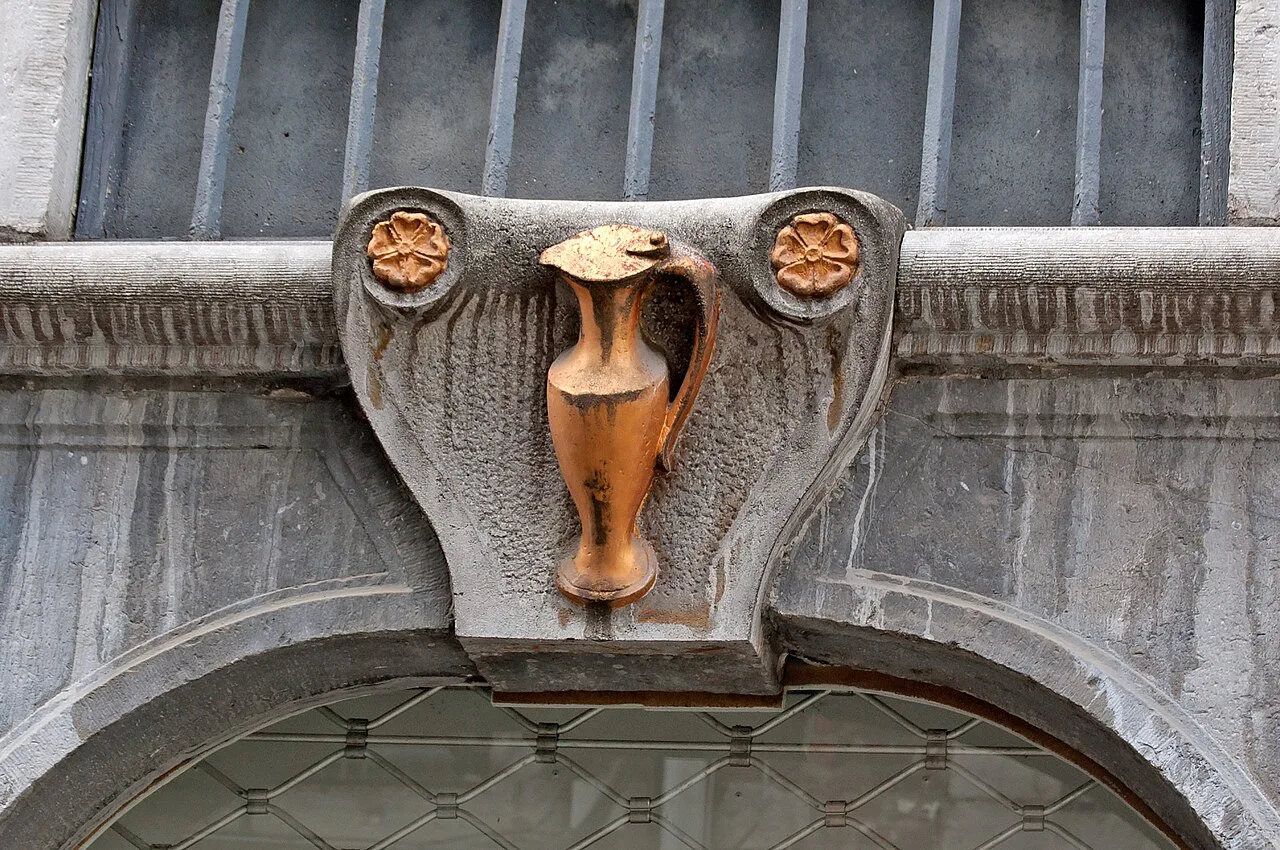
Two small heritage stops sit inside the quarter and are easy to walk past. Look for the petit pot d'or that gave its street its name, a piece of street furniture that makes sense only once you know the naming.
In the same street stands the demeure des seigneurs d'Amay, which the tourist office describes as one of the first buildings reconstructed after Liège was destroyed in 1468. It is a quick look rather than a visit, and best folded into a walk between the fountain and the tavern lanes.
Eating and drinking in the quarter as part of a Liège city break
Use Le Carré for a drink with a purpose: an aperitif before dinner elsewhere, or a late beer after a day of sightseeing. The density of taverns means you can compare a few without committing to one for the whole evening. Keep expectations modest on food, since the quarter's identity is drinking and shopping rather than dining.
For a proper Belgian beer stop, treat the beer cafés of Le Carré as tasting rooms and ask what local brews are pouring. Pair this with daytime browsing along the shopping streets around Rue Vinâve-d'Île.
Walking there from the cathedral and the wider historic centre
The simplest approach is on foot from the cathedral: the fountain sits in front of it and the quarter opens directly beyond. From the main shopping axis of Rue Vinâve-d'Île you are also at the edge of the grid, so any route into the centre delivers you.
Coming from Hors-Château and the Grand Curtius area puts you near the cathedral within a few minutes. For the city's signature climb, the Montagne de Bueren staircase is a separate outing worth adding to a different part of the day.
Liège Attractions: 9 Visitor Guides is the companion index for the museums and monuments you will pass between these walks.
How Le Carré fits into a one- to four-day Liège itinerary
On a single day, see the cathedral and fountain, cut through Le Carré on the way to the rest of the old town, and come back for an evening drink. With two days, give Le Carré a dedicated evening and use daylight hours for the Grand Curtius and the hillside streets.
With three or four days, Le Carré becomes a repeat visit rather than a stop: a shopping loop one afternoon, a beer one evening, and a last-night drink before leaving. Neighbouring quarters such as Pierreuse, Liège add a contrasting hillside walk within easy reach.
Should Le Carré be your base in Liège?
Base yourself in Le Carré only if sociable streets and late taverns are the point of your trip; otherwise stay in a quieter quarter and visit for an evening. Either way, Le Carré costs nothing to walk through and rewards a slow pass rather than a rushed one.
For the wider city, the Liège Attractions hub gathers the major sights that fill the daylight hours around your evenings here.
Explore more Liège guides
Frequently Asked Questions
Is Le Carré the same as the nightlife area of Liège?
It is the quarter most associated with going out in central Liège, but it is a grid of pedestrian streets holding taverns, bars, cafés and boutiques rather than a single club district. The tourist office describes it as a fixture for students and regulars as well as shoppers.
How long does it take to see Le Carré?
The streets are short and interlinked, so a walk-through takes only a few minutes. Most visitors get more out of it by pairing a daytime shopping loop with an evening drink rather than treating it as a standalone sight.
What is the fountain in front of the cathedral?
It is the Fontaine de la Vierge à l'Enfant, popularly called the Fontaine aux Lions, an oeuvre by the celebrated Liège sculptor Jean Del Cour. Locals use it as a meeting point before shopping or a night out, which makes it a handy rendezvous.