
Dampoort, Ghent: A Local District Guide
Dampoort is a working residential district on Ghent's east side, built around Gent-Dampoort station on Oktrooiplein, and it is not a sightseeing quarter. Come here for a practical rail arrival or a quieter base with easy access to the centre, not for canals, belfries or museums on the doorstep. This guide covers what the area is, where it sits, how to reach the historic core and whether it suits a short break in Ghent (Gent).
What and where Dampoort is in Ghent
Dampoort sits east of Ghent's medieval core, on the same side of the city as the Dampoort road junction and the station that carries its name. The city describes it as a lively volkswijk, a people's neighbourhood where different nationalities and generations live and work side by side. That description is the most useful thing to hold on to: this is a lived-in residential area, not a set piece.
The name is shared by the station, the surrounding streets and the road corridor, so when you plan a walk or a taxi pickup, be specific about Oktrooiplein rather than just saying Dampoort. Distances within the district are short, but the streets are ordinary city streets rather than a compact tourist grid. Treat Dampoort as a place you pass through or sleep in, with the historic centre as your day's destination. Our guide to Ghent Neighborhoods: 5 Area Guides puts the district alongside the rest of the city.
Gent-Dampoort station on Oktrooiplein: the district's anchor
Gent-Dampoort station stands at Oktrooiplein 10 and is run by NMBS, the Belgian national operator, which lists the station's address and services on its own site. It is the secondary station on Ghent's east bank, and for travellers coming from Antwerp or other Flemish cities it can be an alternative to Gent-Sint-Pieters on the west side. A weekday opening time of 04:20 is published for the station's main building.
Because the station sits inside a residential district, arriving here feels different from alighting at a grand terminus: you step straight out into a neighbourhood street rather than a monumental square. That is convenient if your accommodation is nearby, and less so if you are heading directly for the Korenmarkt with luggage. Our page on Sint-Pieters, Ghent explains the alternative station and its own surroundings if you are weighing up which side of the city to arrive on.
A lively volkswijk of many nationalities and generations
The city presents Dampoort as a neighbourhood of mixed communities, and that character shows in the everyday fabric of the place: local shops, family housing and streets used by residents rather than visitors. It is a good area for seeing a side of Ghent that is not staged for tourism, and a poor one for ticking off landmarks on foot from your front door. If you want cobbled alleys and canal views at breakfast, stay elsewhere.
Dampoort also makes a sensible practical base if you want cheaper, quieter surroundings a short ride from the centre; it is not a nightlife quarter or a dining destination in its own right. Anyone planning their days will find that Ghent's sights cluster tightly in the historic core, so the district works best as somewhere to sleep and leave from. Read the wider set of Ghent Neighborhoods: 5 Area Guides to compare it with the centre and the west side.
How to reach Dampoort from Ghent's historic centre
The historic centre lies west of Dampoort, and the walk between the two follows ordinary city streets rather than a scenic route. Many travellers simply take a local train, tram or bus for the short hop, or walk if they have no luggage and plenty of time; the station's own transport connections are set out by NMBS. Whichever you choose, allow for a crossing that feels like commuting rather than sightseeing, and plan your day from the centre outwards.
If you arrive in Belgium through Brussels, Eurostar's Ghent guide sets out the change onto a Belgian domestic train and puts the total journey from London at roughly two hours fifty minutes. That routing matters for Dampoort because your domestic connection decides which of Ghent's stations you reach, so check the journey plan rather than assuming you will land on the east side.
Who Dampoort suits on a city break, and who it does not
Dampoort suits travellers who value a straightforward rail arrival and a calm, residential place to sleep over being in the thick of the old town. It does not suit anyone who wants to step out of the door onto the Graslei and Korenlei, or who plans to spend evenings wandering medieval streets on foot. Be honest with yourself about how much walking and travelling you want between bed and sights.
It also works for a second or third visit to Ghent, when you have already done the headline sights and want to see how the city lives outside the postcard. For a first short break with only one or two days, the trade-off usually favours staying closer to the three towers. The official Flanders city page gives a broader sense of what Ghent offers before you commit to a base.
The three towers, the Ghent Altarpiece and the sights within reach
From Dampoort, the classic Ghent circuit begins at the trio of towers: Sint-Baafskathedraal, the Belfort on the Korenmarkt and Sint-Niklaaskerk, which together define the skyline. Sint-Baafskathedraal holds Jan van Eyck's Ghent Altarpiece, installed there on its completion in 1432 and still in the cathedral today after a turbulent history. A visitor centre at the cathedral explains that story, which makes a sensible first stop before you look at the painting itself.
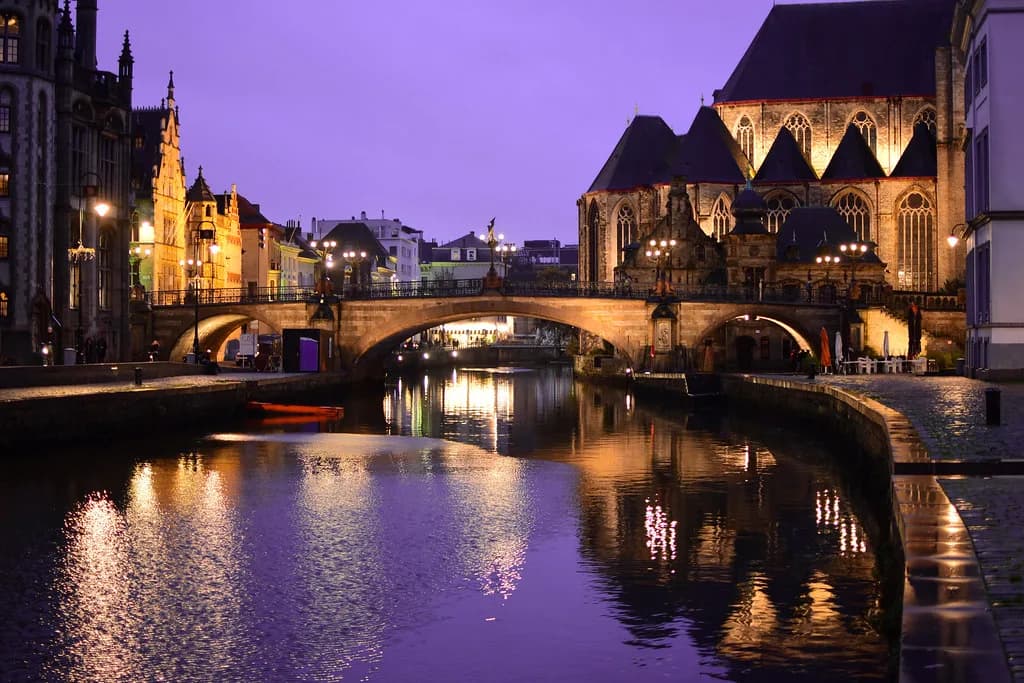
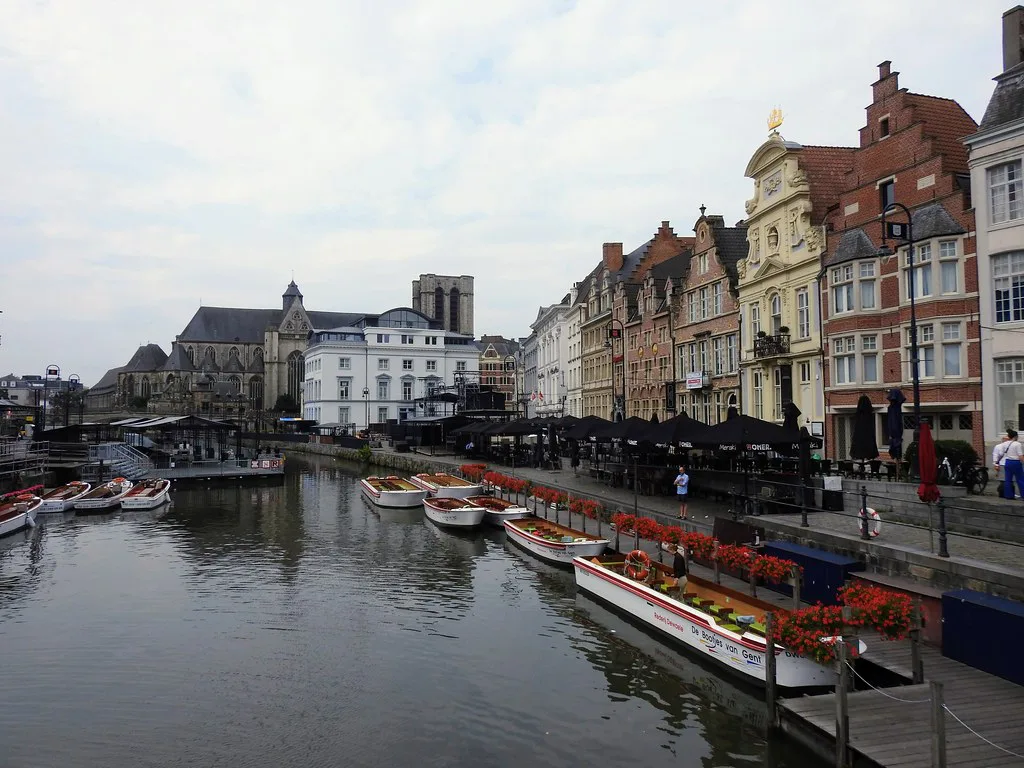
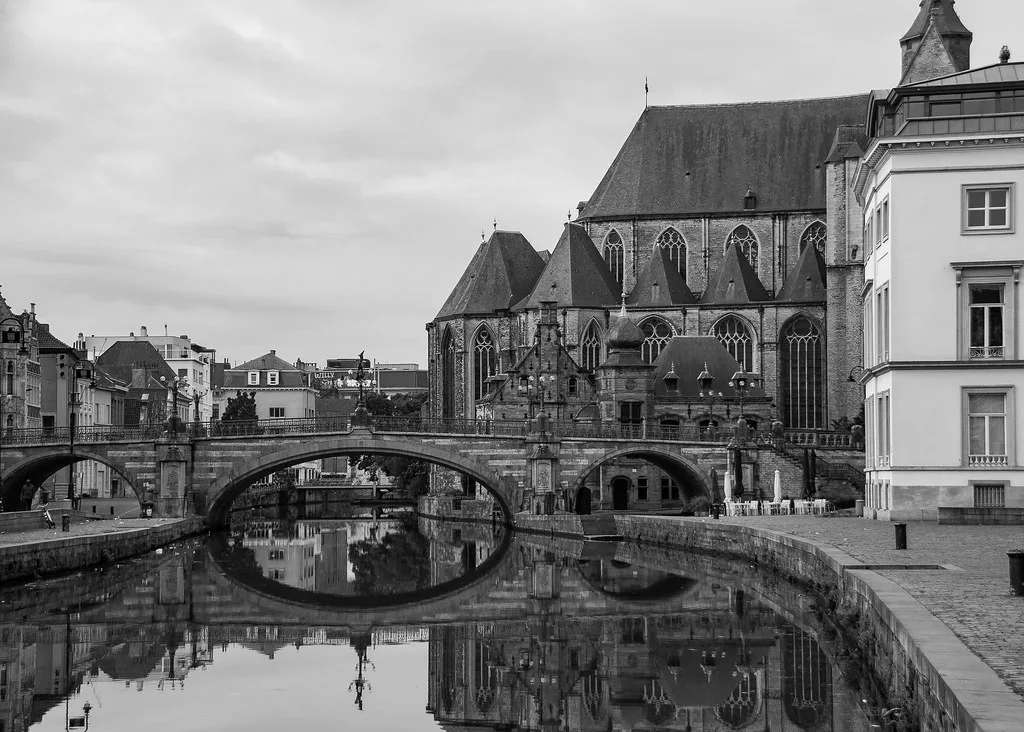
Nearby, Gravensteen at Sint-Veerleplein is a medieval fortress dating from 1180 that later served as a courthouse and prison, and it now displays armour, weapons and a torture chamber. The surrounding Patershol, Ghent is the old working-class quarter of winding alleys that most visitors find the most atmospheric part of a day in the centre. St Michael's Bridge and Werregarenstraatje, the graffiti alley, fill out a compact walking route between them.
For museums, Ghent's core holds MSK Gent with its Flemish masters, SMAK for contemporary art, the Design Museum Ghent and STAM on the city's history, all named by the official Flanders listings. Because these cluster in and around the centre rather than in Dampoort, it makes sense to plan museum time in blocks and travel in once, instead of returning to the station district between visits. Ghent Attractions: 7 Visitor Guides covers the individual sights in more depth.
Two smaller areas sit within a short stroll of the historic core and reward an unhurried hour: Portus Ganda Ghent around the old harbour arm, and Muide, Ghent, the former dockland district to the north. Neither is in Dampoort, but both give a sense of Ghent's working past and are easy to fold into a day in the centre.
Practical orientation around the station and onward connections
Use Oktrooiplein as your reference point: the station faces it, and the streets around it lead into the residential grid of Dampoort. When you book a place to stay, ask how far it is from the station on foot rather than trusting a district name alone, because Dampoort covers a fair spread of streets. Keep the station address handy for taxis and for finding your way back after a day in the centre.
For onward travel, NMBS is the authoritative source for services from Gent-Dampoort to Bruges, Antwerp and elsewhere in Belgium, and Eurostar's Belgium train pages explain how the international leg connects with domestic services. Plan your rail day around your actual connection rather than the station name, since Ghent has more than one and they serve different lines. Keep your ticket and connection details to hand if you are changing trains with luggage.
Should you base yourself in Dampoort?
Choose Dampoort if a quiet residential base near Gent-Dampoort station and an easy rail arrival matter more to you than stepping out into the medieval centre. Skip it for a first short break if you want the three towers, the Ghent Altarpiece and the Gravensteen within walking distance of your bed. Decide by counting how many journeys between bed and sights you are willing to make each day.
Frequently Asked Questions
Is Dampoort the same as Ghent's main station?
No. Dampoort is the east-side district built around Gent-Dampoort station on Oktrooiplein, while Gent-Sint-Pieters lies on the west side of the city. Which one you use depends on the line you arrive on, so check your journey plan with NMBS rather than assuming.
How long does it take to walk from Dampoort to the Korenmarkt?
The historic centre sits west of Dampoort and the two are linked by ordinary city streets, so many visitors cover the gap by local train, tram or bus instead of walking it with luggage. Allow for a commute-style hop rather than a scenic stroll, and plan your sightseeing from the centre outwards.
Does Dampoort have hotels and restaurants of its own?
Dampoort is primarily a residential volkswijk, so treat it as a place to sleep and travel from rather than a dining or sightseeing destination. Compare the wider area guides before booking, and check the exact address of any accommodation against Oktrooiplein so you know the walking distance to the station.