
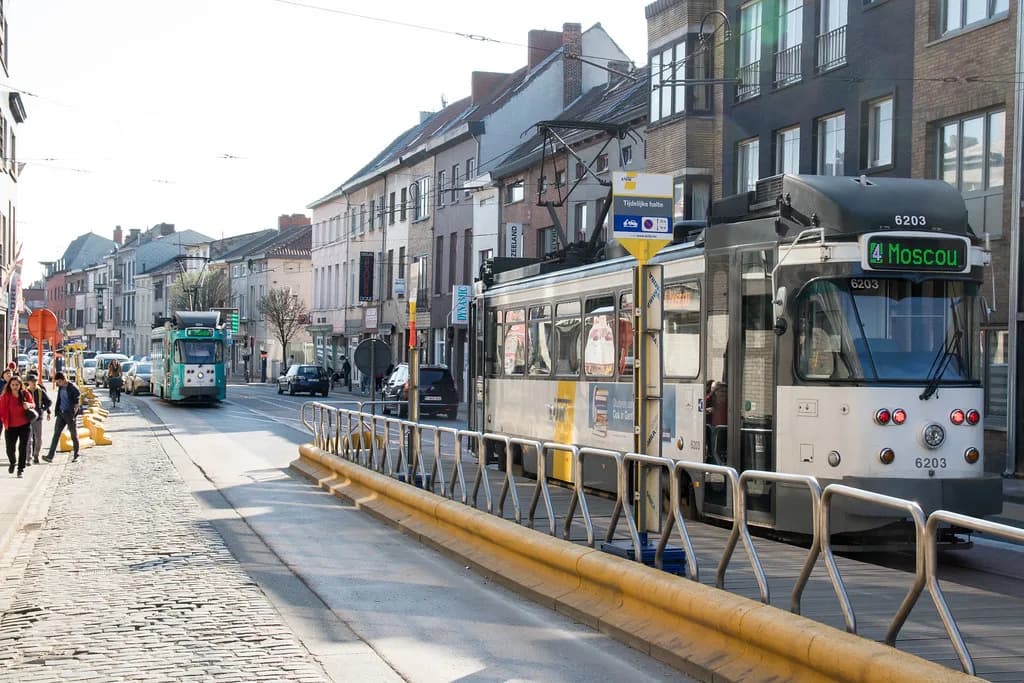
Muide, Ghent: The Docklands District Worth Crossing the Canal For
Muide is worth crossing the canal for if you want to see the working, modern side of Ghent rather than another stretch of stepped gables. It sits north of the historic centre beside Meulestede, a docklands district of port trade, industry and plain residential streets that is being steadily remade. This guide covers what Muide is, who it suits, the parks and bridges arriving through its regeneration, and how much of a short break it deserves.
What Muide is and where it sits
Muide occupies the north of Ghent (Gent), a port and docklands district that grew around the city's waterways and now rubs against the separate neighbourhood of Meulestede. Its landmarks are not churches and belfries but quays, docks, warehouses and the walls of a working harbour economy. If your mental picture of Ghent is the Graslei and Korenlei, Muide is the corrective: flatter, rougher around the edges and unmistakably industrial.
The district lies north of the historic core, so reaching it means heading away from the old town rather than wandering deeper into it. The practical approach is to follow the canal-side routes north from the centre; for orientation, treat the water and the docks as your guide. Keep the walk general in your plans and allow more time than you would for a stone's throw across the Leie.

The character of the district
Muide is a residential neighbourhood with a mixed population and a long working history, not a museum piece dressed up for visitors. The Flemish government's own description notes a diverse and balanced population and a district under pressure from developments in neighbouring areas, with real day-to-day liveability needs. That is the honest character of the place: lived-in, changing and not curated for tourists.
What you get from a wander here is the texture of port infrastructure and ordinary streets rather than a single set-piece sight. The old Muidebrug, the bridge that has long tied the district to the city, was photographed as a local landmark around 1930, and the image carries a long record of the crossing. Expect to build your visit from atmosphere, water and architecture rather than a tick-list.
Anyone weighing up where to walk in Ghent should read Muide against the alternatives rather than in isolation. The waterside quarter around Portus Ganda Ghent offers a very different relationship with the city's waterways, and Dampoort Ghent is the eastern counterpart to Muide's northern dock economy. Comparing them helps you judge whether Muide's quiet, industrial north is the Ghent you actually want.
Who Muide suits, and who should stay closer to the centre
Muide suits travellers who have already seen the old town and want to understand how Ghent works, and anyone who prefers quiet streets, open water and room to walk over a hotel doorstep on a medieval square. It also makes sense for return visitors building a longer stay around the city's periphery. For a first city break of one or two days, the balance tips the other way.
If your priority is the Belfort, the museums and a short walk to dinner, base yourself closer to the centre and treat Muide as a half-day excursion. The trade-off is real: calmer streets in the north against minutes saved on every old-town sight. Travellers who want the historic core on foot should compare this district with the other area guides before choosing where to sleep.
Muide Meulestede Morgen: the regeneration reshaping the district
The force changing Muide is Muide Meulestede Morgen, a co-creative urban renewal programme bringing public money and a long list of projects to the district and neighbouring Meulestede. Its stated aims are to raise liveability while keeping the current social mix, in a climate-robust environment, through new housing forms, renovation, green space and better services. For visitors, that means a neighbourhood visibly under construction and in transition rather than a finished picture.
The programme is unusually concrete about what it builds: 34 social owner-occupied homes in cross-laminated timber, 153 social rental homes and 42 renovated dwellings, alongside a solidarity shop and work and training places. It also sets out new public space and the greening of Manchesterplein, plus a masterplan for the Marseillestraat. Read as a visitor, it is a map of what will look different on a future trip.
Green space: Kapitein Zeppospark, Honfleurpark, Makelaarspark and the Zentuin
Green space is where the regeneration shows most clearly on the ground. The programme lists Kapitein Zeppospark at 32,000 square metres, half of it on the Muide side, plus Makelaarspark at 4,900 square metres and Honfleurpark at 4,000 square metres. Smaller pieces include the Vikingbos at 1,300 square metres and a redesigned Voorhaven with 8,000 square metres of greenery and 3,700 square metres of paving.
The Zentuin is singled out as a unique piece of nature to be revalued and made accessible, which makes it the most intriguing green corner for a visitor who likes wilder, less formal spaces. Do not expect manicured city parks everywhere; the programme mixes small pocket greenery, a green inner courtyard and larger recreational structures. Walking between these spaces is the best way to feel the district's changing shape.
New bridges and connections: Verapazbrug and Meulestedebrug
Two new bridges are central to how Muide will knit into the city. The Verapazbrug is described as the key to reworking Muidepoort, while the Meulestedebrug is built to improve traffic flow and create safer connections for soft traffic such as walkers and cyclists. For a visitor, that translates into easier wandering without doubling back to a single crossing point.
The programme gives no opening dates for these bridges, so plan around the routes that exist when you travel rather than a promised crossing. Confirm which dockland crossings are open before you set out, since construction phasing can change the obvious loop. Treat the bridges as part of the story of the district rather than a fixed sight to tick off.
Sint-Antonius-Abtkerk and the district's next chapter
The Sint-Antonius-Abtkerk stands out in the programme as a building awaiting a new purpose, with reuse listed among the district's future-facing projects. It is a reminder that Muide's regeneration is as much about rethinking existing buildings as adding new ones. Visit it as part of the streetscape rather than as an attraction with a set offer.
Other strands include a housing project on Voorhavenlaan 24 and a living lab exploring fossil-free local energy, which hint at how far the change reaches beyond the waterfront. These are the kinds of details that reward a slow walk and a curiosity about how cities remake themselves.
Eating and drinking in Muide
Muide is a residential district first, so treat eating and drinking as part of the neighbourhood rather than a destination in itself. The regeneration includes a solidarity shop and meeting spaces intended to support local daily life, which points to the kind of small-scale, community-facing provision you can expect. Plan your main meals around the old town and keep Muide for a simple stop while walking.
Belgian beer is best approached in Ghent's dedicated beer cafés nearer the centre, where the choice and setting are the point. In Muide, the appeal is the ordinary: a pause between parks and quays rather than a tasting flight. If food is central to your trip, the historic core gives you far more options within walking distance.
Staying in Muide
The district's accommodation is practical and residential in feel rather than polished boutique hospitality on a historic square. Because Muide sits north of the centre, staying here means accepting a short trip to the headline sights in exchange for calmer surroundings. Compare the neighbourhood guides if your break is short.
For a one- to two-day trip, staying central saves time on every sight; for a longer stay, or a return visit, Muide's quieter streets can be a pleasant counterweight. Confirm current access to any specific park, bridge or building before you build a day around it, as the regeneration is ongoing.
Muide in a one- to four-day Ghent trip
Give Muide a half-day on a three- or four-day break, and cut it entirely if you only have one day and have not yet seen the centre. A sensible loop takes in the docks, one or two of the new parks and at least one bridge crossing, then returns south along the water. That is enough to understand the district without turning it into a full-day outing.
If your shortlist is heavy on churches, belfries and museums, keep those for the centre and let Muide be the contrast at the end of a day. Anyone planning the headline sights first should start with the Ghent Attractions: 7 Visitor Guides hub and slot Muide in as the quieter counterpoint. On a four-day trip it earns a morning; on a one-day trip, it does not.
Should you cross the canal to Muide?
Cross the canal if you want to see the working, changing Ghent beyond the postcard, and give Muide a half-day for the docks, the new parks and the bridges that are re-stitching it to the city. Base yourself here only if quiet streets matter more to you than a short walk to the Belfort and the museums. If you would rather stay among gabled lanes and candlelit dining rooms, Patershol, Ghent is the opposite choice, and Sint-Pieters, Ghent suits anyone arriving by train who wants the station on the doorstep.
Explore more Ghent guides
Frequently Asked Questions
Is Muide the same neighbourhood as Meulestede?
They are adjoining districts in the north of Ghent and are treated together in the city's urban renewal programme, Muide Meulestede Morgen. For a visit, plan them as one area rather than two separate stops.
How long should I spend in Muide?
Half a day is enough to walk the docks, see one or two of the new parks and cross at least one bridge. On a one-day trip to Ghent, skip it and stay in the centre. On a three- or four-day break, it works well as a quieter morning before returning to the old town.