Antwerp Old Town: What to See and How to Walk It
Antwerp's old town packs the Grote Markt, Cathedral of Our Lady, Vlaeykensgang and the Scheldt waterfront into one walkable day of squares and quays.
On this page
Antwerp's old town is a compact medieval core centred on the Grote Markt, and half a day comfortably covers the Grote Markt, the Cathedral of Our Lady, the Vlaeykensgang and the Scheldt waterfront without rushing. The sensible approach is to treat it as a single loop anchored on the Grote Markt rather than a checklist spread across the city. This guide sets out what each square and street holds, then gives a walking order for half a day and for a full one, plus honest advice on what to drop if your break is short.
Trains from London arrive at Antwerpen-Centraal, which Eurostar describes as roughly a 20 minute walk from the city centre, so you can be at the Grote Markt soon after dropping your bag. That makes the historic centre easy to reach on foot or by tram.
What the old town covers and where it sits
The old town, in Antwerpen as the city is called locally, is built around the Grote Markt and the lanes running from it towards Het Steen and the river in the north, the cathedral to the west and the Plantin-Moretus press rooms to the south, close by the river. Everything in this core is within easy walking distance of everything else.
The wider Antwerp that most visitors also want to see lies outside this medieval core: the Zuid museum quarter with KMSKA, the Eilandje docklands with the MAS, and Zurenborg with Cogels-Osylei. Knowing that split early saves you from zigzagging across the city on a short break.
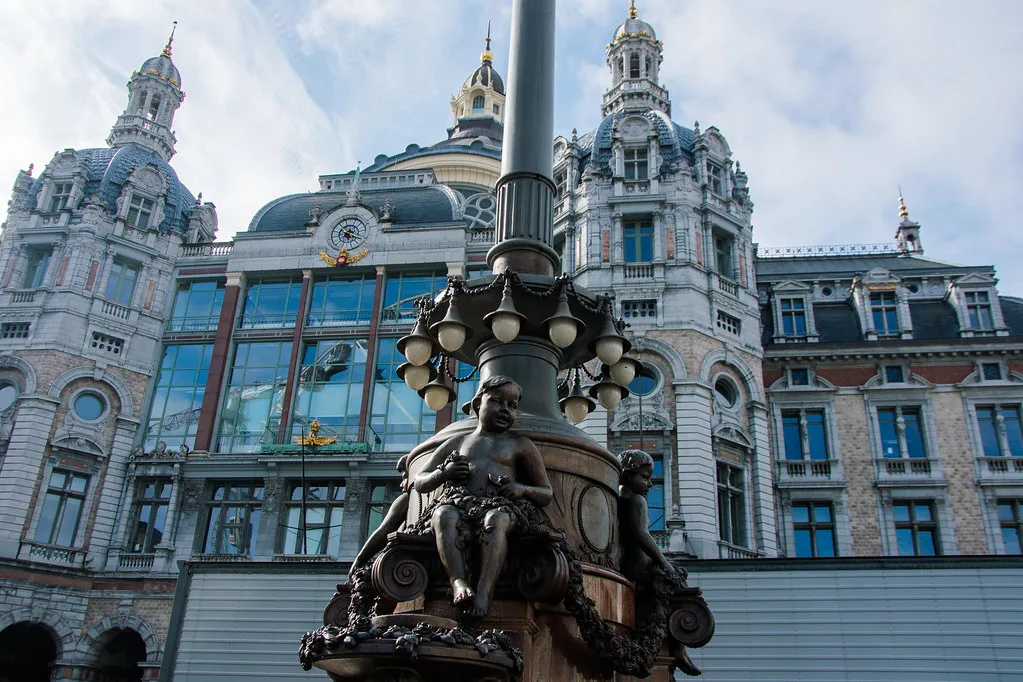
Start at the Grote Markt: guildhalls and the Brabo fountain
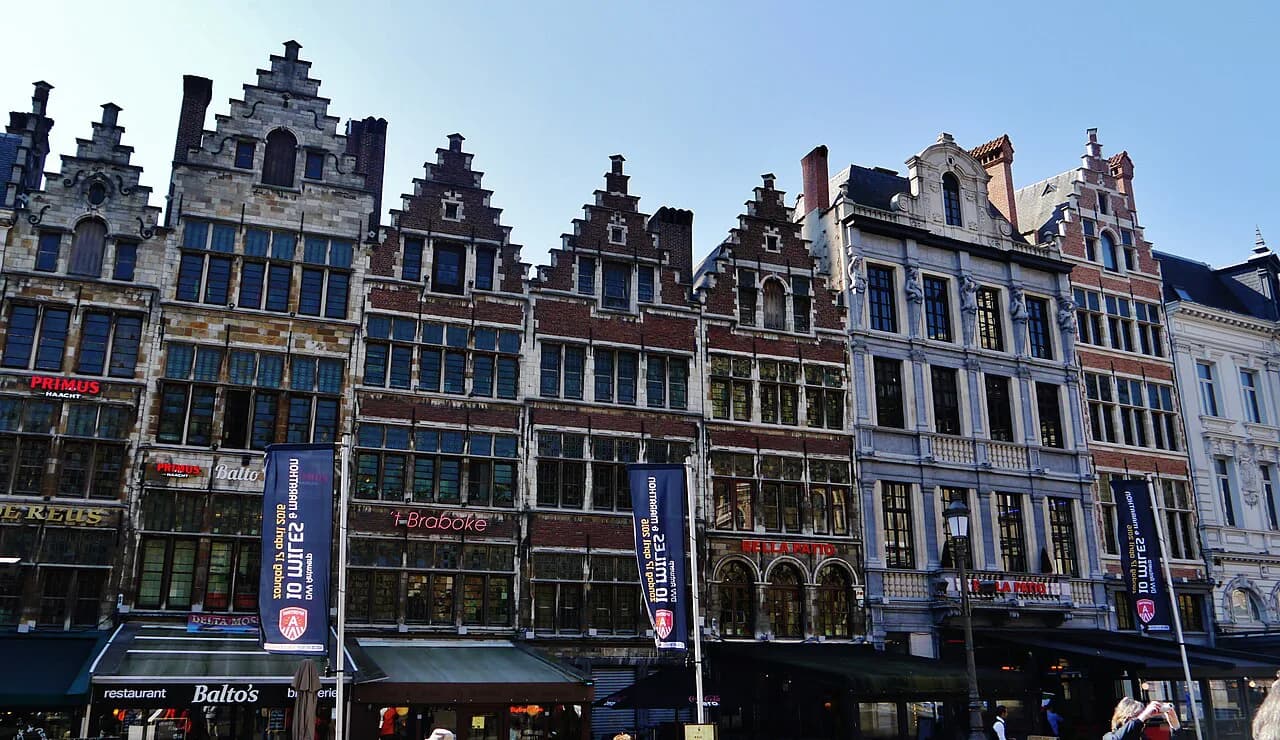
Antwerp's Grote Markt is the obvious place to begin: a cobbled plaza lined with medieval step-roofed houses, which Eurostar singles out as a fine example of a Flemish town square. The centrepiece is the Brabo fountain, showing the Roman soldier Brabo throwing the severed hand of the giant Antigoon into the river, the legend from which the city's name is said to derive. Look for the hand motif afterwards on everything from biscuits to chocolates; the remainder of the events and sights around it are in our Things to Do in Antwerp guide.
Stand with the fountain at your back and the guildhalls frame the square on three sides. From here the cathedral, the Vlaeykensgang and the Scheldt waterfront are all within a short walk, so you can see the core of the old town without doubling back.
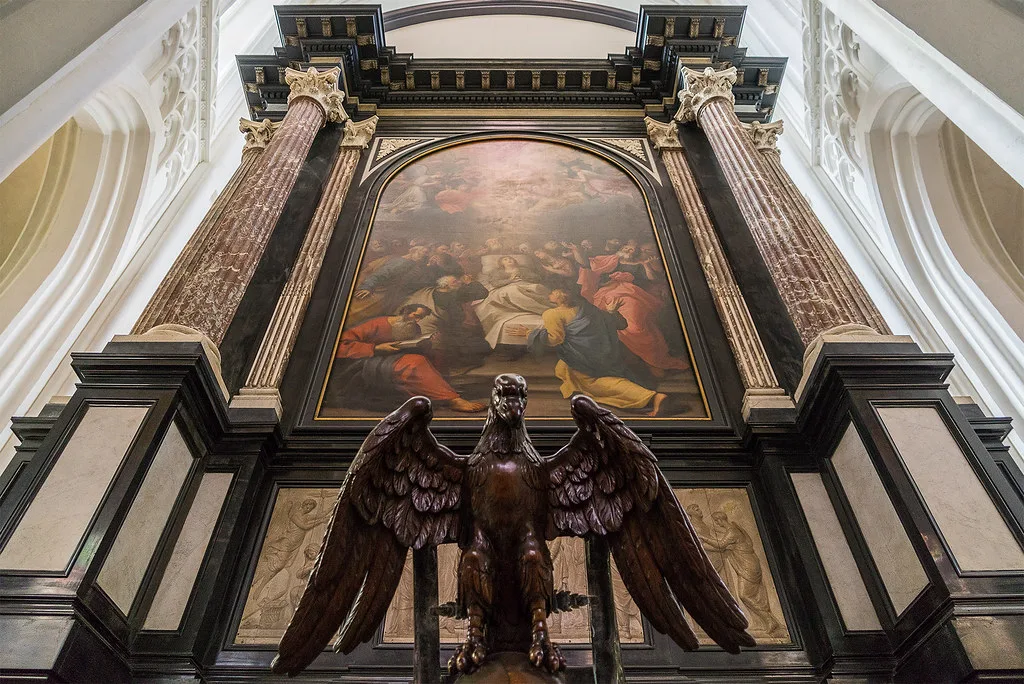
The Cathedral of Our Lady: the spire and the Rubens paintings inside
The Cathedral of Our Lady rises above the rooftops with a 123-metre spire, and Eurostar calls it the tallest Gothic church in the Low Countries as well as Antwerp's most recognisable landmark. Its address is Groenplaats 21, a short walk from the Grote Markt, so you can see the outside in passing and decide whether to go in.
Inside, the reason to go in is the art: Rubens masterpieces including The Descent from the Cross, set against the building's stained glass and soaring stonework. Even visitors who usually skip churches tend to find the combination worth the stop; Eurostar treats it as one of the best things to do in the city.
Vlaeykensgang and the old town alleys
The Vlaeykensgang is the old town's narrowest detour: an alley tucked between the cathedral and the Grote Markt that Eurostar lists among the old-town lanes worth seeking out. Treat it as a short passage on the way between the cathedral and the square rather than a sight you linger in, and pair it with the surrounding streets, where the medieval street plan survives in the twist and narrowness of the lanes.
Walking is the only sensible way to cover this part of Antwerp, and a guided loop helps if you want the legends attached to the stones; our Antwerp Walking Tour route follows much the same ground. Otherwise the alleys are self-explanatory and easy to wander without a plan.
Het Steen and the Scheldt waterfront
Het Steen anchors the northern edge of the old town where the streets open onto the Scheldt waterfront. Eurostar lists Het Steen and the Scheldt waterfront together as a single stop, and that is how it works on foot: the landmark first, then the quays.
The waterfront is also where the old town gives way to the docklands, with the MAS visible in the Eilandje direction. A boat trip from the Scheldt quays is a practical way to see the city from the water; our Antwerp boat tour comparison sets out which routes suit a short break.
Museum Plantin-Moretus and the baroque side of the old town
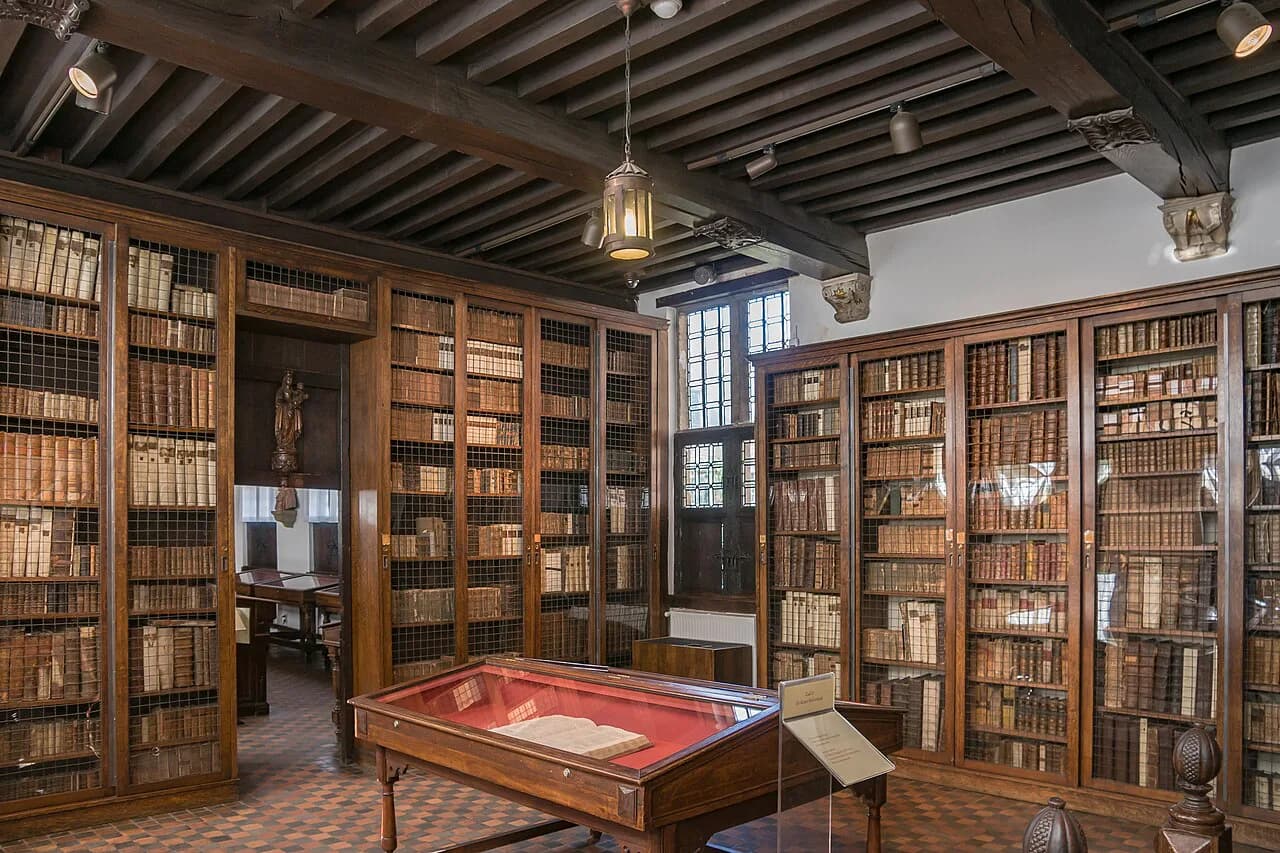
Museum Plantin-Moretus, the surviving printworks of the Plantin family, is the old town's most rewarding museum and sits on its southern edge beside the river. Eurostar lists it among the city's essential sights, and its press rooms and courtyards make a natural pause between the squares and the river. Allow an hour if you are doing the old town in a day.
Museum Vleeshuis is the other historic building worth knowing about inside the core, and Antwerp's official museum roundup sets out what is on before you build a plan around a particular collection.
A walking order for half a day and for a full day
For half a day, start at the Grote Markt, walk up to the Cathedral of Our Lady and take in the Vlaeykensgang on the way, then finish along the Scheldt at Het Steen. That is an easy-paced half day with one museum stop if you want it.
For a full day, add Museum Plantin-Moretus in the morning, break for lunch on or near the Grote Markt, then walk the alleys and quays in the afternoon. If you want the local legends explained, an Antwerp Walking Tour covers the same ground with a guide.
Where the old town ends: Zuid, Eilandje and Zurenborg
The old town ends at the Scheldt in the north and at the ring of newer streets in the south, beyond which lie Zuid and its museums, the Eilandje docklands with the MAS, and Zurenborg with Cogels-Osylei, a street of ornate townhouses. Eurostar names the Sint-Anna tunnel as the way to walk under the river to the Left Bank for the view back at the skyline.
Antwerp's diamond district sits just behind Centraal and is a working trading quarter, so it earns a stop only if the subject interests you; our Antwerp diamond district guide explains what you can actually see. Shopping draws many visitors to Nationalestraat, Kammenstraat and Kloosterstraat, which lie outside the medieval core.
If shopping is the point of your trip, our guide to shopping in Antwerp sets out which streets carry which labels, from high street to independents around the Fashion District. Kloosterstraat is the one that most repays a wander on the way back into the centre.
Old town versus the rest of Antwerp: what you gain and what you miss
Concentrating on the old town gives you the squares, the cathedral and the river in a single walkable morning, which is the right call for a one-night stop. What you miss is the art: KMSKA's seven centuries of painting, the photography museum FOMU and the contemporary collections at M HKA all sit outside the core.
With two days, use the first for the old town and the second for either Zuid's museums or the Eilandje docklands. That gives you both the medieval city and the modern one without spending your break in transit.
Half a day or a full day in the old town?
Take half a day if you are in Antwerp for one night: the Grote Markt, the Cathedral of Our Lady, the Vlaeykensgang and Het Steen give you the medieval city in a single loop without any backtracking. Add Museum Plantin-Moretus if you have a full day, because it is the one old-town museum that rewards an hour indoors.
A two-day break lets you split the old town from the rest of Antwerp, with Zuid and Eilandje on the second day. Book museums and any river trip around the day you actually have rather than trying to fit both halves of the city into one morning.
Explore more Antwerp guides
Frequently Asked Questions
What is the famous shopping street in Antwerp?
Nationalestraat, Kammenstraat and Kloosterstraat are the three shopping streets Eurostar names, each with a different character. Kloosterstraat is the closest to the old town and the most natural extension of a walking day there.
What language is spoken in Antwerp?
Dutch, with the local name for the city being Antwerpen. English is widely understood in the old town, so you can ask directions and order without any Dutch.
How long does it take to walk the old town?
The core between the Grote Markt and the Scheldt is about twenty minutes end to end at walking pace. Give it two to three hours with cathedral and alley stops, or a full day with a museum and a river trip.
Sources
Useful notes for your next trip
Optional updates to our guides.
You might also like
Continue reading
More guides you'll find useful