Antwerpen-Centraal: Antwerp's Railway Cathedral Explained
Antwerpen-Centraal is Antwerp's grand Railway Cathedral, a 20-minute walk from the old town. What to look up for inside, and what sits around it.
On this page
Antwerpen-Centraal is the station most often singled out as Antwerp's finest piece of architecture, and it justifies arriving early or leaving late. Treat it as a sight in its own right and you get one of the best free experiences in the city, before you have walked a single step into the centre.
Arriving from London means a Eurostar to Brussels-Midi/Zuid and an SNCB connection onward, with the whole trip taking roughly 3 hours 15 minutes. You step off on the lower platform level and climb into the grand hall, which is why the building makes such an impression on first arrival.
What Antwerpen-Centraal is and why it is worth a look
Antwerpen-Centraal is Antwerp's main railway station, a working transport hub that happens also to be one of the city's standout buildings. It sits at Koningin Astridplein 27, and its marble hall and dome are open to anyone passing through rather than being behind a ticket desk.
The nickname 'Railway Cathedral' is not the guide's invention: it is the label that has stuck to the building precisely because the scale and finish feel ecclesiastical rather than functional. That reputation is why it appears on lists of things to do in Antwerp alongside the cathedral and the market square, rather than being buried in a transport section.
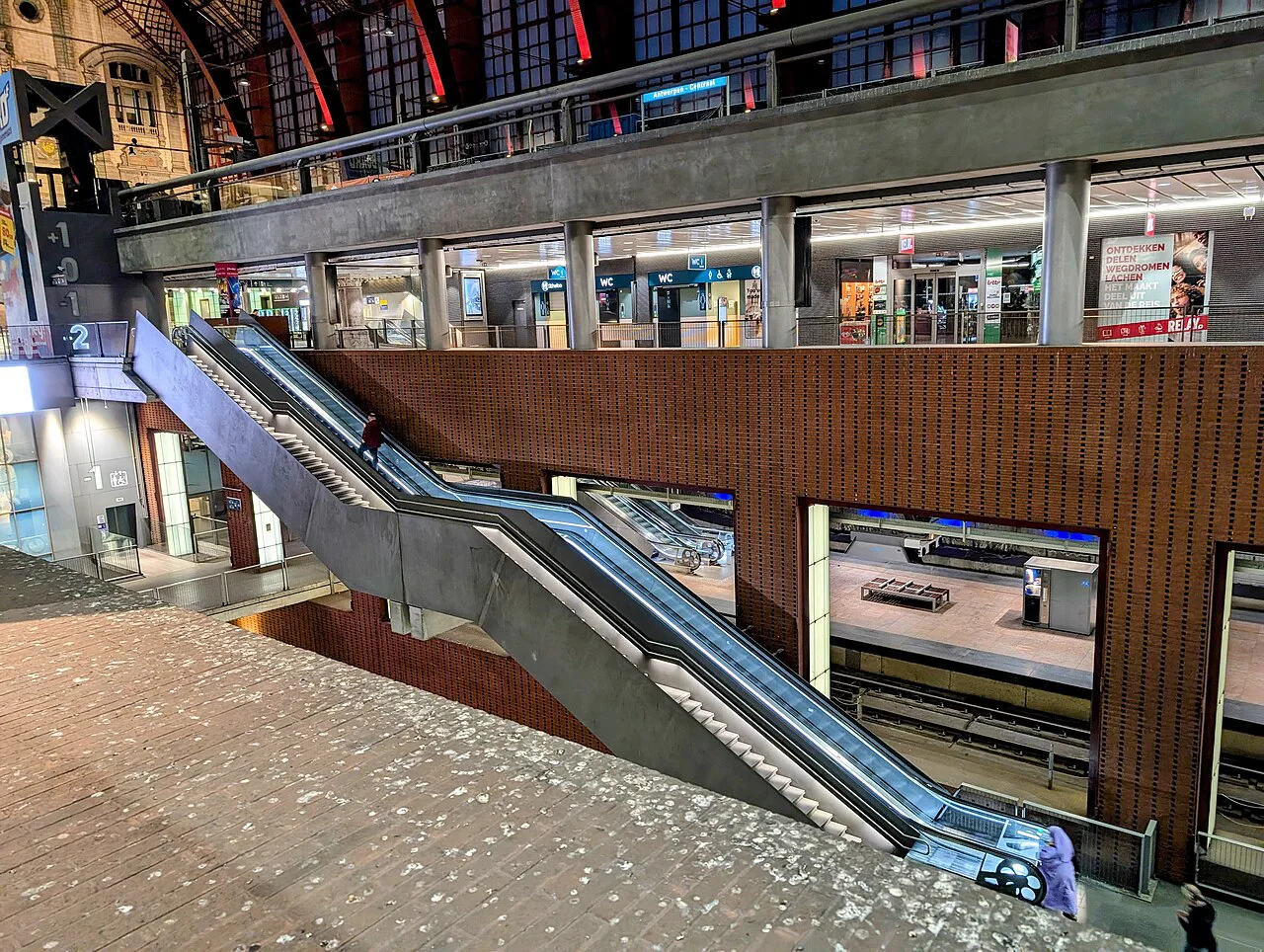
Where the station sits: a 20-minute walk from the old town
The station sits just outside the historic core: it is about a 20-minute walk from the city centre, with tram and bus routes on the doorstep if you would rather ride in. That puts it within easy reach of the Antwerp old town, the Grote Markt and the Cathedral of Our Lady without being in the middle of them.
Think of the geography as three bands: the station and its surrounding streets, the shopping axis running south towards the centre, and the riverfront old town beyond. Walking the whole thing takes the best part of a day with stops, so most people break it up rather than marching straight through.
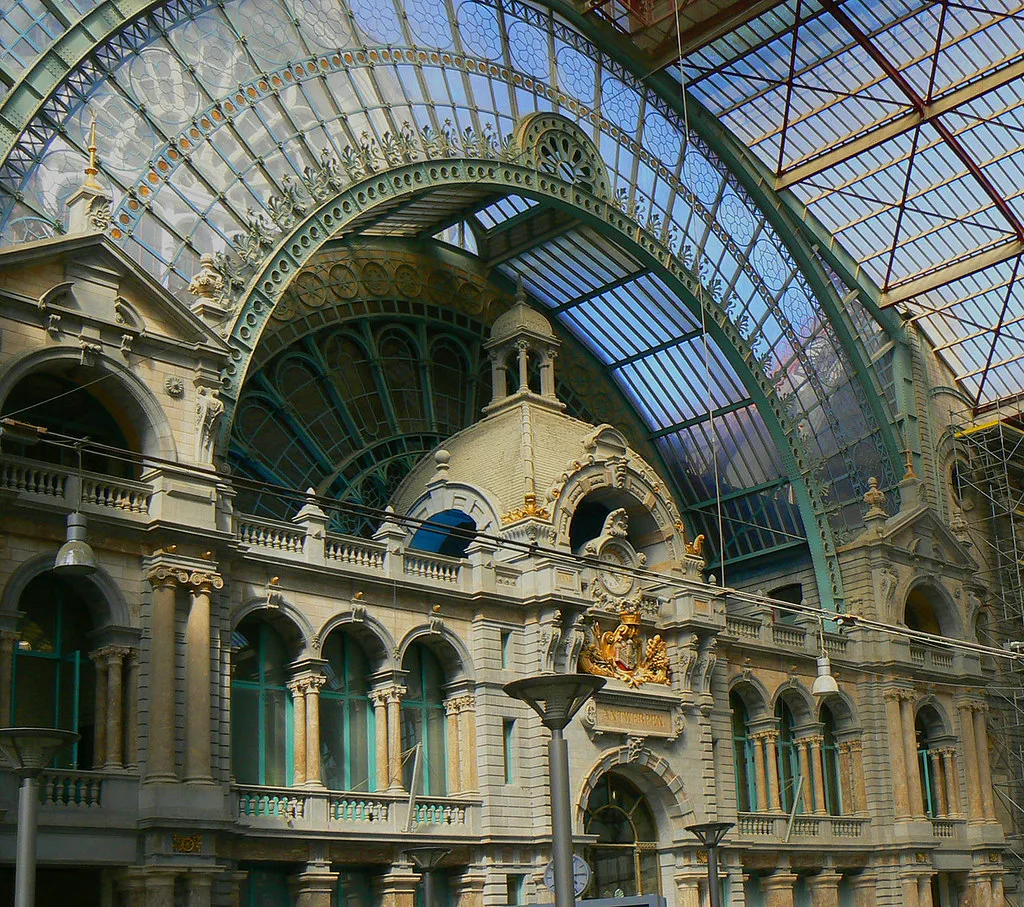
The architecture: the marble hall and the iron-and-glass dome
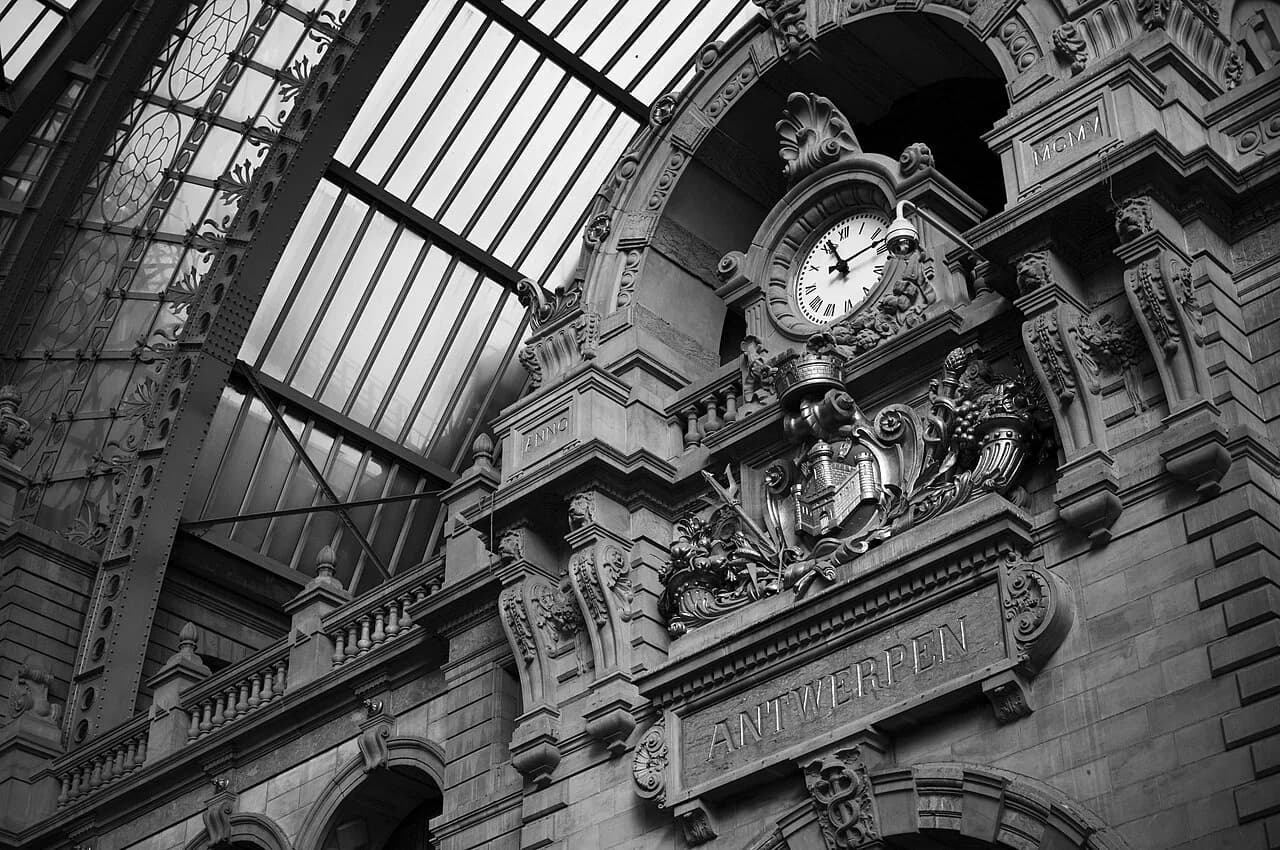
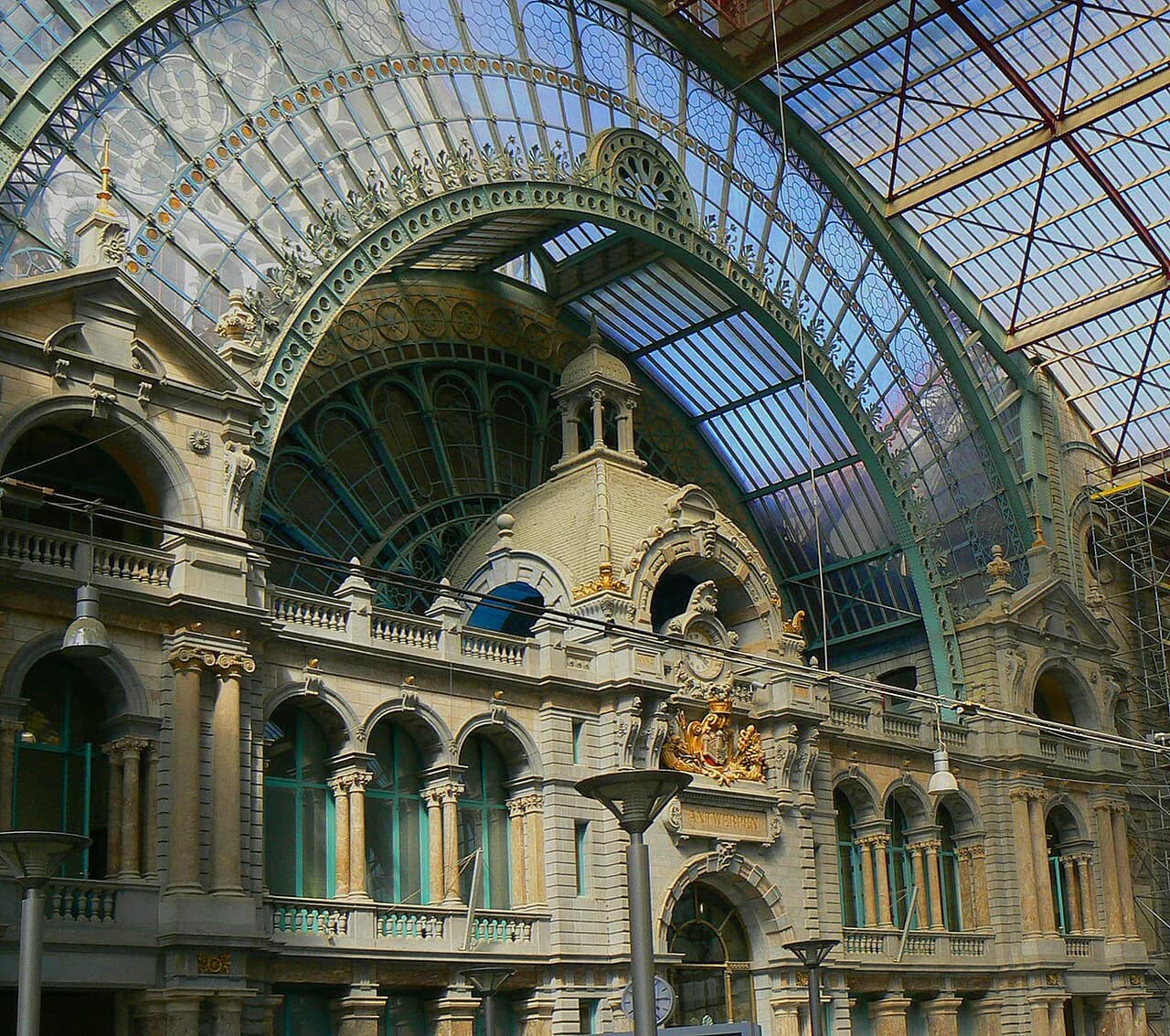
Inside, the building pairs a vast marble hall with a dome of iron and glass, an arrangement that reads more like a palace than a station concourse. Look up when you reach the main hallway: the roof is the detail people remember, and it is easy to miss if you keep your eyes at ticket-machine height.
Gilded and marbled surfaces are spread across several levels, so give yourself a few minutes to climb between them rather than treating the hall as a corridor. The architecture rewards a slow loop more than a quick photo from the entrance.
Arriving by train: what you see on the platform level
Trains arrive on modern platforms below the historic structure, so the first impression is an ordinary station; the drama comes as you ascend into the old building. Coming from London, passengers change at Brussels-Midi/Zuid onto an SNCB service and then roll into Antwerpen-Centraal, which is the end point of the journey rather than a further connection.
Because SNCB tickets allow any train on your route on the same day, a missed connection in Brussels is not the disaster it sounds. You still arrive at the same grand hall, and you still need only a short walk or tram ride to reach the centre.
The diamond district on the doorstep
Directly behind the station lies the Antwerp diamond district, where much of the global rough diamond trade has historically passed through the streets. It is a working commercial quarter rather than a tourist set piece, and the contrast with the marble hall a few minutes away is sharp.
If you want the subject explained properly rather than just walked through, the DIVA museum covers diamonds, jewellery and silver and is the natural pairing with the neighbourhood. Plan the museum and a short loop of the surrounding streets as one block before heading south into the centre.
Nearby sights worth pairing with a station visit
The Antwerp Old Town is the obvious next stop, and the Grote Markt with its Brabo fountain is a sensible first target once you have crossed into the centre. From there the Cathedral of Our Lady, with its Rubens paintings inside, sits a couple of minutes away and anchors the rest of the day.
South of the centre, the Royal Museum of Fine Arts (KMSKA) holds seven centuries of art including the largest collections of Ensor and Wouters, and the Museum aan de Stroom in the Eilandje docklands has a roof terrace open to views over the city and port. Both are substantial enough to claim half a day each, so pick one rather than attempting both around a station visit.
For a shorter stop, the Sint-Anna tunnel under the Scheldt puts you on the Left Bank for a view back at the skyline, and the walk there from the old town passes the waterfront. It is the cheapest way to add a different angle to a station-to-centre day.
How to use the station as a starting point for the old town
A straightforward plan is to leave the station via the Koningin Astridplein exit, walk south through the shopping streets, and pick up a walking tour or a self-guided route once you reach the old town. The station-to-centre leg is the least interesting part of the walk, so treat it as transit rather than sightseeing and save your energy for the middle.
If you are arriving late in the day, reverse it: head straight for the riverfront and the old town while there is light, then loop back to the station at the end and give the hall the time it deserves. Either way, build in a slow pass through the marble hall on the way in or out rather than saving it for a rushed departure.
Practical notes on the building itself
The station is a functioning interchange, so expect crowds at peak arrival times and allow extra minutes if you are carrying luggage up between levels. Keep your bags with you and treat the hall as a thoroughfare at busy moments rather than a place to linger with cases.
Direct Eurostar service from London to Antwerp is planned from December 2026, which would remove the Brussels change and deliver you straight into the hall. Until then, the connection via Brussels-Midi/Zuid remains the route, and the total journey is about 3 hours 15 minutes.
Should you build the station into your Antwerp day?
Yes, if you are arriving or leaving by train, and it costs nothing to do properly: the marble hall, the dome and the gilded upper levels are the reason the building is on the sightseeing list. If you are staying elsewhere and passing through only once, arrive 20 minutes early and climb the levels before heading into town.
Use the station as the top of a straight line south into the old town, stopping at the diamond district and DIVA on the way, then finish at the Grote Markt and the cathedral. That sequence gives you the architecture, the neighbourhoods and the historic centre in one walk rather than three separate trips.
Explore more Antwerp guides
Frequently Asked Questions
Which train station in Antwerp is considered the most beautiful?
Antwerpen-Centraal is the one singled out for its architecture, thanks to its marble hall and iron-and-glass dome. It is also where Eurostar passengers arriving via Brussels complete their journey, so most visitors see it first.
Why is Antwerpen-Centraal called the Railway Cathedral?
The nickname reflects the scale and finish of the interior: a vast marble hall beneath an iron-and-glass dome, with gilded and marbled detail across several levels. The effect is closer to a cathedral nave than a station concourse.
How far is Antwerpen-Centraal from the old town?
It is about a 20-minute walk from the city centre, with tram and bus routes outside the station if you prefer not to walk. The route south takes you past the diamond district and the shopping streets before you reach the Grote Markt and the Cathedral of Our Lady.
Sources
Useful notes for your next trip
Optional updates to our guides.
You might also like
Continue reading
More guides you'll find useful