
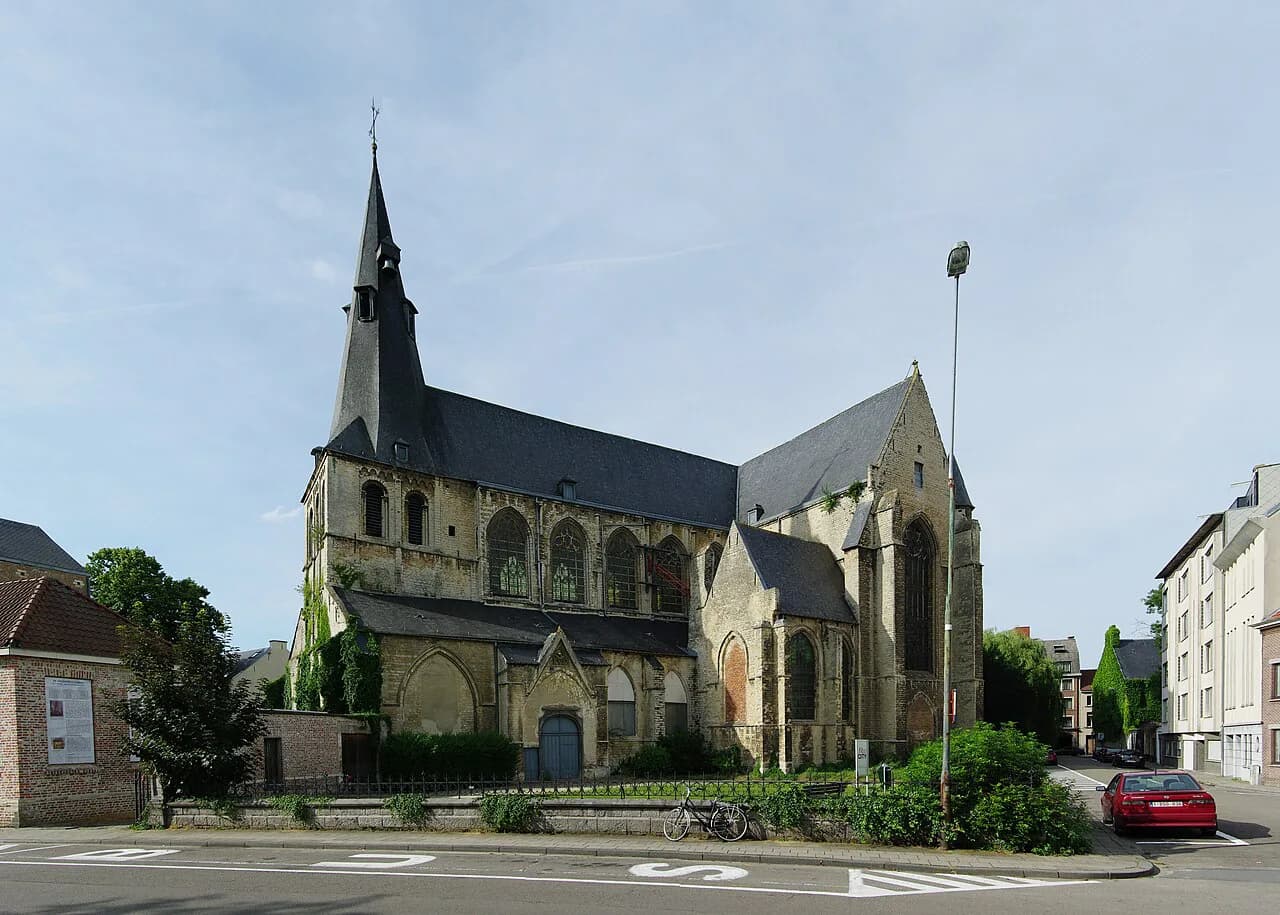
Sint-Jacobskerk Leuven: What You Can See at This Closed Romanesque Church

Sint-Jacobskerk cannot be visited inside: the 13th-century church on Sint-Jacobsplein has been largely empty for more than 60 years and is shut again for renovation. What you get instead is a quick look at a Romanesque shell on a quiet square, worth five to ten minutes as you pass through the western edge of central Leuven. This guide covers where the church stands, why it closed, what the works involve and what to fold into the same walk.
Where Sint-Jacobskerk stands in central Leuven
The church sits on Sint-Jacobsplein, a square on the western side of Leuven's centre, roughly between the Oude Markt and the ring road. Coming from the station you cross the ring and walk up toward the Oude Markt, and the square opens off to your left near the Sint-Jacobsplein bus stops. Treat it as a short detour rather than a destination and work it into a route that takes in the Oude Markt and other Leuven highlights on foot.

Why the church closed in 1963
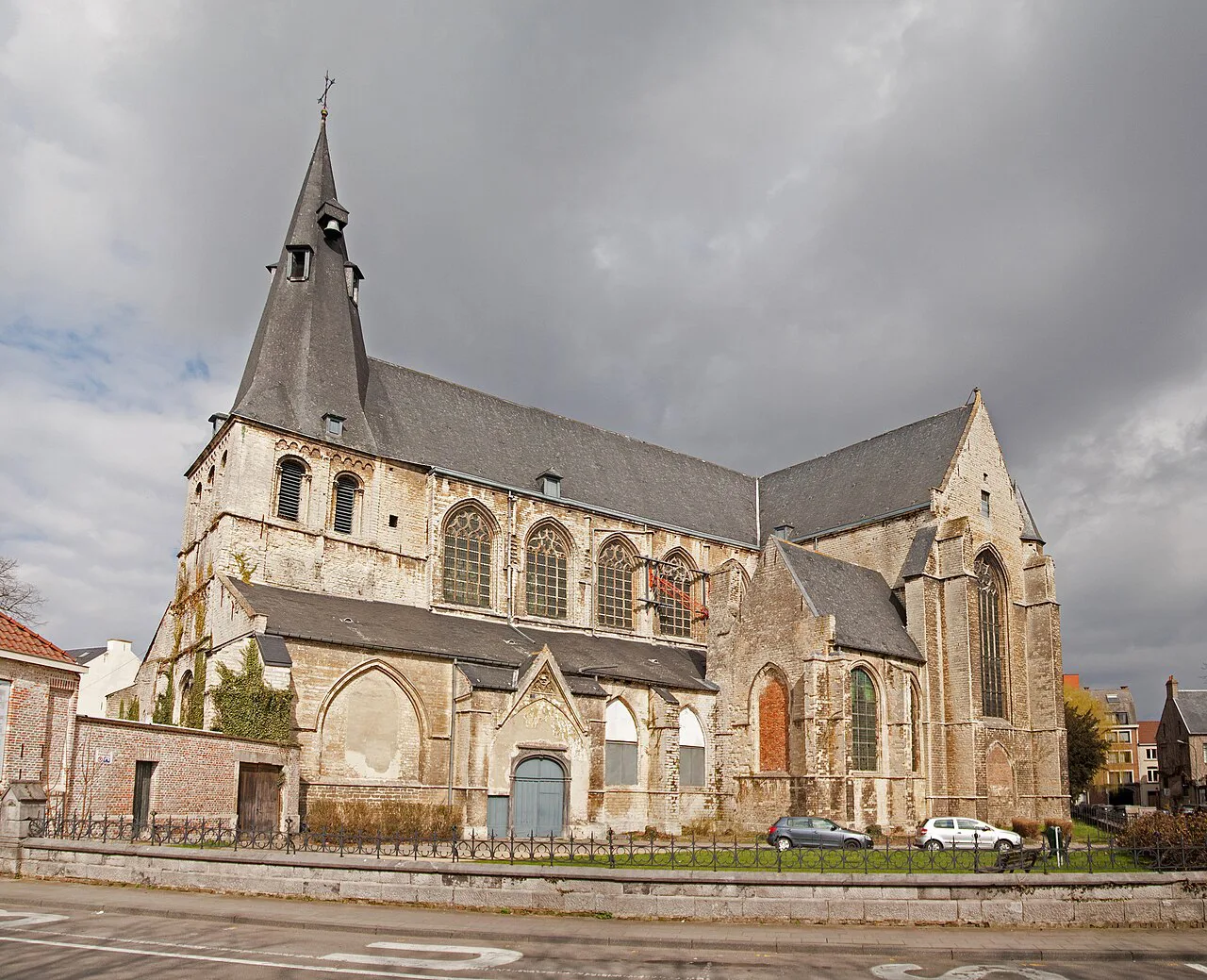
Parts of the ceiling of the side galleries came loose, and the church was closed to the public in 1963. Stability work followed, but the building stayed largely out of use for six decades, and a fresh round of problems forced another closure. Loose plasterwork in places and decayed timber in the doksaal, the screen between nave and choir, were behind that decision.
Romanesque origins and the Gothic expansion
Building began around 1200 in Romanesque style, and the church was extended along Gothic lines between 1300 and 1562. That makes it one of the older ecclesiastical sites in Leuven, older in origin than the great Gothic church on the Grote Markt, though far less intact as a visitor experience. If you want a church you can actually walk into, St Peter's Church, Leuven is the obvious substitute a few minutes east.
The 2024 neighbourhood experiment
After stability works, the city tested a new role for the building in 2024, opening it as an indoor meeting place run with local volunteers. Working groups kept the keys and the calendar, built a counter that doubled as a bar and a stage, and planted a vegetable garden on the former churchyard beside the church. Events that year included an open weekend for Open Monumentendag on 7 and 8 September 2024, a shared meal on 16 October 2024 and a closing parade through the neighbourhood on 3 November 2024.
The current works and the roof repairs
The city commissioned two further interventions through Studio Roma. The first phase tackles the plasterwork, the doksaal and part of the interior, lays a temporary floor and adds sanitary facilities in a space south of the tower, with the aim of bringing the church back into use from summer 2027, following the city's September 2026 announcement. The roof restoration follows later that year. Leuven is counting on a heritage subsidy of 250,000 euros including VAT from the Onroerend Erfgoed agency. A definitive new purpose for the building has not been settled.
What the renovation means for 2030
The deadline behind all this is Leuven's year as European Capital of Culture in 2030, and the interior and roof works are meant to make the church fully usable by then. Until that happens, plan around a closed building: there is no interior to see and no tower to climb. Check the city's page on Sint-Jacobskerk before you build a walk around it, in case the works change access to the square.
What to see around Sint-Jacobsplein
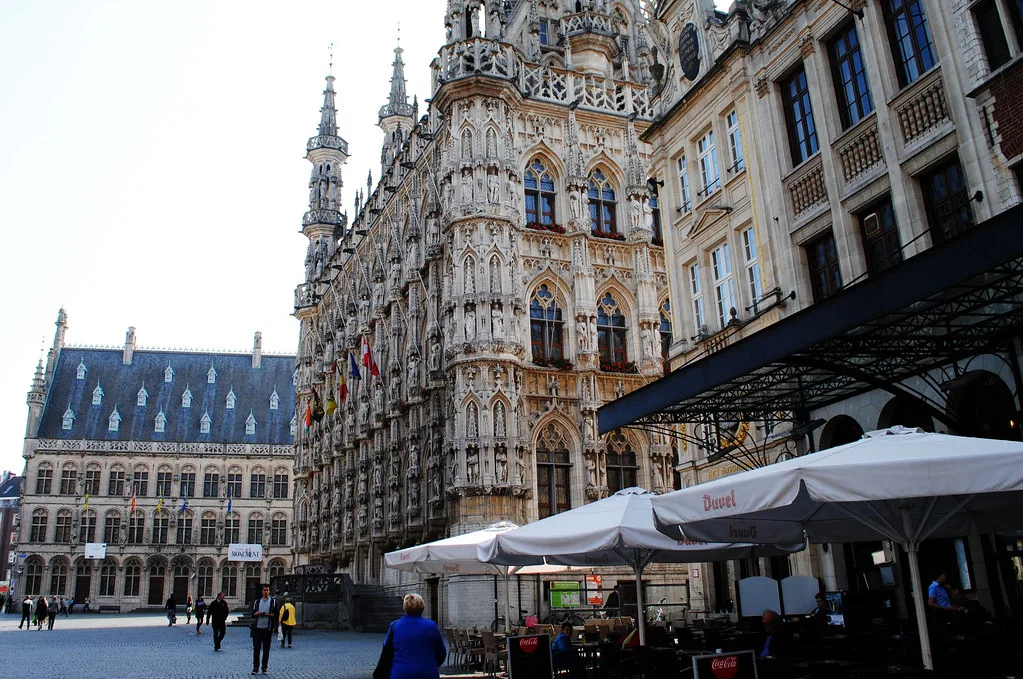
The square itself is small and quiet, so the reward is the surrounding streets. Head east and you reach the Oude Markt, Leuven's long café square, then the Grote Markt with its sculpted Leuven Town Hall (Stadhuis van Leuven); a loop between the three squares takes about 20 to 30 minutes at an easy pace. South of the centre, the Groot Begijnhof Leuven offers a walled, UNESCO-listed streetscape that rewards a longer stop, and the Ladeuzeplein Leuven with its university library tower is a further 10 minutes east.
For a half-day rather than a passing look, add the m museum Leuven near Ladeuzeplein or walk out to the botanical garden Leuven, both within comfortable walking distance of Sint-Jacobsplein. Keizersberg abbey Leuven sits north of the centre on its own hill, and Arenberg Castle, Leuven and Park Abbey, Leuven lie further out and need a bus or bike. Keep the church square as the opening move of a broader circuit rather than a stop in its own right.
How much time to allow
Give Sint-Jacobsplein five to ten minutes on foot, enough to take in the exterior, read the square and move on. If you are pairing it with the Oude Markt and Grote Markt, allow an hour to 90 minutes including a coffee stop. The church is not a rain-proof option while works continue, so keep it for dry weather and put a museum or a café at the centre of a wet afternoon instead.
Should you walk over to Sint-Jacobsplein?
Walk over if you are already circling the western centre and want to see a Romanesque survivor that most visitors miss; skip it if a visitable interior is the point of your morning. The square works best as a ten-minute pause between the Oude Markt and the ring, with the real sights of Leuven kept for the rest of the day. Build the stop into a wider wander, and check the city's Sint-Jacobskerk page before setting out in case access to the square changes during the works.