
Sint-Andries, Antwerp: A Neighbourhood Guide to the Fashion Quarter

Give Sint-Andries half a day if you like browsing, and a full day if you like fashion. This former working-class district around St. Andreaskerk has become the fashion heart of Antwerp, with antique shops, vintage rails, street art and a richly decorated church.
The quarter sits between the historic centre and the Scheldt, a short walk from the Grote Markt and the cathedral area, so it slots easily into a city break. What follows covers its sights, its shopping streets by what they actually sell, its coffee and food stops, the pedestrian tunnel under the river, and who the area suits.
What Sint-Andries is
Sint-Andries grew up as a workers' district around the St. Andreaskerk, and that history still shapes the streets: modest houses, small squares and workshops rather than grand civic set pieces. Visit Antwerpen describes the neighbourhood as a run of congenial little squares, many vintage and antique shops and colourful street-art walls, with the Modemuseum and its spread of boutiques making it the fashion heart of the city.
Its character is browsing rather than ticking off headline monuments, which is exactly why it rewards a slower half-day. The local heritage association Erfgoed Sint-Andries keeps the quarter's folklore and history alive through its own publications, a sign of how strongly the district identifies with its past.
Where Sint-Andries sits
The quarter lies just south of Antwerp's historic core, with the Scheldt closing it off on the western side. From the Grote Markt and the cathedral you can be among its shops within minutes on foot, which makes it one of the easiest add-ons to a day in the centre.
That position means you can walk it as a loop: start near the cathedral, work south through the shopping streets, look into the church, then finish at the river. If you are planning several districts, the wider set of area guides for the city helps you decide what to keep and what to cut.

St. Andreaskerk: the 1529 church
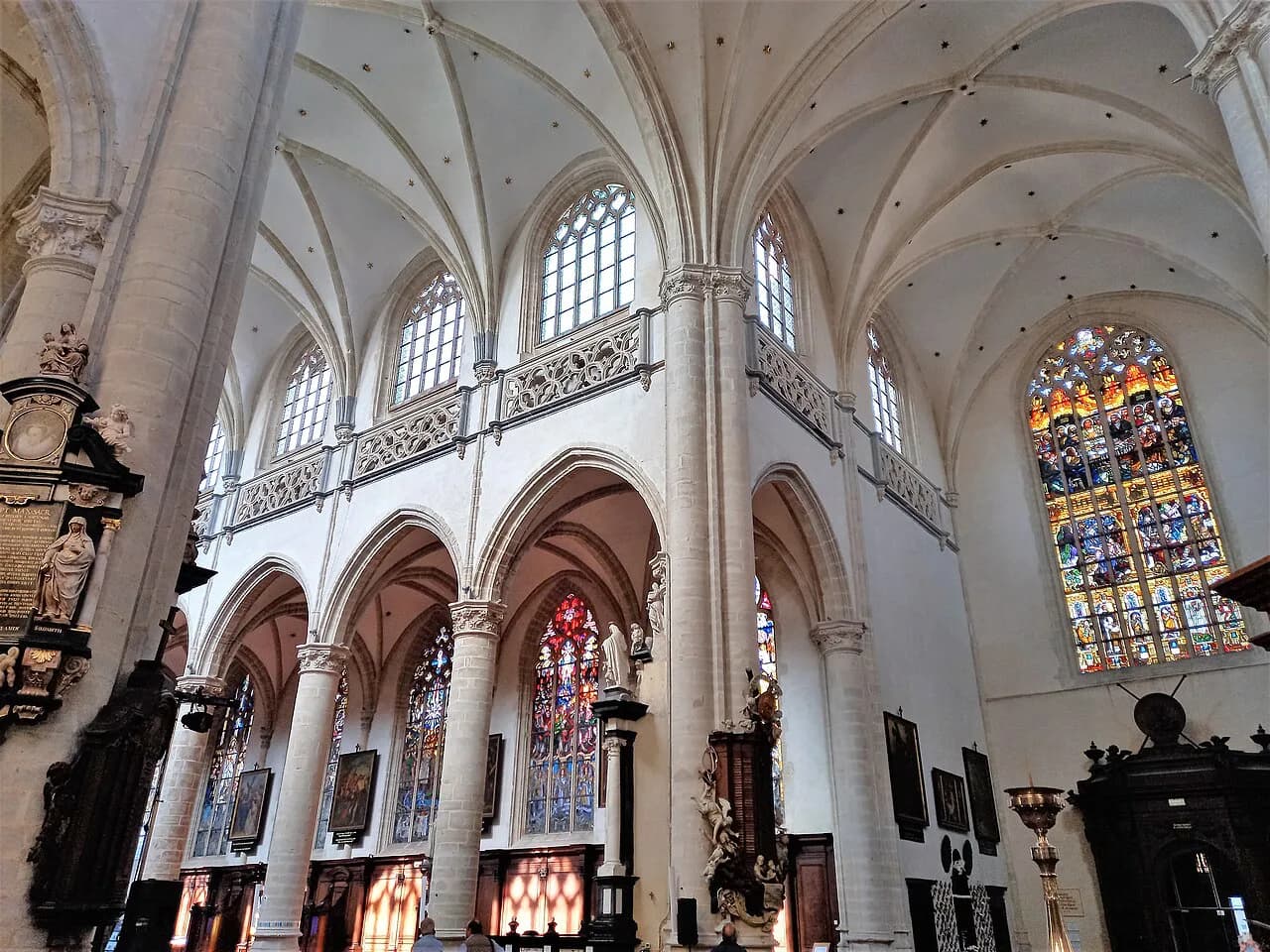
St. Andreaskerk, the church that gives the district its name, dates from 1529 and is the quarter's principal monument. Visit Antwerpen points to its baroque altars and seventeenth-century artworks, an imposing carved pulpit, and a memorial to Mary Stuart, Queen of Scots, whose story ended in England but whose monument stands here rather than in Britain.
Treat it as a quiet pause in a shopping morning rather than a destination church: the interior details are the draw, not scale or a tower climb. The parish publishes its weekend service details through the Kerknet church portal if you want to time a visit around worship rather than walk in mid-morning.
Kloosterstraat, Kammenstraat and Nationalestraat: what each street sells
Group the shopping streets by what they sell and the quarter becomes easy to walk. Kloosterstraat is the antique and bric-a-brac spine, a long run of antiques dealers and junk shops; Kammenstraat and Nationalestraat handle vintage clothing and high fashion instead.
Visit Antwerpen goes further and calls the quarter's shopping streets perhaps the finest in the city, which is a strong claim but a fair guide to where to spend your time. If antiques bore you and couture interests you, skip straight to the Nationalestraat end and work back.
Fashion addresses to know
The fashion reputation becomes concrete at a handful of named addresses. The Modemuseum anchors the district with a programme of exhibitions, walks and activities; the renovated fashion hub VIER, the concept store St. Vincents and the glove shop Boon are the other first addresses Visit Antwerpen singles out.
Aim your visit at one or two of these rather than all four, since each is a browse in its own right. If fashion is the reason you came to Antwerp, the Modemuseum alone justifies building the day around this quarter.
Street art and the Munthof
Street art is spread across the district, with painted walls by Belgian and international artists rather than a single sanctioned mural street. Visit Antwerpen suggests the Streetart Antwerp app as the practical way to find the works, and names the Munthof as an open breathing space within the historic centre.
Wander rather than march: the point here is turning corners and finding colour on side walls, so allow slack in your route. The Munthof makes a natural midpoint to sit down before the next stretch of shops.
Coffee before the browsing
Start with caffeine, as the locals do. Visit Antwerpen names Kaffeenini and Me & My Monkey as two leading coffee addresses in the quarter, the kind of places to open a day of browsing rather than rush through.
Both sit within the shopping grid, so you can fold a stop into the walk rather than detour for it. Order at the counter, then head for Kloosterstraat while you are still fresh.
Eating: Camino in the Munthof
For lunch, Camino in the Munthof serves Korean dishes that Visit Antwerpen describes as firmly on trend with Antwerp locals. It is the one named food stop in the quarter in the city's own neighbourhood guide, and its position on the Munthof puts it right on a walking route.
Plan your appetite around it rather than hunting for a long restaurant list: eat, then cross to the river. If Korean food is not your thing, the surrounding streets have plenty of options, but the city guide makes no other specific food claims.
The Sint-Jansvliet pedestrian tunnel
Finish at the Sint-Jansvliet, where the conspicuous building on the square holds the entrance to the pedestrian tunnel under the Scheldt. Visit Antwerpen highlights the authentic wooden escalators and the film-set look of the passage, which makes it a photogenic crossing for walkers and cyclists alike.
On the other bank you get a sweeping view back at the Antwerp skyline, which is the reward for the walk under the water. From there, the left bank district is the obvious next stop if you want to keep going rather than turn back.
Who Sint-Andries suits, and who it does not
This quarter suits shoppers, fashion followers, antique hunters and anyone who likes finding street art on foot. It suits slower travellers who enjoy an afternoon of browsing and a quiet church, and anyone who wants a memorable, photogenic crossing of the Scheldt at the end.
It does not suit travellers who want big-ticket sights stacked in one compact block, or anyone with a tight half-day who would rather spend it on the cathedral and the Grote Markt. If that is you, keep Sint-Andries as a short add-on rather than the main event.
Travellers who prefer architectural set pieces should look at Zurenborg, whose streets are lined with ambitious townhouses, instead of or alongside this district.
How much time to give it, and how to walk it
A morning or afternoon covers the quarter comfortably. Start at St. Andreaskerk, take in the baroque altars and the Stuart memorial, then work down Kloosterstraat for antiques before cutting across to Kammenstraat and Nationalestraat for vintage and fashion.
Fold in the Modemuseum or one fashion address, break at the Munthof for lunch or coffee, then end at Sint-Jansvliet and cross under the river. That order keeps the walking logical and puts the skyline view at the end rather than the middle.
Getting there and around
Sint-Andries is a walking district: arrive on foot from the historic centre and stay on foot, since the streets are short and the sights close together. The pedestrian tunnel at Sint-Jansvliet extends the walk to the other bank of the Scheldt for those on foot or bikes.
If you are comparing quarters before you commit, the neighbourhood guides for Het Zuid and Het Eilandje give you alternatives within the same city walk.
Joining a guided walk of the quarter
Visit Antwerpen presents guided walks of Sint-Andries through its visitor channel, which is a sensible way to get the street-art and fashion geography straight if you have only one afternoon. Use the walk as orientation before your own browsing.
Confirm the current schedule and any booking requirement with the organiser, since the visitor page is the authoritative channel for how the walks run. From there, tailor the rest of your time to the streets that appealed.
Is Sint-Andries worth your afternoon?
Yes, if you want antiques, vintage clothing, fashion and street art in a compact, walkable quarter with a richly decorated church in the middle. No, if your Antwerp time is short and the cathedral and Grote Markt are still unticked.
For most visitors, the smart move is to slot Sint-Andries in as a half-day between the centre and the river, with the Sint-Jansvliet tunnel as the finish. Walk it in that order and the district gives you its best without eating a whole day.