
Le Grognon, Namur: the Confluence Point of the City

Le Grognon is worth an hour of any Namur visit: it is the old quarter at the very tip of the city where the Sambre meets the Meuse, and the main reason to come now is the NID, a free civic and exhibition space on the esplanade. This guide covers where the Grognon sits, how to walk there from the centre, what happens inside the NID and how to pair it with the climb to the citadel.
What and where Le Grognon is
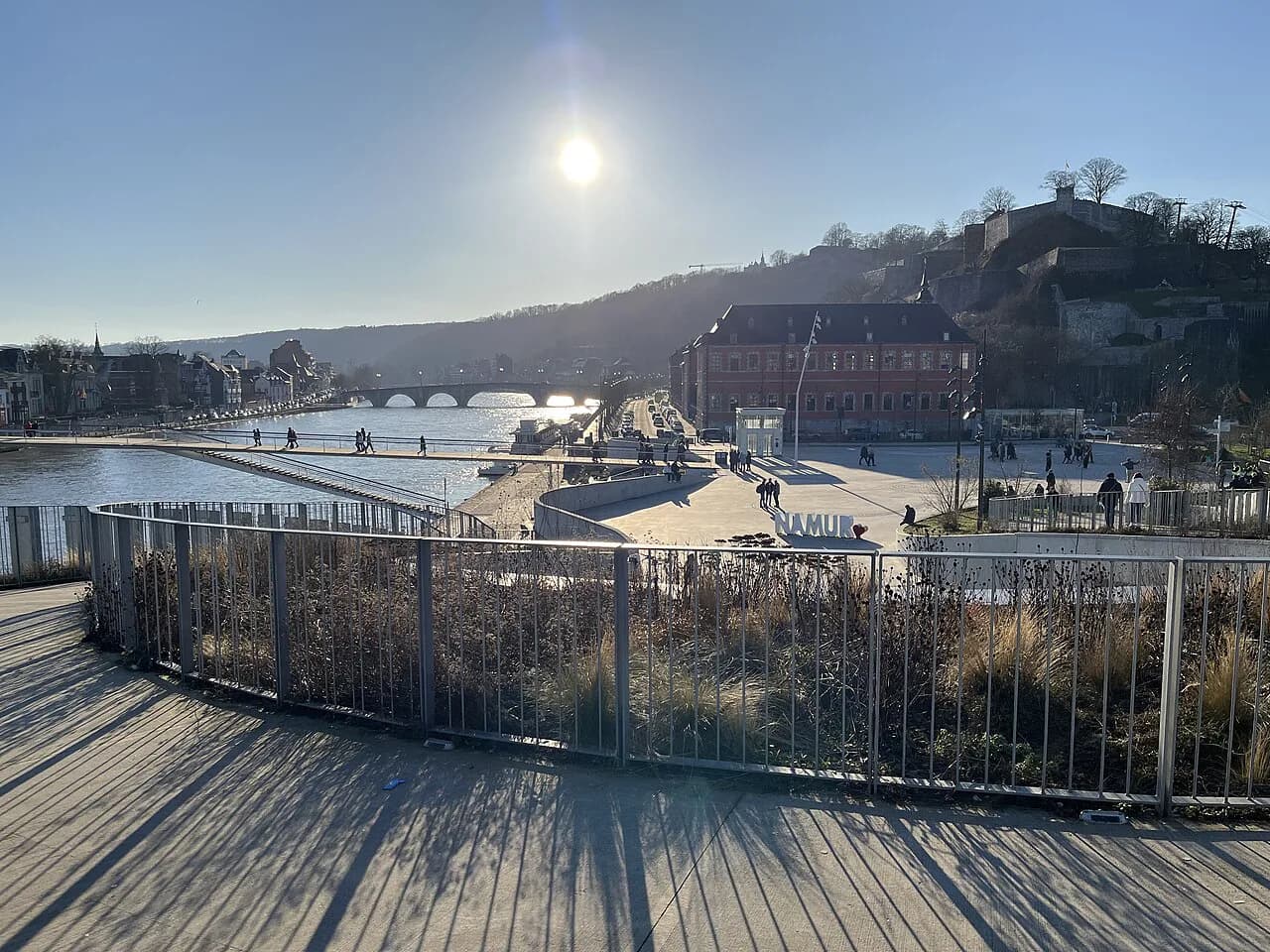
The Grognon is the wedge of land at the confluence of the Sambre and the Meuse, the oldest part of Namur and the historic centre of the city. The Sambre arrives from the west and runs into the Meuse here, so the quarter is bounded by water on two sides and looks back across the river towards Jambes on the opposite bank. Read it as a point on the map first: once you find the confluence, everything else at the Grognon follows from it.
The area has been reworked around a new esplanade that joins the open riverside space to the NID building, a project intended to put people and technology side by side in the city's central square. Plans for the site include a footbridge across the Meuse linking Namur with Jambes. Treat the bridge as a scheme in progress rather than something to plan a route around, and cross by the existing bridges instead.

Walking down from the centre
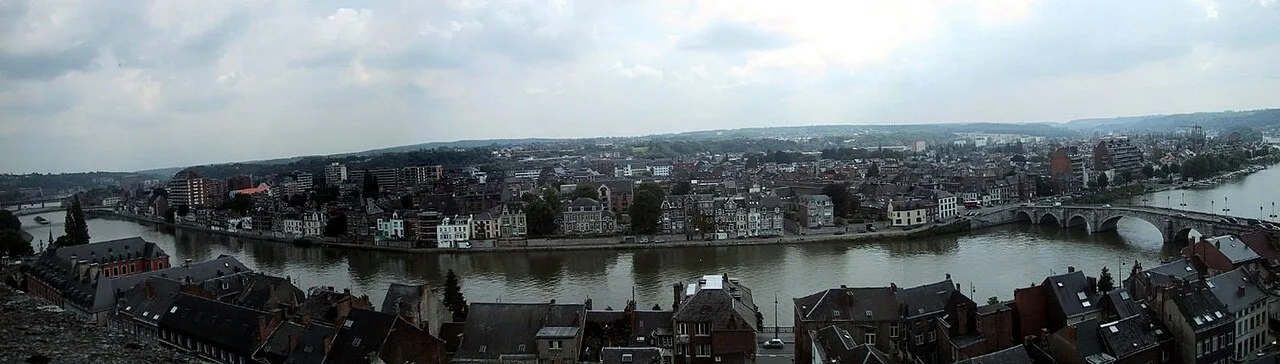
The Grognon sits directly below the old centre, so the approach is a short walk downhill from the area around the cathedral and the shopping streets rather than a trip out of town. Come at it from the rue de Fer side and follow the slope down towards the water; the river opens up in front of you as the streets fall away. Give yourself ten to fifteen minutes from the heart of the centre at an easy pace.
On arrival you get the two rivers at once, the sweep of the Meuse and the narrower mouth of the Sambre, with the wooded ridge of the citadel rising behind you. The esplanade is open ground, so this is a place to stand and orientate before deciding what to do next rather than a sight with a gate and a ticket desk.

Inside the NID
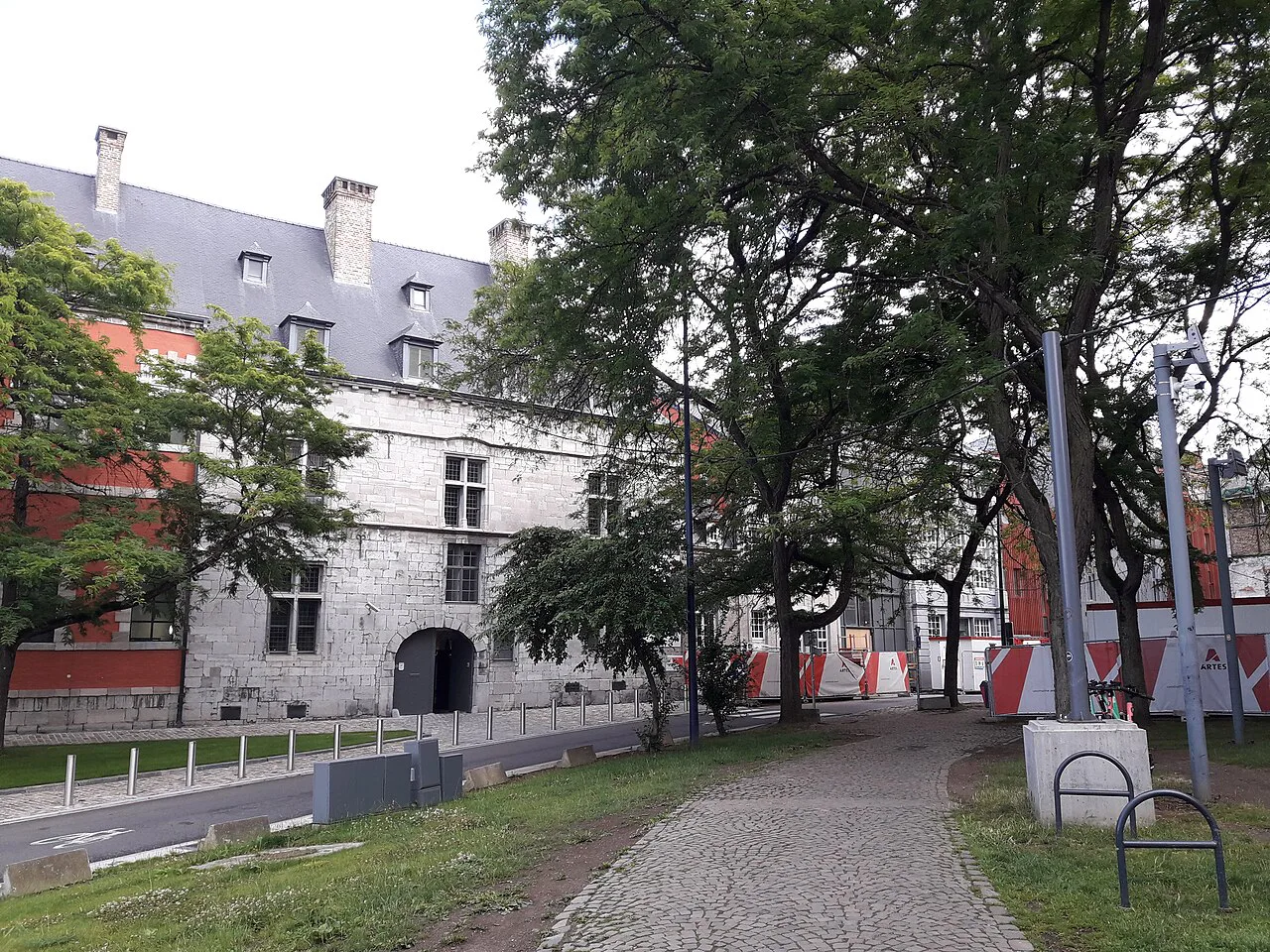
The NID stands for Namur Intelligente et Durable, and it works as a space for experimenting with and debating the city's future: the citizen sits at the centre of thinking about how Namur handles environmental and urban challenges. It runs an exhibition plus a rolling programme of workshops, talks, shows and guided urban walks for the general public and for schools. Knowing this in advance matters, because anyone expecting a conventional museum with glass cases will be surprised; come for ideas and participation rather than artefacts.
All NID activities are free and aimed at raising awareness of sustainable development and urban resilience, which makes the Grognon one of the cheapest stops on a Namur itinerary. The site is designed with a restaurant and a multi-purpose room, so the plan is for the Grognon to work for a pause as well as for the exhibition.
The exhibition and the permanent activities
The standing exhibition is called Faire éclore la ville de demain, and it is the core of a visit: it frames the questions the NID exists to ask about how a city like Namur grows and adapts. Around it sit permanent activities including games and workshops such as La Fresque du Climat and water-themed games that run across long periods rather than on fixed dates. Check the programme on the day you go, since the workshops and performances change through the year.
Two urban trails from the NID
The NID runs two permanent urban trails, Namur en transition and eNIDgmes, which take you out of the building and into the streets to look at the city through the themes of transition and sustainability. They are the best reason to treat the Grognon as a starting point rather than a single stop: you read the centre differently once you have walked one. Ask at the NID about how to pick up a trail before you set off.
Namur 3D and the city model
Namur 3D is the NID's digital model of the city, built so you can visualise urban projects and study the territory in depth. It is genuinely useful before a walk: see how the confluence, the citadel ridge and the streets between them fit together, then go and find the same shapes on the ground. Allow ten minutes at the model, more if you are travelling with someone who likes maps.
The esplanade and the views
The esplanade is the free, open part of the visit and needs no planning: water on two sides, the far bank of the Meuse at Jambes, and the citadel's wooded slope climbing behind the town. Walk the length of it and look back up at the old centre to get your bearings before you climb. Late afternoon gives the best light on the confluence, with the two rivers catching different colours.
How much time to allow
Give Le Grognon about an hour: twenty minutes on the esplanade and the views, then forty minutes for the NID exhibition and the 3D model. Add an hour if you take one of the urban trails, which is the version worth doing if you have a whole day in the city. If you are short of time, the esplanade and the exhibition alone still justify the walk down.
What is nearby
The Citadelle de Namur rises directly above the Grognon, and the ascent on foot is the natural continuation of the visit; the old centre's steep streets climb up from the confluence into the heart of town. Allow a separate block of time for the climb rather than tacking it on at the end of a long day.
Back in the streets of the centre, the Musée Félicien Rops is the strongest indoor stop if the weather turns, and the Parc Louise-Marie gives you a green pause between the river and the shopping district. Both fit comfortably into the same half-day as the Grognon, and you can plan the rest of your day with more Namur Attractions: 5 Visitor Guides.
Who Le Grognon suits
Le Grognon suits travellers who want to understand how Namur is put together and who enjoy an exhibition with an argument, especially with the free entry to the NID removing the risk. It is also the obvious first stop on arrival, because the water and the ridge explain the city's shape in a way the streets alone do not. Skip it if you have only an afternoon and want the citadel and the old centre; the climb deserves your time more than the esplanade does.
Should Le Grognon be your first stop in Namur?
Make Le Grognon your first stop if you have a full day: walk down from the centre, spend an hour on the esplanade and in the NID, then take one of the urban trails before climbing to the citadel. With only an afternoon, see the confluence and the exhibition, then go straight up to the citadel and leave the trails for next time.