
Citadel of Namur (Citadelle de Namur): What to See and How Long to Allow

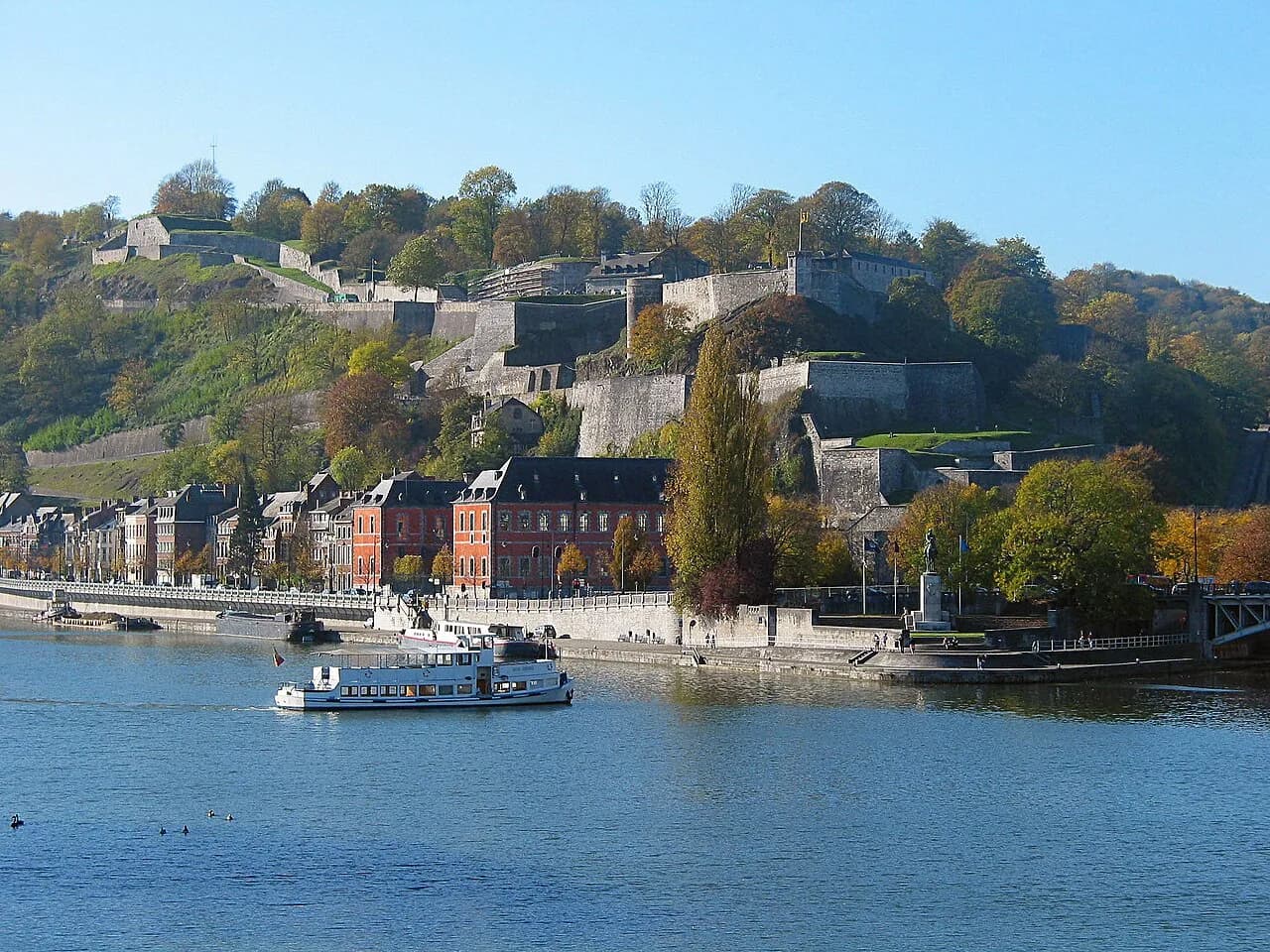
The Citadel of Namur (Citadelle de Namur) deserves half a day, not a quick photo stop: the tourist office's own waymarked loop from the Grognon runs 5 km and strings together the climb, the ramparts, the viewpoints and the descent. It is a fortress park spread across the hill above the meeting point of the Sambre and Meuse, so the walking is the visit rather than something you do around it.
This guide follows that signposted route in sequence, from the staircase behind the Parliament of Wallonia to the watchtower and the way back down the route Merveilleuse. It also gives an honest read on how hard the climb feels, how much of a city break it takes up, and which sights sit within a few minutes of the start.
Where the citadel sits above the two rivers
The citadel occupies the ridge that rises directly above the confluence of the Sambre and Meuse, the low riverside quarter known as Le Grognon, Namur. Because the ground climbs straight out of the town, the fortress is visible from the water and the old centre long before you reach it, and the views work in both directions once you are up.
The signposted walk starts at the Grognon itself, specifically at Pont de France, which is the address the tourist office gives for the route. Treat the bridge and the confluence as your assembly point: you finish the loop back at the same spot, so there is no need to plan a separate return leg.

The climb from the Grognon
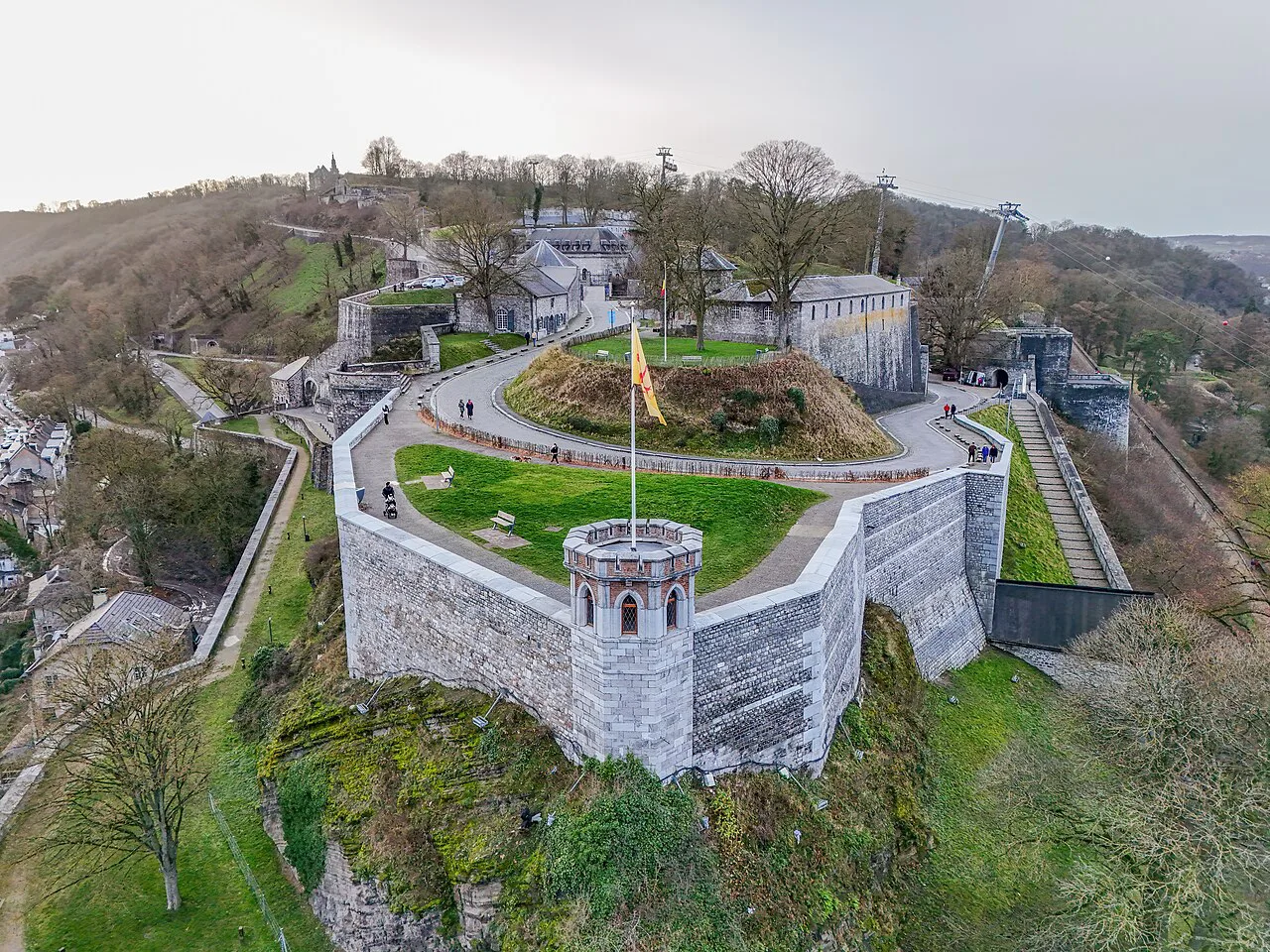
The ascent begins with the staircase at the back of the Parliament of Wallonia, the building that was formerly the Hospice Saint-Gilles. It is a short, sharp pull rather than a long gradual ramble, so anyone carrying a bag or travelling with a slow walker should set the pace early. The reward arrives quickly: Jan Fabre's monumental sculpture Searching for Utopia stands at the top of this first climb, a giant tortoise figure that has become the landmark for the lower citadel.

Searching for Utopia and the Bastion de Sambre
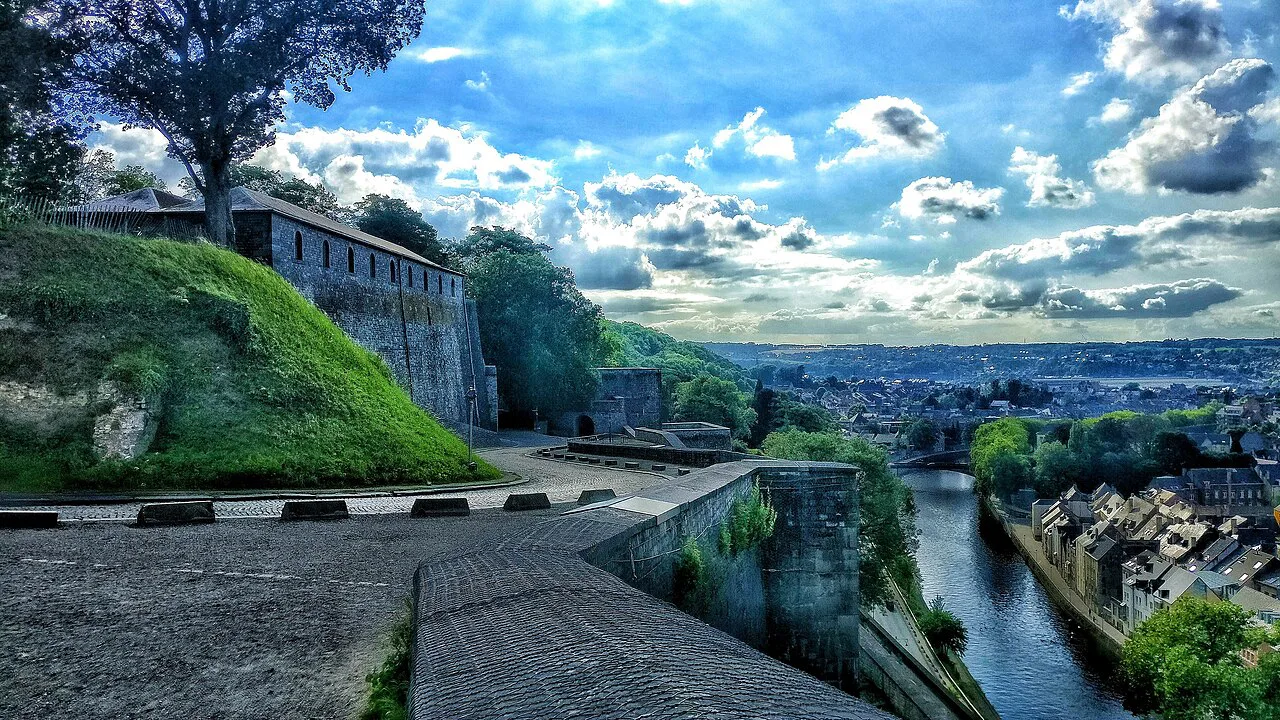
Past the sculpture, the route brings you to the Bastion de Sambre, a fifteen-metre-high defensive work that once guarded the Rampe Verte. It is the clearest piece of fortress architecture on the lower route and a natural place to stop and look back over the town. From here the path continues into the wooded upper citadel rather than along the rampart edge, so the character of the walk shifts from stone to trees.
The 5 km loop: Sentier des Amoureux, Garden of Scents and Reine Fabiola
The Sentier des Amoureux, the Lovers' Path, carries the route on from the bastion and sets the tone for the middle stretch: shaded, quiet and mostly level after the initial climb. It runs alongside the Reine Fabiola attraction park, which the tourist office describes as a children's paradise in the summer months; outside that season, treat the park as scenery rather than a stop.
The Garden of Scents is the low-key highlight of this section, a garden planted for its fragrant species rather than its display beds. It works well as breathing space between the fortress walls, and it makes a sensible pause if the climb has taken more out of you than expected.
Château de Namur, the Esplanade and the Belgian Pavilion
Further up, the route passes the Château de Namur, the hotel and training restaurant attached to the nearby catering school, which marks the transition to the more open upper citadel. On the Esplanade, the Belgian Pavilion from the Milan exhibition has been re-erected and is worth a look before you begin the descent. From here the route turns onto the route Merveilleuse, the scenic way down.
The arboretum lies near the Château de Namur, an urban park set halfway up the slope with a broad collection of tree species. It is the second of the citadel's two green pauses, and it rewards anyone who wants to stretch the visit rather than march the loop.
The watchtower view and the way down
Before the descent proper, climb to the watchtower for the widest view on the citadel: the confluence, the town roofs and the river valley all sit below you. It is the one viewpoint on the route that justifies the effort of the climb on its own, so save some legs for it.
The descent along the route Merveilleuse closes the loop, and the tourist office points out one last curiosity on the way back to the start: the giant tortoise. It bookends the Jan Fabre sculpture at the foot of the climb, so the route opens and closes with the same motif.
How long to allow and how hard the climb is
Budget around half a day for the full 5 km loop, including stops at the sculpture, the bastion, the Garden of Scents, the Esplanade and the watchtower. The distance is modest but the climb is concentrated at the start, so the effort feels front-loaded; anyone short of time can climb to Searching for Utopia and the Bastion de Sambre and turn back for a much shorter outing.
The staircases and the gradient make this a poor choice for wheels and a tiring one in heat, while the wooded middle section is easy going once you are up. Sturdy shoes matter more than any special kit, and the 5 km figure is the waymarked loop from the Grognon, not a circuit of the whole fortified ridge.
Nearby: the Grognon riverside and La Halle al'Chair
Back at river level, La Halle al'Chair is the old meat hall on the Grognon waterfront and a short walk from the foot of the staircase, which makes it an easy add-on before or after the climb. Pair it with a wander along the Sambre and Meuse banks, where the confluence is at its clearest.
Inland from the rivers, the Musée Félicien Rops gives a different half-day in the same city and suits a rainy alternative to the citadel walk. The Parc Louise-Marie is the other obvious green stop in town if the arboretum has left you wanting more gardens.
Walk the loop or stop at the bastion?
If you have half a day in Namur, walk the full signposted 5 km loop from the Grognon: the watchtower view and the descent along the route Merveilleuse are what make the citadel more than a viewpoint. If you have an hour or less, climb only to Searching for Utopia and the Bastion de Sambre, then come back down for the riverside.
Explore more Namur guides
Frequently Asked Questions
Do they speak French in Namur?
Yes. Namur is in Wallonia, the French-speaking region of Belgium, so signs, menus and the tourist office operate in French, with Dutch and German versions often available. English is widely understood in visitor-facing places, and the tourist office publishes its citadel route in English.
In which country is the Citadel of Namur?
Belgium. Namur sits in Wallonia, at the confluence of the Sambre and Meuse, roughly an hour south-east of Brussels by rail, which makes the citadel a practical stop on a Belgian city break.
Can you walk up to the citadel without a car?
Yes. The signposted route begins at Pont de France on the Grognon, a short walk from the town centre, and climbs via the staircase behind the Parliament of Wallonia. Once on the ridge everything is on foot, so a car adds nothing to the visit.