
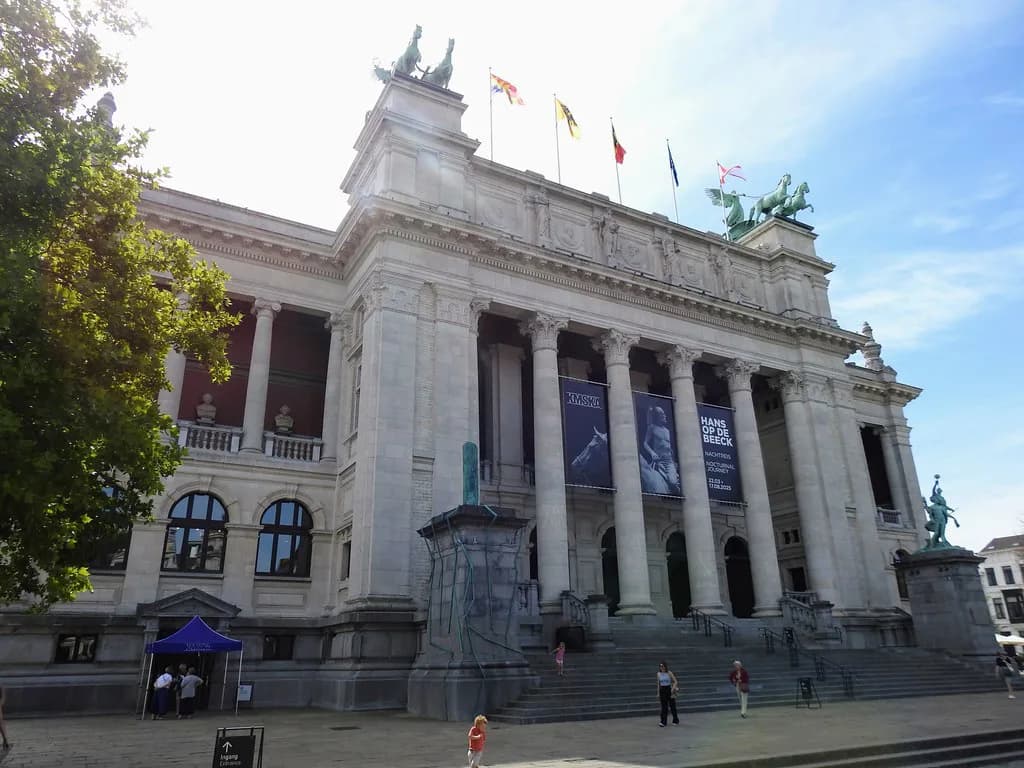
KMSKA: A Visitor's Guide to Antwerp's Royal Museum of Fine Arts
KMSKA, the Koninklijk Museum voor Schone Kunsten Antwerpen, is worth a half day of any Antwerp break and a full day if you want the Rubens rooms and the Ensor collection without rushing. It is the city's royal fine arts museum, holding paintings, sculpture and drawings from the fourteenth to the twentieth century, and it sits on Leopold de Waelplaats in Het Zuid, south of the historic core.
This guide covers where the museum sits, how to walk there from the cathedral quarter, which parts of the collection to prioritise, and how to split a short visit from a long one.
Why KMSKA earns a slot on a short Antwerp break
Most Antwerp city breaks run on the Grote Markt, the cathedral and the Scheldt, a compact cluster of sights. KMSKA pulls you south into Het Zuid, and what you get for the walk is a serious encyclopaedic collection rather than a single showpiece. On a one- or two-day trip, treat it as the anchor of one afternoon.
The museum was founded in 1810 and its holdings run from the Flemish primitives to modern masters and the Flemish expressionists. That span is the argument for going: you can trace five centuries of painting in a single building instead of hopping between specialist galleries.
If you want to weigh it against the rest of the city's sights before committing an afternoon, work through the wider set in Antwerp Attractions: 4 Visitor Guides first and slot KMSKA in where it fits. The museum rewards a proper block of time, so it rarely works as a forty-minute dash.
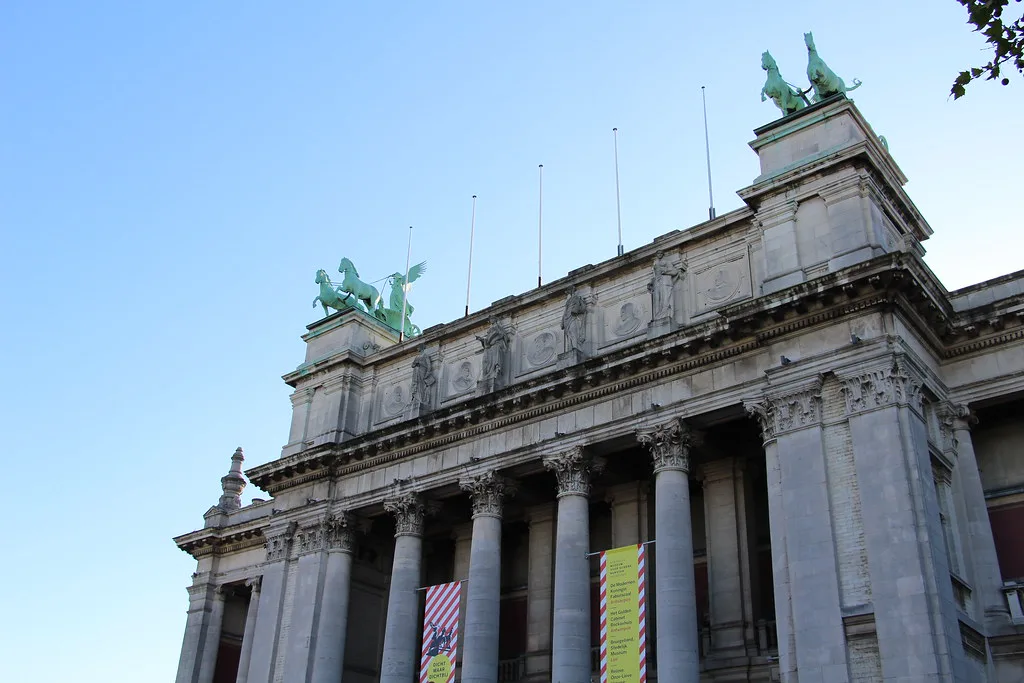
Where KMSKA sits: Leopold de Waelplaats in Het Zuid
The museum's address is Leopold de Waelplaats 1, 2000 Antwerpen, on the edge of Het Zuid. That puts it south of the old centre and its cathedral, in a neighbourhood of wide streets, galleries and cafés rather than medieval lanes; you go south for art, then work back towards the river.
Het Zuid is one of the city's more spacious districts, which makes the approach pleasant on foot and easy to combine with the Scheldt quays. Plan the museum as the start of a southern loop rather than retracing your steps into the centre.
Walking from the Grote Markt and the cathedral quarter
From the Grote Markt and the cathedral quarter, KMSKA is a straightforward walk south and takes roughly twenty-five to thirty-five minutes at an unhurried pace. Route yourself via the Meir, or cut down towards the river and come in along Het Zuid; either way you arrive without needing public transport.
The trade-off is that the walk counts as a leg of the day, so build it in rather than treating it as a quick hop. Consider making the museum a one-way anchor: walk south first thing, then finish the day on the route back.
Inside the collection: Rubens, Ensor and the Flemish primitives
The museum's own summary of its collection is the clearest guide to priorities: art from the Flemish primitives through to modern masters and the Flemish expressionists, with Rubens in a prominent role and the world's most important Ensor collection at its hinge. Those are three different visits inside one building, and knowing which one you came for saves a lot of wandering.
Start with Rubens if you want scale and drama, and give the Ensor rooms real time if you want the thing Antwerp does better than anywhere else. The Flemish primitives suit an earlier slot, when you still have patience for small panels and close detail.
Jules Schmalzigaug appears alongside Ensor and Rubens in the museum's own collection highlights, a reminder that KMSKA is not purely an old-masters museum. If you tend to skip modern rooms in big galleries, make an exception here; it also gives a natural break between the Rubens galleries and the Ensor rooms.
Beyond the paintings: sculpture, drawings and five centuries of work
The collection is not only oil on canvas: it holds paintings, sculptures and drawings spanning the fourteenth to twentieth centuries. That breadth means you can shape a visit around drawing or sculpture if the big gallery walls start to blur.
A five-century span is a lot for one visit, so pick a through-line instead of trying to see everything. Move chronologically and stop when your concentration goes; you will remember a sequence far better than a scattered sweep.
How much time to allow: half a day or a full one
Allow around three hours for a half-day visit built around Rubens and Ensor, and most of a day if you want the primitives, the sculpture and drawings, and a proper pause. The museum is large enough that a ninety-minute stop leaves you skimming.
For a half day, decide before you go in whether you are there for the old masters or for Ensor, and follow that thread first while you are fresh. For a full day, split the visit with a break in Het Zuid partway through; leaving and re-entering keeps the second half sharper.
If your Antwerp time is very tight, decide between KMSKA and the city's other big-hitters before you book anything. The museum is a deep, quiet experience, while the MAS is a lighter, more varied stop, so read up on MAS Antwerp and pick the one that fits the mood of your day.
Tickets, opening times and KMSKA Late on Thursdays
Book tickets and confirm opening hours on the official KMSKA site before you travel; the museum publishes both there. It also runs KMSKA Late every Thursday evening, with music, performances and activities alongside the galleries, which is a real planning lever on a short break.
Thursday evening opening suits anyone arriving late in the day or working through a Thursday, since it lets the museum absorb part of the evening instead of competing with daytime sights. If your break does not include a Thursday, plan a normal daytime slot and build the rest of the day around it.
Exhibitions and activities that can reshape a visit
Temporary exhibitions run alongside the permanent collection and can change how you allocate your hours. The museum lists Philip Aguirre y Otegui from 3 October 2026 to 17 January 2027 and Ossip Zadkine and Belgium on view from 31 October, so check the current programme against your dates. If a show you want is running, add an hour rather than absorbing it into your permanent-collection time.
KMSKA has also joined Van Gogh Europe, which broadens its appeal if you are following that trail across the Low Countries, and there are workshops, walk-in tours and drawing activities on the calendar. These are optional extras rather than reasons to go, but a scheduled activity can give a longer visit some structure.
What is nearby: Het Zuid, the Scheldt quays and the museum quarter
KMSKA anchors a whole afternoon rather than a single stop. Het Zuid's streets and cafés sit on the doorstep, the Scheldt quays are a short walk west, and the MAS museum is a natural next stop along the water, giving you art, a neighbourhood wander and a riverfront finish in one loop.
If you prefer printing presses and old books to paintings, the Plantin-Moretus Museum is the other museum worth planning a half day around, and its historic rooms and archives are a different kind of visit entirely. It makes a sensible alternative if you want two museum stops across separate days.
The Red Star Line Museum tells the story of emigration through Antwerp's docks and sits near the quayside, making it an easy companion to a Het Zuid afternoon if you want a second museum rather than a walk. Pairing it with KMSKA works best when you split the day, with one museum before lunch and one after.
Should KMSKA be your Antwerp art stop?
Yes, if you want range. KMSKA carries Antwerp's art story from the Flemish primitives to the Flemish expressionists, with Rubens in a leading role and the world's most important Ensor collection at its centre. Set aside half a day at minimum, walk south from the centre rather than fitting it between other sights, and use Thursday evening opening if your break falls that way.
Book tickets and confirm opening hours on the official site before you set out, then build the rest of the day around Het Zuid and the Scheldt quays so the walk south pays for itself.